Dehumidifier Running but Not Collecting Water: What to Check
By Ingrid Tamsett · Updated October 2026
Independent editorial guide. We never accept payment for coverage, though we may earn a commission if you purchase through our links.
Quick Take
Work through it in order. First make sure the compressor is running and not only the fan: with the compressor on, the air leaving the unit is warmer than the room. Then check the room against the unit's temperature floor (41°F on the Frigidaire, Midea Cube, hOmeLabs and Honeywell portables), whether it has already reached its humidity setting or is sitting in Auto, whether the filter is clogged, and whether a hose is carrying the water away before it reaches the bucket.
If it runs, the room is above its floor and above 60% on a separate hygrometer, the filter is clean, and it still makes almost nothing after a few hours, the fault is most likely inside the cabinet: the compressor or the sealed refrigerant system. That's not an owner repair. Go to the warranty: most portables carry one year, Honeywell's licensee says it's out of business, and AlorAir, Santa Fe and AprilAire cover longer.
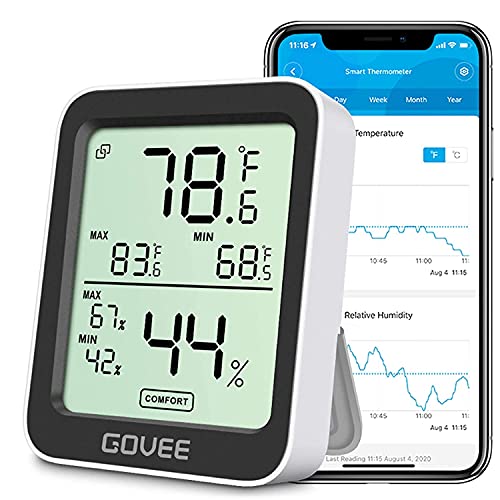
If yours is past saving, our picks start with the replacement we would buy and the inexpensive hygrometer that makes every check on this list easier. See picks ↓

Most dry buckets aren't broken dehumidifiers, so check the cheap causes before you assume the worst. The dehumidifier hums, air comes out the grille, and the bucket stays dry. It happens on a seven-year-old Frigidaire, a Kenmore about two years old, a Honeywell that quit making water at under two years, even an Arctic King a month out of the box. Some of those may be dead compressors. Plenty of the time it's something else.
A unit in Auto mode may have decided the room is fine. A basement that slipped under 41°F can frost the coil until the machine stops dehumidifying to defrost. A drain hose can carry every drop away before it reaches the bucket, or clog and stop the unit cold. The checks below run cheapest and most likely first. Every one is done from outside the cabinet, with the unit switched off and unplugged for anything you handle, and none of them touch the refrigerant. If you end up replacing it, our basement dehumidifier guide covers sizing and drains, and the replacement we would buy is the Midea Cube 50 Pint.
First, is the compressor running or only the fan?
A dehumidifier makes water one way: the compressor chills a coil, room air passes over it, and moisture condenses and drips into the bucket. The fan alone moves air and nothing else. So the first question is whether the compressor is on.
You can tell from outside the cabinet. Feel the air coming out of the outlet: with the compressor running, it's warmer than the room, because the machine releases the heat it pulled from the air plus its own. The Frigidaire FHDD5034Y1 manual describes the air leaving the outlet louvers as "dry, warm air" and says the unit will produce heat while in operation, which is why it asks for 12 inches of clearance and no closets. You may hear it too: the same manual lists a high-pitched chatter from the compressor during the dehumidifying cycle among its normal sounds. If the outlet air feels the same as the room and you hear only the fan, the compressor isn't running.
That isn't always a fault. Several operating modes turn the compressor off on purpose, and in some the fan keeps going. The Frigidaire FHDD5034Y1 manual says the compressor is off in Fan mode, so check the mode first. It also says that when frost builds on the evaporator coils, the compressor cycles off and the fan keeps running until the frost is gone, with "dF" on the display. Santa Fe's manual describes the same thing from its defrost thermostat. A unit that has reached its humidity setting stops dehumidifying too. And if you just switched it on, give it a few minutes: Midea's Cube manual says that after the unit stops, it can't restart for 3 minutes, to protect the compressor. The sections below cover each. Inside the cabinet, a running compressor makes one coil ice cold and the other hot, and no temperature difference means it isn't running, but the outlet air test tells you the same thing with the cabinet closed. Keep it closed. Frigidaire's manual says the unit has no user-serviceable parts, and hOmeLabs' says never to take its dehumidifier apart yourself.
If the unit is brand new and the compressor never runs, stop troubleshooting and return it inside the store's window. An Arctic King that stops making water a month after purchase is a return, not a diagnosis.
Is the room too cold? Frost, defrost and the 41°F floor
Every compressor dehumidifier has a published floor, the lowest room temperature it's built to work in. Here's where the units we cover set it:
Unit | Published floor | Notes |
|---|---|---|
Frigidaire FHDD5034Y1, FHDD5033Y1, FHDP5033Y1 | 41°F (range 41-89°F) | And 30% to 80% relative humidity, per the manual |
Midea Cube | 41°F (range 41-95°F) | The manual says not to place it where the temperature falls below 41°F, because the coils can frost and performance may drop. |
hOmeLabs 50-pint models | 41°F (range 41-90°F) | |
Honeywell TP-FIT | 41°F (range 41-89°F) | |
Santa Fe Compact70 | 49°F minimum, most effective from 56°F up | Its manual says that at 55°F or below, or in low humidity, it will produce little to no water. |
AprilAire E070 | 50°F minimum inlet air for dehumidifying | 40°F minimum dew point |
AlorAir Sentinel HD55S | 33.8°F | With an automatic defrost system built for that |
Two things happen as a basement cools toward those floors. There's less water in the air to begin with; ENERGY STAR's explanation of the 2019 test change says plainly that there's less water to remove in cooler air. And the coil spends more of its time frosted, which means more time in defrost with the fan running and the compressor off. A unit can spend a cold night mostly defrosting and leave a near-empty bucket without anything being broken.
Put a thermometer next to the unit before you blame it. If the space is under the floor, you have a placement problem, not a broken machine. Move it somewhere warmer, wait for spring, or buy a unit rated for the cold, which is why the AlorAir HD55S is in our picks.
Some frost isn't a fault. Frigidaire's manual says frost on the coils behind the filter right after start-up is normal and usually clears within 60 minutes, and Midea's troubleshooting table calls frost on the coils normal because the Cube has an auto defrost. If ice stays on the coil in a room comfortably above the floor, switch the unit off, unplug it and let it thaw completely on its own; hOmeLabs' manual warns against any unapproved way of speeding up defrosting. Then check the filter (next sections). Coils that keep freezing are often on their way out: one hOmeLabs froze and its compressor failed after about three months of use, and one owner's coils freeze after a season despite a clean filter, across hOmeLabs, Midea and Frigidaire units. A coil that keeps icing in a warm room with a clean filter and open airflow points at the refrigerant side, which is a warranty call, not a fix.
Has it already reached its setting? Auto mode and the humidity reading
A dehumidifier that thinks the room is dry enough stops making water. That's correct behavior, and it trips people up. Two things cause it.
Auto mode. Frigidaire's FHDD5034Y1 ships running in Auto. Its manual says that in Auto the unit picks a comfortable humidity and fan speed itself, the set humidity can't be changed, and the display goes off. The FHDD5034Y1 manual doesn't publish its Auto target, but the compact FHDD5033Y1's manual says its Auto mode holds 45% to 55% depending on room temperature. So a basement sitting at 52% may get no water out of an FHDD5033Y1 in Auto, by design. Switch to Dry mode, which takes a target from 35% to 85% in 5% steps on the FHDD5034Y1. Owners of an earlier Wi-Fi Frigidaire 50-pint hit this wall until they found Dry mode; our Frigidaire review has the details. hOmeLabs has a similar mode called Comfort. Its manuals say Comfort presets the humidity by room temperature and won't take a manual setting: 55% below 65°F, 50% from 65°F to 77°F, and 45% above that. In a cool basement, Comfort stops at 55%. Comfort mode can also short-cycle: one hOmeLabs owner's unit cycled off and on every 2-3 minutes, which they blame on the sensor, whose reading rose as soon as the unit shut off, and another 'comfort' mode unit, a week old and brand unnamed, does the same.
A humidity reading that runs low. The unit decides when to stop from its own sensor. If that sensor reads low, the machine thinks it's done while the room is still damp. Nine Midea Cube owners describe a humidity display stuck near 30% or about 20 points low; those who checked against another dehumidifier or a hygrometer saw 40-60%. Our Midea Cube review covers that fault in detail. It isn't only a Cube problem: a Honeywell 70-pint's display has read about 30% in a room a second sensor put in the 60s.
The test is the same for both. Put a separate hygrometer a few feet from the unit. If it reads above 60%, set the dehumidifier to a target clearly below that, in Dry or manual mode rather than Auto, and give it an hour. If the unit's own display disagrees with the hygrometer by more than a few points, trust the hygrometer and treat the unit's sensor as suspect, especially if it's still inside its return window.
Pick a sensible target while you're there. EPA's mold guidance says to keep indoor humidity below 60%, ideally 30% to 50%. In a cool basement, don't chase the bottom of that range: Santa Fe's manual advises against its Drier setting in rooms under 65°F, because it means long periods of ineffective run time. We'd set 45-50% and leave it.
Look at where the water goes: bucket, hose and pump
Sometimes the machine is making water and it's going somewhere other than where you're looking. Run through these:
- A hose on the drain port. If someone connected a continuous-drain hose, the water bypasses the bucket and goes down the hose. An empty bucket is normal then. Follow the hose to its end and see if it's wet.
- A hose that climbs or kinks. A gravity hose has to run downhill all the way. Frigidaire's manual asks for a 1/2-inch or larger hose with no kinks or elevations, hOmeLabs warns that hoses longer than 5 feet may not drain properly, and AlorAir's manual requires at least 1 inch of fall for every 10 feet of run. Water that can't get out backs up into the unit, and a full bucket stops it: Frigidaire's manual says that when the bucket is full, the unit shuts down and the BUCKET FULL light comes on.
- A clogged hose. A clogged drain hose lets the tank fill, and the unit can then shut itself off. Rinsing the hose quarterly keeps it clear. Pull the hose, flush it at a sink, and check the port it connects to.
- A required trap. Santa Fe's Compact70 manual says a drain trap is required for the unit to run properly, positioned about 8-10 inches from the unit with its top at least 2 inches below the drain port. Check that it's there and set at that height.
- A pump that is switched off, or set to leave water behind. On pump models, check the mode. AlorAir's HD55P ships in gravity mode, with a light that shows when pump mode is on. On a Midea Cube with a pump, the manual says the pump inlet hose has to sit in the bucket for the pump to move the water out, and its troubleshooting table lists cleaning the pump filter and checking that the pump hose isn't blocked or leaking.
- The bucket itself. Switch the unit off and unplug it, then pull the bucket, empty it, and seat it fully. If the full light stays on with an empty, fully seated bucket, Frigidaire's manual says to check that the float is snapped in place; on other units, check the troubleshooting table in your manual. If it still won't clear, that's a service call.
Clean the filter, and leave the coils to the manual
A clogged filter starves the coil of air. Less air means less water and, in a cool room, a coil that frosts sooner. Go by your manual's interval. Frigidaire and Midea both say to clean the filter every two weeks, and hOmeLabs at least once every 30 days. Santa Fe's manual says to check and replace its filters every three to six months and that a dirty filter reduces capacity and efficiency; it also says running without one of its approved MERV filters voids the warranty. A Hisense that stops working when its filters plug starts again once they're cleaned.
Switch the unit off and unplug it, as the Frigidaire, Midea and hOmeLabs manuals all say to before cleaning, then pull the filter and wash or replace it the way your manual says. Then check airflow clearance: Frigidaire asks for 12 inches around its FHDD5034Y1 and 15.75 inches around the compact FHDD5033Y1, so a unit pushed against a wall or boxed in by storage may be starved even with a clean filter.
Stop there. Owners do take dehumidifiers apart to clean the coils, and one Frigidaire owner did exactly that and still had a unit that ran without collecting water. The manuals say not to. Frigidaire's says the evaporator contains sharp parts and users shouldn't clean it themselves. hOmeLabs' says never to take the unit apart or repair it yourself, and its warranty is void if a non-authorized third party attempts a repair. Midea's says repairs shouldn't be attempted independently, and Santa Fe's says only qualified HVAC or electrical contractors may service its units. Leave the coils to an authorized servicer.
When the air is already dry
A dehumidifier can only remove water that's in the air, and a damp-smelling basement isn't always a humid one. Frigidaire's manual lists a working range of 30% to 80% relative humidity. Santa Fe's manual says its unit will produce little to no water in low humidity.
Some arithmetic shows what to expect. ENERGY STAR certifies the Frigidaire FHDD5034Y1 at 49.71 pints a day at 65°F and 60% relative humidity, the DOE test condition. That's about 2 pints an hour, so a 2.7-gallon bucket (21.6 pints) would fill in roughly 10-11 hours. That's the rating point. In a room that's cooler or drier than 65°F and 60%, expect less, and once the room reaches your setting, far less. What you shouldn't see is almost nothing over several hours in a room a separate hygrometer puts above 60% and above 65°F.
Collection also falls off as a space dries out, which looks like a problem and isn't. One new unit pulled two gallons a day for three weeks, then dropped to half a gallon or less once the room and everything in it had dried. Slow progress isn't the same as no water, either. One AlorAir owner set a larger unit to 40% in a winter basement; a week later their own hygrometer read 50-52% and the unit read 48%, while water was still pumping out of it. If the hygrometer says the space is already where you want it, the dry bucket is the result you bought the machine for.
When it's the sealed system, and what the warranty says
If you've ruled out everything above and the outlet air still isn't warm, or the compressor runs but the unit makes almost nothing in a warm, damp room, the problem is most likely inside the cabinet: a compressor that won't start, or a refrigerant leak in the sealed system. One Honeywell owner noticed an oily film on the water in the tank before their unit quit; that's one report, and an oily film isn't proof of anything on its own, but it's worth mentioning when you file a claim.
This isn't an owner repair, and we won't describe one. Dehumidifiers are factory-sealed small appliances under EPA's refrigerant rules, and EPA counts attaching gauges, adding refrigerant or removing it as technician work that requires Section 608 certification. One owner says they've fixed failed units by adding refrigerant themselves. Skip it: adding refrigerant is on EPA's list of technician work, and a leak or restriction repair would cost more than a new unit in most cases. That's why the warranty matters so much.
Here's what each maker's own documents say:
Maker | Warranty | Conditions |
|---|---|---|
Frigidaire | Limited one year, parts and labor, functional repairs only | The manual states no separate compressor or sealed-system term. |
Midea Cube | One-year limited | From the delivery or purchase date, whichever is later |
hOmeLabs | Limited one year | Units bought new from hOmeLabs or an authorized reseller; void if repaired by a non-authorized party |
Honeywell (TP-FIT and other JMATEK-made portables) | One year parts and labor plus four years on the sealed system | The licensee behind them now says it's out of business and no longer provides direct customer service. US claims go through a Honeywell Store warranty claim form, which needs a receipt or order confirmation showing the price, and the Honeywell Store's terms exclude purchases from unauthorized sellers. |
AlorAir | For orders on or after May 14, 2026: first two years fully covered, then refrigeration parts only (compressor, condenser, evaporator) through year six, without labor or transport | A unit sent in for inspection after the first six months ships at your cost, and there's no in-home service. Units must come from AlorAir or an authorized dealer. |
Santa Fe | Five years against defects, six on components | Labor, shipping and reinstallation aren't covered. Call the factory for authorization before any warranty repair. |
AprilAire E070 | Five years from purchase | Labor, shipping and reinstallation excluded |
Real lifespans track those terms more than the marketing. One owner gets four or five years out of a residential-grade unit before the compressor gives out; another's compressor failed after about three months of use, their third dehumidifier failure in six years. A portable that quits in year two on a one-year warranty is usually yours to replace, so check the date on your receipt before you spend anything on diagnosis.
If it's done, here's what we'd replace it with
For a basement that stays above 41°F, buy the Midea Cube 50. ENERGY STAR certifies it at 49.67 pints a day on the current 65°F test, the same class as the Frigidaire and Honeywell 50-pint units, and it usually costs less. Put a hygrometer beside it for the first week and send it back if the two disagree by more than a few points. The Frigidaire FHDD5034Y1 is the alternative when it's priced at or below the Cube; switch it out of Auto on day one.
If your old unit died in a space that drops under 41°F, a new portable with the same floor will do the same thing. The AlorAir Sentinel HD55S runs from 33.8°F with auto defrost. Size it from ENERGY STAR's 36.33 pints a day at 65°F, not the 55 on the box. If the basement has no drain below the unit, our dehumidifier with pump guide covers the built-in and separate-pump setups.
The picks
Products we recommend for this guide.

Midea Cube 50 Pint Dehumidifier
The replacement we would buy for a basement above 41°F: ENERGY STAR certifies 49.67 pints/day on the 65°F DOE test. Check its humidity display against a separate hygrometer in week one; some owners found it reading far too low.
Read our full review: we scored it 7.0/10

Frigidaire 50 Pint Dehumidifier with Wi-Fi (FHDD5034Y1)
Same certified class as the Cube (49.71 pints/day at 65°F) with a 2.7-gallon bucket. It ships in Auto, where you can’t set the humidity, so switch to Dry on day one. One-year warranty. Buy it at or below the Cube’s price.
Read our full review: we scored it 6.4/10

AlorAir Sentinel HD55S Dehumidifier
For a space that drops below the 41°F floor most portables share: rated from 33.8°F with auto defrost. ENERGY STAR lists 36.33 pints/day at 65°F, well under the 55 on the box. Gravity drain only; first two years fully covered.
Read our full review: we scored it 7.0/10
What owners say
Real owner reports from the threads and editorial sources we drew on for this guide.
“My 7 year old Frigidaire dehumidifier runs but does not collect water. I pulled it apart the other day and cleaned the coils, put it back together, and still no luck.”
“I went to empty it but the tray didn't have any water in it even though I last emptied it several hours ago. It is also running and blowing air out like normal. The only difference is that it's not sucking water out of the air and into the bucket/tray. We recently bought it last month.”
“the machine starts and makes noise like it should.. but at the end of the night, there is hardly any water, but the other one on the other side of the basement (30-40 ft away) is full?”
“In ‘comfort’ mode that has a predetermined set humidity, my unit cycles off and on ever 2-3 minutes. The humidity sensor is not accurate… the minute the unit shuts off the unit’s humidity level rises quickly, even though the humidity in the room has not changed much.”
“I use a cheap one where the drain line crud’s up and blocks. Then it fills the internal tank and auto shuts off.”
“Mold and sludge can build up inside the hose and cause clogs, so I rinse the tube out quarterly.”
“The units stop working if filter(s) are plugged. It has not failed, it just won't work until filter is cleaned.”
“When I first got a dehumidifier and ran it in my garage it pulled two gallons a day for three weeks straight. Then all of a sudden it dropped to half a gallon or less per day - it just took that long to suck the moisture out of everything else in the room.”
“I got it set up, set the humidity to 40%, and let it go. At the time the humidistat I had in the basement read around 53-60, while the humidity outside and the rest of the house is around 25%. A week later and the humidity is 50-52 on the humidistat and the humidifier itself reads 48%.”
“A residential grade unit last me 4/5 years before the compressor craps out. Just the way it is…”
“Compressor failed within about 3 months of actual use. 3rd dehumidifier failure in the 6 years that I've lived here, last 2 were Frigidaire's.”
