hOmeLabs 50 Pint Dehumidifier Review: Why Its 50 Is an Old-Test 50
By Ingrid Tamsett · Updated October 2026
Independent editorial review. We never accept payment for coverage, though we may earn a commission if you purchase through our links.

Spec sheet
| Rated capacity | 50 pints/day at 80°F, 60% RH (old AHAM test, both models) |
| Current DOE (65°F) capacity | Not published; not found in ENERGY STAR data |
| "MAX" title figure | 120 pints/day at 95°F, 90% RH (not a standard rating) |
| ENERGY STAR | Claimed by hOmeLabs; 50-pint models not in the certified list (Oct 2026) |
| Drainage | HME1004: built-in pump, 16.4 ft max lift. HME031003N: gravity hose sold separately |
| Operating range | 41-90°F |
| Airflow | 188 CFM standard, 218 CFM Turbo |
| Humidity setting | 35-85% RH in 5% steps |
| Warranty | Limited 1 year; void if repaired by non-authorized parties; no commercial use |
| Owner-reported failure (earlier 4,500 sq ft gen) | Compressor failure; compressor running with power off |
Verdict
Owner reports come from r/homeowners, r/hvacadvice and r/HomeImprovement, and they are thin for the current 50-pint models. Two reports name the earlier 4,500 sq ft model (a compressor failure; a compressor that kept running with the power off); others don't name a model (coils icing after a season, email support going quiet). One crawl-space owner, with an unidentified hOmeLabs model, describes a unit set to 50%. The sample is small and skews toward people whose unit broke.
Read full take ↓


For most basements we would buy a Midea Cube 50 over the hOmeLabs 50 Pint Wi-Fi Dehumidifier (HME031003N). The Cube typically costs less and is certified at 49.67 pints a day on the current test, so you get the bigger machine for less. The hOmeLabs and its built-in-pump twin, the HME031004N that Amazon lists as HME1004, are two of the most familiar basement dehumidifiers on Amazon, and they do the job in a muggy basement with a drain nearby. The catch is the number on the box. hOmeLabs rates that "50 pints" at 80°F and 60% relative humidity, the old industry test condition. Frigidaire and Honeywell 50-pint units are rated at 65°F under the current DOE test, so the same number describes a bigger machine when it comes from them.
ENERGY STAR publishes a rough conversion table for exactly this problem, and it maps an old-test 50 to about 30 pints a day on today's test. That puts the hOmeLabs closer to a current 30- or 35-pint unit than to the Frigidaire or Honeywell it sits next to in search results. hOmeLabs doesn't publish a current-test figure, and neither 50-pint model shows up in ENERGY STAR's certified list, even though the product page and the manual cover both call it ENERGY STAR rated.
The case for the hOmeLabs is narrow: buy it when a sale puts it well under the Cube, or when you need a built-in pump that lifts water higher than the 14 feet the Cube's pump version is rated for. Either way, it belongs in a moderately damp basement that stays above 41°F. If your basement is large, wet or cold, look at a Frigidaire or Honeywell 50 instead. There isn't much owner history on these exact models; what there is describes compressor trouble on an earlier hOmeLabs generation and email support going quiet, so treat our reliability score as provisional.
The good parts
- A tall pump: the pump version (HME1004) lifts water up to 16.4 feet, per the manual. That reaches a utility sink or a basement window without a separate pump.
- Controls: Wi-Fi control and a humidistat you can set from 35% to 85% in 5% steps.
- Turbo fan: raises airflow from 188 to 218 CFM.
- A labeled rating: hOmeLabs prints the test condition right next to its rating. Frigidaire states no test condition, and Honeywell's spec table labels a 70-pint figure '2019 DOE Standard' that contradicts its 49.66 ENERGY STAR listing.
The problems
- Old-test capacity: the 50-pint rating is an old-test figure. ENERGY STAR’s rough table puts an old 50 near 30 pints on the current test.
- The 120-pint title: the "MAX 120 Pint" in the title is measured at 95°F and 90% humidity, a condition your basement will never see.
- ENERGY STAR: we could not verify the claim for either 50-pint model.
- Warranty: one year, limited, with no extra coverage on the compressor. Honeywell lists four years on sealed-system parts, but its licensee says it's out of business, so that edge is shaky.
- Missing specs: no published noise, wattage or tank size for the current models.
- No hose in the box: the non-pump HME031003N ships without a drain hose; hOmeLabs sells it separately.
Two models, one rating
Spec | HME031003N | HME1004 (HME031004N) |
|---|---|---|
Rated capacity | 50 pints/day at 80°F, 60% RH (old test) | 50 pints/day at 80°F, 60% RH (old test) |
Drainage | Gravity hose, sold separately; runs over 5 ft may not drain properly | Built-in pump, 16.4 ft max lift; not at or below 32°F outdoors |
Coverage claim (hOmeLabs) | Up to 7,000 sq ft | Up to 7,500 sq ft |
What's the same on both, per the manual and product pages: a 41-90°F operating range, a 35-85% humidistat in 5% steps, 188 CFM airflow or 218 CFM on Turbo, R32 refrigerant and a one-year limited warranty. hOmeLabs doesn't publish noise in decibels, power draw, amps or tank size for the current 50-pint models, on its product pages or in the February 2025 Wi-Fi manual. Frigidaire publishes 47, 49 and 51 dBA by fan speed and 470 watts at 8.8 amps for the FHDD5034Y1. If the unit is going into a finished room where you'll hear it, that gap matters.
What the 50 pints is worth
DOE moved portable dehumidifier testing from 80°F to 65°F, with compliance required from June 13, 2019. ENERGY STAR's explanation is plain: cooler air holds less water, so the same machine likely reports a smaller capacity on the new test. Its conversion table maps an old 50 to roughly 30 pints on the new test, and an old 70 to roughly 40-45, and it warns that the table is a rough correlation that varies by model. On the current test, Frigidaire's FHDD5034Y1 is certified at 49.71 pints a day and Honeywell's TPFIT50PWK at 49.66.
Do the division. If the hOmeLabs lands near ENERGY STAR's estimate of 30, then 30 divided by 49.7 is about 0.6, so it would remove roughly 40% less water per day than either of those machines at the same 65°F condition. That's an estimate from a generic table, not a measurement, and hOmeLabs could settle the question by publishing its DOE figure. It hasn't. Plenty of basements sit below 65°F in spring and fall, too, and every one of these ratings drops as the air cools.
Ignore the 120-pint figure. The Amazon title says MAX 120 Pint at 95°F and 90% RH. That's 15 gallons a day, measured in air far hotter and wetter than any basement, and 5°F above the 90°F top of the unit's own operating range in the manual. It tells you nothing about how the machine performs in a basement.
Don't count on the ENERGY STAR label either. hOmeLabs' product page says the 50-pint Wi-Fi model is ENERGY STAR certified, and the cover of the Wi-Fi manual reads Energy Star Rated Dehumidifier 22 Pint, 50 Pint and 50 Pint with Pump. When we searched ENERGY STAR's certified dehumidifier data in October 2026 by model number (HME031003N, HME031004N, HME1004), by the UPCs on all three Amazon listings, and by brand, the only hOmeLabs models listed were two smaller units rated 24.48 and 32.46 pints a day. It may be certified under a number we didn't try, but we can't confirm it, so we don't count it. If you're relying on a utility rebate that requires ENERGY STAR, check before you buy.
Where it works
Put it in a finished or partly finished basement that turns muggy in summer, stays above 41°F all year, and has a floor drain, sump or utility sink within reach. EPA's mold guidance says to keep indoor humidity below 60%, ideally 30-50%, and a humidistat that goes down to 35% can hold that in a space this machine is big enough for. If the water has to go up and out, buy the pump version and skip the separate condensate pump.
Ignore the coverage numbers. hOmeLabs claims up to 7,000 square feet for the HME031003N and 7,500 for the pump model. Honeywell, whose 50-pint TPFIT50PWK is certified at 49.66 pints a day on the current test, claims 4,000. A machine rated on the easier test claiming nearly twice the area of one rated on the harder test tells you how much those square-foot figures are worth. Size by how wet the space is and what the rating means, not by the floor area printed on the box.
Pick something else in these cases:
- A large basement, a seepage history or a busy sump: a current-test 50 like the Frigidaire FHDD5034Y1 or Honeywell TPFIT50PWK removes more water at the same condition.
- A crawl space, or a basement that drops below 41°F in winter: the manual’s operating range is 41-90°F; look at a crawl space unit built for colder air.
- You want the compressor covered past year one: Honeywell lists four years on the sealed system, but its licensee says it's out of business, claims now go through a Honeywell Store form, and we can't confirm its Amazon seller is authorized. Read our Honeywell review before counting on that coverage.
- A business space: the hOmeLabs warranty excludes commercial or non-household use.
Water, refrigerant and humidity readings
It's a plug-in appliance; the work is deciding where the water goes. With a floor drain, set the non-pump unit near it, buy the hOmeLabs drain hose, and keep the run short and downhill, since the manual says hoses longer than 5 feet may not drain properly. With a utility sink or a window above the unit, buy the hOmeLabs 50 Pint with Pump (HME1004) and route the pump hose up to it, within the 16.4-foot lift. The manual warns not to use the pump when the outdoor temperature is at or below 32°F, because the water will freeze, so don't run the pump hose out a window in winter. Amazon carries the HME1004 under two listings with different UPCs, and one of them leaves the 80°F rating text off, so check the listing details for the model number before you buy.
With neither, you're emptying a bucket. hOmeLabs doesn't publish the tank size for the current models; the previous 50-pint pump model held 1.6 gallons, or 12.8 pints. At the rated 50 pints a day, that fills in about 6 hours. Even at a more realistic 30 pints, it fills in about 10. In a humid month that means emptying it twice a day, which is why we'd buy the pump version or add a condensate pump such as the Little Giant VCMA-15ULS under the non-pump unit.
The manual says the unit uses R32, a flammable refrigerant, so follow its placement and clearance instructions. Any repair to the sealed refrigerant system is a job for a licensed technician, and hOmeLabs' warranty is void if the unit is repaired by anyone it hasn't authorized.
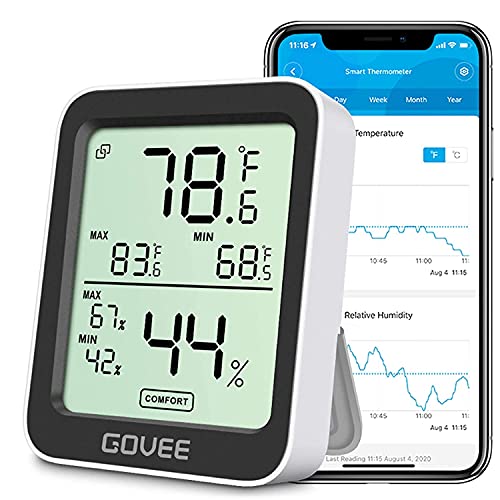
Put a separate hygrometer at the far side of the basement. The unit's humidistat reads the air right around it, and where the dry air lands matters: one crawl-space owner, running a hOmeLabs unit they don't identify by model, found wood in the unit's airstream reading 9.8-10.3% moisture while the rest of the space read 12-14%.
Thin owner record, short warranty
We can't tell you whether the current HME031003N and HME1004 are better or worse than the units owners complain about, because the reports mostly predate them. Two that name a model describe an earlier hOmeLabs generation sold as the 4,500 square-foot model. The 2021 Amazon listing for that model, on the same listing page that now sells the 7,000 square-foot 50-pint HME031003N, gives its model number as HME020031N. The listing that now sells the HME1004 appeared in a 2020 post as a 1,500 square-foot model. Amazon listings get reused across generations and even sizes, so any report attached to one of them may describe a different machine from the one that ships today.
With that caveat, the hardware complaints center on the compressor. A 4,500 square-foot unit froze up and its compressor failed after what its owner says was about three months of actual use, in a wood shop they needed dry; the two dehumidifiers before it, both Frigidaires, had also failed. On a 4,500 square-foot pump model, the compressor kept running with the power switch off, and only unplugging stopped it. Coils that freeze after a season of use come up too, from an owner who names no model and has seen it on hOmeLabs, Midea and Frigidaire machines alike. Support has gone email-only, and the emails can stop getting answers.
That's a handful of reports from people whose unit broke, which is no basis for a failure rate. The cross-brand comments suggest consumer dehumidifier compressors in general don't last the way they once did. What we can tell you is what the warranty covers.
hOmeLabs offers a limited one-year warranty on products bought new from hOmeLabs or an authorized reseller. It's void if the unit is repaired by a non-authorized party, and it excludes commercial or non-household use. Frigidaire's 50-pint models also carry one year, parts and labor. Honeywell's TPFIT portables list everything for one year and sealed-system parts (the compressor, evaporator, condenser and refrigerant tubing) for four, which on paper is exactly what the compressor-side hOmeLabs failures above call for. In practice, the licensee behind that warranty says it's out of business. Claims now go through a Honeywell Store form whose terms exclude unauthorized sellers, and we can't confirm the Amazon seller qualifies. Whatever you buy, register it and keep the order record.
Next to the current-test 50s
Against all three, the hOmeLabs is the smaller machine wearing the same number. It's priced like a 50, and its rating converts to roughly 30.
Model | Rated capacity | Built-in pump | Warranty |
|---|---|---|---|
hOmeLabs HME031003N / HME1004 | 50 pints/day at 80°F (old test); about 30 on today's test by ENERGY STAR's table | HME1004: 16.4 ft | 1 year, limited |
Frigidaire FHDD5034Y1 | 49.71 pints/day at 65°F, IEF 2.01 | None (FHDP5033Y1: 16.4 ft) | 1 year, parts and labor |
Honeywell TPFIT50PWK | 49.66 pints/day at 65°F | 15 ft (product page), 16.4 ft (manual) | 1 year on everything, 4 on sealed-system parts; licensee out of business |
Midea Cube 50 | 49.67 pints/day at 65°F | MAD50PS1QWT-A: 14 ft | 1 year |
Frigidaire 50 Pint with Wi-Fi (FHDD5034Y1): ENERGY STAR certified on the current test, with an integrated energy factor of 2.01 liters per kWh, a 2.7-gallon bucket, published noise of 47-51 dBA and the same 41°F low limit. It's the better machine for a larger or wetter basement with a floor drain. Frigidaire's FHDP5033Y1 adds the built-in pump if you can find it.
Honeywell TPFIT50PWK: a built-in pump, a 14-pint tank, and only a minimum noise figure of 51 dBA published. On paper its warranty is the standout of this group, but the licensee behind it says it's out of business, claims go through a Honeywell Store form that excludes unauthorized sellers, we can't confirm the Amazon seller is authorized, and it's sold out on Honeywell's own site. It typically costs noticeably more than the hOmeLabs, and we no longer think that warranty is worth the premium.
Midea Cube 50: certified at 49.67 pints a day on the current test in both the non-pump MAD50S1QWT-A and the pump MAD50PS1QWT-A, with the same 41°F floor and a one-year warranty. The Amazon listing we link is the non-pump model, typically priced below the hOmeLabs, so you get the larger current-test capacity for less. The pump version is sold separately, and its manual gives a 14-foot maximum pump height, short of the HME1004's 16.4 feet. That 2.4-foot gap is the clearest reason left to choose the hOmeLabs pump model.
When we would buy one
Usually we wouldn't, because the Midea Cube 50 exists. It typically costs less than the hOmeLabs and is certified at 49.67 pints a day on the current test, so for a moderately damp basement it's our default. We'd buy the hOmeLabs in two cases: when a sale puts it well under the Cube, or when the water has to climb higher than the 14 feet the Cube's pump version is rated for, which the HME1004's 16.4-foot pump covers without a separate pump. Either way, size it as a 30-pint-class machine, put a hygrometer on the far wall, and keep it out of anywhere that drops below 41°F. For a big or wet basement, we'd pay the difference for the Frigidaire FHDD5034Y1 if there's a floor drain, or pair it or the Cube with a condensate pump if there isn't. The Honeywell TPFIT50PWK's four years on sealed-system parts no longer sway us now that its licensee is out of business.
Score breakdown
hOmeLabs rates it at 50 pints a day at 80°F, the old test; ENERGY STAR's rough conversion puts an old 50 near 30 pints on today's 65°F test, against about 49.7 for the Frigidaire and Honeywell 50s. The 16.4-foot pump, 188-218 CFM fan and 35-85% humidistat are solid. With no published current-test capacity, noise or wattage, we can't score it higher.
Owner evidence on the current HME031003N and HME1004 is thin. Two reports name the earlier 4,500 square-foot generation (a compressor failure; a compressor that would not switch off), and others that name no model describe coils icing and email support going quiet. That is a handful of owners in a self-selected sample, not a failure rate. With a one-year warranty and no extra compressor coverage, we score it below average and hold the number loosely.
It typically costs less than a current-test 50 from Frigidaire or Honeywell, but you're buying a smaller machine, so the value per pint removed is weaker than the sticker suggests. The pump version is the better deal of the two if you'd otherwise add a condensate pump. The Midea Cube 50 typically costs less and is certified at 49.67 pints a day on the current test, so the hOmeLabs only wins on value when it's on sale or when you need its 16.4-foot pump.
hOmeLabs 50 Pint Dehumidifier on Amazon.
The Evidence Behind Our Verdict
Owner reports come from r/homeowners, r/hvacadvice and r/HomeImprovement, and they are thin for the current 50-pint models. Two reports name the earlier 4,500 sq ft model (a compressor failure; a compressor that kept running with the power off); others don't name a model (coils icing after a season, email support going quiet). One crawl-space owner, with an unidentified hOmeLabs model, describes a unit set to 50%.
The sample is small and skews toward people whose unit broke.
Our rating above is our own editorial call. What follows is the field evidence we weighed to reach it: first-hand reports from owners on Reddit and independent HVAC and DIY forums, which we lean on more than manufacturer-influenced published reviews because unsponsored owners tend to be the more candid signal.
What Reddit Is Saying
“I have 500sqft of crawlspace and put a homelabs dehumidifier in at 50% humidity control. Other parts of crawlspace that the Dry air was not blowing directly on are around 12-14% moisture which I think is healthy.”
“I bought a HomeLabs 4500 sq. ft. dehumidifier last September. They promised great customer service and came across overall as a 'feel good' company. The unit froze up a couple days ago (compressor failure). Their cust. service phone # says they only respond to E-mails now.”
“i have a homelabs 4500 sq dehumidifier with pump and one day i noticed the compressor is on but the fan is not so i powered it off and the compressor still wont turn off so i have to unplug it to get the compressor to turn off”
“I have the same issue - the coils freeze in the back after a season of use - so this is the compressor failing? I keep the filter clean and I’ve tried HomeLabs, Midea and Frigidaire.”
Frequently asked questions
Is the hOmeLabs 50 Pint Dehumidifier worth it?
It typically costs less than a current-test 50 from Frigidaire or Honeywell, but you're buying a smaller machine, so the value per pint removed is weaker than the sticker suggests. The pump version is the better deal of the two if you'd otherwise add a condensate pump. 4-foot pump.
How reliable is the hOmeLabs 50 Pint Dehumidifier?
Owner evidence on the current HME031003N and HME1004 is thin. Two reports name the earlier 4,500 square-foot generation (a compressor failure; a compressor that would not switch off), and others that name no model describe coils icing and email support going quiet. That is a handful of owners in a self-selected sample, not a failure rate.
How well does the hOmeLabs 50 Pint Dehumidifier perform?
7 for the Frigidaire and Honeywell 50s. 4-foot pump, 188-218 CFM fan and 35-85% humidistat are solid. With no published current-test capacity, noise or wattage, we can't score it higher.
What do real owners say about the hOmeLabs 50 Pint Dehumidifier?
Owner reports come from r/homeowners, r/hvacadvice and r/HomeImprovement, and they are thin for the current 50-pint models. Two reports name the earlier 4,500 sq ft model (a compressor failure; a compressor that kept running with the power off); others don't name a model (coils icing after a season, email support going quiet). One crawl-space owner, with an unidentified hOmeLabs model, describes a unit set to 50%.
Options Worth Checking Out

Frigidaire 50 Pint Dehumidifier with Wi-Fi (FHDD5034Y1)
A true current-test 50: ENERGY STAR certified at 49.71 pints/day at 65°F, with a 2.7-gallon bucket and published 47-51 dBA noise. Our pick for a larger or wetter basement with a floor drain. No pump, and a one-year warranty.
Read our full review: we scored it 6.4/10

Honeywell 50-Pint Dehumidifier with Pump (TPFIT50PWK)
ENERGY STAR certified at 49.66 pints/day at 65°F with a built-in pump (plan on 15 ft). Its four-year sealed-system term is shaky now: the licensee is out of business, claims go via the Honeywell Store, and the Amazon seller may not be authorized.
Read our full review: we scored it 5.3/10

Midea Cube 50 Pint Dehumidifier
This listing is the non-pump MAD50S1QWT-A, certified at 49.67 pints/day at 65°F and typically priced below the hOmeLabs. The pump version (MAD50PS1QWT-A, 14 ft max lift) is sold separately. Same 41°F floor and one-year warranty.
Read our full review: we scored it 7.0/10
You Might Also Need
Accessories worth grabbing alongside your purchase

Little Giant VCMA-15ULS Condensate Pump
For the non-pump hOmeLabs with no floor drain nearby. Let the dehumidifier drain downhill into this pump and it lifts the water out: rated 25 GPH at 10 ft of lift, far more than any dehumidifier makes in a day.
Read our full review: we scored it 7.3/10