AlorAir vs Santa Fe: Sentinel HD55S or Compact70 for a Crawl Space
By Ingrid Tamsett · Updated October 2026
Independent editorial review. We never accept payment for coverage, though we may earn a commission if you purchase through our links.

Verdict
AlorAir Sentinel HD55S
Santa Fe Compact70
Owner reports come from r/hvacadvice, r/basement, r/HomeImprovement and r/BuyItForLife. No owner has run both units. Compact70 owners describe units lasting about three to six and a half years and longer, against one owner's six failures since 2014, mostly evaporator coil leaks with five handled under warranty, and a second suspected coil failure. No reports name the HD55S; the AlorAir evidence is brand-level, with an original HD55 running for years and a six-month compressor failure on a Sentinel HD35P.
Read full take ↓


Pick by how cold your crawl space gets in January first, and by how much a failure in year three would hurt second. The AlorAir Sentinel HD55S and the Santa Fe Compact70 are the two crawl space dehumidifiers people cross-shop most. One costs a fraction of the other, and the cheap one is the unit rated to run in colder air. We scored them level, 7.0 each, because each one wins a different crawl space.
Ignore both boxes. The HD55S listing leads with 120 pints and the Compact70 carries 70 in its name. Neither number is measured under the current DOE test for portable dehumidifiers, which runs at 65°F and 60% relative humidity. At that condition ENERGY STAR lists the HD55S at 36.33 pints a day, and Santa Fe rates the Compact70 at 43.7. The Santa Fe pulls about 7.4 more pints a day, roughly 20% more water, at the same test point.
Then check whether the crawl space is ready for either one. Santa Fe's own Compact70 manual says the space must be "free of water intrusion or excessive fresh (outside) air infiltration," and that those problems should be fixed before the unit goes in. If your vents are still open, close them and seal the vapor barrier first. Both of these machines will run all summer to little effect in a vented crawl space.
Pick by your crawl space
- Crawl space stays in the mid-50s or warmer all year: the Compact70. It removes about 20% more water at the DOE test, filters through MERV-13 instead of MERV-1, and its written warranty covers defects for five years.
- Crawl space drops below about 55°F in winter: the HD55S. AlorAir rates it to run down to 33.8°F. Santa Fe's manual says the Compact70 works most effectively from 56°F up and will produce little to no water at 55°F or below.
- Tight budget, or you would rather keep the difference and replace a unit if it dies: the HD55S, bought from AlorAir or an authorized dealer so the warranty holds.
- You want one box to run for years with the longest coverage behind it: the Compact70, with a pump or hang kit budgeted if your space needs one.
- No drain anywhere near the unit: neither has a built-in pump. Add a condensate pump, or look at the AlorAir HD55P, which has one built in.
- Vents still open: neither yet. Seal the crawl space first.
Side-by-side specs
Every figure below comes from the manufacturer, ENERGY STAR or the manual. Where the HD55S family has variants, the figure is for the HD55S; for the Compact70 it is for the current part 4044110. The HD55S airflow, noise, coverage and drain figures come from AlorAir's HD55S Wi-Fi spec sheet, which still lists R410A; AlorAir's current HD55S spec sheet and Wi-Fi product page say R32.
Spec | AlorAir HD55S | Santa Fe Compact70 |
|---|---|---|
Capacity at the DOE test (65°F, 60% RH) | 36.33 pints/day (ENERGY STAR listing) | 43.7 pints/day (Santa Fe) |
Capacity at the old AHAM test (80°F, 60% RH) | 55 pints/day | 70 pints/day |
Box number | 120 pints/day at 90°F and 90% RH saturation | None beyond the 70 |
Lowest operating temperature | 33.8°F with auto defrost | 49°F, most effective 56-95°F per the manual, with a defrost thermostat |
Efficiency at the DOE test | Integrated energy factor 2.08 L/kWh (ENERGY STAR) | 1.96 L/kWh (Santa Fe); no ENERGY STAR claim |
Electrical | 115 V, 4.1 A | 115 V, 444 W and 3.7 A at the DOE test; the manual asks for a GFCI outlet on a circuit of at least 15 A |
Airflow and noise (manufacturer) | 130 CFM, under 52 dBA on its spec sheet | 150 CFM, 55 dBA average |
Filter | MERV-1 | MERV-13 plus a washable pre-filter; the warranty requires a MERV-8, MERV-11 or MERV-13 filter |
Drain | Gravity only, at least 1 in of fall per 10 ft | 3/4 in female NPT and an 8 ft gravity hose, no built-in pump; Santa Fe's pump kit (part 4022220) lifts up to 12 ft |
Coverage claim | Up to 1,300 sq ft | Up to 2,600 sq ft tightly sealed, 2,200 moderately sealed, 1,800 loosely sealed |
Size and weight | 19.2 x 12.2 x 13.3 in, 44 lb | 12 x 12 x 21 in, 55 lb |
Refrigerant | R32 | R454B |
Warranty | 2 years full, then years 3-6 refrigeration parts only, for purchases from April 14, 2026 | 5 years on defects, 6 years on components, Santa Fe choosing part or unit |
What's the same on both: an ordinary 115 V plug, a gravity drain out of the box with no pump inside, and a six-year number somewhere in the warranty.
Capacity: compare the 65°F numbers
Since June 2019 the DOE has tested portable dehumidifiers at 65°F instead of 80°F, and ENERGY STAR says the cooler test gives a smaller number for the same machine because cooler air holds less water. At 80°F the Compact70 reads 70 and the HD55S 55, so the Santa Fe removes about 27% more. At 65°F it is 43.7 against 36.33, about 20% more. The gap narrows at the cooler test, and both machines lose a third or more of their 80°F rating there: the HD55S keeps 66% of its 55, the Compact70 62% of its 70.
The 120 on the HD55S listing is a saturation figure, measured at 90°F and 90% RH, and it is 3.3 times the unit's 65°F rating. Santa Fe doesn't sell the Compact70 on a saturation number. If you size the HD55S by its box, you will buy a machine with about a third of the capacity you planned for. An owner of two of AlorAir's larger Storm units makes the same complaint about the brand's labels in general.
A sealed crawl space can sit below 65°F even in summer, and neither maker publishes capacity below that test point, so expect less than either figure in practice. In a 1,500 sq ft sealed crawl space the choice is easier: that's past AlorAir's 1,300 sq ft claim for the HD55S and inside Santa Fe's 1,800 sq ft figure for a loosely sealed space.
On energy, the HD55S is slightly ahead per pint. Both integrated energy factors come from the same 65°F test. At 2.08 L/kWh the HD55S needs about 8.3 kWh to pull its rated 36.33 pints (about 17.2 liters) in a day; at 1.96 L/kWh the Compact70 needs about 10.6 kWh for its 43.7 pints (about 20.7 liters). Per liter, that's about 6% in AlorAir's favor. Once the space dries out, both cycle off at the setpoint, so your bill depends as much on how wet the crawl space is as on which badge is on the box.
Crawl space temperature decides most of this
We'd weigh this spec hardest, and it's where the cheap unit wins outright. AlorAir rates the HD55S to operate from 33.8°F with an auto-defrost cycle. Santa Fe rates the Compact70 to operate down to 49°F, but its manual says it works most effectively between 56°F and 95°F, advises against the Drier setting in rooms under 65°F, and says in its troubleshooting section that at 55°F or below it will produce little to no water.
So the two machines split at about 55°F:
Crawl space temperature | Santa Fe Compact70 | AlorAir HD55S |
|---|---|---|
Above about 56°F | In its effective range, and removes more water | In its effective range |
About 49-55°F | Still runs, but by its own manual pulls little or no water | Keeps working, although AlorAir doesn't publish how much it removes there |
Below 49°F | Outside its rated range | Rated to keep going into the 30s |
Real crawl spaces hit that line. One Compact70 owner's crawl space unit sits on a low-temperature lockout at about 50°F for most of the winter, close to the 49°F floor Santa Fe lists. A crawl space under a heated house in a mild climate may never leave the mid-50s. One in a cold climate, with cold soil under the barrier, can drop well below that for weeks. Cold air holds little water, so the HD55S won't remove much volume in a 40°F crawl space either, but in the shoulder seasons, when the space hovers in the low 50s and the air is still damp, it's the one of these two that keeps working.
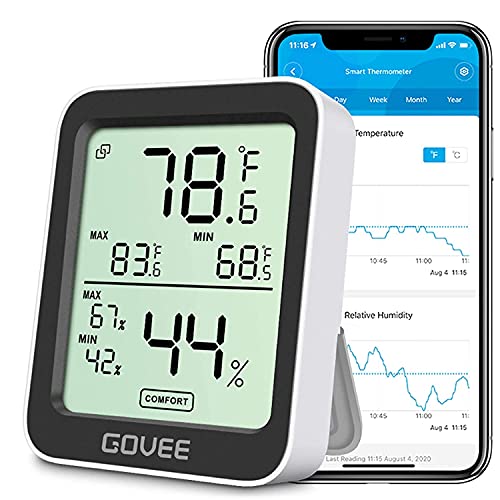
Put a thermometer-hygrometer at the far end of the crawl space for a few weeks of winter before you choose. If it never drops below about 55°F, the temperature question goes away and the comparison turns on capacity, filtration and warranty, where the Santa Fe leads. If it does, buy the AlorAir.
Drain, power and setup
Neither unit has a built-in pump, so plan the water first. The HD55S drains by gravity only and the manual asks for at least 1 in of downward slope per 10 ft of hose. The Compact70 has a 3/4 in threaded drain and an 8 ft gravity hose, and its manual adds a requirement the spec sheet doesn't mention: a drain trap about 8-10 in from the unit, with the top of the trap at least 2 in below the drain port. That means the Compact70 has to sit high enough for a trap, which matters if you're pairing it with a pump. If you have no floor drain, sump or downhill path, budget for Santa Fe's pump kit or a standalone condensate pump with either unit, or buy the HD55P, AlorAir's version with a pump built in.
A standalone pump's overflow switch only stops equipment wired to it, and a plug-in dehumidifier usually has nothing to wire, so put a water alarm next to the pump. In a cold climate, route the discharge to an interior drain if you can. The HD55S is the one more likely to be running in a near-freezing crawl space, and an exterior line can freeze solid while it keeps making water.
Electrically, both plug into an ordinary 115 V outlet. AlorAir says non-grounded wiring voids its warranty; Santa Fe asks for a GFCI outlet on a circuit of at least 15 A within reach of the 9 ft cord. If there's no outlet in the crawl space, adding one is a job for a licensed electrician. Santa Fe's manual also says to hang the unit from the floor joists with a hang kit wherever flooding is possible, and that a flooded unit isn't covered. The Compact70 is sized to fit between joists for that; the HD55S is the lighter unit to carry in, at 44 lb against 55.
On DIY installs, AlorAir says a homeowner can install the HD55 and keep the warranty. Santa Fe's warranty is void for defects that come from not installing the unit according to the instructions. Either way, follow the manual and keep the receipt.
Reliability: neither record is clean
No owner report covers both side by side, so these are two separate records, and both are thin.
The Compact70 lasts when it lasts. A long-time Compact70 user, 20 years on the model, got six to six and a half years from their last unit without issues; others report about three trouble-free years and a tight, low crawl space held at 45%. The failure that keeps coming up is the coil. One owner has had six Compact70 failures since a 2014 purchase, a defrost sensor first and then repeated refrigerant leaks they blame on the evaporator coil, with five repaired or replaced under warranty. Another suspects the same coil failure on a Compact70 of unknown purchase date. Two more Santa Fe failures don't name the model, one after 4-5 years and one at about 15-16 months. A Santa Fe that leaked refrigerant was likely an Advance90, not a Compact70, so we leave it out. The six-unit history starts a generation before today's R454B model, and we don't know whether the current one fixed the coil problem.
Nobody has reported on the HD55S by name yet. The one report that names the HD55 is for the original R410A model, run in a basement for years without problems. The closest match is a 120-pint AlorAir Sentinel HD55 listing (HD55S-equivalent specs) that works well in a newly encapsulated 1,300 sq ft crawl space. Beyond that the evidence is brand-level: a Sentinel took a basement from the mid-60s to the low 40s in a few days, and a Storm has run about 2.5 trouble-free years. On the failure side, a Sentinel HD35P compressor failed at six months and its owner paid $150 in shipping for the replacement, and a six-year-old Storm lost its pump and then hit a sensor fault its owner couldn't fix. An installer who goes through about 50 AlorAir units a month sees 3-5 dead on arrival and low failure rates after the first year.
Our read: AlorAir's risk sits early, and a unit that fails after month six can mean a shipping bill if it has to go back for inspection. Santa Fe's documented failures are mostly refrigerant leaks at the coil, some recurring within a year or two of a replacement, and the warranty did its job for the owner with six of them. Run an HD55S hard in its first months; buy a Compact70 assuming you may use the warranty.
Warranty fine print, side by side
Both brands advertise six years. The documents behind the word differ.
- AlorAir HD55S: AlorAir's website gives orders placed on or after May 14, 2026 a 6-year limited warranty, and extends the same coverage to purchases from April 14 to May 13, 2026. The first 2 years cover parts, labor and replacement of the unit; years 3-6 cover refrigeration system parts only (compressor, condenser, evaporator), excluding transportation and labor. If you send the unit in for inspection instead of taking AlorAir's recommended service option, AlorAir covers shipping on a valid claim only in the first six months, even inside the 2-year full period; under-warranty replacement parts for minor repairs ship at AlorAir's cost. The manual says there's no in-home service and that the warranty is valid only on units bought from AlorAir or an authorized dealer.
- Santa Fe Compact70: the manual warrants the unit against defects in materials or workmanship for five years from purchase and its components for six. The remedy is, at Santa Fe's sole discretion, a replacement component or product, so Santa Fe decides whether you get a part or a new unit. Labor, shipping, removal and reinstallation are excluded, as are air filters, flood damage and used units bought from third parties. Running it without a MERV-8, MERV-11 or MERV-13 filter voids the warranty, and the manual says to call the factory for claim authorization before any warranty repair.
Line them up by year:
Years | AlorAir HD55S | Santa Fe Compact70 |
|---|---|---|
1-2 | Covers more of the cost: labor included and the whole unit can be replaced, though a unit you send in for inspection after month six ships at your cost | Any defect; shipping excluded from day one |
3-5 | Refrigeration parts only, without labor or transportation | Any defect. This is where the Compact70 pulls ahead. |
6 | Refrigeration parts only | Any component |
Santa Fe's manual also says only qualified HVAC or electrical contractors may service the unit, so a replacement part still means paying someone to fit it.
The Santa Fe filter rule depends on the rating, not the brand. A correctly sized generic MERV-13 (11.38 x 9.00 x 0.75 in) keeps you inside that wording, and since filters aren't covered anyway, it's a fair way to cut the running cost. The HD55S ships with a MERV-1 filter, the bottom of the MERV scale.
What each one costs you over the years
The Compact70 costs far more up front. At the prices we saw while writing this, two HD55S units cost less than one Compact70, so you could buy an AlorAir, replace it once, and still come out ahead, before counting the shipping bill if one has to go back for inspection after month six. Check both current prices before you lean on that; they move.
The Santa Fe price buys about 20% more water at the DOE test, a MERV-13 filter, a coverage claim for a larger sealed space and five years of defect coverage. If your crawl space stays warm and you plan to keep the unit five years or more, that's a fair trade. If it runs cold, a good part of what you'd pay for goes unused for months each winter, because the Compact70 pulls little or no water below about 55°F.
Our scores reflect that split. The Compact70 leads on performance (7.6 against 7.2) and reliability (6.8 against 6.2). The HD55S leads on value (7.6 against 6.2). Weighted 40/35/25, the two land at 7.0 each. Those are the same axis scores as our individual reviews of each unit; putting them side by side didn't change the evidence.
Our call for your crawl space
For a sealed crawl space that stays in the mid-50s or warmer, a drain or room for a pump, and a budget that can absorb the price, we'd buy the Compact70. It removes more water at the test that matters, keeps the coil cleaner, and its five-year defect coverage lines up with the failures owners report.
For a crawl space that drops below about 55°F in winter, or a buyer who would rather keep the difference, we'd buy the HD55S. Size it by the 36.33-pint figure, not the 120, buy it from AlorAir or an authorized dealer, register it the day it arrives, and give it a hard workout in the first six months, while AlorAir still pays shipping on a valid claim if the unit has to go back for inspection.
Whichever you choose, seal the crawl space first, put a hygrometer at the far end, and aim below 60%. The EPA says to keep indoor humidity below 60%, ideally 30-50%, and the DOE's Building America guide to closing ventilated crawlspaces aims for 30-50% in a closed crawl space. That guide also names a small conditioned-air supply and return, tied into the house's own heating and cooling system, as one of the most effective ways to dry a closed crawl space, and says a permanent dehumidifier might be necessary to hold that range in areas without air conditioning. If your house has ducted central air, ask your HVAC contractor about that route before you buy either unit.
Scores at a Glance
AlorAir Sentinel HD55S
Santa Fe Compact70
Filled circle = category winner. Scores are our editorial assessments on a 1 to 10 scale.
Reliability & Durability
Neither record is clean. Compact70 owners report units running three to six and a half years and longer, against one owner's six coil-related failures since a 2014 purchase, five handled under warranty. No owner report names the HD55S yet; AlorAir's brand-level failures cluster early, and its full coverage ends at two years, with shipping on you after six months if a unit goes back for inspection, against Santa Fe's five years on defects.
Performance & Results
At the DOE 65°F test the Compact70 removes 43.7 pints/day against the HD55S's 36.33, about 20% more, and it filters through MERV-13 instead of MERV-1. The HD55S is rated to run down to 33.8°F, while Santa Fe's manual says the Compact70 makes little to no water at 55°F or below. Warm crawl space, Santa Fe; cold one, AlorAir.
Value
The HD55S costs a fraction of the Compact70 and is about 6% more efficient per liter at the same test. The Compact70's extra capacity, filter and warranty earn back part of its price if your crawl space stays warm and you keep it five years. Check both current prices.
The Evidence Behind Our Verdict
Owner reports come from r/hvacadvice, r/basement, r/HomeImprovement and r/BuyItForLife. No owner has run both units. Compact70 owners describe units lasting about three to six and a half years and longer, against one owner's six failures since 2014, mostly evaporator coil leaks with five handled under warranty, and a second suspected coil failure.
No reports name the HD55S; the AlorAir evidence is brand-level, with an original HD55 running for years and a six-month compressor failure on a Sentinel HD35P.
Our rating above is our own editorial call. What follows is the field evidence we weighed to reach it: first-hand reports from owners on Reddit and independent HVAC and DIY forums, which we lean on more than manufacturer-influenced published reviews because unsponsored owners tend to be the more candid signal.
AlorAir Sentinel HD55S owners
“I just encapsulated this summer (1300 sq ft) and bought Alorair. It’s been a few months and it works well. I keep it at 63% humidity, and it kicks in every 20-30 minutes or so. A lot less in fall due to decreased humidity.”
“I got an Aloaire sentinel and it took humidity from mid 60s to low 40s in a few days.”
“They finally sent a replacement unit. Shipping cost me $150. Replacement unit still working.”
Santa Fe Compact70 owners
“I've used a Santa Fe Compact 70 (from Sylvane) for 20 years now. They're easy to install and can go in tight space (my previous ones were in a 2 ft. high crawlspace). My last unit went for 6 years with no issues.”
“My crawlspace dehumidifer shuts off on low temperature lockout (about 50F) for most of the winter. Yours may not run as much as you'd want, unless your crawlspace stays warm in the winter.”
“Just stumbled upon this thread while researching what to replace my now-dead Compact70, too. I suspect the evaporator coil died on mine, too. It sounds like it's running fine, but it just runs 24/7 to no effect.”
Frequently asked questions
Should I buy the AlorAir Sentinel HD55S or the Santa Fe Compact70?
Then check whether the crawl space is ready for either one. Santa Fe's own Compact70 manual says the space must be "free of water intrusion or excessive fresh (outside) air infiltration," and that those problems should be fixed before the unit goes in. If your vents are still open, close them and seal the vapor barrier first.
How do the AlorAir Sentinel HD55S and Santa Fe Compact70 compare on construction?
Neither record is clean. Compact70 owners report units running three to six and a half years and longer, against one owner's six coil-related failures since a 2014 purchase, five handled under warranty. No owner report names the HD55S yet; AlorAir's brand-level failures cluster early, and its full coverage ends at two years, with shipping on you after six months if a unit goes back for inspection, against Santa Fe's five years on defects.
What do real owners say about the AlorAir Sentinel HD55S and the Santa Fe Compact70?
Owner reports come from r/hvacadvice, r/basement, r/HomeImprovement and r/BuyItForLife. No owner has run both units. Compact70 owners describe units lasting about three to six and a half years and longer, against one owner's six failures since 2014, mostly evaporator coil leaks with five handled under warranty, and a second suspected coil failure.
Top Picks
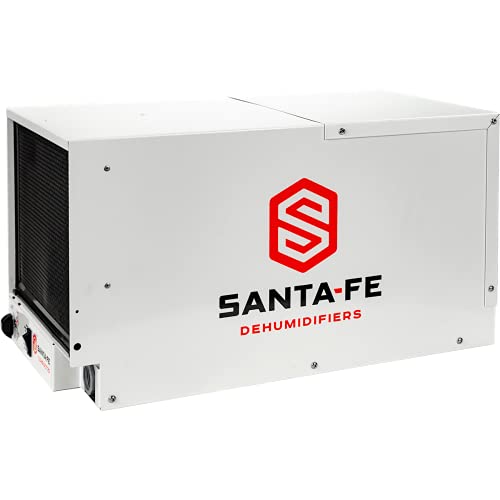
Santa Fe Compact70 Dehumidifier (part 4044110)
Our pick for a sealed crawl space that stays in the mid-50s or warmer: 43.7 pints/day at the DOE 65°F test, MERV-13 filter, 5-year defect warranty. No featured offer when we checked; new units show under All Buying Options.
Read our full review: we scored it 7.0/10


AprilAire E070W Wi-Fi Crawl Space Dehumidifier
If you want the Compact70 class with app control and no drain nearby: this listing bundles the E070W with a condensate pump, drain hose, hanging kit and MERV 11 filter. Rated 70 pints at the old 80°F test; the E070 is rated to 50°F.
Read our full review: we scored it 7.1/10
You Might Also Need
Accessories worth grabbing alongside your purchase

Full Individual Reviews
Deep-dive on each, individually

