Hessaire MC37 Review: Real Cooling in Dry Heat, a Damp Fan Elsewhere
By Teo Varnadoe · Updated October 2026
Independent editorial review. We never accept payment for coverage, though we may earn a commission if you purchase through our links.
 ← 16 in wide x 38 in tall (Hessaire) →
Spec sheet
| Airflow (Hessaire) | 3,100 CFM, maker rating |
| Tank | 10.3 gal; float valve and hose hookup for outdoor use |
| Power | 250 W, 2.4 A, 115V plug |
| Size and weight | 24 x 16 x 38 in, 40 lb, casters |
| Humidity limit (Hessaire) | Best at 10-30% RH; reduced above 60% |
| Ventilation needed | About 3.1-6.2 sq ft of opening (our math from DOE rule) |
| Pump life (Hessaire) | Can wear out after 4-6 months of use |
| Owner-reported failure | MC37V controls stopped working; no email reply from support |
| Warranty | 1 yr parts only; pads and labor excluded; authorized sellers |
Verdict
Owner reports come from r/hvacadvice, r/phoenix, r/Albuquerque, r/Denver, r/homeimprovementideas, r/GarageGym and r/AirConditioners, plus Garage Journal. Few owners name the MC37 by model: two describe Hessaire's 3,100 CFM cooler, one an MC37V, and others a smaller MC18V, a bigger MC61V or an unnamed Hessaire; the rest describe portable evaporative coolers generally, with the brand shown where they gave it. Of 16 quotes, 5 are positive (dry-climate garages and patios), 6 negative (humid air, closed rooms, rust, one dead MC37V) and 5 mixed or practical. Several "I bought a Hessaire" posts marked as ads were left out.
Read full take ↓


The Hessaire MC37 evaporative cooler is the portable swamp cooler we'd roll into a garage, shop or patio in the dry West, and the one we'd tell anyone in a humid summer to skip. It cools by evaporating water into the air, so it only works when that air is dry. On a 10% humidity afternoon it can blow air 20-plus degrees cooler than the day. In muggy weather it's a big fan that makes the room damp.
Hessaire rates it at 3,100 CFM with a 10.3-gallon tank, three fan speeds, oscillating louvers and a 250 W draw. That airflow figure is Hessaire's own, so treat it as a maker claim. The MC37M and MC37V are essentially the same cooler with different control panel and motor part numbers, so buy whichever an authorized seller has for less.
One buying note. The Amazon listing we link is sold by a third-party seller, not Hessaire, and Hessaire's warranty covers only coolers bought from Hessaire or an authorized seller. We couldn't confirm whether that seller is authorized. Keep your receipt and the serial number either way, because a claim needs both.
What it does well
- Cheap to run: 250 W on Hessaire's spec, roughly a third of what a 10,000 BTU window AC pulls while cooling (our estimate from that unit's efficiency rating).
- Lots of air for the money: a 3,100 CFM rating, three speeds and swinging louvers, built for garages, patios and shop floors.
- Easy to keep running: Hessaire sells the pump, float valve kit, media set and control panel as separate parts.
- Hose hookup: a float valve and garden hose adapter keep the 10.3-gallon tank topped up outdoors.
Where it falls short
- Humidity: Hessaire says it loses effectiveness above 60% relative humidity, and its best band is 10-30%.
- It needs fresh air: run it in a closed room and it saturates the air and stops cooling. It needs an opening to pull from and another to exhaust through.
- It adds moisture: everything near it gets damper, which matters in a garage full of bare steel.
- A thin warranty: one year on parts only, with the pads and all labor excluded.
Check your humidity before you check the price
An evaporative cooler can't cool air below its wet-bulb temperature, the temperature a wet thermometer reads as water evaporates off it. How close it gets depends on the pads. The University of Florida's extension guide puts a well-designed pad system at up to 85% of the way to wet bulb, and a Building America report for DOE puts older thin-pad coolers at 50% to at most 80% and a good direct cooler at 85%. Hessaire doesn't publish a figure for the MC37, so we ran the numbers at 70% and 85%.
Outdoor air | Wet bulb | Air leaving the pads (70%) | Air leaving the pads (85%) |
|---|---|---|---|
95°F, 10% humidity | 60.7°F | 71°F | 65.8°F |
95°F, 20% humidity | 66°F | 74.7°F | 70.3°F |
95°F, 30% humidity | 70.7°F | 78°F | 74.4°F |
95°F, 50% humidity | 79.1°F | 83.8°F | 81.4°F |
95°F, 70% humidity | 86.1°F | 88.8°F | 87.4°F |
That's our arithmetic from standard psychrometric math at sea level; at Phoenix or Denver elevation the wet bulb runs a little lower, which helps. Read it this way. At 10% humidity you get air 24-29 degrees cooler than outside, and that's real relief. At 50% you get 11-14 degrees, but the air coming at you is close to saturated. At 70% it's 6-8 degrees of muggy breeze. Hessaire's own guidance lines up: best performance at 10-30% humidity, good at 30-50%, reduced above 60%, with a typical drop of 15-25°F.
Check the humidity at the hour you'd use it, not the daily average. In Phoenix, owners get good use out of them until monsoon moisture arrives, and some give up on them until fall. A cheap hygrometer in the garage settles the question in a week. The same Building America report gives a rule of thumb for whole climates: places where the 1% design wet bulb is 70°F or lower can be cooled comfortably with direct evaporative coolers, and up to 75°F works for many people.
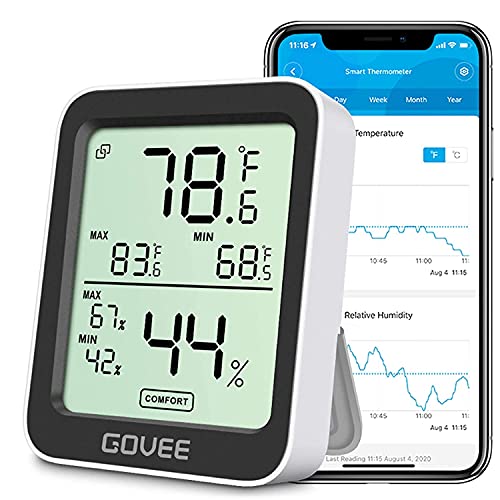
The Department of Energy's consumer guide, now offline, was blunt about portables: coolers on wheels provide "only a slight cooling effect" and are "limited by the humidity within your home." That's the case for the MC37 as a spot cooler, aimed at you while you work, rather than a way to cool a whole house. If your summers are humid, buy an air conditioner. Our Midea U window AC review covers the quiet inverter unit we would start with.
The numbers Hessaire publishes
Spec | MC37 (M and V) |
|---|---|
Airflow | 3,100 CFM (Hessaire figure) |
Coverage | 950 sq ft per retailer and Amazon listings; Hessaire's own page gives no figure |
Tank | 10.3 gallons, float valve and hose adapter for continuous fill |
Power | 2.4 A, 250 W, standard 115V plug |
Size and weight | 24 x 16 x 38 in, 40 lb, on four casters |
Controls | Rotary fan switch (off, low, medium, high), pump switch, swing switch; the M adds a main on/off switch |
Run time per fill | Amazon listing: 3-4 hours. Hessaire support: refill every 4-8 hours in hot, dry weather |
Noise | No figure |
Water use | No figure |
Warranty | 1 year, parts only; media pads and labor excluded |
Treat the CFM line the way you'd treat horsepower on a shop vac. It's the maker's number, measured the maker's way. Portacool rates its APEX 500 at 800 CFM for 500 square feet, and Honeywell's spec sheet lists 470 CFM for a cooler whose Amazon title says 745 CFM, with an asterisk the listing never explains. Comparing CFM claims across brands tells you very little.
MC37M or MC37V?
Hessaire's current manual describes both with the same rotary fan switch, pump switch and swing switch. The M uses its own control panel and fan motor and adds a separate main power switch; airflow, tank and media are the same. Neither has a remote or a timer. Those belonged to the older MC37A, which Hessaire no longer lists, so ignore any listing that promises an 8-hour timer on an MC37M. The MC37V is a fine buy if it's cheaper; it's also sold by a third-party seller on Amazon.
Set it up so it can breathe
Hessaire's manual says the MC37 is "highly recommended for outdoor use." Indoors, it wants the cooler in front of an open window or door so it pulls fresh air, plus another opening for the room's air to leave. That second opening is the part people skip. With nowhere for the damp air to go, a room's humidity climbs within the hour and the cooling fades.
The old DOE guide gave a sizing rule for whole-house coolers: 1 to 2 square feet of opening for every 1,000 CFM, on the side of the house away from the wind. Applied to the MC37's rating, that's 3.1 to 6.2 square feet. A 16-foot garage door raised 3 to 4 inches gives you 4 to 5.3 square feet. Open it too far and hot air pours back in; too little and humidity builds.
- Best spot: in a doorway or right behind an open window, so the air entering the pads is outdoor air.
- Fill by hand indoors: the manual says continuous fill isn't to be used indoors or left unattended, so the hose hookup is for outdoor use.
- Point it at people: a portable cooler does its best work as a breeze aimed at you on the bench, not as a whole-garage chiller.
- Skip the ice: Hessaire says not to put ice in the main tank unless the model is designed for it, and the MC37 manual doesn't call for it.
- Don't hose the pads while it runs: the manual says that can damage the motor and voids the warranty.
Living with it: water, pads, pumps and rust
Plan on a lot of water. Hessaire publishes no gallons-per-hour figure, but its support page says to refill every 4 to 8 hours in hot, dry weather, and an Amazon listing claims 3 to 4 hours per tank. One eastern Oregon owner watched several gallons disappear in about an hour at 100-plus degrees. Outdoors, run the hose. Indoors, budget a bucket trip or two per session.
Pads are a consumable. Hessaire says to replace the media at least once a season, and the old DOE guide recommended twice a season to monthly for coolers that run constantly. The warranty doesn't cover them. The routine that keeps them from smelling is simple: drain and refill the tank weekly, wipe it with mild soap monthly, run vinegar through it now and then as the manual suggests, and at shutdown run the fan with the pump off for 30 minutes so the pads dry.
The pump is the part that wears. Hessaire's own troubleshooting page says pumps can wear out after 4 to 6 months of use, and the replacement is a part Hessaire sells on its own. One MC37V owner's controls stopped working, and support didn't answer their email. That's a single report, but it's a reminder that the warranty ships a part and leaves the labor to you.
The added moisture has a cost. In a garage full of tools, a swamp cooler can leave bare steel rusting and lumber moving. If you keep cast iron or a table saw out there, crack the big door wider, run the cooler only while you're working, and wipe down machined surfaces.
How it compares
Here's the MC37 against its smaller and bigger siblings, two other portables sold on Amazon, and the window AC we'd buy instead in humid country. Figures are the makers' or their listings', except the AC's power draw, which is our estimate.
Unit | Type | Airflow or capacity | Power | Water | Humid climates |
|---|---|---|---|---|---|
Portable evaporative | 3,100 CFM | 250 W | 10.3 gal | No | |
Hessaire MC18 | Portable evaporative | 1,300 CFM | 85 W | 4.8 gal | No |
Hessaire MC61 | Portable evaporative | 5,300 CFM | 430 W | 14.6 gal | No |
Honeywell CL201AE | Indoor evaporative | 470 CFM (spec sheet) | 250 W | 5.3 gal | Listing: best below 60% humidity |
Portacool APEX 500 | Portable evaporative | 800 CFM | 2.4 A | 13 gal | No |
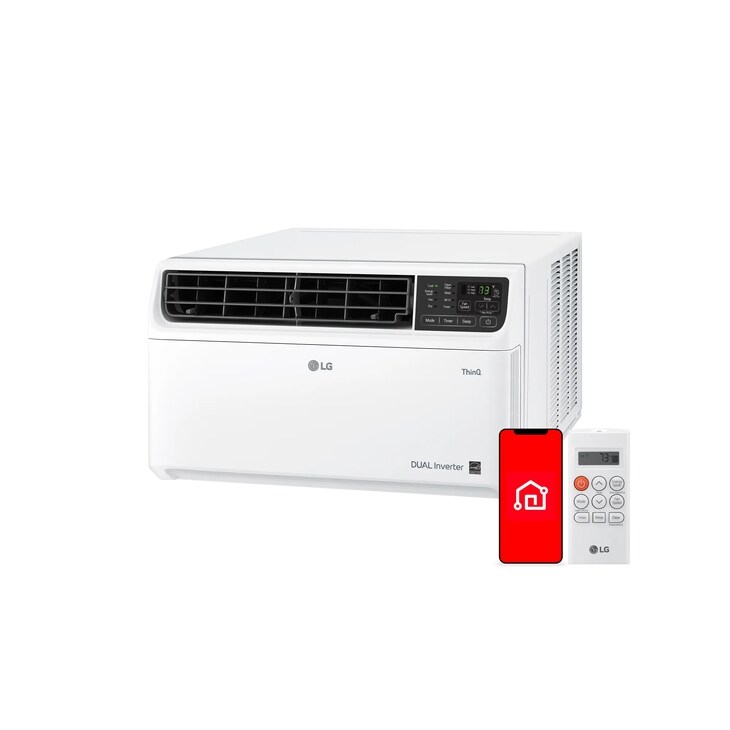
Midea U 10,000 BTU | Inverter window AC | 10,000 BTU | About 670 W (our estimate) | None | Yes, and it dries the air |
- Hessaire MC18 and MC61: the same design in smaller and bigger sizes. The MC18 suits a single work area; the MC61 is for big garages and patios. Both had used offers in Amazon's buy box when we checked, so we don't link them.
- Honeywell CL201AE: a smaller indoor cooler with a remote and a carbon dust filter. Its spec sheet rates 470 CFM and 280 square feet; fine for a dry bedroom, too small for a garage.
- Portacool APEX 500: the commercial-grade choice: Wi-Fi controls, a 53 dB rating, a 13-gallon reservoir and a 3-year components warranty with a lifetime housing. It costs a lot more than the MC37.
- A window AC: removes heat and moisture instead of trading one for the other, works with the room closed and works in any climate. It draws more power, but it's the only one here that cools a humid room.
The old NREL fact sheet put the trade plainly: evaporative coolers use less than a third of the energy of air conditioners, and a room-sized unit can lower a single room's temperature 5 to 15 degrees. Both figures assume the dry climate these coolers are built for.
Who should buy the MC37
Buy it if you live where summer afternoons run under about 30% humidity, you need to work in a garage, shop or on a patio, and you can leave a door or window open while it runs. Set it in the doorway, aim it at yourself, keep the tank clean and expect to replace pads every season and a pump now and then. For that job, it's a cheap way to make 105°F bearable.
Skip it if your summers are humid, if the space has to stay closed up, or if the garage holds tools and wood you don't want damp. In any of those cases, the money goes further on a window AC or a small mini-split.
Score breakdown
In dry air the physics favor it: at 95°F and 10% humidity, air leaving a good pad lands around 66-71°F by our math, and Hessaire claims 3,100 CFM. Above 50% humidity it cools little and adds moisture, it needs open doors to work, and DOE's old guide called portables a slight cooling effect.
A fan, a pump and a tank, with every wear part sold separately. Hessaire says pumps can wear out after 4-6 months of use, and one MC37V owner's controls quit with no reply from support. The warranty is one year on parts only, excludes pads and labor, and requires an authorized seller.
At 250 W it draws roughly a third of what a 10,000 BTU window AC does while cooling, and it cools a space no window unit could, like an open garage. Plan on a new media set every season and water by the bucket indoors. In a humid climate its value falls to that of a fan.
Hessaire MC37 on Amazon.
The Evidence Behind Our Verdict
Owner reports come from r/hvacadvice, r/phoenix, r/Albuquerque, r/Denver, r/homeimprovementideas, r/GarageGym and r/AirConditioners, plus Garage Journal. Few owners name the MC37 by model: two describe Hessaire's 3,100 CFM cooler, one an MC37V, and others a smaller MC18V, a bigger MC61V or an unnamed Hessaire; the rest describe portable evaporative coolers generally, with the brand shown where they gave it. Of 16 quotes, 5 are positive (dry-climate garages and patios), 6 negative (humid air, closed rooms, rust, one dead MC37V) and 5 mixed or practical.
Several "I bought a Hessaire" posts marked as ads were left out.
Our rating above is our own editorial call. What follows is the field evidence we weighed to reach it: first-hand reports from owners on Reddit and independent HVAC and DIY forums, which we lean on more than manufacturer-influenced published reviews because unsponsored owners tend to be the more candid signal.
What Reddit Is Saying
“This week been hitting 113F my garage gets to 75F-80F in 15 minutes that is even leaving the big door open 1/3 to allow fresh air into the back of the cooler blows the hot air the sides around it. Have to figure out a way to allow fresh air into the back of the cooler. They work great in dry climates this week we been 6-8% humidity.”
“Hessaire 3,100 CFM 3-Speed Portable Evaporative Cooler (Swamp Cooler) for 950sf. We basically used it as a stand-in where we had our in-laws swamp cooler replaced. I now use it in the garage and makes a wonderful work environment when it's hot as hell outside.”
“Search hessaire on Amazon or depot . One of the best brands I've used over the years, works fast for spot cooling or whole room, works best outside the doorway with scrren door or wheeled by a large open window.”
“I've been having good luck with a portable swamp cooler on wheels (Hessaire MC18V) with the garage door partially open (otherwise it gets humid and the cooler can't do it's job as well). I just wheel it around and point it at me when I'm on the bench, standing somewhere, etc.”
“The swamp cooler does bring it from the high 100s into the low 90s and if you leave the door cracked the humidity doesn’t get a ton past the high 30s. It’s not the most pleasant but it uses a ton less energy and is serviceable to workout in.”
“I got a 1300 cfm swamp cooler and no even though the humidity is 50%. It does not take the temperature down of the garage itself.. on the plus side I’m sitting here with this thing 6 feet away from me in a 90° garage on the low setting and It makes me feel very comfortable, on high setting. I’m almost too cold.”
“I'm in eastern Oregon and mine holds several gallons. In the summer with 100+ temps it evaporates in about an hour. Filling by hand is tedious and messy.”
“I had a swamp cooler in my garage in Phoenix and it was great up till about early June, then it was useless except for as a big fan until maybe mid October depending on which specific summer.”
“Recently my fiancé and I are in the process of replacing our Condenser unit. But in the meantime I’ve been attempting to cool down our house with the hessaire mobile evaporative cooler mc61v. And so far, no matter what I do it’s just blowing excess humidity EVERYWHERE. It’s making everything damp that’s near it and I’ve had it in front of windows with full circulation to no avail.”
“This worked pretty well in the dry conditioned air for a little while, maybe 30-60 minutes. However, beyond that time the evap cooler was saturating the air and just not providing much cooling, resulting in a humid sauna in that room and noticeable mugginess in the rest of the apartment.”
“So, I previously lived in a place with great ventilation, where the cooler worked pretty good,. But then moved to a place with lot of non-opening windows, and it just made the place super, super humid, which was very much not fun on a hot day. And bad for art and Musical instruments.”
“Hello, my MC37V Evap Cooler is no longer turning on. Does anyone have experience with these? Seems like maybe the controls are not working. The power supply shows power, tried resetting it several times and tested several outlets. Any suggestions? Support didnt answer my email...”
“This, plus a swamp cooler introduces humidity that can cause rust in stuff you would have in a garage… I’d stay away from it (personal experience).”
What Owner Forums Say
“Guys, I was instructed to run the fan for 15min at the end of the day to dry out the media (cooling media / baffles) to prevent mold. We had temp near 80 today and it worked great.”
“I have a rolling Portacool evap cooler in my garage that does a good job of cooling as long as the humidity is under 15%. Once the monsoons roll in, it's pretty ineffective.”
“I lived in several homes in Tucson Az that had them.. They work well if you have low humidity to start with outdoors but anything over say 25% and they just don't work that well.”
Frequently asked questions
Is the Hessaire MC37 worth it?
At 250 W it draws roughly a third of what a 10,000 BTU window AC does while cooling, and it cools a space no window unit could, like an open garage. Plan on a new media set every season and water by the bucket indoors. In a humid climate its value falls to that of a fan.
How reliable is the Hessaire MC37?
A fan, a pump and a tank, with every wear part sold separately. Hessaire says pumps can wear out after 4-6 months of use, and one MC37V owner's controls quit with no reply from support. The warranty is one year on parts only, excludes pads and labor, and requires an authorized seller.
How well does the Hessaire MC37 perform?
In dry air the physics favor it: at 95°F and 10% humidity, air leaving a good pad lands around 66-71°F by our math, and Hessaire claims 3,100 CFM. Above 50% humidity it cools little and adds moisture, it needs open doors to work, and DOE's old guide called portables a slight cooling effect.
What do real owners say about the Hessaire MC37?
Owner reports come from r/hvacadvice, r/phoenix, r/Albuquerque, r/Denver, r/homeimprovementideas, r/GarageGym and r/AirConditioners, plus Garage Journal. Few owners name the MC37 by model: two describe Hessaire's 3,100 CFM cooler, one an MC37V, and others a smaller MC18V, a bigger MC61V or an unnamed Hessaire; the rest describe portable evaporative coolers generally, with the brand shown where they gave it. Of 16 quotes, 5 are positive (dry-climate garages and patios), 6 negative (humid air, closed rooms, rust, one dead MC37V) and 5 mixed or practical.
Options Worth Checking Out


You Might Also Need
Accessories worth grabbing alongside your purchase