Midea Cube vs Frigidaire 50 Pint Dehumidifier: Same Pints, Different Risks
By Ingrid Tamsett · Updated October 2026
Independent editorial review. We never accept payment for coverage, though we may earn a commission if you purchase through our links.

Verdict
Midea Cube 50
Frigidaire 50 Pint (FHDD5034Y1)
Owner reports come from r/Midea, r/Appliances, r/basement, r/homeowners, r/HomeImprovement, r/hvacadvice, r/BuyItForLife and r/Costco. Cube evidence counts only posts that clearly describe a Cube; Costco-thread Midea reports that never name the model were left out of the Cube side. The Cube's standout problem is a humidity reading stuck near 30% on new units, nine owners in a single discussion, against four owners running Cubes three to five years. No Frigidaire report names a current Y1 model; across older generations, six owners describe units dead inside about four years and five describe units past five. No owner clearly ran both a Cube and a current Frigidaire 50, so there are no side-by-side cards.
Read full take ↓


We'd buy the Midea Cube 50 Pint Dehumidifier (MAD50S1QWT-A) for most damp basements, and put a separate hygrometer beside it for the first week. On paper it and the Frigidaire 50 Pint Dehumidifier with Wi-Fi (FHDD5034Y1) are the same machine. ENERGY STAR certifies the Cube at 49.67 pints a day and the Frigidaire at 49.71, both on the current DOE test at 65°F and 60% relative humidity, and both at an integrated energy factor of 2.01 liters per kWh. Both stop at 41°F, both use R32, and both carry one year of warranty. A difference of 0.04 pints a day is a rounding error.
So the choice comes down to what the ratings don't cover: the price on the day you shop, how the water leaves the machine, how each one decides what humidity it's holding, and the owner record behind each brand. The Cube was cheaper when we checked and, if Midea's listing is right, carries a bigger bucket. The Frigidaire publishes its noise figures, which Midea doesn't for the US Cube.
The hygrometer is for a known Cube fault: a built-in humidity reading stuck near 30%, or about 20 points low, that shows up on new units within days. Buy the Frigidaire instead when it's priced at or below the Cube, or when it's going into a room where a published decibel rating matters.
Which one to buy
- Damp basement, floor drain or sump nearby, cheapest certified 50: the Cube. Same capacity and efficiency, lower price when we checked.
- Frigidaire priced at or below the Cube the day you buy: the Frigidaire. Nothing on paper gives the Cube a reason to cost more.
- It goes in a finished room and noise is the worry: the Frigidaire, which lists 47, 49 and 51 dBA by fan speed. Midea publishes no figure for the US Cube.
- No drain below the unit: either one plus a condensate pump. When we checked, Amazon had only used units of the Cube pump model (MAD50PS1QWT-A), and there was no Amazon listing for the Frigidaire FHDP5033Y1.
- The space drops below 41°F in winter: neither. Both are out of their rated range there; look at a crawl space unit such as the AlorAir Sentinel HD55S.
Side-by-side specs
Every figure below comes from ENERGY STAR, the manufacturer's spec sheet or manual, or the Amazon listing where we say so. The Cube figures are for the 50-pint model; the Frigidaire figures are for the FHDD5034Y1 unless noted.
Spec | Midea Cube 50 | Frigidaire FHDD5034Y1 |
|---|---|---|
Capacity at the DOE test (65°F, 60% RH) | 49.67 pints/day, with or without pump | 49.71 pints/day; 49.95 for the compact FHDD5033Y1 and pump FHDP5033Y1 |
Operating range | 41-95°F | 41-89°F and 30-80% RH |
Bucket | Not stated in Midea's US documents; the Amazon listing claims 4.2 gallons, and Midea Canada's sheet for an older Cube 50 lists 16 liters, adjustable 1-4 gallons | 2.7 gallons (1.9 on the FHDD5033Y1 and FHDP5033Y1) |
Drain | Gravity hose | Gravity hose; the manual asks for a 1/2-inch or larger hose with no kinks or rises |
Built-in pump version | MAD50PS1QWT-A, 14 feet maximum height per the US manual | FHDP5033Y1, 16.4 feet of distance and rise per its manual |
Noise (manufacturer) | Not published for US models; the older Canadian Cube 50 sheet lists 48-49.5 dBA at the front and 54.5 at the rear on high | 47 / 49 / 51 dBA |
Electrical | No wattage published for the US Cube 50 that we could find | 115 V, 8.8 A, 470 W |
Size | With pump: 14.45 in wide x 14.76 high x 14.57 deep, 41.54 lb | 15.9 in wide x 24.7 high x 12.2 deep |
Humidity control | Target set from the front panel or the app; the Midea documents we have don't state the range | Ships in Auto mode, which picks the humidity itself; Dry mode takes a target from 35% to 85% in 5% steps |
Warranty | One-year limited, from delivery or purchase, whichever is later | One-year limited, parts and labor |
What's the same on both: an IEF of 2.01 L/kWh, R32 refrigerant, and no sealed-system years added to the one-year warranty.
Capacity and running cost: a tie
Both numbers are earned at the condition that matters. Since June 13, 2019, DOE has tested portable dehumidifiers at 65°F instead of 80°F, and ENERGY STAR notes that the same machine will likely report a smaller capacity on the cooler test. That's why both of these read 50 while an old-test 50, like the one hOmeLabs still prints, lands near 30 on ENERGY STAR's rough conversion table. Between these two, 49.67 against 49.71 pints is a gap of less than a tenth of one percent.
Running cost is a tie too, because the IEF is identical. 49.67 pints is about 23.5 liters; at 2.01 liters per kWh, a full day at rated output takes about 11.7 kWh on either machine, and every 10 pints of water costs about 2.4 kWh. Frigidaire's rated 470 watts gives the same answer from the other direction: 470 x 24 is 11.3 kWh for a day the compressor never cycles off. Multiply by your own electric rate. Once the basement reaches its setpoint, both cycle and use less.
Neither rating holds in a colder basement. Air at 58°F holds less water than air at 65°F, and neither maker publishes a capacity below the test point. Both manuals put the floor at 41°F; Midea's warns that the coils can frost below it, and Frigidaire's describes an automatic defrost that shows dF on the display while the fan clears the ice.
Bucket, drain and pump
Here's the first real difference. The Frigidaire's 2.7-gallon bucket holds 21.6 pints, about 10 hours of water at its rated 49.71 pints a day. Midea's US documents don't give the Cube's bucket size, but its Amazon listing says 4.2 gallons and Midea Canada's sheet for an older Cube 50 says 16 liters; if the 4.2 holds, that's 33.6 pints, or about 16 hours at the rated 49.67. On bucket duty the Cube means roughly one less trip a day.
The catch is how you empty it. The Cube sits on top of its own bucket, so emptying it means lifting the top section off, and that annoys owners enough that one gave up on the Cube over it. If you plan to empty by hand every day, weigh that before you buy the Cube. We wouldn't run either one on its bucket in a basement, though. Nobody keeps up with a bucket every 10 or 16 hours through a whole summer.
With a floor drain, sump or standpipe lower than the unit, both machines run on the included hose and the bucket stops mattering. Without one, you need a pump. The Cube pump version (MAD50PS1QWT-A) is rated for 14 feet, but Amazon had only used units of it when we checked, so we don't link it. The Frigidaire FHDP5033Y1 is rated for 16.4 feet of distance and rise, but it had no Amazon listing. In practice that points most buyers to a non-pump unit plus a separate pump such as the Little Giant VCMA-15ULS, rated at 50 gallons an hour at 5 feet of lift and 25 at 10. Two things come with it. Little Giant wants the pump on its own circuit, with no other receptacles or equipment on it, so it can't share the dehumidifier's outlet. And its overflow switch can shut down an appliance or sound an alarm, but the Amazon listing says the alarm isn't included and basic wiring knowledge is required; a plug-in dehumidifier usually has no control circuit for that switch to break. If there's no spare circuit near the drain, that's work for a licensed electrician.
One pump detail favors neither brand cleanly. The Cube's pump never empties the tank past about half, per one owner, and the app shows nothing about tank status; Midea's manual confirms the bucket level locks at its fourth step with PUMP on. A built-in pump that fails takes the whole dehumidifier with it for repair, on either brand.
How each one decides the humidity
Each machine has one control quirk you should know before it arrives, and they're different in kind.
The Cube's is a hardware fault on some units. Nine owners describe the built-in display sitting at or near 30% while separate hygrometers read 40-60%, or reading about 20 points low, in a discussion that started with the pump model, MAD50PS1QWT. Three of the nine got the same fault on a replacement unit, and one was on a third 50-pint Cube in two weeks. People with a fault find each other, so that count can't tell you what share of Cubes do this. What makes it manageable is timing: every owner who says when it started saw it on a new unit, within days, and a stuck reading is obvious against a cheap hygrometer. Check in week one, inside the return window. Swapping in a replacement sensor has fixed it for some owners, but that means opening an appliance that holds a flammable refrigerant; others work around it by running the unit in manual or continuous mode. Inside the first year, we'd return it.
The Frigidaire's is documented design. The FHDD5034Y1 ships running in Auto mode, and its manual says that in Auto the set humidity and fan speed can't be changed and the display goes off; the unit picks both. To choose your own target, switch to Dry mode, which takes 35% to 85% in 5% steps. Owners of an earlier Wi-Fi Frigidaire 50-pint couldn't get it to take a humidity setting until they found Dry mode. Nothing needs fixing or returning; it needs one button press.
We haven't seen a Frigidaire report of a stuck humidity sensor, but there's much less recent Frigidaire evidence of any kind, so don't read too much into the silence. Whichever you buy, set it to 45-50%. EPA's guidance is to keep indoor humidity below 60%, ideally 30-50%, and the dehumidifier reads the driest air in the room, so a hygrometer across the basement tells you more than either display.
Noise, size and placement
Only the Frigidaire gives you a like-for-like number: 47, 49 and 51 dBA for the FHDD5034Y1 by fan speed. Midea doesn't publish a noise rating for the US Cube; its Canadian sheet for an older Cube 50 lists 48-49.5 dBA at the front and 54.5 at the rear on high, which suggests turning the back away from where you sit. Owners mostly call the Cube quiet, one says it's quieter than any model they'd seen, and a couple find it a bit loud for a bedroom. One Frigidaire 50-pint owner calls theirs excellent but runs it mostly overnight because of the noise. We don't measure sound ourselves.
Shape matters more than you'd think in a utility corner. Midea lists the Cube 50 with pump at about 14.5 inches on each side. The Frigidaire is 24.7 inches tall on a 15.9 by 12.2-inch footprint. The Frigidaire manual wants at least 12 inches of clearance around the unit and says not to run it in an enclosed small space like a closet, since it gives off heat. Both machines do: a compressor dehumidifier puts the electricity it uses back into the room as heat, and Cube owners notice their rooms running warmer.
Reliability and warranty
Plan on a one-year machine from either brand. Midea's is a limited warranty from delivery or purchase, whichever is later. Frigidaire's manual describes a limited one-year warranty for functional repairs only, during which Electrolux pays for parts that are defective in materials or workmanship. Neither adds years on the compressor or sealed system. Past month twelve, a dead unit is yours to replace on either brand.
The owner evidence is uneven, and it's about different generations. Four Cube owners report running theirs three to five years without problems, though most don't say which size, and we haven't seen a firsthand report of a Cube dying after its warranty; the claim gets repeated secondhand. The Cube's documented problems are early ones: the sensor fault above, one new owner who found drain water on the floor, and the heavy lift-off top.
No Frigidaire report names a current Y1 model, which hasn't been out long enough to have a track record. Across older generations, six owners describe Frigidaire dehumidifiers that died inside about four years: a 50-pint bought in 2020 that failed in 2022, with its replacement failing in 2024; a pump model at two years; one at four months; one at four years; a 70-pint FFAD7033R1 that iced up at three years and then threw an F0 code; and a 70-pint that threw the same code under warranty. Frigidaires also turn up in other owners' strings of failed units. Against that, five owners describe Frigidaires running five years or longer, including an FFAD5033W1 on a gravity drain at five years and two units bought about ten years ago that run every summer.
Read that as brand history, not a Y1 forecast. Our scores carry over from our single-product reviews: 6.0 on reliability for the Cube, whose problems show up in the return window, and 5.6 for the Frigidaire, whose older failure record shows up later and isn't covered. The few owners who've run both brands don't name models. One replaced a Frigidaire with pump that died at two years with a Costco Midea 50-pint with pump at half the price; another, whose current unit's coils freeze after a season, has tried hOmeLabs, Midea and Frigidaire. Keep the order record whichever you buy.
Our pick, and when to switch
The Cube, for a damp basement above 41°F with a drain or sump in reach. It matches the Frigidaire on certified capacity and efficiency, it was cheaper when we checked, and its bucket is bigger if the listing's 4.2 gallons holds. Put a hygrometer beside it for the first week and send it back if the display sits near 30% while the room is plainly damper. Our Midea Cube review covers the sensor fault and the pump model in more depth.
The Frigidaire, when it's priced at or below the Cube, when you'd rather not lift the Cube's top to empty it, or when the unit lives in a finished room and you want a published noise rating. Switch it to Dry mode on day one. Our Frigidaire 50-pint review has the model-by-model breakdown, and our basement dehumidifier guide covers drains, pumps and humidity targets for both.
If the space falls below 41°F, buy neither; a crawl space unit rated for cold air, such as the AlorAir Sentinel HD55S at 33.8°F, is the right tool.
Scores at a Glance
Midea Cube 50
Our pick
Frigidaire 50 Pint (FHDD5034Y1)
Filled circle = category winner. Scores are our editorial assessments on a 1 to 10 scale.
Reliability & Durability
Both carry one year, with no extra sealed-system coverage. The Cube's problems show up early, inside the return window: nine owners with a stuck humidity reading, against four running theirs three to five years. Frigidaire's older generations fail later, six owners with units dead inside about four years, and no report names a current Y1 unit, so its score reflects brand history and the short warranty.
Performance & Results
Close to a tie: ENERGY STAR certifies 49.67 pints/day for the Cube and 49.71 for the Frigidaire at the 65°F DOE test, both at 2.01 IEF and a 41°F floor. The Cube edges ahead on a bigger bucket, if its listing's 4.2 gallons holds; the Frigidaire answers with published noise figures. Each loses a little to a control quirk: the Cube's sensor fault on some new units, the Frigidaire's Auto mode that won't take a setpoint.
Value
The Cube listed below the FHDD5034Y1 when we checked, for the same certified capacity, efficiency and warranty, so it buys more current-test capacity per dollar. The Frigidaire is fair value at parity and poor value at a premium. Check both current prices; if they flip, so does our pick.
The Evidence Behind Our Verdict
Owner reports come from r/Midea, r/Appliances, r/basement, r/homeowners, r/HomeImprovement, r/hvacadvice, r/BuyItForLife and r/Costco. Cube evidence counts only posts that clearly describe a Cube; Costco-thread Midea reports that never name the model were left out of the Cube side. The Cube's standout problem is a humidity reading stuck near 30% on new units, nine owners in a single discussion, against four owners running Cubes three to five years.
No Frigidaire report names a current Y1 model; across older generations, six owners describe units dead inside about four years and five describe units past five. No owner clearly ran both a Cube and a current Frigidaire 50, so there are no side-by-side cards.
Our rating above is our own editorial call. What follows is the field evidence we weighed to reach it: first-hand reports from owners on Reddit and independent HVAC and DIY forums, which we lean on more than manufacturer-influenced published reviews because unsponsored owners tend to be the more candid signal.
Midea Cube 50 owners
“I have a midea cube, which is quieter than any model I’d seen before, but then I recently also got a Waykar and it is exceptionally quiet.”
“Have had it for a few years and no complaints whatsoever. Super low maintenance.”
“I probably didn't need them because the fix was easy, but I replaced my bunk sensor with the one you mentioned and it's working as expected.”
“I'm now on my 2nd cube in a week and it's doing the same thing. Reading 30% while during this time I've had two separate hygrometers in the same area reading 40-50% depending on the time of day and the weather.”
“I’m on my 3rd 50pint cube in 2 weeks. This thing is stuck on 30 also. I spent an hour on the phone with customer service and they told me I was the first complaint of the unit being stuck at 30 rh.”
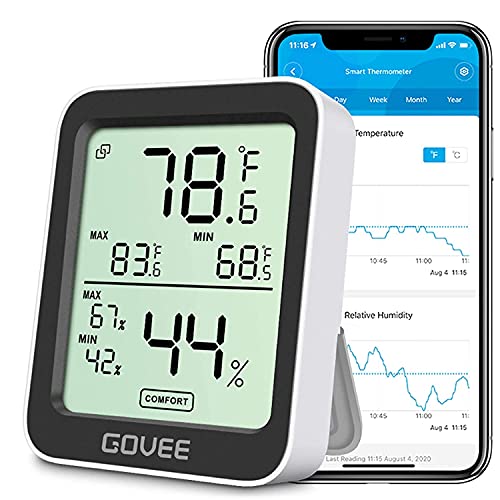
“I hear there’s a replacement sensor you can get and install but I haven’t done it yet. I’m using a govee wifi sensor so I can manually track humidity And turn on and off the dehumidifier”
Frigidaire 50 Pint (FHDD5034Y1) owners
“Funny I have an April aire in the shop and Frigidaire in my basement, both are going on over 5 yr.”
“I bought 2 Frigidaire dehumidifiers about 10 years ago. I turn them on every summer and they've never failed.”
“I have a two-story house in San Jose (CA), without basement, and to mitigate moisture, I got one portable dehumidifier (50 pint Frigidaire). It is an excellent dehumidifier but due to its noise level, I mainly keep it ON from midnight till morning (it is not very effective, if I run it in the quiet mode).”
“I was only able to adjust the humidity level up or down while in the "dry mode".”
“Frigidaire - 2 units/2failures in 4 years I bought a 50 pint unit in June 2020 Unit failed in August 2022 Replacement unit failed in June 2024 I have a 5 year extended warranty through Frigidaire but apparently doesn't apply to replacement unit.”
“So my Frigidaire basement humidifier (FFAD7033R1) hasn’t been maintaining my desired humidity for the last couple months. It sounds like it’s working fine other than some crack sounds. I realized the sounds were ice forming at the base of the grill/coils.”
“I replaced it with the Frigidaire which died after four months so I would avoid that as well.”
Frequently asked questions
Should I buy the Midea Cube 50 or the Frigidaire 50 Pint (FHDD5034Y1)?
The hygrometer is for a known Cube fault: a built-in humidity reading stuck near 30%, or about 20 points low, that shows up on new units within days. Buy the Frigidaire instead when it's priced at or below the Cube, or when it's going into a room where a published decibel rating matters.
How do the Midea Cube 50 and Frigidaire 50 Pint (FHDD5034Y1) compare on construction?
Both carry one year, with no extra sealed-system coverage. The Cube's problems show up early, inside the return window: nine owners with a stuck humidity reading, against four running theirs three to five years. Frigidaire's older generations fail later, six owners with units dead inside about four years, and no report names a current Y1 unit, so its score reflects brand history and the short warranty.
What do real owners say about the Midea Cube 50 and the Frigidaire 50 Pint (FHDD5034Y1)?
Owner reports come from r/Midea, r/Appliances, r/basement, r/homeowners, r/HomeImprovement, r/hvacadvice, r/BuyItForLife and r/Costco. Cube evidence counts only posts that clearly describe a Cube; Costco-thread Midea reports that never name the model were left out of the Cube side. The Cube's standout problem is a humidity reading stuck near 30% on new units, nine owners in a single discussion, against four owners running Cubes three to five years.
Top Picks

Frigidaire 50 Pint Dehumidifier with Wi-Fi (FHDD5034Y1)
The equal on paper: 49.71 pints/day at 65°F, the same 2.01 IEF and 41°F floor, plus published 47-51 dBA noise. Buy it when it costs the same as the Cube or less, and switch it to Dry mode on day one to set your own humidity target.
Read our full review: we scored it 6.4/10

AlorAir Sentinel HD55S (ENERGY STAR, gravity drain)
For a space that falls below the 41°F floor both of these share: AlorAir rates it to run from 33.8°F, and ENERGY STAR lists 36.33 pints/day at 65°F. Gravity drain only. The warranty holds only when bought from AlorAir or an authorized dealer.
Read our full review: we scored it 7.0/10
You Might Also Need
Accessories worth grabbing alongside your purchase

Little Giant VCMA-15ULS Condensate Pump
Lets a pumpless Cube or Frigidaire drain uphill: 50 GPH at 5 ft, 25 at 10 ft. It wants its own circuit, and its overflow switch needs an alarm (not included) wired to it, since a plug-in dehumidifier usually has no control circuit to break.
Read our full review: we scored it 7.3/10
Full Individual Reviews
Deep-dive on each, individually

