Windmill Air Conditioner Review: Efficient WhisperTech, Shaky Track Record
By Teo Varnadoe · Updated October 2026
Independent editorial review. We never accept payment for coverage, though we may earn a commission if you purchase through our links.

Spec sheet
| Lineup (Windmill) | WhisperTech 8K 08W2Wi, 10K 10W2Wi, 12K 12W2Wi (variable speed); Original 6K W1W12, 8K W1W31 (no inverter claim) |
| CEER (EnergyGuide labels) | WhisperTech 8K and 10K: 15.0; 12K: 13.5; Original 6K: 11.0; 8K: 11.3 |
| ENERGY STAR | 08W2Wi and 10W2Wi certified (not Most Efficient); 12W2Wi and Originals not listed |
| Noise, 8K WhisperTech datasheet (dBA high/med/low) | 52/48/41; Windmill site says "starts at 42 dB" for all WhisperTech sizes |
| Window fit (Windmill) | Double-hung, 23-37 in wide (6K Original 22-36 in), 14 in minimum opening height |
| Weight (Windmill) | WhisperTech 61 / 63 / 65 lb (8K / 10K / 12K); 8K datasheet says 63 lb |
| Power (Windmill) | 115V; 6.8 A (8K), 8.7 A (10K), 11.6 A (12K) WhisperTech; 6.5 ft cord |
| Warranty (Windmill) | Limited one year on every size; no longer compressor term published |
| Heat mode | None on any size (Cool, Eco, Fan) |
| Owner-reported failures | Beeping, settings changing or control board (5 owners); stopped cooling (4 owners) |
Verdict
Owner reports on Windmill come from r/hvacadvice and r/AirConditioners, and they skew clearly negative: of about two dozen owners, two or three are happy with theirs. Several threads are complaint threads by title, but the general "has anyone used one?" thread runs negative too, six unhappy owners against one happy one. Five owners describe random beeping, settings changing on their own or a failed control board; four say their unit stopped cooling; three say it failed after the one-year warranty ended; two say the temperature sensor misreads the room; three call theirs loud or noisy. Support stories split seven unhelpful to four helpful. Only two reports identify a WhisperTech (an 8,000 BTU inverter unit and a 12,000), none identify an Original or a Lite, so most of this is a brand-level record.
Read full take ↓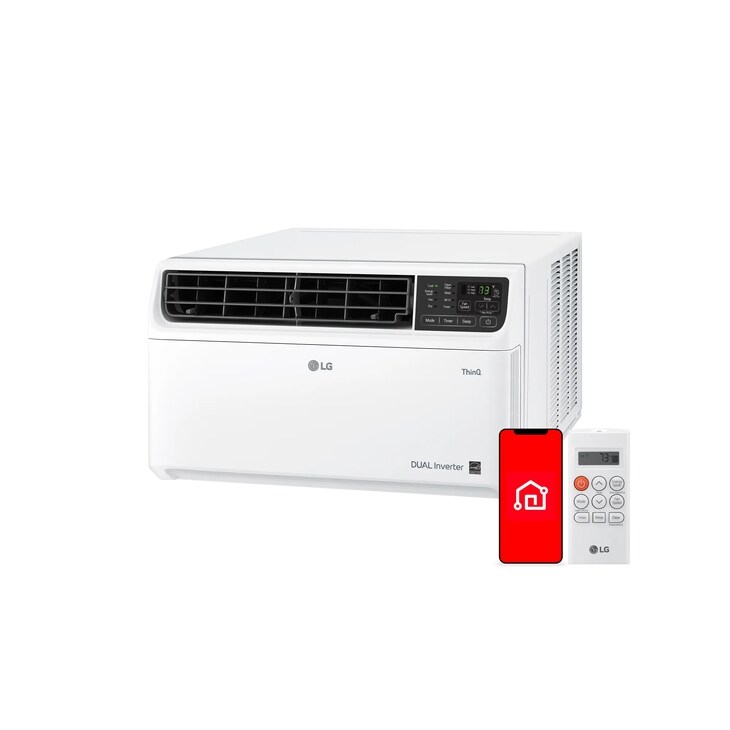


We wouldn't pick a Windmill first. The Windmill 8,000 BTU WhisperTech Window Air Conditioner is a better machine on paper than its reputation suggests: Windmill's WhisperTech units use a variable-speed (inverter) compressor, and the 8,000 and 10,000 BTU sizes carry ENERGY STAR certification at a CEER of 15, the same rating as LG's larger Dual Inverter units and the Midea U on Amazon now. The 8,000 BTU datasheet lists 41 dBA on low. It looks better in a window than most box units, and that's a big part of why people buy it.
The owner record is rough. Failed electronics are the recurring complaint: random beeping, settings changing on their own, or a dead control board. Units that stopped cooling come next, a couple of them within the first six weeks. Windmill's warranty is one year, and some units failed just after it ran out. Most of those reports don't say which Windmill line they're about, which matters, because Windmill sells a non-inverter Original and a budget Lite line under the same name.
We'd buy a Midea U for a bedroom window that fits one, or an LG Dual Inverter for a box-style unit. If you buy a Windmill anyway, buy a WhisperTech, confirm the model number, install it as soon as it arrives, and test it hard inside your first year.
What the WhisperTech gets right
- Efficiency: the 8,000 and 10,000 BTU WhisperTech units are ENERGY STAR certified at CEER 15, matching the LG 8,500-12,000 BTU Dual Inverters and the Midea U on Amazon now.
- Inverter: a variable-speed compressor on every WhisperTech size, confirmed by ENERGY STAR for the 8,000 and 10,000.
- Low published noise: 52/48/41 dBA high/medium/low on the 8,000 BTU datasheet.
- Weight: Windmill lists 61 to 65 pounds across the WhisperTech sizes, against 85 for LG's 8,500 and 12,000.
- Power: a standard 115V plug on every size.
What holds it back
- Electronics: random beeping, settings changing on their own, or a failed control board.
- Cooling failures: units that stopped cooling, a couple within six weeks of install.
- Warranty: a limited one-year warranty, with no longer compressor or sealed-system term that we could find.
- The 12,000: the 12,000 BTU WhisperTech drops to CEER 13.5 and isn't on ENERGY STAR's list.
- No small inverter: the only 6,000 BTU Windmill outside the Lite line is a non-inverter Original at CEER 11.0, so a small bedroom has no inverter option.
- No heat: cooling only on every size.
Which rooms and windows it fits
Windmill rates the 8,000 BTU WhisperTech for about 350 square feet, the 10,000 for about 450 and the 12,000 for about 550. The 6,000 BTU Original is rated for about 250. If your bedroom is the size Windmill rates its 6,000 BTU unit for, the smallest WhisperTech is rated for about 100 square feet more, and that leaves a Windmill buyer with an awkward choice: an 8,000 BTU inverter rated for a bigger room than yours, or a 6,000 BTU Original with no inverter at CEER 11.0. LG rates its 6,000 BTU Dual Inverter for 250 square feet too, so a room that size does have an inverter option, just not from Windmill.
We'd take the 8,000 BTU WhisperTech over the 6,000 Original for a bedroom, because an inverter can turn itself down while a fixed-speed compressor can only cycle on and off. Windmill doesn't publish how low the WhisperTech throttles, though, so we can't tell you how well it handles a small room. One 8,000 BTU unit in a 180-square-foot room kept switching to fan because its sensor thought the room was already cold, and Windmill's support blamed the unit being too big for the room. We can't say whether the fault was the sensor or the sizing, but it's a reason to keep your receipt handy if you put an 8,000 in a small bedroom.
Window fit is narrow. Windmill lists a 23 to 37-inch opening width for every WhisperTech size (22 to 36 inches for the 6,000 BTU Original) and a 14-inch minimum opening height for all of them. Windmill's spec table says standard double-hung windows; the 8,000 BTU datasheet says single- and double-hung. Sliders and casements aren't on either list.
Pick something else if:
- Your window is under 23 inches wide: GE's ClearView fits openings from 20 inches, and LG's 10,000 BTU and the Midea U start at 22.
- Your sash opens less than 14 inches: LG's 10,000 BTU and GE's ClearView need 13 inches, the Midea U 13.75.
- You sleep lightly and your window can take a U-shaped unit: the Midea U straddles the sash, so the window closes between the room and the compressor; the Windmill is a box unit, with no closed sash between the room and the compressor.
- You need any heat: no Windmill size heats; a reverse-cycle window unit such as Midea's heat-capable inverter models covers spring and fall.
Original, Lite or WhisperTech: the lineup
Windmill sells three lines under one name, and the reviews you'll read online rarely say which one they mean. CEER is from Windmill's EnergyGuide labels; ENERGY STAR status is from its room AC list, which we searched by model number and by brand. Power is Windmill's spec table.
Line / model | Cooling | Compressor | CEER | ENERGY STAR | Room (Windmill) | Power | Weight |
|---|---|---|---|---|---|---|---|
WhisperTech 08W2Wi | 8,000 BTU | Variable speed | 15.0 | Yes (March 28, 2024) | About 350 sq ft | 740 W, 6.8 A | 61 lb (datasheet: 63) |
WhisperTech 10W2Wi | 10,000 BTU | Variable speed | 15.0 | Yes (March 28, 2024) | About 450 sq ft | 960 W, 8.7 A | 63 lb |
WhisperTech 12W2Wi | 12,000 BTU | Variable speed | 13.5 | Not listed | About 550 sq ft | 1,280 W, 11.6 A | 65 lb |
Original W1W12 | 6,000 BTU | No inverter claim | 11.0 | Not listed | About 250 sq ft | No figure | No figure |
Original W1W31 | 8,000 BTU | No inverter claim | 11.3 | Not listed | No figure | No figure | No figure |
Lite | 5,000 and 6,000 BTU | No figure | 11.0 | No figure | No figure | No figure | No figure |
Neither ENERGY STAR certification is Most Efficient. The trap is the 8,000 BTU size, because both the Original and the WhisperTech come in it. The model number settles it: a WhisperTech ends in W2Wi, and the 8,000 BTU Original is W1W31. If the listing doesn't show a model number, the yellow EnergyGuide label does, and its CEER tells you too: 15.0 is the WhisperTech, 11.3 is the Original.
On Amazon, when we checked in October 2026, the model field on Windmill's 8,000, 10,000 and 12,000 BTU "Quiet Window Air Conditioner" listings reported 08W2Wi, 10W2Wi and 12W2Wi, the 6,000 BTU listing reported the W1W12 Original, and the Lite listings reported their own model numbers. The 8,000 BTU listing we link to reports 08W2Wi, a WhisperTech. Listings can change, so check the model number on the box when it arrives. Availability moves around: Windmill's own store showed the 8,000 BTU Original and the 10,000 BTU WhisperTech as sold out in October 2026, pointing buyers to other retailers, while the 6,000 BTU Original and the 8,000 and 12,000 BTU WhisperTech were for sale. Check the listing for current stock and price.
Efficiency, noise and power
CEER (combined energy efficiency ratio) is the room AC rating; higher means more cooling per watt. Electricity use for the same cooling scales with 1 divided by CEER, so the 8,000 BTU WhisperTech uses about 25% less power than the 8,000 BTU Original (11.3 ÷ 15 = 0.75). At 12,000 BTU, the WhisperTech's 13.5 means about 11% more electricity than a CEER 15 unit such as LG's 12,000 BTU Dual Inverter (15 ÷ 13.5 = 1.11). If the ENERGY STAR label matters to you, or to a utility rebate you're chasing, the 12,000 BTU WhisperTech doesn't carry it. ENERGY STAR records a variable-speed compressor and no heating mode for the 08W2Wi and 10W2Wi.
Windmill's product page describes the WhisperTech as using "a variable-speed compressor," while the 8,000 BTU datasheet lists the compressor as Inverter and Windmill's EnergyGuide files for the three WhisperTech sizes are named Inverter-8K, -10K and -12K. Windmill makes no variable-speed claim for the Originals, and their CEER of 11.0 and 11.3 is in line with the fixed-speed GE ClearViews at 11.4 and 11.5. Treat an Original as a conventional window AC.
On noise, Windmill's spec table lists the WhisperTech sizes at "Starts at 42 dB" and the 6,000 and 8,000 Originals at 49 and 50 dB. "Starts at" is the bottom of the range, not what you'll hear on high. The only per-speed figures we've seen are on the 8,000 BTU WhisperTech datasheet: 52 dBA on high, 48 on medium and 41 on low, a dB below the website's figure for the same unit. We don't measure sound, and manufacturers don't state test distances or conditions, so read these as rough positions. On paper, the 8,000 BTU WhisperTech's 41 on low sits next to GE's 40 dBA quiet mode and below LG's 44 dBA sleep setting. Owners don't all hear it that way; a few call theirs loud or describe a strange noise.
Every size is 115V, on a 6.5-foot cord per Windmill's spec table (the 8,000 BTU datasheet says 6 feet). We couldn't retrieve Windmill's owner's manual, so we can't quote its outlet or circuit requirements. Read the electrical section of the manual in the box and the rating on the unit's nameplate before you plug it in.
Every size runs Cool, Eco and Fan only; there's no heat mode. The 8,000 BTU datasheet lists R32 refrigerant, which EPA's SNAP list classes as A2L, a lower-flammability group. It's a factory-sealed plug-in appliance, so you never handle the refrigerant. We haven't seen a published outdoor operating range.
What the install involves
No refrigerant work and no wiring. It's a window unit: you set it in a double-hung window, close the sash on it, seal the side gaps and plug it in. The weight is the hard part. At 61 to 65 pounds, the WhisperTech is at least 20 pounds lighter than LG's 8,500 and 12,000 BTU box units, but still heavy to lift over a sill and out through an open window. We'd do it with two people.
We couldn't retrieve Windmill's installation manual, so we can't list what's in the box or quote the mounting steps. If you rent or have vinyl frames, read Windmill's install instructions on its site before you order and decide whether screws are allowed in your window. One owner with vinyl windows and brick siding outside found the install steps called for the unit to be screwed in, and wasn't sure they could do that or add a support bracket.
Don't drill into the unit. One owner punctured the coil while drilling for a drain line, and the unit started leaking refrigerant. Let condensate drain per the instructions in the box. If you want to run a drain line, ask Windmill how before you put a bit anywhere near the cabinet.
Every size has a limited one-year warranty, per Windmill's spec table and product page, and we haven't seen a longer term for the compressor or sealed system. The clock starts at purchase, not install: one 8,000 BTU unit bought in July 2024 and not installed until a later summer put out no cool air. Install it soon after it arrives, run it hard in the first weeks, and keep your receipt and an install photo; support has asked owners for photos or video before acting on a claim.
Reliability and living with it
Treat this as a brand-level record, because that's what it is. Only two owner reports clearly identify a WhisperTech: an 8,000 BTU unit described as having an inverter, and a 12,000 BTU unit, a size Windmill sells only as a WhisperTech. None identify an Original or a Lite. Complaint posts pull the mix negative, but general "has anyone used a Windmill?" discussions run negative too.
The electronics are the weak point. Five owners describe random beeping, settings that change on their own, or a control board or motherboard that failed. Two of them bought their units in 2023 and neither names a model; Windmill launched the WhisperTech in May 2023, so a 2023 purchase can be either an Original or a WhisperTech. In one case Windmill confirmed the board had failed, said the unit was outside its warranty period, and offered a $150 credit toward a new one. In another case there was no discount at all.
Cooling failures come second, with four owners whose unit stopped cooling or cooled much less. Two of those came early: one compressor quit within three weeks of install, and the 12,000 BTU WhisperTech began shutting off every 5 to 10 minutes after about six weeks and never cooled properly again. A couple of owners also say the temperature sensor misreads the room, so the unit thinks the room is colder than it is and stops cooling; one puts it at a room of 83°F reading 67°F.
Longevity reports are short. One owner's two units lasted three years and four and a half; another unit started failing after two years, and several failed after the one-year warranty ended. On the other side, one owner has two older Windmills still going strong, and another says theirs cools a New York City room fast and holds it overnight.
Support leans negative, with more refusals and runarounds than good experiences. Out-of-warranty refusals are the common story, one of them softened with that $150 credit. Others describe a runaround with days left on the warranty, being sent back to the store, or support they call a joke, and the 12,000 BTU owner spent two weeks answering repeated requests before filing a credit card chargeback. The good experiences: a free replacement after sending a video, an offered swap, an owner who's happy once past the canned email replies, and responsive support whose replacement was lost in transit and took three to four weeks to arrive during a heat wave. We haven't seen a CPSC recall on Windmill air conditioners.
A few other notes. Two units that looked good and ran fairly quiet vibrated the wall pretty badly, and their owner returned the second one. Some buyers choose a Windmill because it blows air upward rather than straight at you, and one replaced a working unit just because they didn't like how the old one looked.
How it compares
CEER is ENERGY STAR's or the maker's label; window and weight figures are each maker's.
Unit | Style | CEER | Window width / min opening | Weight | Warranty |
|---|---|---|---|---|---|
Windmill 8,000 WhisperTech (08W2Wi) | Box, inverter | 15 | 23-37 in / 14 in | 61 lb | 1 yr limited |
Midea U 8,000 (MAW08V1UWT) | U-shaped, straddles the sash | 15 | 22-36 in / 13.75 in, single- or double-hung | No figure | 1 yr, per its listing |
LG Dual Inverter 6,000 | Box, inverter | 15.5 (Most Efficient) | No figure | No figure | 1 yr parts and labor |
LG Dual Inverter 8,500 / 10,000 / 12,000 | Box, inverter | 15 | No figure | 85 lb (8,500 and 12,000) | 1 yr parts and labor |
GE ClearView 10,300 / 12,200 | Saddle, inverter | 14.7 | 20-40 in / 13 in | 80 lb | 1 yr replace, repair or refund; no labor |
GE ClearView 6,100 / 8,300 | Saddle, fixed speed | 11.5 / 11.4 | No figure | No figure | No figure |
- Midea U: our bedroom pick. It ties the 8,000 BTU WhisperTech on CEER; the difference is the chassis, since the U closes the window between the room and the compressor, and its window range is a little more forgiving. The catch is Midea's 2025 mold recall on earlier U models; the V1UWT isn't on the list, but check the suffix. One owner who swapped a Midea U for an 8,000 BTU WhisperTech regretted it over noise and ordered the Midea again.
- LG Dual Inverter: the box-unit alternative. LG has an inverter 6,000 BTU unit for a small bedroom, which Windmill doesn't (Amazon had no offers on it when we checked in October 2026, so our pick links LG's own store), and a 12,000 BTU that's both more efficient and ENERGY STAR certified. LG's warranty is the same length as Windmill's. At 8,500 and 12,000 BTU, the Windmill is the easier lift.
- GE Profile ClearView: only the 10,300 and 12,200 BTU ClearViews are inverter units. They straddle the sill so you keep more of the window, and GE lists 40 dBA in quiet mode. GE's fixed-speed 6,100 and 8,300 BTU ClearViews are close to Windmill's Originals.
- Mini-split: if the room needs heat as well as cooling, no Windmill does that. A ductless mini-split is the long-term answer in a house you own; in a rental, a reverse-cycle window unit is the shoulder-season fix.
Our call
The 8,000 BTU WhisperTech is efficient and quiet on paper, but at a CEER tie with the Midea U and LG's Dual Inverters, the reason to choose it comes down to looks and a lighter cabinet. That isn't enough to outweigh the failed electronics, the units that stopped cooling and a one-year warranty. If your window takes a Midea U, buy that. If you want a box unit, buy an LG Dual Inverter. If you love the Windmill's design and buy one anyway, make it an 8,000 or 10,000 BTU WhisperTech with W2Wi in the model number, skip the Originals and the 12,000, install it the week it arrives, and get any problem on record with Windmill before the year runs out.
Score breakdown
The 8,000 and 10,000 BTU WhisperTech units match LG's 8,500-12,000 BTU Dual Inverters at CEER 15, with a variable-speed compressor and 41 dBA on low per the 8,000 BTU datasheet. The 12,000 drops to CEER 13.5 without ENERGY STAR, and the only 6,000 BTU option is a non-inverter Original. Some owners report a sensor that misreads the room or call their unit loud, and no size heats.
Failed electronics (random beeping, settings changing on their own, dead control boards) are the recurring complaint, followed by units that stopped cooling, a couple within six weeks. Some failed just after the one-year warranty ran out, and support reports lean negative. Most reports don't name the line, so this is a brand-level record; only two clearly identify a WhisperTech, one loud with poor support, the other failed after six weeks.
A WhisperTech sells in the same range as the Midea U and LG's Dual Inverter units, at the same CEER, with the same one-year warranty length. What sets it apart is the look and a lighter cabinet, and the owner record doesn't give you a reason to expect it to outlast the alternatives.
Windmill Air Conditioner on Amazon.
The Evidence Behind Our Verdict
Owner reports on Windmill come from r/hvacadvice and r/AirConditioners, and they skew clearly negative: of about two dozen owners, two or three are happy with theirs. " thread runs negative too, six unhappy owners against one happy one. Five owners describe random beeping, settings changing on their own or a failed control board; four say their unit stopped cooling; three say it failed after the one-year warranty ended; two say the temperature sensor misreads the room; three call theirs loud or noisy.
Support stories split seven unhelpful to four helpful. Only two reports identify a WhisperTech (an 8,000 BTU inverter unit and a 12,000), none identify an Original or a Lite, so most of this is a brand-level record.
Our rating above is our own editorial call. What follows is the field evidence we weighed to reach it: first-hand reports from owners on Reddit and independent HVAC and DIY forums, which we lean on more than manufacturer-influenced published reviews because unsponsored owners tend to be the more candid signal.
What Reddit Is Saying
“I told them I have two other windmills that are older and are still going strong so not sure why this one wasn't cooling. They had me send a video of it blowing and the temp in the room on my thermostat not changing. Super simple. They apologized and shopped me a brand new one free of charge.”
“I got mine in May and its been great. It cools my room fast and stays cool overnight, and I live in NYC so you know our summer temps are ridiculous.”
“Punctures the coil in my windmill AC while trying to drill drainage line. Now it is leaking A2L.”
“Purchased a Windmill 8000 btu with inverter to replace the Midea U. This thing is loud. Support is no help. Basically telling me to reach out to store I purchased from. Regret buying it. I ordered the Midea U now that it’s back for purchase again. If you want a quiet window ac, the Windmill with inverter isn’t it.”
“I purchased the 12K BTU Windmill AC from Best Buy in late May 2025. After working for about six weeks, it began shutting off every 5–10 minutes and never cooled properly again.”
“My unit, purchased in 2023, developed a control board failure that made it completely unusable — it started randomly changing settings on its own. After going through troubleshooting with Windmill support, they confirmed the control board had malfunctioned but said it was outside their warranty period. Their only solution was to offer a $150 credit toward buying a replacement unit, which felt disappointing given the short lifespan of the original.”
“I have to decide every day between the anxiety of constant beeping or being in a sweltering apartment and I choose the sweltering apartment.”
“Their thermometers do NOT work. Your room will be 83 and the unit will think it’s 67. A few other posters have had that issue and mine started doing it last year (my second summer with the unit) and of course it’s out of warranty and they won’t replace it.”
“Customer service says that because I bought an 8000 BTU for a 180 square foot space the unit is so-called turning off once it's cold prematurely because it cools the room down too quickly. However the room never actually cools down because the temperature probe always thinks the room is already cold when I turn it on.”
“Installed in the window and started using it in May 2025. Worked well & wasn't as ugly as my 10+ year old Frigidaire unit. However, within 3 weeks, the compressor completely stopped working.”
“I bought an 8K BTU in July 2024. I just installed it this year and it doesn't put out any cool air, a mere 2 years later its broken.”
“Yes I bought two units and yup they both failed one lasted 3 years one 4.5 Do not buy this garbage”
“I purchased 2 of them last year. They look good and are fairly quiet. BUT they do vibrate the wall pretty bad. I only noticed the vibration issue when I got one for the bedroom. I returned the 2nd one after a couple weeks and do not plan on getting another one.”
Frequently asked questions
Is the Windmill Air Conditioner worth it?
A WhisperTech sells in the same range as the Midea U and LG's Dual Inverter units, at the same CEER, with the same one-year warranty length. What sets it apart is the look and a lighter cabinet, and the owner record doesn't give you a reason to expect it to outlast the alternatives.
How reliable is the Windmill Air Conditioner?
Failed electronics (random beeping, settings changing on their own, dead control boards) are the recurring complaint, followed by units that stopped cooling, a couple within six weeks. Some failed just after the one-year warranty ran out, and support reports lean negative. Most reports don't name the line, so this is a brand-level record; only two clearly identify a WhisperTech, one loud with poor support, the other failed after six weeks.
How well does the Windmill Air Conditioner perform?
The 8,000 and 10,000 BTU WhisperTech units match LG's 8,500-12,000 BTU Dual Inverters at CEER 15, with a variable-speed compressor and 41 dBA on low per the 8,000 BTU datasheet. 5 without ENERGY STAR, and the only 6,000 BTU option is a non-inverter Original. Some owners report a sensor that misreads the room or call their unit loud, and no size heats.
What do real owners say about the Windmill Air Conditioner?
Owner reports on Windmill come from r/hvacadvice and r/AirConditioners, and they skew clearly negative: of about two dozen owners, two or three are happy with theirs. " thread runs negative too, six unhappy owners against one happy one. Five owners describe random beeping, settings changing on their own or a failed control board; four say their unit stopped cooling; three say it failed after the one-year warranty ended; two say the temperature sensor misreads the room; three call theirs loud or noisy.
Options Worth Checking Out

Midea 8,000 BTU U-Shaped Window AC (MAW08V1UWT)
What we'd buy for a bedroom instead of a Windmill: the same CEER 15 as the 8,000 BTU WhisperTech, with the closed sash between you and the compressor. MAW08V1UWT: not recalled, fits 22-36 in windows. Only a third-party seller when we checked.
Read our full review: we scored it 7.5/10
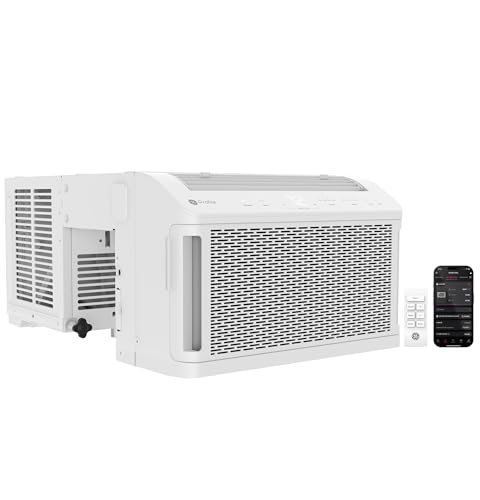
GE Profile ClearView 10,300 BTU Inverter Window AC (PHNT10CC)
For a window too narrow for a Windmill: GE's saddle-style inverter fits openings 20-40 in wide, 13 in minimum height. The 10,300 BTU size (CEER 14.7, up to 450 sq ft), 80 lb, no labor warranty. Only a third-party seller had it new when we checked.
Read our full review: we scored it 6.8/10

