Best Quiet Window Air Conditioner for a Bedroom
By Teo Varnadoe · Updated October 2026
Independent editorial guide. We never accept payment for coverage, though we may earn a commission if you purchase through our links.
Quick Take
For most bedrooms, buy the Midea 6,000 BTU U-shaped window air conditioner (model MAW06V1UWT). It straddles the sash, so when you close the window, glass and frame sit between your bed and the compressor, and its inverter compressor slows down at night instead of slamming on and off. It's sized for a room of 150 to 250 square feet, the range ENERGY STAR's chart pairs with 6,000 BTU, it's ENERGY STAR certified at CEER 15.1, and no 6,000 BTU Midea U is on the 2025 recall list.
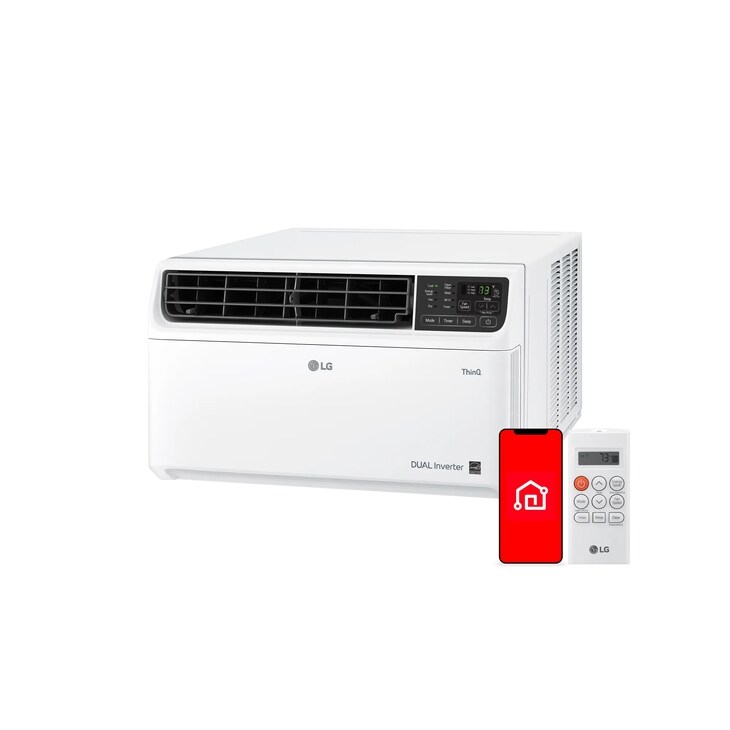
The catch is a high-pitched inverter whine that some people hear and others never notice. Every report of it concerns older Midea U models, but the current one appears to share the earlier cabinet, so buy it somewhere with an easy return and spend the first night listening with the fan on low. If you already know thin, high tones drive you up the wall, or your window won't take a U, the LG 6,000 BTU Dual Inverter box unit is our backup; Amazon had no offers on it when we checked, so we point to LG's own store and earn nothing on it. For a window outside the U's range, GE's inverter ClearView is the saddle-style alternative, though Amazon's listing for the 10,300 BTU size had no featured offer when we checked, only one new unit from a third-party seller among used ones.
Our picks cover the default bedroom U, the LG for whine-sensitive ears (from LG directly), the bigger U for a large primary bedroom, and the cheap thermometer that tells you whether any of them is reading your room right. See picks ↓

If quiet is the reason you are shopping, the shape of the unit matters more than the brand. We would put the Midea 6,000 BTU U-Shaped Window Air Conditioner in a typical bedroom first. A U-shaped or saddle-style unit puts a closed sash between the room and the compressor, and ENERGY STAR credits those designs with "greater noise reduction" for that reason. A conventional box unit has no closed sash between the room and the compressor, so its cabinet insulation does all the work. Owners who have a U credit that layout, at least in part, for how little compressor noise reaches them.
Quiet isn't silent, and the spec sheets won't tell you how loud a unit will be in your room. Every maker publishes decibel figures, but none of the ones we cover states a test distance, so a Midea number and an LG number aren't comparable. The fan is what you'll hear most, inverter units can add a thin whine that splits people down the middle, and a lot of rattle and buzz comes from how the unit sits in the window rather than from the machine.
So pick the design that keeps the compressor behind glass, buy the size the room needs and no bigger, and use the return window to find out whether your ears and your unit get along.
Where the compressor sits decides most of the noise
Every air conditioner has two noise sources: the compressor, which hums or drones, and the fan, which moves air past your ear. You can't get rid of the fan. You can choose how much of the compressor reaches you, and there are three layouts:
- Portable: keeps the compressor in the room with you.
- Box window unit: runs through the opening, so nothing but its own cabinet stands between the room and the compressor.
- U-shaped or saddle-style: a unit like the Midea U, or GE's ClearView, straddles the sash or sill so the closed window separates the indoor half from the compressor.
That's the main reason the U is our default. One owner who weighed the LG against the Midea struggles to hear the compressor at all because of the window barrier, and can watch TV at night without waking roommates. Owners who have both also credit the U shape, or the condensing unit being isolated outside, for the Midea running quieter overall than their LG. You'll see a portable suggested for a rattling window, on the logic that the compressor can't shake the window. We disagree. A portable moves the compressor into the bedroom, which is the opposite of what a light sleeper wants; our window AC vs portable guide covers when a portable is still the right call.
The fan is what's left. No unit will be silent: on a good inverter unit, compressor noise drops to a hum rather than a rumble, but the fan sounds like a small oscillating fan. Owners compare it to a tower fan, or, on an LG Dual Inverter on low, to a cheap standing fan. Plan for fan noise and buy the unit that lets you run the fan slowly.
Why the decibel numbers won’t settle it
Here is what each maker publishes for the units we'd consider for a bedroom, in dBA:
Unit | High | Mid | Low | Quietest setting |
|---|---|---|---|---|
Midea U 8,000 (original, retailer spec) | 47 | No figure | 42 | "As low as 32 dBA" (Midea listing and store pages) |
Midea U 10,000 / 12,000 (original, retailer spec) | 51 / 52 | No figure | 42 / 42 | No figure |
LG Dual Inverter 6,000 (LW6023IVSM) | 54 | 50 | 46 | 44 sleep |
LG Dual Inverter 10,000 (LW1022FVSM) | 58 | 54 | 50 | 44 sleep |
GE ClearView 10,300 inverter | 54 (high fan) | No figure | 51 | 40 quiet mode |
GE ClearView 12,200 inverter | 56 | No figure | 53 | 40 quiet mode |
Windmill 8,000 WhisperTech (datasheet) | 52 | 48 | 41 | Site says "Starts at 42 dB" |
None of these makers states a test distance or room conditions, and we don't measure sound, so don't line them up across brands. Midea's 32 dBA and the retailer's 42 dB low-fan figure for the same U can't both describe the same test; we'd plan on the 42 dB figure and treat 32 as a best case. What the tables are good for is comparing sizes within one brand, where the method is at least the same. Do that and every table points one way. LG's 10,000 BTU runs 4 dBA louder on low than its 6,000 (50 against 46). The original 12,000 BTU Midea U lists 5 dB more on high than the 8,000 (52 against 47). GE's 12,200 lists 2 dBA more than the 10,300 on high fan. Bigger units move more air, and moving air makes noise.
The inverter whine: the catch nobody prints
Inverter compressors are why these units are quieter overall, and they bring their own sound: a high-frequency tone from the compressor drive that some people hear clearly and others can't hear at all. On the Midea U it's the biggest theme in owner reports: 12 or more Midea U owners describe a high-pitched whine, a couple more hear it mainly at startup, and others hear nothing of the kind. Owners who had a Midea U and an LG Dual Inverter at the same time and compared the sound mostly found the whine worse on the Midea, six to two, and a couple heard no problem from either. It tends to be buried under the higher fan settings and show up on low fan, which is the setting you sleep on, and in a family it may be one person who notices.
Two cautions on that evidence. Every Midea whine report predates ENERGY STAR's September and October 2025 certification of the V1UWT models now on Amazon, so nobody has reported on the current units either way, and there's no owner report at all on the 6,000 BTU MAW06V1UWT we recommend. But ENERGY STAR lists the 8,000 BTU V1UWT at the same cabinet size and weight as the original 8,000 BTU U, so it appears to share the earlier cabinet, and we wouldn't assume the whine is gone. The LG isn't immune either: some owners describe a high-pitched sound from an LG indoors, while more call their LG very quiet (one of them still hears a slight whine on medium fan), all on older LG generations. One owner who tried two Midea inverter units heard the whine from the U and none from a conventional-shaped Midea inverter, and can't tell whether they got lucky.
Buy the U from a seller with an easy return, install it properly (one owner found the whine dropped sharply once they fitted the foam blocks the way the manual shows), and run it overnight on low fan within the first week. If the tone bothers you, send it back and buy the LG 6,000 BTU instead. That's the trade we'd accept: the LG gives up the closed sash, but it whines less often.
Size it small: the bigger unit is the louder one
ENERGY STAR's sizing chart, which assumes an 8-foot ceiling, calls for 6,000 BTU in a room of 150 up to 250 square feet, 7,000 for 250-300, 8,000 for 300-350 and 10,000 for 400-450. Add 10% for a very sunny room, take 10% off for a heavily shaded one, and add 600 BTU for each regular occupant beyond two. ENERGY STAR's reason for sizing carefully is that an oversized unit "will cool the room before it has a chance to remove the humidity," leaving the room damp and clammy.
Do the math for a common bedroom. A 12 x 13-foot room is 156 square feet, a 6,000 BTU room. Make it a very sunny top-floor room and it needs about 6,600 BTU. An 8,000 BTU U in that room is about 1.2 times what the chart calls for (8,000 ÷ 6,600 = 1.21). GE's smallest inverter ClearView, the 10,300, is about 1.6 times (10,300 ÷ 6,600 = 1.56). That's why we'd only consider the ClearView for a big bedroom, not a small one.
Noise is the other reason to size small. Owners who have run both the 8,000 and the 12,000 BTU Midea U say the 12,000's fan is louder or defaults to a higher speed, and the maker tables above agree. You'll often see the advice that bigger is fine because inverters throttle down. We disagree for a bedroom. An 8,000 BTU U can run happily in a 121 square-foot bedroom, but an inverter still has a minimum speed, and one 12,000 BTU U owner found a conventional 8,000 BTU unit did a slightly better job of dehumidifying their space. Buy the size the chart gives you; step up only when its adjustments push you over the line.
Rattles, buzz and vibration start with the install
A lot of what people call a loud air conditioner is the window, the sill or the wall. A buzz, a rattle or most of a whine can go away with how the unit sits: nudging a Midea in the window until the buzz stopped, setting a rock on the outside half, or fitting the foam blocks exactly as the manual's install section shows. An owner of two fixed-speed 8,300 BTU ClearViews puts the buzzing others describe down to units that aren't level or aren't supported with foam where the sill is uneven. That's an owner's explanation, not GE's, but checking level costs nothing.
Not every vibration is an install fault. Six owners in a single discussion of GE ClearView vibration say their unit does it, and that discussion collects people who have the problem, so it isn't a sample of all owners; foam pads don't always fix it. One owner of a 12,000 BTU-class ClearView compared the vibration to a diesel generator and decided to return it, then found it calmed down after about an hour of running and was about 90% better by the next day, though it came back once after a week switched off. Against that, a couple of ClearView owners describe theirs as quiet inside the house, and one Windmill owner returned a second unit because it vibrated their wall. Whatever you buy, run it at night in the actual room while the store will still take it back.
Fit comes before any of that. The U needs a single- or double-hung window 22 to 36 inches wide that opens at least 13.75 inches, and one shopper found the published dimensions off by a quarter inch and ended up with an LG. GE lists 20 to 40 inches wide with a 13-inch minimum opening for every ClearView. LG's spec sheet for its 6,000 BTU unit gives only the cabinet, 19 4/7 inches wide and 12 1/3 inches tall; its Amazon listing adds a double-hung window 22 to 36 inches wide and 13 inches tall. Measure before you order, and leave yourself some margin.
Settings that make a quiet unit quieter at night
Eco mode is the setting most likely to wake you. Midea's manuals for earlier U models, which call it Energy Saver, say the fan keeps running for 3 minutes after the compressor shuts off, then comes on for 2 minutes at 10-minute intervals until the room warms past the set point. That rise and fall is easy to mistake for a fault at 2 a.m., and for some sleepers the fan stopping and starting is worse than a steady low fan. The U1QWT manual says Energy Saver is on by default, and both manuals we read say switching the unit off and on with the power button turns it back on in Cool, Dry and Auto. We couldn't find a manual for the V1UWT, so check the one in your box.
Our routine for a light sleeper: Eco off after every power-up, fan on low, set point where you want it, and on the U, Comfort Sense turned on. Midea's U1QWT manual says that remote-only feature measures the temperature where the remote sits and sends it to the unit at 3-minute intervals, and one owner who uses it finds the remote's reading far more accurate than the unit's own sensor. Leave the remote on a dresser pointed at the AC.
Other brands have their own versions. LG lists 44 dBA in sleep mode on every Dual Inverter size we cover. LG's 2017-2022 models are known for a wrong temperature reading, mostly in Energy Saver mode, so check any LG against a room thermometer in the first week. One owner of two GE ClearViews finds the unit defaults to Eco between uses. A cheap thermometer and humidity meter across the room tells you whether the unit is reading the room correctly and whether an oversized unit is leaving it cool but damp.
Which quiet unit for which room and window
Room | Window | Unit | Why |
|---|---|---|---|
Bedroom, 150-250 sq ft | Single- or double-hung, 22-36 in wide, opens 13.75 in | Midea 6,000 BTU U (MAW06V1UWT) | CEER 15.1; its listing states a two-year warranty, longer than the one year on the 8,000 and 10,000 BTU listings |
Sunny or larger bedroom, 300-350 sq ft | Same | Midea 8,000 BTU U (MAW08V1UWT) | CEER 15. No featured offer when we checked in October 2026, only a third-party seller, so it isn't a pick |
Primary bedroom or bedroom-plus-sitting-area, 400-450 sq ft | Same | Midea 10,000 BTU U (MAW10V1UWT) | CEER 15, not on the recall list |
Whine-sensitive ears, or the U won’t fit | Double-hung, 22-36 in wide, 13 in tall | LG 6,000 BTU Dual Inverter (LW6023IVSM) | CEER 15.5, ENERGY STAR Most Efficient, 63 lb, cooling only |
Up to 450 sq ft (GE rating) | 20-21 or 37-40 in wide, which a U can’t span | Saddle-style inverter, CEER 14.7, rated for 450 sq ft |
- If the 8,000 U is still unavailable: don't jump to the 12,000; owners of both sizes say its fan is louder.
- Don't oversize the 10,000 U: it's about 1.7 times the 6,000 BTU a room under 250 sq ft needs.
- The LG: Amazon had no offers on it when we checked in October 2026, so we point to LG's own store. It's a box unit, so there's no closed sash between you and the compressor; you trade that for a lower whine risk.
- The GE: its Amazon listing had no featured offer when we checked, and most offers were used scratch-and-dent units, so choose one whose condition says New. It weighs 80 pounds, GE's one-year warranty has no labor coverage, and you should test it for vibration early.
We'd skip a few things. The fixed-speed 6,100 and 8,300 BTU ClearViews carry the same name as the inverter models but no inverter, at CEER 11.5 and 11.4. Windmill's 8,000 BTU WhisperTech lists low decibel figures, but the owners who name that model call it loud, though one WhisperTech owner calls theirs pretty quiet, and the brand's reliability record is rough; our Windmill review has the detail. A sliding or casement window rules out the U; read our window AC vs portable guide before you buy a portable for a bedroom.
Before you click buy on any Midea U, check the model suffix. CPSC recall #25320, announced June 5, 2025, covers about 1.7 million U and U+ units over mold from pooled water that can fail to drain, including the 8,000-12,000 BTU V1QWT, AV1QWT, W1QWT and U1QWT models. The V1UWT listings we link aren't on it, and no 6,000 BTU model is. Confirm the suffix on the listing and again on the box label.
For the full picture on each unit, read our Midea U review, our LG Dual Inverter review, our GE Profile ClearView review, the Midea U vs LG Dual Inverter comparison, our Windmill review and the window AC vs portable AC guide.
The picks
Products we recommend for this guide.


What owners say
Real owner reports from the threads and editorial sources we drew on for this guide.
“Comparison sites lean towards the LG but I seriously struggle to hear the compressor because of the window barrier. This is really nice because I watch TV at night and don't want to turn up the volume disturbing roommates that are sleeping.”
“It’s definitely quieter than the typical ones and has way less compressor noise, but you can’t escape the sound of the fan. When the compressor kicks on it’s more of a hum than a rumble, still audible but not as abrasive. The fan sounds like a typical smaller oscillating fan which is still pretty noticeable.”
“Most people don't seem to notice (I'm the only one in my family that does). It's not super loud, and can't really be heard over the higher fan settings. But on low fan indoors, or if you go outside and listen to the compressor, I find it annoying.”
“I can't work 6-8 hours a day and have this high-pitched whine irritating my ears. Luckily purchased with the Home Depot credit card and have a one year return policy.”
“While I have noticed a brief whine when the unit powers on and starts to spin up, it goes away completely once it gets up to speed. This cant be more than 10 seconds. I feel like people may get different results based on how well they've installed the unit.”
“The U shape one I got had that annoying whine and drove me crazy. The 2nd one from Costco I am happy to say has no whine. Not sure if I got lucky or it's a different and better part.”
“So I bought an Lg dual inverter and it’s AMAZING. Absolutely no regrets and no high pitched whine. It was also the quietest ac out of the three imo.”
“Worked out well! I like the Midea. One of mine gives a bit of a buzz but if I reposition or nudge it then it stops.”
“Although, it's also generally much quieter than other types of air conditioners, it does make different noises than traditional ones do. My favorite is the woo-woo-woo-woo-woo-woo-woo-woo sound it makes when the variable compressor is activated in one of the lowest power settings. It only makes that kind of sound briefly, but it did take getting used to.”
“I bought a 12k because it was a great price ($290 at Costco) but a conventional 8k did a slightly better job at dehumidifying for the space.”
“Also I keep eco mode off not sure if it matters but I prefer the fan to stay running rather than off and on.”
“I tried to use 1 last year, unfortunately, the specs lied by ¼" & it wouldn't fit GRRRRR The LG I got instead is not bad.”
