Whynter Dual-Hose Portable AC Review: Buy the Inverter Model
By Teo Varnadoe · Updated October 2026
Independent editorial review. We never accept payment for coverage, though we may earn a commission if you purchase through our links.

Spec sheet
| Cooling, SACC (DOE 2017) | ARC-1230WNH 12,000 · ARC-1280WX 10,000 · ARC-147WF 10,000 · ARC-14S 9,500 BTU |
| Box number (ASHRAE-128) | 14,000 BTU (1230WNH, 147WF, 14S) / 13,000 (1280WX); 2,000-4,500 BTU above SACC |
| Compressor | NEX inverter: ARC-1230WNH, ARC-1280WX; no inverter claimed: ARC-14S, ARC-147WF |
| CEER (Whynter) | 1230WNH 14.2 · 1280WX 12.1 · 147WF 7.83 · 14S none current (2016 label only) |
| Hose design | Hose-in-hose on 1230WNH (9.5 in panel, 28-82 in); two separate hoses on the others (6.5 in panel) |
| Heat (of these four, ARC-1230WNH only) | 12,000 BTU heat pump; condensate pump runs in heat mode only; drain hose required |
| Noise (Whynter dBA) | 1230WNH <42.5/49.5/56.5 · 1280WX 50/53/56 · 14S <51/<56 · 147WF <51/<54 |
| Max power | 1,212-1,341 W; 11.6-11.9 A; 115V plug |
| Warranty (manual) | 1 year limited; compressor 3 years total; mail-in; authorized dealer in 48 contiguous states; owner pays return freight months 2-12 |
| Owner-reported failure | ARC-14S: daily draining when self-evaporation fails (one splash motor disconnected from factory) |
Verdict
Owner reports come from r/hvacadvice, mostly troubleshooting threads, so they lean toward problems. About 17 Whynter owners post; five name a model (two ARC-14S, three ARC-1230WNH), and the rest describe dual-hose units without naming one, so parts of this evidence are brand-level. Two ARC-14S owners describe daily water, one traced to a factory-disconnected splash motor. There are no owner reports for the ARC-147WF or ARC-1280WX.
Read full take ↓
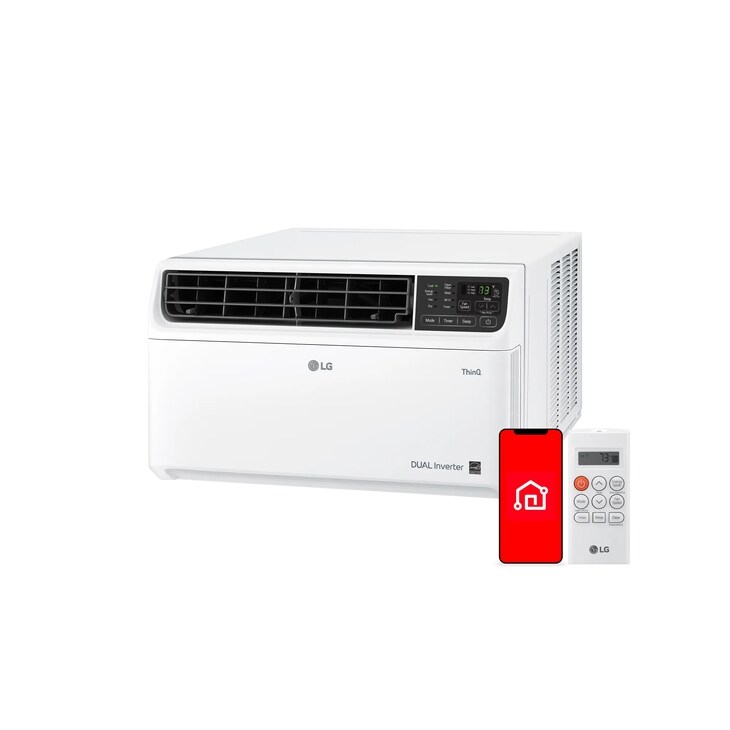


Of the four dual-hose Whynters worth knowing about, buy the Whynter ARC-1230WNH NEX Inverter Portable Air Conditioner with Heat: an inverter compressor, a hose-in-hose duct, a reverse-cycle heat pump, a 12,000 BTU SACC cooling rating and a published CEER of 14.2. The ARC-1280WX is an inverter design with two separate hoses and no heat, but the only ARC-1280WX offer on Amazon when we checked was a used unit. The ARC-14S and ARC-147WF are the older single-speed designs, and their published numbers make a weak case for them in 2026.
All four carry "14,000 BTU" or "13,000 BTU" on the box, and that number is almost useless for shopping. Whynter publishes a second, lower figure for each, the SACC rating from the DOE's 2017 portable test, and the gap between the two ranges from 2,000 BTU on the ARC-1230WNH to 4,500 BTU on the ARC-14S. Two Whynters that look identical in a listing can be 2,500 BTU apart in rated cooling.
Read the warranty before you buy. Whynter covers the compressor for three years, which beats Midea's one year on the Duo. But service is mail-in to Whynter's service center, and from two months to one year after purchase you pay the return freight to get it there. The warranty also only covers units bought from an authorized Whynter dealer, and when we checked, the Amazon listing we link was sold by a third-party seller, not Amazon, so confirm the seller first. And if your window takes a regular window unit, a window unit is still the better buy for most bedrooms.
What we like about the ARC-1230WNH
- Rated cooling: 12,000 BTU SACC, only 2,000 BTU below the box number. That's tied for the smallest gap in Whynter's dual-hose line and matches the Midea Duo's 14,000 BTU models.
- A published CEER: 14.2, printed in Whynter's own specs. Midea doesn't print one for the Duo, though DOE certifies the Duo heat model at the same 14.2.
- Inverter: a NEX inverter compressor (the ARC-1280WX has one too), so the unit slows down instead of cycling on and off at full power.
- A full noise table: under 42.5 dB on low, 49.5 on medium, 56.5 on high.
- Heat pump: heating rated at 12,000 BTU, with a built-in condensate pump for heat mode.
- Compressor coverage: three years on all four models, against one year on the Duo and on LG's window units.
What we'd change
- Mail-in service: warranty service is mail-in, limited to units bought from an authorized Whynter dealer within the 48 contiguous states, and the return freight is yours from month two to year one.
- Condensate: daily water on the ARC-14S in humid weather, and P1 pan-full errors on the ARC-1230WNH.
- Summer drainage: the ARC-1230WNH's condensate pump only runs in heat mode, per Whynter's manual. In summer it's self-evaporation or a gravity drain hose.
- The older models: the ARC-14S and ARC-147WF have no inverter, and the ARC-147WF's CEER of 7.83 is a bit over half the ARC-1230WNH's.
- Availability and labels: the only ARC-1280WX offer on Amazon when we checked was a used unit, and no portable can be ENERGY STAR certified.
Which rooms and windows they fit
Pick by SACC: the ARC-1230WNH (12,000) for a hot top-floor room or a room you also want to heat, the ARC-1280WX (10,000) for a typical bedroom that only needs cooling, if you can find it new from an authorized dealer. Whynter rates the ARC-1230WNH for up to 600 square feet and the ARC-14S for 500, but those are marketing figures, and a 150-250 square-foot bedroom is where a 10,000-12,000 BTU SACC portable makes the most sense.
A Whynter dual-hose makes sense when:
- Your window is awkward: a casement, a horizontal slider or a narrow opening that won't hold a window unit, or your lease bans anything hanging outside the glass.
- You want spring and fall heat: in a room without ductwork, and you'll use the ARC-1230WNH's heat pump as a supplement, not your only heat.
- You can drain it: with a drain hose or a condensate pump, if you live somewhere humid.
- You value the compressor term: you'd rather have three years on the compressor than the Duo's one, and you can live with mail-in service.
Pick something else if:
- Your window fits a window unit: for a typical bedroom, Midea's 10,000 BTU U-shaped window unit (MAW10V1UWT) is ENERGY STAR certified at CEER 15 and costs far less. For a bigger room, LG's 12,000 BTU Dual Inverter window unit is ENERGY STAR certified at CEER 15, keeps its compressor outside, and comes with in-home warranty service. See the section on window units below.
- You need real winter heat: heat-pump output falls as the outdoor air gets colder, and we couldn't find a low-temperature limit for the ARC-1230WNH's heat mode in Whynter's published text. For a room you'll heat all winter, look at a cold-climate mini-split.
- You can't buy from an authorized dealer: within the 48 contiguous states. Whynter's warranty requires purchase from one.
- Your window opening is shorter than 28 inches: and you want the ARC-1230WNH. Its kit starts at 28 inches; the ARC-14S kit starts at 20.
The four models on paper
Read SACC and ignore the box. Whynter's spec pages list both numbers for every model; the ARC-14S page names the standards, 14,000 BTU under ASHRAE-128 and 9,500 BTU under the DOE 2017 standard. Whynter also sells cooling-only inverter models (ARC-1230WN, ARC-1230WN2, ARC-1030WN) and heat versions of the older units (ARC-14SH, ARC-147WFH); this review covers the four below. All figures are Whynter's.
Model | Box / SACC | Gap | CEER | Compressor | Hoses | Heat | Noise |
|---|---|---|---|---|---|---|---|
ARC-1230WNH | 14,000 / 12,000 BTU | 2,000 BTU (14%) | 14.2 | NEX inverter | Hose-in-hose | Heat pump, 12,000 BTU | Under 42.5 / 49.5 / 56.5 dB (low/med/high) |
ARC-1280WX | 13,000 / 10,000 BTU | 3,000 BTU (23%) | 12.1 | NEX inverter | Two 7.5 in | None (Auto, Cool, Dry, Fan) | 50/53/56 dBA |
ARC-147WF | 14,000 / 10,000 BTU | 4,000 BTU (29%) | 7.83 | No inverter claimed | Two 5.9 in | None (Cool, Dehumidify, Fan) | Under 51 low, under 54 high |
ARC-14S | 14,000 / 9,500 BTU | 4,500 BTU (32%) | None current | No inverter claimed | Two 5.9 in | None listed | Under 51 low, under 56 high |
So the ARC-1280WX, sold as the "smaller" 13,000 BTU unit, carries a higher SACC rating than the 14,000 BTU ARC-14S. The SACC figure is the one to hold up against other portables, and it's the closest thing a portable has to a window unit's DOE rating. The two test procedures aren't identical, so treat that comparison as approximate. All four pull outdoor air across the condenser instead of exhausting the air you just cooled.
CEER is the DOE's combined energy efficiency ratio; a higher number means more cooling per watt-hour. For the same amount of cooling, energy use scales with 1 divided by CEER, so the ARC-147WF's rating implies about 1.8 times the electricity of the ARC-1230WNH (14.2 ÷ 7.83 = 1.81), and the ARC-1280WX about 1.17 times. Put it in a season: 1,000 hours at 10,000 BTU an hour is 10 million BTU of cooling. At CEER 7.83 that's about 1,277 kWh; at 14.2, about 704 kWh. The difference is about 573 kWh; multiply by your own electric rate to see what that's worth. A rating isn't a meter, so treat that as a ballpark, but it's the reason we'd pay for an inverter in a room you cool every night.
The ARC-14S has no current CEER on Whynter's site. The only efficiency figure we've seen is a 2016 EnergyGuide label (3,351 kWh a year) made under the pre-2017 test method, which can't be compared to a CEER. We won't recommend a model whose maker hasn't published a current efficiency rating over one that has.
Of these four, only the ARC-1230WNH heats, and it does it with a heat pump, not a resistance coil. Whynter rates it at 12,000 BTU of heating but doesn't say which standard that number comes from. Its manual describes "heat pump drainage": a condensate pump that only engages in heat mode, with the drain hose required whenever you heat. Midea publishes a 41°F outdoor floor for the Duo's heat pump; we couldn't extract Whynter's equivalent figure from its manual, so ask Whynter before you count on heat once nights drop into the 40s.
The ARC-1280WX manual rates cool mode for 60-95°F ambient and dry mode for 55-95°F. The ARC-1230WNH manual contradicts itself, giving 60-95°F in the operation section and 63-90°F in troubleshooting. If you plan to run it in a hot attic room, assume the narrower range.
On noise, the ARC-1230WNH's low setting is about 8 dB under the others on paper, and low is the one that matters at night. We don't measure sound, and every one of these keeps a compressor in your bedroom.
Maximum draw runs from 1,212 watts and 11.9 amps (ARC-1280WX) to 1,341 watts and 11.8 amps (ARC-147WF), on a standard 115V plug. On a 15-amp circuit, 11.9 amps leaves about 3 amps for everything else, so keep space heaters, hair dryers and window units off the same circuit.
What setup involves
No refrigerant work and no wiring. These are sealed plug-in appliances. The work is in the window kit, the hoses and the water. Measure the opening before you pick a model, and check where the hose holes land:
Model | Window panel width | Kit length |
|---|---|---|
ARC-1230WNH | 9.5 in | 28-82 in |
ARC-1280WX | 6.5 in | Up to 82 in |
ARC-147WF | 6.5 in | 20-46 in |
ARC-14S | 6.5 in | 20-56 in |
On a slider or casement, the ARC-1230WNH's wider panel is 3 more inches of glass you give up. Fit can be fussy at the short end: one dual-hose owner found the panel too short without the extender piece and the window too short to fit the extender without covering the hose holes.
Two hoses mean two connections at the unit and two at the panel, and they can pop off. A couple of people in an ARC-14S discussion who say they have "the same unit," without naming the model, hold theirs on with duct tape. It works, and it looks bad. The hose-in-hose ARC-1230WNH has one duct to seat, which is a tidier install.
Spend your planning time on water. The ARC-14S uses a splash motor that throws water from the reservoir onto the hot condenser, where it evaporates and leaves through the exhaust hose, as one owner who opened their unit describes it. When that works, you rarely drain. When it doesn't, you drain constantly, and the ARC-14S's drain spigot sits low near the floor, a complaint from more than one Whynter owner. If you're in a humid climate, set the unit level, raise it, and plan a drain hose to a floor drain or a condensate pump from day one. One owner's trick is worth copying: if you run a hose to a pump, route it through a bucket set higher than the unit's internal shutoff switch, so a pump failure fills the bucket and trips the switch instead of flooding the floor.
On the ARC-1230WNH, the built-in pump only runs in heat mode. Whynter's manual says so plainly. In summer it's self-evaporation or a gravity drain hose: Whynter lists upper and lower drain ports for continuous operation, so a hose running downhill to a floor drain works. If self-evaporation can't keep up and there's no hose, the P1 code tells you the pan is full.
Reliability and living with it
If a new Whynter fills its pan every few hours in mild weather, suspect the splash motor before you blame the climate. The owner record here is thin and skews toward troubleshooting posts, so read it as a list of failure modes, not a failure rate. Only a handful of owners name one of these four models, all of them ARC-14S or ARC-1230WNH owners, and there are no owner reports at all for the ARC-147WF or ARC-1280WX.
The ARC-14S water problems come from a couple of owners, not a large sample. A Florida workshop owner was draining several times a day, opened the unit, and found the splash motor had come disconnected at the factory. Plugged back in, it got through a whole Florida summer without draining once. You'll read that Florida humidity overwhelms any portable and the unit wasn't defective; in that case it was. A Chicago basement apartment owner has a drain hose carrying 5-8 gallons a day, but the unit leaks from an opening underneath whenever it's off or in dehumidify mode. Another "same unit" poster pulls at least 3 gallons a day on humid days out of an oil pan with a shop vacuum.
The Chicago ARC-14S's compressor stopped after about a year of running, with only the fan still going. That's one report, but it's the failure the three-year compressor term exists for, and it's the one where mail-in service bites hardest.
ARC-1230WNH reports are few and small: P1 pan-full errors, and a "trickling" noise only when the compressor runs. On the cooling-only ARC-1230WN, a fast ticking at first was gone once the weather turned hot and humid. One buyer found bent condenser fins on a just-unboxed unit and worried about a refrigerant leak. Damaged fins can be carefully straightened and aren't a refrigerant risk unless the tubes behind them are damaged, but we'd photograph that kind of shipping damage and contact the seller right away.
A couple of owners of a Whynter portable they didn't name say the fan won't stay on medium or high in cooling mode, snapping back to low, so the on-off cycle is loud. We can't tie that to a specific model.
Whynter's warranty terms, from the ARC-1230WNH and ARC-1280 manuals: one year of limited coverage, with the compressor covered for an additional two years after that (three years total), for units bought from an authorized Whynter dealer within the 48 contiguous states, repaired or replaced "on a mail-in basis" at Whynter's service center. From two months to one year after purchase, you pay the return freight; the manual doesn't say who pays it on a compressor claim in years two and three. One ARC-14S owner found Whynter support helpful over email once they showed what they'd already tried. We haven't seen a CPSC recall for Whynter as of October 2026.
How they compare
Whynter ARC-1230WNH | Midea Duo (14,000 BTU) | LG window units | |
|---|---|---|---|
SACC / rated cooling | 12,000 BTU | 12,000 BTU | 12,000 BTU DOE (LW1224IVSM) |
CEER | 14.2 | Not published | 15, ENERGY STAR |
Noise table | Low, medium and high | Low only | No figure |
Heat-mode floor | Not published | 41°F | No heat |
Warranty | 1 yr, compressor 3 yr; mail-in, return freight yours months 2-12 | 1 yr; you pay diagnostics, removal, transport and reinstallation | 1 yr parts and labor, in-home service |
- ARC-1230WNH vs Midea Duo: these are the two hose-in-hose inverter heat pumps worth considering, and on rated cooling they tie. The Duo's owner record is larger and leans on water and mold. Price order moves: when we checked in October 2026, the Duo heat model we link had no featured offer on Amazon, and the only seller listing it new, a third party, asked more than the Whynter's listing. Both certify CEER 14.2 with DOE, so efficiency is a wash; we'd pick the Whynter for the compressor term.
- ARC-1280WX vs ARC-1230WNH: the ARC-1280WX gives up heat and 2,000 BTU of SACC (10,000 vs 12,000) and drops to CEER 12.1, in exchange for a narrower 6.5-inch panel and two separate 7.5-inch hoses. It weighs 55 pounds. Its March 2026 manual covers both the white ARC-1280WX and the black ARC-1280MX as the same unit. The catch is buying one. When we checked in October 2026, the only Amazon offer for the ARC-1280WX was a used unit, and Whynter's warranty only covers units bought from an authorized dealer, so we don't link it. If you find an ARC-1280MX or ARC-1280WX new from an authorized dealer, it's a sound cooling-only buy.
- ARC-14S and ARC-147WF: the ARC-14S has a long history and the most owner reports, nearly all about water. Its manual now covers a revised ARC-14S2 as well. The ARC-147WF adds Wi-Fi to the same basic recipe and publishes a CEER of 7.83. Neither has an inverter, and both rate lower on SACC than the inverter models. We'd skip both.
When a window unit is the better buy
Most of the time, if your window allows one. Put the ARC-1230WNH next to LG's 12,000 BTU Dual Inverter window unit (LW1224IVSM). Whynter's 12,000 BTU SACC against LG's 12,000 BTU DOE rating is the closest like-for-like comparison available. LG's unit is ENERGY STAR certified at CEER 15; the Whynter's 14.2 means about 6% more electricity for the same cooling on paper (15 ÷ 14.2 = 1.06), and the two numbers come from different DOE test procedures. Efficiency is close. The bigger differences are elsewhere: the window unit keeps its compressor outside the glass, drips its condensate outdoors, takes no floor space and usually costs less. Its warranty is one year with in-home service, against Whynter's three-year compressor term with mail-in service and freight.
The window unit has limits of its own. LG lists the 12,000 BTU unit for windows 27-39 inches wide with a 16-inch opening, it weighs 85 pounds, and it's cooling-only. If you have a slider, a casement, a narrow window, a lease that forbids anything outside the glass, or you want a heat pump in the same box, that's the buyer a Whynter dual-hose is for.
For a typical bedroom, the cheaper match is Midea's 10,000 BTU U-shaped window unit (MAW10V1UWT) against a 10,000 BTU SACC portable like the ARC-1280WX. ENERGY STAR lists it at CEER 15, and the Amazon listing gives a fit of single- or double-hung windows 22-36 inches wide with at least 13.75 inches of opening height. The U shape lets the window close between the indoor and outdoor halves, so the compressor noise stays outside. It's cooling-only, with a one-year warranty on that listing. Older U models were recalled in 2025 for mold, so confirm the listing says MAW10V1UWT; the V1QWT, U1QWT, W1QWT and AV1QWT models were recalled.
Against the ARC-147WF, the window unit wins outright: CEER 15 vs 7.83 means the Whynter's rating implies nearly double the electricity for the same cooling (15 ÷ 7.83 = 1.92). The two ratings come from different DOE test procedures, so treat the ratio as approximate.
Which Whynter to buy, if any
Buy the ARC-1230WNH if a window unit won't work in your room and you want the most rated cooling, a published efficiency figure and heat-pump heating for spring and fall. The ARC-1280WX is the right cooling-only Whynter for a normal bedroom, but only if you can buy it new from an authorized dealer; otherwise, look at the Midea Duo or a window unit. Skip the ARC-14S and ARC-147WF. Whichever you buy, set up a drain path on day one if your summers are humid, test the self-evaporation in the first two months while freight is still on Whynter, and keep the receipt and the box.
Score breakdown
The ARC-1230WNH's 12,000 BTU SACC matches the best hose-in-hose portables, and its published CEER of 14.2 and sub-42.5 dB low setting back it up. The heat pump adds shoulder-season heat, though Whynter publishes no low-temperature limit we could read. The single-speed ARC-14S and ARC-147WF would score well below this; they rate 9,500-10,000 SACC and the 147WF's CEER is 7.83.
ARC-14S water handling is hit or miss: a unit that shipped with its splash motor disconnected needed no draining all summer once it was plugged in, and one run on a drain hose may have lost its compressor after about a year. ARC-1230WNH reports are few: a P1 pan-full error and compressor noises. The three-year compressor term helps, but service is mail-in and the owner record is thin, with only a handful of owners naming a model.
Against the Midea Duo, the ARC-1230WNH matches its DOE-certified CEER of 14.2 and adds two extra years on the compressor, and when we checked it cost less than the only new Duo offer, though that order moves. Against a 12,000 BTU inverter window unit it loses on price and in-home service. Paying return freight on a mail-in warranty, from month two to year one, eats into the value of that compressor term.
Whynter Dual-Hose Portable AC on Amazon.
The Evidence Behind Our Verdict
Owner reports come from r/hvacadvice, mostly troubleshooting threads, so they lean toward problems. About 17 Whynter owners post; five name a model (two ARC-14S, three ARC-1230WNH), and the rest describe dual-hose units without naming one, so parts of this evidence are brand-level. Two ARC-14S owners describe daily water, one traced to a factory-disconnected splash motor.
There are no owner reports for the ARC-147WF or ARC-1280WX.
Our rating above is our own editorial call. What follows is the field evidence we weighed to reach it: first-hand reports from owners on Reddit and independent HVAC and DIY forums, which we lean on more than manufacturer-influenced published reviews because unsponsored owners tend to be the more candid signal.
What Reddit Is Saying
“So it turned out the splash motor came disconnected from the factory, so water from the reservoir wasn't being splashed onto the condenser. I plugged it in and it works just fine now. So it wasn't defective generally speaking, but this particular unit was, fortunately easily fixable. Shockingly, I made it through the entire FL summer without having to drain once.”
“I suck out at least 3 gallons a day on humid days. Mine sits in an XL oil pan and I have a mini shop vacuum to suck out the water.”
“As of right now, I don't think my Whynter ARC-14s's compressor is turning on. I can only hear the fan and the humidity in my very tiny basement apartment is 65-70% (and that's with a dehumidifier going on the other half).”
“I have a different model of Whynter, the ARC-1230WNH, and I noticed it filling up quickly, and throwing the P1 error. Indicating it needs to be drained.”
“I just got a 1230wnh and am also experiencing a stranging "trickling" noise that is only present when compressor is on.”
“I attempted putting my Whynter dual hose portable ac up and the actual window panel with the holes is too small to fit the window but with the extender, the window isn’t tall enough to fit the extender without it blocking the holes.”
Frequently asked questions
Is the Whynter Dual-Hose Portable AC worth it?
2 and adds two extra years on the compressor, and when we checked it cost less than the only new Duo offer, though that order moves. Against a 12,000 BTU inverter window unit it loses on price and in-home service. Paying return freight on a mail-in warranty, from month two to year one, eats into the value of that compressor term.
How reliable is the Whynter Dual-Hose Portable AC?
ARC-14S water handling is hit or miss: a unit that shipped with its splash motor disconnected needed no draining all summer once it was plugged in, and one run on a drain hose may have lost its compressor after about a year. ARC-1230WNH reports are few: a P1 pan-full error and compressor noises. The three-year compressor term helps, but service is mail-in and the owner record is thin, with only a handful of owners naming a model.
How well does the Whynter Dual-Hose Portable AC perform?
5 dB low setting back it up. The heat pump adds shoulder-season heat, though Whynter publishes no low-temperature limit we could read. 83.
What do real owners say about the Whynter Dual-Hose Portable AC?
Owner reports come from r/hvacadvice, mostly troubleshooting threads, so they lean toward problems. About 17 Whynter owners post; five name a model (two ARC-14S, three ARC-1230WNH), and the rest describe dual-hose units without naming one, so parts of this evidence are brand-level. Two ARC-14S owners describe daily water, one traced to a factory-disconnected splash motor.
Options Worth Checking Out

Midea Duo 14,000 BTU Portable AC with Heat (MAP14HS1TBL-A)
The ARC-1230WNH's direct rival: same 12,000 BTU SACC, hose-in-hose, inverter heat pump that stops below 41°F. CEER 14.2 per DOE, a one-year warranty, and no featured offer when we checked; only a third-party seller listed it new.
Read our full review: we scored it 6.4/10

You Might Also Need
Accessories worth grabbing alongside your purchase

