Best Propane Heater: Buddy Sizes, Indoor Rules and Vented Options
By Margo Pettibone · Updated October 2026
Independent editorial guide. We never accept payment for coverage, though we may earn a commission if you purchase through our links.
Quick Take
For most people, the propane heater to buy is the Mr. Heater Portable Buddy. It makes 4,000 or 9,000 BTU/hr on one 1 lb cylinder, shuts off on low oxygen or a tip, and keeps a two- or three-person ice shack, a tent, a truck cap or one room in a power outage warm, usually on low. Its manual asks for half the vent opening the Big Buddy needs. It scores 7.0 in our review, tied with the Big Buddy, and costs a good deal less.
Buy it with a battery CO alarm, because the low-oxygen shutoff doesn't measure carbon monoxide, and run it only where its manual allows: small recreational enclosures with a window or roof vent, or emergency heat at home on 1 lb cylinders, never while you sleep. A garage isn't on that list. For a garage you heat all winter, a vented gas unit heater like the Mr. Heater Big Maxx is the propane heater we'd buy instead.
Our everyday portable, the bigger and in-between Buddys, the installed and vented options and the CO alarm that goes with every one of them are below. See picks ↓

The propane heater we'd hand most people is the Mr. Heater Portable Buddy: one to three people in a fishing hut, a canvas tent, a truck cap or a van, or one room during an outage. It's enough heat for those jobs, it runs on a single 1 lb cylinder, and its US manual carries an indoor-use statement with conditions you can meet. It's still an unvented flame in a small space, so the venting rules, the CO alarm and the no-sleeping rule come with it.
The rest depends on the space and how long you'll heat it:
- Four-person hub, wall tent, or long days well below zero in wind: the Big Buddy, with 18,000 BTU/hr on HI, two cylinder ports and twice the vent opening.
- More than 9,000 BTU/hr but less than the Big Buddy: the Buddy FLEX at 8,000-11,000 BTU/hr, though we'd pass on it for most people: it can't turn down low and its manual rules out bedrooms and bathrooms.
- A cabin you heat all winter and want held at a set temperature: an installed vent-free wall heater with a thermostat and blower, such as the Heatstar 18,000 BTU, chosen and installed by its own manual.
- A garage or shop you heat most of the winter: the vented Mr. Heater Big Maxx MHU50 on natural gas or propane, installed by a qualified installer.
- Massachusetts or Canada: check the manual in the box; the Massachusetts and Canada version of the Big Buddy says For Outdoor Use Only.
- Heat while you sleep: none of them. Warm the space, then shut the heater off.
Our scores, ranked
These are the scores from our full reviews: Performance 40%, Reliability 35%, Value 25%. The Buddy FLEX and the Heatstar appear in our Buddy reviews as alternatives; we haven't scored them.
Heater | Our score | Key spec | Best for | Where we cover it |
|---|---|---|---|---|
7.3 | Vented unit heater: 50,000 BTU/h input, 40,000 output; natural gas or propane | A garage or shop heated all winter, with a pro install | ||
7.0 | 4,000 / 9,000 BTU/hr; one 1 lb cylinder; 9 sq in venting | One to three people in a shack, tent, truck cap or van; one room in an outage | ||
7.0 | 4,000 / 9,000 / 18,000 BTU/hr; two 1 lb ports; 18 sq in venting | Bigger hubs, wall tents, serious cold and wind | ||
Mr. Heater Buddy FLEX | No figure | 8,000-11,000 BTU/hr; 11 sq in venting; no bathroom or bedroom use | A shelter that needs a bit more than 9,000 and never a low setting | |
Heatstar 18,000 BTU vent-free | No figure | Installed vent-free radiant heater with thermostat and blower | A cabin heated all winter |
For these heaters next to the 240V garage heaters we cover, with each manual's indoor rating, see every model ranked. The Big Maxx scores highest, but it's a different kind of heater: it hangs from the ceiling, burns from a gas line and sends its exhaust outside. Among portables, the Portable Buddy and Big Buddy tie, and the Portable Buddy wins for most people on price and venting.
How much heat you need
Both Buddys are rated by the same yardstick: Mr. Heater's area claims (225 square feet for the Portable Buddy, 450 for the Big Buddy) work out to 40 BTU/hr per square foot at full input. In a shelter, wind and insulation matter more than floor area, and owners of two- and three-person shacks mostly run the Portable Buddy on LO.
Heater | Settings (BTU/hr) | Maker's area claim | Fuel |
|---|---|---|---|
Portable Buddy (MH9BX) | 4,000 / 9,000 | 225 sq ft | One 1 lb cylinder, or a remote tank up to 20 lb kept outdoors |
Buddy FLEX (MH11BFLEX) | 8,000-11,000 | 275 sq ft (product page) | 1 lb cylinder or remote tank |
Big Buddy (MH18B) | 4,000 / 9,000 / 18,000 | 450 sq ft | One or two 1 lb cylinders (two for HI), or remote tanks up to 20 lb kept outdoors |
The Big Buddy's MED is the Portable Buddy's HI, so what you're deciding is whether you'll want 18,000 often enough to haul the bigger heater and a second cylinder. For a two- or three-person shack, mostly you won't. A four-person hub, a wall tent or a cold windy day in a bigger shelter is where the Big Buddy earns its size; in a small portable shelter it runs hot. The FLEX's low setting starts at 8,000, twice the Buddy's LO, so it can't turn down for a small insulated shack.
Where the manuals allow indoor use
The two Buddy US manuals use the same wording. Each heater is "safe for indoor use in small recreational enclosures having means for providing combustion air and ventilation, such as enclosed porches, cabins, fishing huts, trailers, tent trailers, tents, truck caps and vans," and may be used for emergency indoor heating on a disposable 1 lb cylinder. A recreational enclosure needs a window or roof vent. The conditions differ by heater:
Manual requirement | Portable Buddy | Big Buddy | Buddy FLEX |
|---|---|---|---|
Vent opening at the ceiling and at floor level | 9 sq in | 18 sq in | 11 sq in |
Emergency home use, bathroom | LO only | LO only | Not allowed |
Emergency home use, bedroom | HI or LO | LO or MED | Not allowed |
Side clearance to combustibles | 6 in | 6 in | 24 in |
Both Buddy manuals also say: 1 lb cylinders only for emergency heat at home, no other fuel-burning appliances running inside at the same time, never left unattended, and never operated while you sleep. A refillable cylinder never comes indoors; a remote tank up to 20 lb is for recreational enclosures and stays outside. Each carries a notice that it's not for use in a dwelling home in California, and the FLEX's manual carries the same indoor statement and California notice.
A garage or workshop isn't on either Buddy manual's indoor list, even though Mr. Heater's product pages name garages and workshops among their uses. Both manuals also say that with a cylinder attached, the heater must be stored outdoors and not in a building or garage. The CPSC says never to use portable fuel-burning camping equipment inside a home, garage, vehicle or tent unless it is designed and instructed for that enclosed space. In the driveway with the door up, a Buddy works as an outdoor spot heater; for a closed garage, see the vented option below.
Check which heater you're holding. Mr. Heater sells the Big Buddy under two part numbers with the same model number: F274805 is the US version, and F274806, the Massachusetts and Canada version, ships with a manual that says For Outdoor Use Only. Mr. Heater's Portable Buddy page lists Massachusetts and Canada sale restrictions too. Read the manual in your box.
Carbon monoxide, oxygen and sleep
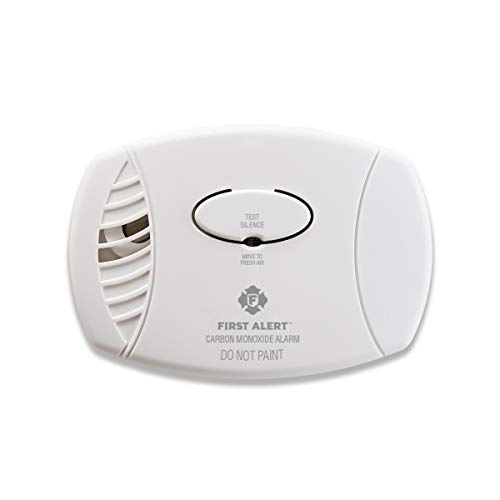
Buy a battery CO alarm listed to UL 2034 with any of these heaters and run it whenever the heater runs. The Buddys' safety system watches oxygen: it cuts the gas when oxygen runs low and does nothing about carbon monoxide. Some owners assume the low-oxygen shutoff doubles as a CO detector. It doesn't. The CPSC says a CO alarm is no substitute for proper use of the appliance, so you still follow the venting rules, and it advises against placing an alarm directly above a fuel-burning appliance.
Don't run one while you sleep. Both Buddy manuals say never to operate the heater while sleeping, the CPSC says to shut off any camping heater before going to sleep, and it says never to operate unvented fuel-burning appliances in any room where people are sleeping. Warm the tent or the room, then turn the heater off.
If the low-oxygen system trips, both Buddy manuals say not to relight until you've let in fresh air, and to have the heater serviced if it keeps shutting off. Above 7,000 ft, both manuals say the heater may burn less brightly and may shut off, and the CPSC notes that CO risk goes up at high altitude. The Portable Buddy manual lists the early signs of CO poisoning as flu-like headache, dizziness and nausea; get fresh air at once.
Moisture and the missing fan
Unvented combustion puts water vapor into the space, which the EPA says plainly, and owners describe condensation on tent walls and van windows. The venting the manuals ask for is also what carries the water out. If dampness is a constant fight in a van you live in or a cabin you visit all winter, a vented heater is the better long-term answer.
Neither Buddy has a thermostat, and the current Big Buddy has no fan, so heat pools at the ceiling. A small battery fan placed nearby, not attached to the heater, moves it around. Don't clip anything onto a Buddy or set a stove fan on top: the manuals call hand-made or third-party accessories extremely dangerous, and Mr. Heater's warranty policy says third-party attachments void the warranty.
Fuel: cylinders, tanks, hoses and the filter
Fuel | Portable Buddy (manual) | Big Buddy (manual) |
|---|---|---|
One 1 lb cylinder | About 3 h on HI, 6 on LO | 1.5-6 h |
Two 1 lb cylinders | No figure | 3-12 h (HI needs two) |
One 20 lb tank, kept outdoors | 48-110 h | 24-108 h |
For a 12-hour outage at home, where the manuals allow 1 lb cylinders only, that's two to four cylinders on the Portable Buddy and roughly eight to ten at full heat on the Big Buddy. Stock them before the storm. In a camp, shelter or tent, a 20 lb tank outside on a hose saves a lot of swaps. Below 20°F, run times can drop sharply, and both manuals recommend a 20 lb tank.
Use Mr. Heater's own hose. The manuals name hoses F273701, F273702 and F272702, each used with fuel filter F273699 replaced every year, or the F273704 Buddy series hose, which doesn't need the filter. Running without the filter, or on a generic hose, is a common cause of the oily-line and clogged-heater complaints about the Buddy line.
For a garage or a cabin: vented or installed heat
If you heat a garage or shop most of the winter and have natural gas or a propane tank, buy a vented unit heater instead of a portable. The Mr. Heater Big Maxx MHU50 puts 40,000 BTU/h into the room from 50,000 BTU/h of input at 80% efficiency, runs off a wall thermostat you buy separately, and sends its combustion gases outside through a flue. It ships for natural gas with the propane conversion kit in the box. Its manual says a qualified installer, service agency or the gas supplier does the install: a gas line, a vent through the wall or roof, a 120 V circuit with a disconnect near the unit, and mounting with the bottom at least 8 ft above a residential garage floor. The manual also warns that too little combustion air can make the heater produce excessive carbon monoxide, so put a CO alarm in the garage anyway. Expect flame-sensor lockouts that need a cleaning; the warranty runs 3 years on parts and 10 on the heat exchanger.
If you'd rather heat a garage without gas at all, our garage heater guide covers the 240V electric options and when a mini-split wins.
For a cabin you heat all winter, a vent-free wall heater with a thermostat fixes the two biggest Buddy complaints: it holds a set temperature and adds a blower. Heatstar and Mr. Heater both sell 18,000 BTU models. Those are installed heaters rather than portable ones, with their own manuals covering fuel supply, room size and ventilation, so read the manual before you buy and install it exactly as written.
Warranty
Mr. Heater's documents disagree on the Buddy warranty. The current Portable Buddy manual and the product pages list 3 years, Mr. Heater's warranty policy page says 1 year for everything except unit heaters, and the Amazon listing for the Portable Buddy says 1 year. Register the heater, keep the receipt and plan on the shorter term. The Big Maxx, a unit heater, carries 3 years on parts and 10 years on the heat exchanger per its manual.
Which one we would buy
- One to three people in a shack, tent, truck cap or van: the Portable Buddy.
- Emergency heat for one room in an outage: the Portable Buddy on 1 lb cylinders, awake and vented, with a CO alarm.
- A four-person hub, a wall tent or serious cold: the Big Buddy, US version, with a Mr. Heater hose and filter for a tank outside.
- A cabin you heat all winter: an installed vent-free heater with a thermostat, such as the Heatstar, per its manual.
- A garage or shop heated most of the winter: the Big Maxx MHU50, professionally installed.
Whichever you buy, buy the CO alarm with it.
The picks
Products we recommend for this guide.
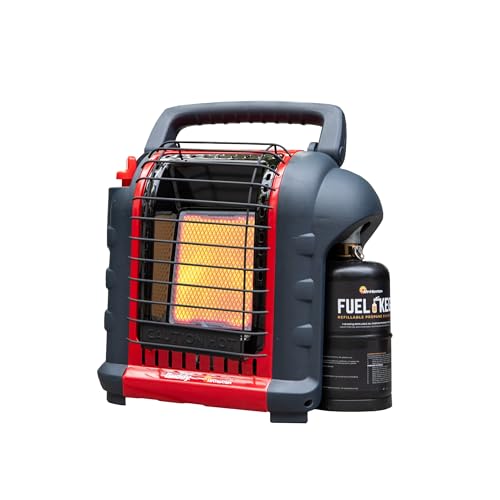
Mr. Heater Portable Buddy 9,000 BTU (MH9BX)
Our pick for one to three people in a fishing hut, tent, truck cap or van, or one room in an outage: 4,000 or 9,000 BTU/hr on one 1 lb cylinder, low-oxygen and tip-over shutoffs, and 9 sq in of venting at ceiling and floor.
Read our full review: we scored it 7.0/10

Mr. Heater Big Buddy 18,000 BTU (no-fan MH18B)
For bigger hubs, wall tents and long cold days in wind: 4,000 / 9,000 / 18,000 BTU/hr and two cylinder ports. HI needs two cylinders and 18 sq in of venting. Check for the US F274805 manual if you plan indoor use.
Read our full review: we scored it 7.0/10


Mr. Heater Big Maxx MHU50 50,000 BTU Unit Heater (NG, LP kit included)
The gas heater for a garage heated all winter: 40,000 BTU/h of vented heat on a wall thermostat (sold separately) and a 10-year heat exchanger warranty. Its manual calls for a qualified installer for the gas line, vent and disconnect.
Read our full review: we scored it 7.3/10
What owners say
Real owner reports from the threads and editorial sources we drew on for this guide.
“I recently bought the buddy flex. So far so good. I like it. Lots of heat. I have an otter lodge. Had it on low and needed to have the doors zipped open about a foot.”
“People can tell me these are safe, and I do use a CO detector, but I will never sleep with one running. I have one, and use it to take the chill out of the tent before I get my wood stove going.”
“The amount of venting that I needed to do in my RTT annex just to prevent headaches/nausea negated any amount of warmth gained.”
“My Big Buddy doesn't have issues and never has. No, it's not great in windy situations. Yes, it causes condensation in the tent, but any heating of this type will do the same.”
“I then got a small garage and I got by with unvented heaters for years. Thought it was awesome to have no cold air blowing down my neck and heat. Then, I started noticing the humidity from the unvented heater. Once I went with vented heaters in my well insulated garage and shop, I just can't go back.”

