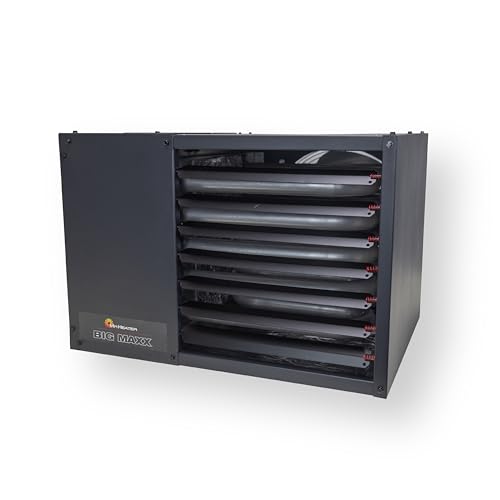
Mr. Heater Big Maxx MHU50 Review: The Garage Heater Worth a Gas Line
By Margo Pettibone · Updated October 2026
Independent editorial review. We never accept payment for coverage, though we may earn a commission if you purchase through our links.
 ← Product page: 26 x 29 x 14.87 (unit not stated) →
Spec sheet
| Input / output (manual) | 50,000 BTU/h input, 40,000 BTU/h output, 80% efficiency |
| Heating area (maker claim) | Up to 1,667 sq ft |
| Fuel (product page) | Natural gas, NG-to-LP conversion kit included |
| Venting (manual) | Category I vertical (3 in on 50K) or Category III horizontal (4 in, 5-25 ft) |
| Mounting (manual) | Bottom at least 8 ft above a residential garage floor |
| Electrical (manual) | 120 V, 2.3 A, with a separate disconnect near the unit |
| Installer (manual) | Qualified installer, service agency or the gas supplier |
| Owner-reported failure | Flame-sensor lockouts (2-blink code) until the sensor rod is cleaned |
| Warranty (manual) | 3 years on parts, 10 years on the heat exchanger |
Verdict
Owner reports come from Garage Journal and from r/hvacadvice, r/HomeImprovement, r/propane, r/homeowners and r/garageporn. Most owners name the 50,000 BTU MHU50; a few Big Maxx owners write about things shared across the line: support, cleaning, 50K versus 80K sizing and 80K durability. Satisfied owners praise the heat and the quiet; the troubleshooting threads center on flame-sensor lockouts, with a few out-of-box failures and install mistakes.
Read full take ↓


If your garage has natural gas or a propane tank and you heat it most of the winter, the Mr. Heater Big Maxx MHU50 50,000 BTU unit heater is the one we'd hang. It's a vented, thermostat-controlled gas heater that puts 40,000 BTU/h into the room at 80% efficiency, which is more than twice what the 5,000 W electric ceiling heaters make, and its combustion gases leave through a flue instead of landing in your air.
Two things temper that. The install, not the heater, is the project: a gas line, a vent through the wall or roof, a 120 V circuit with a disconnect, and a thermostat you buy separately, and Mr. Heater's manual says a qualified installer, service agency or the gas supplier does that work. And plan on ignition lockouts. A dirty flame sensor is the Big Maxx's signature nuisance, and you'll be pulling the side panel to clean it.
What we like
- Real heat: 50,000 BTU input and 40,000 BTU output per the manual, rated for up to 1,667 sq ft on the product page. That covers a two- or three-car garage with room to spare.
- Vented combustion: flue gases go outside through a 3 in vertical vent or a 4 in Category III horizontal vent, so no moisture or combustion byproducts in the shop the way an unvented heater adds them.
- Runs off a wall thermostat: any standard 24 V thermostat wired to R and W, so it can hold 45°F all winter and jump to working temperature when you walk in.
- Either fuel: it ships for natural gas, and the product page says the propane conversion kit is in the box.
- A long warranty where it counts: 10 years on the heat exchanger and 3 years on parts, per the manual and the product page.
What we'd change
- Flame-sensor lockouts: two blinks on the board means it lit and lost the flame. It makes three tries to light, then locks out for 60 minutes. Cleaning the sensor rod usually fixes it, but you need a ladder and the side panel off.
- Out-of-box problems: a dead-on-arrival unit, a hard ignition that blew a side panel out, and a combustion fan that would not stop cycling are all on record from new 50K owners.
- Thermostat sold separately: and Mr. Heater recommends an isolation relay if it is a microprocessor thermostat, because the spark board can disturb it.
- Headroom: the bottom of the heater must sit at least 8 ft above a residential garage floor, and the Amazon listing asks for a 10 ft ceiling.
How much garage it heats
Size it on the 40,000 BTU/h it delivers, not the 50,000 it burns. That output equals about 11.7 kW of electric resistance heat (40,000 divided by 3,412 BTU per kWh, our arithmetic), so it's roughly 2.3 times a 5,000 W ceiling heater's 17,060 BTU/h. Mr. Heater's 1,667 sq ft claim works out to 30 BTU/h of input per square foot, which is plenty for an insulated garage and optimistic for a drafty pole barn.
Owners who chose between the 50K and the bigger 80K mostly say the 50K is the right size for a two- or three-car garage, and we agree. Oversizing a unit heater means short cycles and a slab that never catches up, and the 50K has headroom to spare in an insulated space. Size up only for a big or poorly insulated building, or if you want fast recovery from a cold soak.
Owner-reported space | Heater | What they got |
|---|---|---|
3-car garage, 11 ft ceilings, Minnesota | 50K | From a 50°F setback to 65°F in 10 minutes; "super quiet" |
Shop, southeastern Wisconsin, horizontal vent | 50K | Holds 45-50°F, bumped to 62°F when working out there |
Shop under 1,000 sq ft, Wisconsin | 50K | 330 gallons of propane the first winter |
Well-insulated 1,200 sq ft, 10 ft walls | 80K | Overkill and cycled a lot in the cold; the owner wishes they had bought the 50K |
Shop, previously a 45K heater | 80K | The 45K took over an hour to make it comfortable; the 80K runs about 30 minutes to temperature |
The last row is the honest counterpoint. If you heat the space only when you walk in and want it warm fast, a bigger heater recovers quicker. If you hold a setback temperature all winter, which is how most owners run these, the 50K is enough and cycles less.
Fuel and running cost
At full fire the MHU50 burns 50,000 BTU an hour. On propane that's about 0.55 gallons an hour (50,000 divided by EIA's 91,452 BTU per gallon), and on natural gas it's half a therm an hour. The thermostat cycles it well below that once the slab is warm. For scale, the Wisconsin owner's 330-gallon first winter is about 30 million BTU, roughly 600 hours of full fire, for a shop held at 45-50°F and warmed to the low 60s for work sessions. Multiply by your own propane price.
On propane, the tank matters. The manual wants a low-pressure regulator between tank and heater set between 11 and 14 in WC, and it isn't supplied. A 100 lb cylinder can struggle to vaporize enough gas for a big heater on a cold day; the 50K asks less of it than the 80K does, but your propane supplier should size the tank and regulator. The electrical draw is small: 2.3 A at 120 V for the blowers and controls, so a power outage still leaves you cold.
What the install involves
This is the section that decides whether the Big Maxx is a bargain. The heater costs a fraction of a Modine; the install can cost as much as the heater. The manual says installation and service must be performed by a qualified installer, service agency or the gas supplier, and it's written for that person, not for you. Here's what they'll be doing, so you can budget and ask good questions.
- Gas line: a 1/2 in connection, a drip leg, a 1/8 in NPT test tap ahead of the heater, and a manual shutoff and ground-joint union where local code requires them. Line pressure targets are 7 in WC on natural gas and 13 in WC on propane. The manual also says to disconnect the heater before pressure-testing the piping above 1/2 psig, and to isolate it with its own shutoff at lower test pressures.
- Venting: vertical is a Category I vent with a 3 in connector on the 50K. Horizontal is Category III with a 4 in vent, a 5 ft minimum and a 25 ft maximum plus one elbow, sloped up toward the cap. The cap must sit at least 12 in out from the wall and above the snow line, 4 ft from doors and windows, and no common venting is allowed when it goes out horizontally. The supplied flue transition is mandatory.
- Mounting: two brackets to a joist or truss, or hanging rods. Clearances are 1 in at the top and sides, 18 in at the rear and at the access panel, 0 in at the bottom, and 6 in around single-wall vent pipe. In a residential garage the bottom of the heater must be at least 8 ft above the floor and protected from vehicles.
- Electrical: a 120 V supply with a separate fused or breaker-protected disconnect switch near the unit, sized per the rating plate, plus 18 AWG thermostat wire. A licensed electrician runs the circuit; we give no wiring steps.
- Conversion: on propane, the included conversion kit goes in before first fire (owners describe a new valve spring and orifices), and above 2,000 ft the manifold pressure gets adjusted per the manual's altitude table.
The owner stories show what goes wrong. One new owner pressure-tested a new propane line with the valve at the heater open and likely ruined the gas valve. Another bought a house whose 50K vent stub stuck out only 7 in, close enough to melt the siding, and was quoted $1,400 to redo it in stainless. Both problems are covered in the manual, which is exactly why a pro does this.
Mind what lives in the garage, too. The manual says never to use the heater where volatile or airborne combustibles such as gasoline, solvents, paint thinner or dust particles may be present, and it wants combustion air free of chlorine, solvents and paint removers or the heat exchanger suffers. A paint booth or a dusty woodshop needs a different heater, so ask your installer about a separated-combustion model.
Living with it
Expect the ignition sequence to become familiar. On a call for heat the inducer runs, it purges for about 30 seconds, sparks, and proves the flame through a sensor rod. If the sensor reads too little current it shuts the gas, tries twice more, and locks out for an hour with two blinks on the board. Dust, spider webs and oxidation on that rod are the usual cause. Cleaning it fixes most lockouts, and owners who clean it before each season rarely see them. That matches the manual, which asks for the burners, flue passages and combustion blower to be inspected and cleaned before every heating season.
Mount it where you can get the side panel off. The LED codes and the sensor are behind it, the manual already asks for 18 in of clearance at the access panel, and a heater boxed into a tight corner turns a five-minute cleaning into a project.
Some failures are not about cleaning. New 50K owners report a unit that was dead on arrival, a delayed ignition that banged hard enough to push a side panel out, a combustion fan that wouldn't stop cycling after the thermostat was satisfied, and a 2-blink lockout that survived a new control board. Mr. Heater sells replacement gas valves and conversion kits for the Big Maxx on its own site, and owners say its tech line ships parts readily. We'd still buy from a seller with an easy return in the first month, and keep the receipt for the 3-year parts warranty.
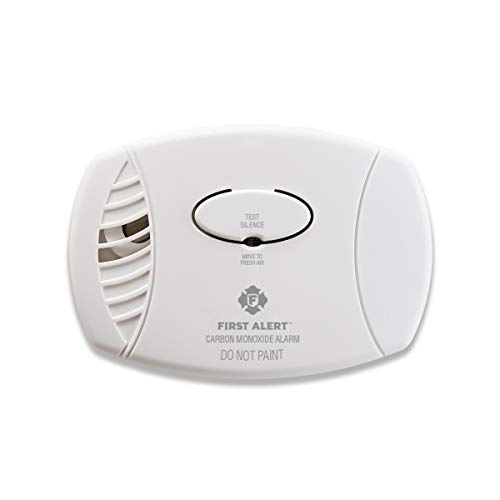
The long-haul record is better than the troubleshooting threads suggest. Owners describe Big Maxx heaters running 8 and 10 years, and the 10-year heat exchanger warranty covers the part that would end the heater's life. Put a battery CO alarm listed to UL 2034 in the garage anyway. The manual warns that too little combustion air can make the heater produce excessive carbon monoxide, and an alarm is the only way you'd know.
How it compares
Heater | Heat into the room | Fuel and hookup | Warranty |
|---|---|---|---|
40,000 BTU/h (50,000 input, 80%) | Natural gas or propane, vented, 120 V, pro install | 3 yr parts, 10 yr heat exchanger | |
Mr. Heater Big Maxx MHU80 | 64,000 BTU/h (80,000 input, 80%) | Same, with a 4 in vertical vent connector | 3 yr parts, 10 yr heat exchanger (listing) |
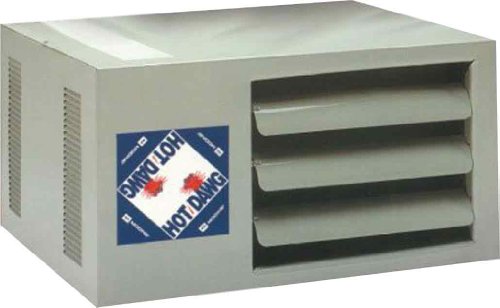
Modine Hot Dawg HD45 | 45,000 BTU input, 80% (listing) | Natural gas, power vented through wall or roof (listing) | No figure |
Comfort Zone CZ220 | 17,060 BTU/h (5,000 W) | 240 V hardwired, 30 A breaker | 1 year |
Dr. Infrared DR-975 | 25,597 BTU/h (7,500 W high) | 240 V hardwired, 40 A breaker | 1 year |
Against the Modine Hot Dawg, the Big Maxx is the value pick. The Modine lists for more than twice as much on Amazon, and garage people trust its parts support and build, but on paper the two do the same job. Against the 80K, buy the bigger one only for a large or leaky building. Against electric, the gas heater wins on output and on running cost wherever gas is cheap, and the electric ceiling heaters win on install simplicity: one 240 V circuit, no gas line, no vent. If you also want summer cooling, look at a mini-split before either.
Our verdict
Buy the Big Maxx MHU50 for a two- or three-car garage or a small shop you keep heated all winter, with gas already on site and a budget for a proper install. It's the most heat per dollar we'd recommend, it's quiet, and it keeps combustion out of your air.
Skip it if you'd be running a new gas line a long way, if your ceiling can't give it 8 ft of clearance underneath, or if you want a heater you install yourself in an afternoon; a 240 V electric ceiling heater is the simpler buy. And whatever you choose, keep the gasoline and paint thinner out of the room it heats.
Score breakdown
It puts 40,000 BTU/h into the room at 80% efficiency, more than twice a 5,000 W electric ceiling heater, and vents its combustion outside. With a wall thermostat it holds a setback all winter, and owners describe a three-car garage climbing from 50°F to 65°F in 10 minutes. It's quiet for a gas unit heater.
Flame-sensor lockouts are routine and need a ladder and the side panel off to clean. New owners report a dead-on-arrival unit, a hard ignition and a cycling combustion fan. On the other side, owners run these for 8 to 10 years, Mr. Heater sells the replacement parts, and the heat exchanger carries a 10-year warranty with 3 years on parts.
It lists for less than half the price of a Modine Hot Dawg and includes the propane conversion kit. Budget most of the money for the install: a gas line, a vent, a 120 V circuit with a disconnect and a thermostat, done by a qualified installer. Check the current price on Amazon.
Mr. Heater Big Maxx MHU50 on Amazon.
The Evidence Behind Our Verdict
Owner reports come from Garage Journal and from r/hvacadvice, r/HomeImprovement, r/propane, r/homeowners and r/garageporn. Most owners name the 50,000 BTU MHU50; a few Big Maxx owners write about things shared across the line: support, cleaning, 50K versus 80K sizing and 80K durability. Satisfied owners praise the heat and the quiet; the troubleshooting threads center on flame-sensor lockouts, with a few out-of-box failures and install mistakes.
Our rating above is our own editorial call. What follows is the field evidence we weighed to reach it: first-hand reports from owners on Reddit and independent HVAC and DIY forums, which we lean on more than manufacturer-influenced published reviews because unsponsored owners tend to be the more candid signal.
What Reddit Is Saying
“I put in a mr heater big Maxx 50,000 BTU in my 3 car, 11 foot ceilings, I love it, it is super quiet, I live in MN, I have had it set at 50F and it can get it up to 65 in 10 minutes.”
“Installed a natural gas garage heater. MHU50 model. I noticed right away during ignition it was abnormally loud and the. Quickly quieted down. This time though, when it ignited, a very loud bang happened, with a flame coming out of the side and it ended up blowing the side panel out 1/4 inch.”
“i recently ran natural gas to my detached garage and purchased a "big max" 50k btu garage furnace . sadly it was DOA”
“Mr heater big maxx- Installed yesterday replaced hotdawg heater. Fired up and worked great. Once it hit the temp it shutdown normally then combustion fan would turn on and off every few second and wouldn’t stop.”
“I recently purchased a home that has a Mr.Heater 50,000 BTU natural gas heater installed with a horizontal vent going straight from the rear of the heater through the wall to the outside. During inspection, we noticed the vent terminated to close to the house and was melting some of the siding outside.”
What Owner Forums Say
“The owners manual spells it out quite clearly. I opted for horizontal venting when I put mine in. For some reason I could not get myself to cut a hole in a brand new metal roof. Have fun with your project! I went with a 50k and it would adequately heat your space.”
“I keep mine around 45/50, bumping up to 62 when I am out there. Work on all kinds of projects/equipment. Have had good success with a Big Max 50k on a horizontal Vent.”
“I have the same heater and had to contact them when I installed because something got damaged in transit. They were more than helpful and accommodating when I talked to them. Sent out parts no proof of receipt needed.”
“I have had the same Big Maxx 80k heater in my garage for 10 years now, luckily have never had to open it up”
“I have an 80K in my well insulated 1200' w/ 10' walls. It is overkill and wish I had settled for the 50K. I keep it at 50 degrees during the winter and it used to cycle quite a bit when really cold out.”
“I have two of the heaters and dust and spiders collect there over the spring, summer, and fall and sometimes cause ignition issues. Not often but occasionally in the 8 years I've been using Big Maxx heaters.”
“My problem is with my mr heater big maxx 50,000 btu.. its stuck in shutdown mode/no flame (2 blink code) as soon as i turn it on via thermostat or the wall switch i have it wired too, nothing runs inducer fan will not turn on, it will not go through its start up procedure. I replaced the board, same issue.”
Frequently asked questions
Is the Mr. Heater Big Maxx MHU50 worth it?
It lists for less than half the price of a Modine Hot Dawg and includes the propane conversion kit. Budget most of the money for the install: a gas line, a vent, a 120 V circuit with a disconnect and a thermostat, done by a qualified installer. Check the current price on Amazon.
How reliable is the Mr. Heater Big Maxx MHU50?
Flame-sensor lockouts are routine and need a ladder and the side panel off to clean. New owners report a dead-on-arrival unit, a hard ignition and a cycling combustion fan. On the other side, owners run these for 8 to 10 years, Mr.
How well does the Mr. Heater Big Maxx MHU50 perform?
It puts 40,000 BTU/h into the room at 80% efficiency, more than twice a 5,000 W electric ceiling heater, and vents its combustion outside. With a wall thermostat it holds a setback all winter, and owners describe a three-car garage climbing from 50°F to 65°F in 10 minutes. It's quiet for a gas unit heater.
What do real owners say about the Mr. Heater Big Maxx MHU50?
Owner reports come from Garage Journal and from r/hvacadvice, r/HomeImprovement, r/propane, r/homeowners and r/garageporn. Most owners name the 50,000 BTU MHU50; a few Big Maxx owners write about things shared across the line: support, cleaning, 50K versus 80K sizing and 80K durability. Satisfied owners praise the heat and the quiet; the troubleshooting threads center on flame-sensor lockouts, with a few out-of-box failures and install mistakes.
Options Worth Checking Out

Comfort Zone CZ220 5,000W Ceiling-Mount Garage Heater
The no-gas-line alternative: 5,000 W (17,060 BTU/h) of electric heat hung from a joist on one 240 V circuit. Less than half the Big Maxx's output, but no vent, no gas piping and no combustion. Fine for a one-car garage or session heat.
Read our full review: we scored it 7.0/10
You Might Also Need
Accessories worth grabbing alongside your purchase
More Mr. Heater Reviews
See all →How Does It Compare?
Side-by-side breakdowns featuring this product

