Cadet SoftHeat Hydronic Baseboard Review: Quieter, Not Cheaper to Run
By Margo Pettibone · Updated October 2026
Independent editorial review. We never accept payment for coverage, though we may earn a commission if you purchase through our links.
 ← EBHN1250W: 71 in long, 9-1/2 in tall (Cadet) →
Spec sheet
| Output (Cadet, EBHN1250W) | 1,250 W / 4,265 BTU/h at 240 V; 937 W at 208 V |
| Current (Cadet) | 5.2 A at 240 V, 4.5 A at 208 V; hardwired |
| Size (Cadet) | 71 in long, 9-1/2 in tall, 3-1/4 in deep; 25.9 lb |
| Heat type | Mineral-oil-filled element, natural convection; no fan |
| Warm-up (Cadet guide) | 30-60 minutes to warm a room initially |
| Thermostat | Sold separately (wall or EBKNW built-in kit) |
| Clearances (guide) | 12 in above and in front, 6 in each side; not below a receptacle |
| Owner-reported failure | Oil weeping from the sealed tube end, burning-oil smell |
| Warranty (Cadet guide) | 7 years limited; clean at least every 24 months |
Verdict
Owner reports come from r/HomeImprovement and r/DIY. All six quoted owners name a Cadet SoftHeat or are discussing one: two are happy with it (a 1970s house converted to SoftHeat, a bedroom unit for allergies that works but feels much like a plain baseboard), two report oil leaks from the sealed tube, one of them replaced under warranty, and two describe mounting it a couple of inches above the floor. Most discussion of electric hydronic baseboards online is about whether they save electricity; we treat that as a physics question, not owner evidence. Owners of boiler-fed hydronic baseboards and of other brands were left out.
Read full take ↓


Buy the Cadet SoftHeat hydronic baseboard for a bedroom, nursery or office where you want silent, even electric heat and you're willing to pay extra for comfort. Don't buy it to cut your electric bill. Every watt of resistance heat makes the same 3.412 BTU whether it goes through bare fins, a fan or a tube of mineral oil, so the 1,250-watt SoftHeat makes exactly the heat a 1,250-watt plain baseboard does, for several times the money.
What the oil buys you is how the heat arrives. The element sits in a sealed, oil-filled copper tube, so the heater warms slowly, runs cooler on the surface, stays quiet with no ticking fins, and keeps giving off heat after the thermostat clicks off. In a room you sleep in, that steadiness is worth something. In a room you heat all winter, the money is better spent on a heat pump.
A note on the listing. The Amazon listing we link doesn't print a model number, but its 240/208V rating and 5.21/4.5 A draw match Cadet's 71-inch, 1,250-watt EBHN1250W. It's sold by a third-party seller, so compare the price with home centers before you order.
Why people pick it
- Silent: convection only, no fan, and no expansion pings from bare fins.
- Gentle heat: the oil-filled element smooths out the on-off swings of a plain baseboard and keeps heating for a while after it shuts off.
- Safer to touch: Cadet bills it as having the lowest surface temperatures available, and the element is sealed inside the tube.
- Floor-friendly: it can sit directly on any floor, carpet included, and has wiring boxes at both ends.
Why people pass
- No energy savings: resistance heat is resistance heat; the oil changes the timing, not the total.
- Price: several times a standard baseboard of the same wattage, and a thermostat costs extra.
- Slow start: Cadet says a cold room can take 30 to 60 minutes to warm.
- Leaks happen: a few owners report oil weeping from the sealed tube end, replaced under warranty.
Sizes and what each one heats
From Cadet's product sheet, 240-volt models. Every SoftHeat is 9-1/2 in tall and 3-1/4 in deep; length grows with wattage.
Model | Length | Watts (240 / 208 V) | BTU/h (240 / 208 V) | Amps (240 / 208 V) | Weight |
|---|---|---|---|---|---|
EBHN500W | 35 in | 500 / 375 | 1,710 / 1,280 | 2.1 / 1.8 | 13.9 lb |
EBHN750W | 47 in | 750 / 563 | 2,560 / 1,925 | 3.1 / 2.7 | 17.9 lb |
EBHN1000W | 59 in | 1,000 / 750 | 3,415 / 2,560 | 4.2 / 3.6 | 21.9 lb |
EBHN1250W (reviewed) | 71 in | 1,250 / 937 | 4,265 / 3,200 | 5.2 / 4.5 | 25.9 lb |
EBHN1500W | 83 in | 1,500 / 1,125 | 5,120 / 3,840 | 6.3 / 5.4 | 29.9 lb |
Cadet also sells 120-volt (-1W) and 208-volt-only (-8W) versions. Match the voltage on the label to your circuit: a 120-volt heater on 240 volts fails, and a 240-volt heater on 120 volts makes a quarter of its heat. On a 208-volt building supply a 240-volt model makes 75% of its rated output.
How big a room
The old rule of thumb is 10 watts per square foot, which puts the 1,250-watt model at about 125 sq ft and the 1,500 at about 150. Treat that as a starting point; a room with an outside corner and big windows needs more, and a proper heat-loss calculation beats any rule of thumb. Because SoftHeat packs about 211 watts into each foot of length, you need a long stretch of free wall: 71 inches for the 1,250, ideally under a window, with nothing within 12 inches in front or above and 6 inches at each end.
Running cost, and the efficiency myth
You'll read that hydronic baseboards save energy because the oil holds heat. They don't save electricity. A room needs a certain number of BTUs to stay warm, and any resistance heater turns each kilowatt-hour into 3,412 BTU. The oil just stores some of that heat and releases it after the element shuts off, so the heater cycles less often. If the steadier heat lets you keep the thermostat a degree lower, that is the only real saving.
The arithmetic: at full output the EBHN1250W uses 1.25 kWh an hour, about 19 cents at an example rate of 15 cents per kWh. The thermostat cycles it, so a room that holds its heat costs less. A cold-climate heat pump at ENERGY STAR's floor of COP 1.75 at 5°F would make the same 4,265 BTU/h for about 714 watts, 43% less on the coldest night and more on mild ones.
What the install requires
Like any hardwired baseboard, it needs a circuit at the right voltage and a thermostat, and Cadet's guide expects the work to follow the National Electrical Code; if you're not comfortable with that, a licensed electrician does it. We give no wiring steps here. What to plan for:
- A thermostat: SoftHeat has none built in. Use a line-voltage wall thermostat or Cadet's EBKNW built-in kit; Cadet recommends an electronic wall thermostat for the best results.
- Circuit load: Cadet limits one breaker to 80% of its rating or the thermostat's rating, whichever is lower. On a 20 A circuit that is 16 A: three EBHN1250W heaters at 5.2 A each fit, a fourth doesn't.
- Placement: mounted level and horizontal only, not below an electrical receptacle, and not against low-density cellulose fiberboard. Cadet asks for the trim to be removed so the heater sits on the floor; one owner who mounted theirs on 2 in of trim says Cadet told them a few inches up is fine.
- Replacing old baseboards: measure the wall first: the 1,250 W model is 71 in long and the 1,500 W model 83 in.
Living with it
Owners who chose SoftHeat for bedrooms and whole older houses are happy with it: quiet, even heat, and no exposed element. The difference from a plain baseboard is subtle enough that one owner who bought it for a spouse's dust allergies said their spouse found it worked while it felt about the same to them. Pair it with a good thermostat; owners who upgraded theirs say it makes a big difference.
The failure to know about is a leak. A few owners report oil weeping from the crimped end of the sealed tube, with a burning-oil smell when the heater runs. Cadet's guide says to stop using a heater that leaks; the fluid is a non-toxic mineral oil that cleans up like used oil. Cadet replaced one owner's leaking heaters under the warranty. Beyond that the heater has no moving parts. Cadet asks you to vacuum it at least every 24 months, and skipping that maintenance voids the warranty.
The warranty
Cadet gives SoftHeat a limited seven-year warranty: it will repair or replace any EBHN heater found defective within seven years of purchase. It doesn't apply to damage from improper installation or the wrong supply voltage, improper maintenance, misuse or unauthorized parts, and the remedy is limited to repair or replacement. Register the heater with Cadet and keep the receipt.
SoftHeat against the alternatives
Option | Heat per watt | Noise | Thermostat | Warranty |
|---|---|---|---|---|
Cadet SoftHeat EBHN1250W | 3.412 BTU/W (resistance) | Silent | Sold separately | 7 years |
Marley Qmark HBB1504 (hydronic) | 3.412 BTU/W (resistance) | Silent (fanless per listing) | Sold separately | No figure |
3.412 BTU/W (resistance) | Fan noise | Built-in knob | 2 years | |
Senville Aura 12K (heat pump) | COP above 1 (more heat per watt) | Quiet indoor head | Remote | Licensed installer required |
- Marley Qmark HBB: the other widely sold electric hydronic baseboard, on Amazon through an electrical distributor. Same principle and same electricity use; compare length and price for the wattage you need.
- Cadet Com-Pak: a fraction of the price with a built-in thermostat, and it heats a room faster. The fan is the trade-off, which is why SoftHeat exists for bedrooms.
- A ductless heat pump: if the room is heated every day of the winter, a mini-split like the Senville Aura 12K, which NEEP rates at 11,500 to 12,000 BTU/h at 5°F depending on version, uses far less electricity and adds cooling. It costs many times more to buy and install.
Is SoftHeat worth it?
For a bedroom, nursery or home office that needs its own quiet heat, yes, if the price gap doesn't bother you: it's silent, steady and simple, with a long warranty. Size it at roughly 10 watts per square foot as a first guess, give it a good thermostat, and check the voltage label against your circuit.
For saving money, no. If the goal is a lower bill, a plain baseboard with a better thermostat costs less up front, and a heat pump costs less to run.
Score breakdown
1,250 W at 240 V is 4,265 BTU/h, enough for roughly 125 sq ft by the usual rule of thumb, delivered silently and evenly with heat that lingers after the thermostat shuts off. It makes no more heat per watt than any baseboard, takes 30-60 minutes to warm a cold room, and needs a separate thermostat.
A sealed element, fins and no moving parts, with a seven-year limited warranty. Owners keep these running for years; the reported failure is oil weeping from the sealed tube end, which Cadet has replaced under warranty. Skipping the every-24-months cleaning voids the coverage.
It costs several times a plain baseboard of the same wattage and saves no electricity, and resistance heat is expensive to run. The Amazon listing is a third-party seller without a model number, so compare prices with home centers. Check the current price on Amazon.
Cadet SoftHeat Hydronic Baseboard on Amazon.
The Evidence Behind Our Verdict
Owner reports come from r/HomeImprovement and r/DIY. All six quoted owners name a Cadet SoftHeat or are discussing one: two are happy with it (a 1970s house converted to SoftHeat, a bedroom unit for allergies that works but feels much like a plain baseboard), two report oil leaks from the sealed tube, one of them replaced under warranty, and two describe mounting it a couple of inches above the floor. Most discussion of electric hydronic baseboards online is about whether they save electricity; we treat that as a physics question, not owner evidence.
Owners of boiler-fed hydronic baseboards and of other brands were left out.
Our rating above is our own editorial call. What follows is the field evidence we weighed to reach it: first-hand reports from owners on Reddit and independent HVAC and DIY forums, which we lean on more than manufacturer-influenced published reviews because unsponsored owners tend to be the more candid signal.
What Reddit Is Saying
“I replaced all of the old ones in my 70's house with the Cadet Softheat line. They're way more expensive up front, but I like them a lot. They have the element inside a tube of mineral oil, basically making them an oil filled space heater. That should also make them safer since the element isn't exposed.”
“My wife has dust allergies and I put one of these Cadet Soft Heat Hydronic baseboards in the bedroom. She says it works, doesn't seem much different to me.”
“I was finally able to get Cadet on the phone and they said it’s fine to go a few inches, just not a few feet”
“I installed exactly that unit. It’s totally not a problem if you don’t mind the cosmetics.”
“I have had several Cadet Softheat hydronic heaters fail due to leaking oil tubes. When it leaks it reeks of burning oil and a little smokey. They've warranteed them out but now I have 2 units that in all other ways are fine.”
“Just found this on our model EBHN1000. Smelled like burning plastic when it ran. Must have been burning oil since it looked very similar to yours.”
Frequently asked questions
Is the Cadet SoftHeat Hydronic Baseboard worth it?
It costs several times a plain baseboard of the same wattage and saves no electricity, and resistance heat is expensive to run. The Amazon listing is a third-party seller without a model number, so compare prices with home centers. Check the current price on Amazon.
How reliable is the Cadet SoftHeat Hydronic Baseboard?
A sealed element, fins and no moving parts, with a seven-year limited warranty. Owners keep these running for years; the reported failure is oil weeping from the sealed tube end, which Cadet has replaced under warranty. Skipping the every-24-months cleaning voids the coverage.
How well does the Cadet SoftHeat Hydronic Baseboard perform?
1,250 W at 240 V is 4,265 BTU/h, enough for roughly 125 sq ft by the usual rule of thumb, delivered silently and evenly with heat that lingers after the thermostat shuts off. It makes no more heat per watt than any baseboard, takes 30-60 minutes to warm a cold room, and needs a separate thermostat.
What do real owners say about the Cadet SoftHeat Hydronic Baseboard?
Owner reports come from r/HomeImprovement and r/DIY. All six quoted owners name a Cadet SoftHeat or are discussing one: two are happy with it (a 1970s house converted to SoftHeat, a bedroom unit for allergies that works but feels much like a plain baseboard), two report oil leaks from the sealed tube, one of them replaced under warranty, and two describe mounting it a couple of inches above the floor. Most discussion of electric hydronic baseboards online is about whether they save electricity; we treat that as a physics question, not owner evidence.
Options Worth Checking Out

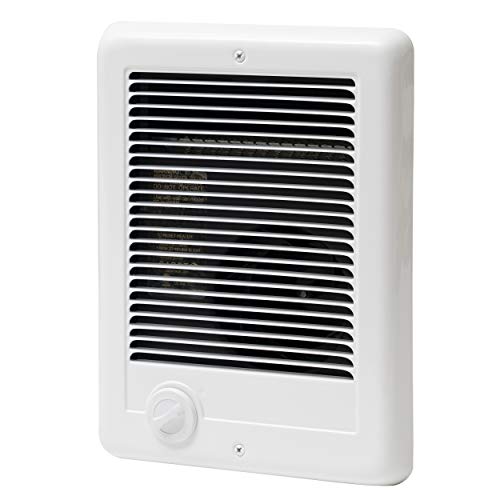
Cadet Com-Pak CSC202TW 2,000W 240V In-Wall Heater with Thermostat
Much cheaper and faster to warm a room, with a built-in thermostat and 6,825 BTU/h at 240 V. The fan is audible, which is why we would put SoftHeat in a bedroom and this in a bathroom or office. Our full review covers it.
Read our full review: we scored it 6.8/10
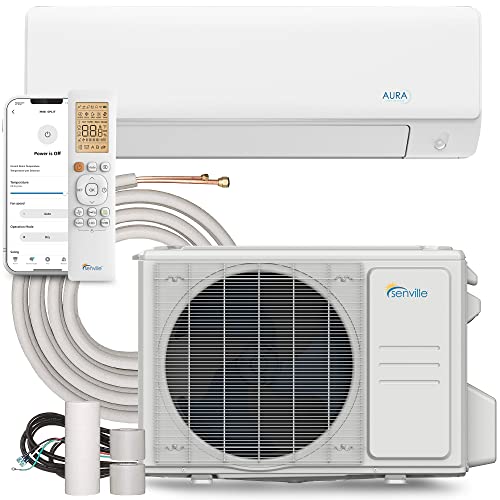
Senville Aura 12,000 BTU Ductless Mini-Split Heat Pump
For a room heated every day of the winter: 11,500 to 12,000 BTU/h at 5°F per NEEP depending on version, plus summer cooling, on far less electricity. It costs many times a baseboard and needs a licensed installer.
Read our full review: we scored it 7.5/10
You Might Also Need
Accessories worth grabbing alongside your purchase


