Senville Aura Mini-Split Review: Cold-Climate Heat, Pro Install Required
By Wendell Asaro · Updated October 2026
Independent editorial review. We never accept payment for coverage, though we may earn a commission if you purchase through our links.
 ← Indoor unit 33.40 in wide (9k/12k) →
Spec sheet
| Rated heat at 47°F (12k) | 12,000 BTU/h (AHRI via NEEP); Senville's site lists 13,000 |
| Heat at 5°F (NEEP, R-454B) | 11,500 BTU/h on 9k and 12k; 18,000 on 18k; 24,200 on 24k |
| Lowest published heating point | -22°F (9k-24k); 12k makes up to 5,900 BTU/h there (NEEP) |
| SEER2 (Senville) | 27.4 (9k) / 25.4 (12k) / 21.4 (18k) |
| HSPF2 Region IV (AHRI via NEEP) | 12.5 / 10.5 / 11.0 / 13.5 (9k-24k); Senville lists higher |
| Electrical (12k) | 208/230V only; 12 A MCA, 15 A max fuse |
| Line set | 25 ft pre-charge; 82 ft max (9k/12k), 98.4 ft (18k), 164 ft (24k) |
| Install type | Vacuum pump and manifold gauge required; Senville says no DIY |
| Warranty (Senville spec table) | 10 yr compressor / 5 yr parts; licensed HVAC install required; labor excluded |
| Owner-reported issues | F5 code on first use (1 confirmed Aura owner, 1 likely); a 4-month-old 24k shutting off seconds after starting |
Verdict
Aura-specific owner discussion is thin and comes from r/hvacadvice, and most threads start with a problem: an F5 code, a short-cycling 24k, a condenser damaged in shipping, mismatched wiring labels, a DIY vacuum step gone wrong. That makes it a list of failure modes, not a failure rate. Parts and support reports are about Senville as a brand, the shipping and labeling reports involve a 33k and an unspecified Aura, and the F5 owner who got parts mailed didn't name a model.
Read full take ↓


Buy the Senville AURA 12,000 BTU mini-split if you heat through real winters and a licensed installer is already lined up. Don't buy it to install yourself. It's the step-up line in Senville's single-zone range, and on paper it's one of the strongest cold-weather units you can buy on Amazon: NEEP's cold-climate list certifies the current R-454B 12k at 11,500 BTU/h at 5°F, every wall size we checked carries ENERGY STAR Cold Climate status, and Senville publishes heating down to -22°F. Senville's current spec tables give the compressor 10 years, double the Leto's.
Check the listing before you order. The one we link is the 208/230V SENA-12HF-16 with a 16 ft line set. Amazon doesn't list the refrigerant, its 25.5 efficiency figure matches the older R-410A Aura 12k on NEEP's list (rated 12,000 BTU/h at 5°F and 10,000 at 17°F), and its warranty field reads 2 years parts and 7 years compressor rather than the 10 and 5 in Senville's current spec table. Confirm the model number and refrigerant with the seller.
Then there's the install. Senville's product FAQ answers "Can I install the system myself?" with "No." The R-454B system must be installed and commissioned by a qualified professional, the install manual requires a vacuum pump, and the warranty certificate is valid only when a licensed professional completes the job. The Aura is a pro-install heat pump that happens to be sold online. It's worth that trouble when you want to stop running backup heat and you've found a contractor who'll work on equipment you supply. Missing either one, a different unit serves you better, and we name it below.
What we like
- Cold output that holds: 11,500 BTU/h at 5°F on the current 12k, about 96% of its 12,000 BTU/h rating at 47°F (both NEEP/AHRI).
- Heat to -22°F: with NEEP capacity data at that temperature for each wall size from 9k to 24k.
- Efficiency: 25.4 SEER2 on the 12k and 27.4 on the 9k, per Senville.
- Warranty term: a 10-year compressor and 5-year parts warranty in Senville's current spec tables, the longest of the units we compare it with here.
- Line-set limits: 82 ft on the 9k and 12k, 98.4 ft on the 18k and 164 ft on the 24k.
What we'd change
- DIY: Senville says no to owner installs, and its warranty requires a licensed HVAC contractor.
- Install: vacuum pump and manifold gauge, no quick-connect option.
- Power: 208/230V only, so most houses need a new circuit.
- Published numbers: Senville's HSPF2 and 47°F heating figures don't match the AHRI-sourced numbers on NEEP's list, and its 24k product page shows a ceiling cassette's spec table.
- The Amazon listing: it shows an older efficiency figure and a shorter warranty than Senville's current tables, so confirm the model and refrigerant before you buy.
- Thin record: owner evidence is sparse and mostly problem reports, and labor is never covered under the warranty.
Which rooms and winters it suits
The Aura earns its price where January nights fall to single digits or below and the heat pump has to carry the room. Think a finished basement or addition in New England, upstate New York, the upper Midwest or the Rockies, a main living area where you want to stop burning oil or propane for most of the winter, or a cabin you keep above freezing. NEEP's cold-climate spec targets IECC climate zone 4 and colder, and every Aura wall pairing we rate is on that list.
- Good fit: rooms whose heat loss at 5°F is close to the unit's 5°F capacity, sized from a Manual J or a careful load estimate; buyers who already have a licensed HVAC contractor willing to install customer-supplied equipment; long or awkward line runs, where the 82 ft to 164 ft limits give the installer room to work.
- Installing it yourself: get the MrCool DIY 5th Gen instead. It ships pre-charged quick-connect lines and its warranty allows owner installs, at the cost of cold-weather output (8,400 BTU/h at 5°F on the 12k).
- Mild winters, mostly cooling: if your winters stay well above 5°F, the Senville Leto cost a good deal less when we checked, under the same warranty rules.
- Your own vacuum install: the Pioneer Diamante Pro's policy doesn't require a licensed installer, though it is rated to heat only down to -4°F.
- Only a 115V outlet: every Aura size we checked is 208/230V.
Cold-weather capacity by size
Nameplate BTU is a 47°F number. For a cold-climate buyer the 17°F and 5°F columns are what count, and there the Aura is strong. These are NEEP's rated figures for the current R-454B wall pairings (SENA-xxHF-OG outdoor with SENA-xxHF-IGG indoor), in BTU/h; -22°F is a maximum. SEER2 is Senville's figure, which NEEP matches; HSPF2 is the AHRI-certified Region IV rating on NEEP.
Size | 47°F | 17°F | 5°F | Max at -22°F | SEER2 | HSPF2 (AHRI) | HSPF2 (Senville site) |
|---|---|---|---|---|---|---|---|
9k | 12,000 | 12,000 | 11,500 | 5,100 | 27.4 | 12.5 | 13.9 |
12k | 12,000 | 12,000 | 11,500 | 5,900 | 25.4 | 10.5 | 13.7 |
18k | 18,000 | 18,000 | 18,000 | 8,000 | 21.4 | 11.0 | 13.4 |
24k | 29,000 | 22,200 | 24,200 | 11,900 | No figure | 13.5 | No figure |
The 9k and 12k carry identical heating figures on NEEP at every temperature, so on paper the 9k gives up nothing in heat; the difference is cooling capacity (9,000 vs 12,000 BTU/h) and efficiency. Senville's own site rates the two differently at 47°F, at 9,800 and 13,000 BTU/h, and lists 21,000 for the 18k. Those don't match the AHRI figures, the same kind of gap as the HSPF2 columns. Measured against Senville's 13,000, the 12k's 5°F output would be about 88% of its rating rather than 96%.
Size around the 5°F number. The 17°F figure is the softer one: MrCool's own submittal for its Olympus 9k and 12k, which share these exact NEEP ratings, prints 9,800 BTU/h at 17°F rather than 12,000, while both sources agree on 11,500 at 5°F. NEEP and MrCool's submittal also both list more output at 5°F than at 17°F for the 24k; we report them as published. We use the AHRI HSPF2 numbers because that's the certified rating. Either set clears the 8.5 HSPF2 floor for a non-ducted cold-climate unit.
Senville's Aura wall pages cover 9k, 12k and 18k with full spec tables. The 24k page shows a spec table for the SENA-24HF-IC ceiling cassette instead of the wall unit, so our 24k figures come from NEEP only, and we couldn't find a published width or sound rating for the 24k wall unit. We couldn't find a single-zone Aura 36k either: Senville's 36k Aura address redirects to the Leto 36k, and NEEP lists SENA-36HF only as a multi-zone outdoor unit. Amazon also carries 6,000, 15,000 and 33,000 BTU Aura listings, and NEEP lists single-zone R-454B wall pairings in those sizes too, but we rate the 9k to 24k wall units. If you're shopping the 15k, its lowest published heating point on NEEP is -13°F, not -22°F.
The rest of the sheet for the 12k: 208/230V single phase, 12 A minimum circuit ampacity and a 15 A max fuse (the 18k calls for 16 A and 20 A). Indoor sound runs from 24 dB on low to 47 dB on turbo, with 57 dB outdoors. The indoor unit is 33.40 in wide on the 9k and 12k and 40.55 in on the 18k.
Running the numbers for a cold room
Say a load calculation puts a room at 10,000 BTU/h of heat loss on a 5°F night. The current Aura 12k's rated 11,500 covers it with 1,500 to spare (the older R-410A 12k's 12,000 would leave 2,000). The Pioneer Diamante Pro 12k (9,000 at 5°F) comes up 1,000 short, the MrCool DIY 5th Gen 12k (8,400) is 1,600 short, and the 115V Senville Leto 12k (6,600) is 3,400 short. That gap is what you're paying for.
Now drop to -22°F. NEEP's maximum for the Aura 12k there is 5,900 BTU/h, about 49% of its 12,000 BTU/h rating at 47°F (45% of Senville's 13,000), and the same room would need more than that because it's colder outside. Plan on at least 4,100 BTU/h of backup heat for those nights. Sizing up doesn't fix it: the 18k tops out at 8,000 BTU/h at -22°F, still short, and an oversized unit short-cycles through the milder months, which is most of the heating season. We'd keep the 12k and add a small backup heater.
What the install involves
The Aura ships with refrigerant charged for 25 ft of line, needs at least 9.84 ft of run, and allows up to 82 ft on the 9k and 12k (49.2 ft of height difference), 98.4 ft on the 18k and 164 ft on the 24k. The connections are flared, and the install manual tells the installer to evacuate the indoor unit and piping with a vacuum pump and manifold gauge before opening the refrigerant valves. There's no quick-connect version. The Amazon listing we link includes a 16 ft line set, so a longer run means a longer line set, which your installer should size within those limits.
- Tools: a vacuum pump and manifold gauge per the manual, and in our view a micron gauge to confirm the vacuum holds. A licensed installer arrives with all three.
- Electrical: a 208/230V circuit sized to the unit (15 A max fuse on the 9k and 12k, 20 A on the 18k). In most houses that means a new circuit; have a licensed electrician run it to local code.
- Refrigerant: R-454B, listed as ASHRAE class A2L in EPA's SNAP table, with a factory charge of 40.92 oz on the 12k. Senville says this system must be installed and commissioned by someone with the qualifications your jurisdiction requires.
- Outdoor unit: a pad or wall bracket, plus a plan for the water it sheds during defrost.
The law backs Senville up. Under EPA's Section 608 rules, attaching gauges and hoses or adding and removing refrigerant is technician work that requires certification, and the regulatory definition of a technician can include owners. That's a large part of why we treat the Aura as a buy-it-and-hire-it unit.
The vacuum step is the part of a flare install a first-timer can get wrong without noticing. One buyer who couldn't get a local tech to call back in a Texas August installed a 9k in a garage, skipped the vacuum-hold step, opened the refrigerant valves, found a leak, and was left asking whether the system needed recovery and a recharge. On an Aura, that DIY attempt has already cost you the warranty.
The warranty and the licensed-installer rule
Plan on a licensed contractor or no coverage. Senville's spec tables list 10 years on the compressor and 5 years on parts for every Aura size. The certificate that governs it states that "in order for your warranty to be valid it must be completed by a licensed professional," and its proper-installation clause limits coverage to systems "installed by a state-certified or licensed HVAC contractor," with Senville able to ask for proof. Labor for diagnosing, repairing, removing, installing, shipping, servicing or handling is excluded. You register at senville.com/warranty. The Amazon listing we link gives its warranty as 2 years parts and 7 years compressor, so confirm the term for the exact model you receive when you register.
Read plainly, a full DIY install leaves you without coverage, and the product FAQ ties its "No" to the warranty terms. The middle path many buyers consider, running the lines yourself and paying a contractor to evacuate and start the system, is a gray area. "Completed by" could fit a contractor who finishes the job; "installed by" reads tighter. If you go that route, get the contractor's license number on an invoice that covers the evacuation and startup, and ask Senville in writing before you rely on coverage.
Line that contractor up before you order; the garage install above went DIY because no local tech would respond in peak season. Ask up front whether the company will install equipment you supply, and what it charges to evacuate and commission a system.
Reliability and support
There isn't much Aura owner history, and nearly all of it comes from people posting because something went wrong. Treat it as a list of failure modes to know about, not a failure rate. No problem shows up with more than a couple of owners, so none of them is a pattern yet.
Keep the warranty certificate where you can find it. An F5 code with no air from the indoor unit on first use is on record, and that owner says the repair wasn't covered by warranty, without saying why. An owner with the same symptom on an unstated model contacted Senville support, which looked up a purchase made directly from Senville about five years earlier and mailed both parts for a $25 shipping charge; the serial number on the warranty certificate was the one thing support needed. We don't have a Senville code table for the Aura, so we won't guess what F5 means.
Inspect the condenser on delivery, and have your installer check the labeling against the manual. A 33,000 BTU Aura arrived with a condenser damaged in shipping, and Senville's tech support judged it cosmetic and offered $120 off to keep it; an installer would never accept a damaged unit for a customer, and you shouldn't either. Other one-off reports: a four-month-old Aura 24k starting and shutting off within seconds on a 90°F day, and terminal numbers and wire colors on the units that didn't agree, which left one owner waiting on a voicemail to Senville asking which was right.
Support opinions split, and they're mostly about the brand. Parts can take two to four weeks if you can reach someone, by one account. Others expect Senville to have better parts availability than MrCool, and a landlord with a dozen budget mini-splits in rentals praises Senville's live tech support. The five-year owner above got parts. On noise, an outdoor unit on a multi-zone Aura system grew loud enough to wake its owner about a year after install, possibly a compressor that had worked loose; there are no noise reports on the single-zone units. There's no owner record on long-term winter performance either, so for that we go on the published figures.
How it compares
Heat at 5°F is NEEP's figure, in BTU/h, for the 12k of each line. Prices are as of when we checked.
Unit | Heat at 5°F | Heating ends | Install | Warranty | Price vs Aura 12k |
|---|---|---|---|---|---|
Senville Aura 12k | 11,500 | -22°F | Flare and vacuum, licensed pro | 10 yr compressor / 5 yr parts, licensed install required | Reference |
MrCool Olympus E Star 4th Gen 12k | 11,500 (5,900 max at -22°F) | -22°F (same NEEP ratings) | Vacuum; MrCool says it needs an HVAC pro | 7 yr compressor / 5 yr parts, no registration; licensed contractor "may be necessary" | Mainly sold through HVAC retailers |
Senville Leto 12k | 6,600 (115V), 8,000 (230V) | 5°F | Vacuum; same licensed-install rule | 5 yr compressor | Cheaper |
Pioneer Diamante Pro 12k 230V | 9,000 | -4°F | Vacuum to 500 microns, 4-hour hold | No licensed installer required; registration needed | Much cheaper |
MrCool DIY 5th Gen 12k 115V | 8,400 | -13°F | Pre-charged quick-connect 25 ft lines, no vacuum | 5 yr parts / 7 yr compressor, owner installs allowed | More expensive on Amazon |
A few details the table can't hold. The Olympus also matches the Aura's 25.4 SEER2 and 10.5 HSPF2, and the only Olympus on Amazon when we checked was the older R-410A Hyper Heat; the current line sells mainly through HVAC retailers. The Pioneer lists 20.0 SEER2 and 9.5 HSPF2, a 16 ft line set and a 50 ft max run, and its policy excludes install faults and lost refrigerant. The MrCool DIY 5th Gen is the one built for owner installs.
The Olympus question
Neither Senville nor MrCool says who builds these units, and we won't guess. The public data does line up. Each 9k to 24k Aura wall pairing on NEEP's list carries the same ratings, value for value, as the matching MrCool Olympus E Star 4th Gen pairing; the 9k on both shows 27.4 SEER2, 12,000 BTU/h at 17°F, 11,500 at 5°F and 5,100 at -22°F. The older R-410A Aura listings match MrCool's legacy Olympus Hyper Heat the same way. That's a strong sign of a shared platform, though nobody has confirmed it.
So you're choosing between paperwork and price, not performance. If an HVAC retailer quotes an Olympus for less, the trade is a 7-year compressor term with looser installer wording against the Aura's 10 years with a strict licensed-install clause. If you're paying a pro either way, the Aura's longer compressor term is the better deal.
Who should buy the Aura
Buy the Aura if you heat through winters that hit 5°F or colder, you want one indoor unit to carry a room without backup most nights, and a licensed contractor is installing it. Of the units we link here, it's the one whose rated 5°F output is close to its nameplate, and Senville backs the compressor for 10 years when the install qualifies. The 12k is the size most rooms need; the 18k makes sense when your load calculation says so, not as insurance.
Skip it if you planned to install it yourself. The MrCool DIY 5th Gen is our DIY pick, and you trade about 3,100 BTU/h of 5°F capacity on the 12k for a warranty that survives an owner install. If winters are mild, the Leto or the Pioneer Diamante Pro cost less when we checked, and you'd rarely use the Aura's extra heat.
Score breakdown
Tied with the Olympus for the best published cold-weather numbers of the units we compare it with: 11,500 BTU/h at 5°F on the current 12k, about 96% of its AHRI-rated 12,000 BTU/h at 47°F, ENERGY STAR Cold Climate status on every wall size we rate, and NEEP capacity data down to -22°F for the 9k to 24k. Cooling is efficient too, at 25.4 SEER2 on the 12k. We hold it back from a 9 because owner reports on winter performance are almost nonexistent.
The 10-year compressor term looks strong, but only a licensed install qualifies and labor is never covered. Owner evidence is thin and problem-led: an F5 code on first use that warranty didn't cover, a similar report (model not stated) fixed with mailed parts, a four-month-old Aura 24k shutting off within seconds, and a shipping-damaged condenser.
Fair for what it does at 5°F, since it outheats every 12k we link that was cheaper when we checked by 2,500 BTU/h or more. But the licensed contractor is part of the price, the Leto and Pioneer cost far less when we checked and suit mild climates, and an Olympus with identical ratings may be quoted for less through a retailer.
Senville Aura Mini-Split on Amazon.
The Evidence Behind Our Verdict
Aura-specific owner discussion is thin and comes from r/hvacadvice, and most threads start with a problem: an F5 code, a short-cycling 24k, a condenser damaged in shipping, mismatched wiring labels, a DIY vacuum step gone wrong. That makes it a list of failure modes, not a failure rate. Parts and support reports are about Senville as a brand, the shipping and labeling reports involve a 33k and an unspecified Aura, and the F5 owner who got parts mailed didn't name a model.
Our rating above is our own editorial call. What follows is the field evidence we weighed to reach it: first-hand reports from owners on Reddit and independent HVAC and DIY forums, which we lean on more than manufacturer-influenced published reviews because unsponsored owners tend to be the more candid signal.
What Reddit Is Saying
“They are mailing us both parts. I just had to pay $25 for shipping. We purchased about five years ago.”
“After buying a Senville Aura unit online, I couldn’t get a response from local HVAC techs (Texas in August = slammed schedules), so I went the DIY route for my ~350 sq. ft garage.”
“I contacted Senville straight away, emailed pictures as asked and I received an email from tech support stating that it was cosmetic and the unit would function properly when installed. They offered me a $120 discount if I kept the unit.”
“I just tried to turn on my senville aura and it doesn't appear to be blowing any air at all and is giving my error code F5.”
“The labels on the units go red, black, white. Which is not 1, 2, 3 as the wires are labeled.”
Frequently asked questions
Is the Senville Aura Mini-Split worth it?
Fair for what it does at 5°F, since it outheats every 12k we link that was cheaper when we checked by 2,500 BTU/h or more. But the licensed contractor is part of the price, the Leto and Pioneer cost far less when we checked and suit mild climates, and an Olympus with identical ratings may be quoted for less through a retailer.
How reliable is the Senville Aura Mini-Split?
The 10-year compressor term looks strong, but only a licensed install qualifies and labor is never covered. Owner evidence is thin and problem-led: an F5 code on first use that warranty didn't cover, a similar report (model not stated) fixed with mailed parts, a four-month-old Aura 24k shutting off within seconds, and a shipping-damaged condenser.
How well does the Senville Aura Mini-Split perform?
Tied with the Olympus for the best published cold-weather numbers of the units we compare it with: 11,500 BTU/h at 5°F on the current 12k, about 96% of its AHRI-rated 12,000 BTU/h at 47°F, ENERGY STAR Cold Climate status on every wall size we rate, and NEEP capacity data down to -22°F for the 9k to 24k. 4 SEER2 on the 12k. We hold it back from a 9 because owner reports on winter performance are almost nonexistent.
What do real owners say about the Senville Aura Mini-Split?
Aura-specific owner discussion is thin and comes from r/hvacadvice, and most threads start with a problem: an F5 code, a short-cycling 24k, a condenser damaged in shipping, mismatched wiring labels, a DIY vacuum step gone wrong. That makes it a list of failure modes, not a failure rate. Parts and support reports are about Senville as a brand, the shipping and labeling reports involve a 33k and an unspecified Aura, and the F5 owner who got parts mailed didn't name a model.
Options Worth Checking Out
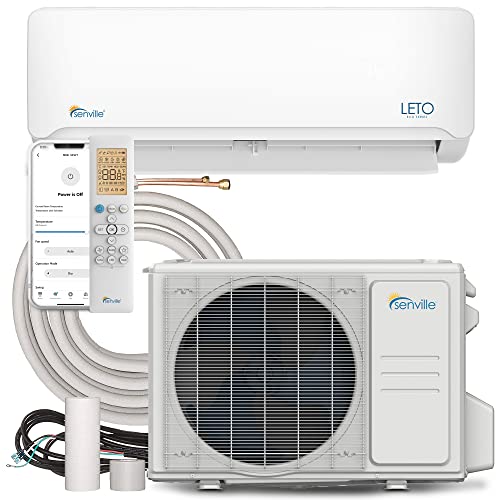
Senville LETO 12,000 BTU Mini-Split Heat Pump
Cheaper than the Aura when we checked, for mild winters: 21.2 SEER2 cooling, but only 6,600 BTU/h at 5°F on 115V and heat rated down to 5°F. Same licensed-install warranty rule and vacuum install as the Aura, with a 5-year compressor term.
Read our full review: we scored it 6.4/10
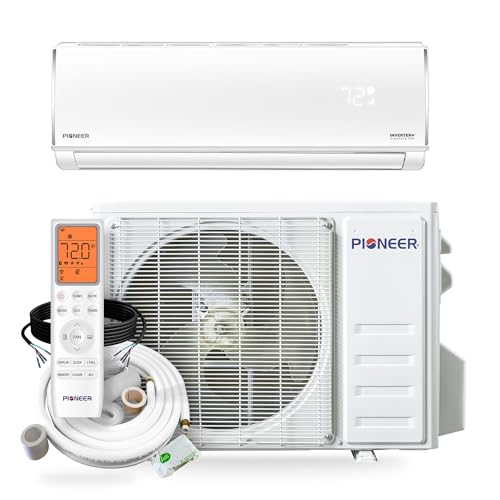

MRCOOL DIY 5th Gen 12,000 BTU 115V Mini-Split
The pick if you want to install it yourself: pre-charged quick-connect lines with no vacuum step and a warranty that allows owner installs. You give up cold-weather heat, 8,400 BTU/h at 5°F against the Aura 12k's 11,500.
Read our full review: we scored it 6.9/10
You Might Also Need
Accessories worth grabbing alongside your purchase

More Senville Reviews
See all →

How Does It Compare?
Side-by-side breakdowns featuring this product

