Cooper & Hunter MIA Mini-Split Review: Good Value, Contractor Warranty Only
By Wendell Asaro · Updated October 2026
Independent editorial review. We never accept payment for coverage, though we may earn a commission if you purchase through our links.
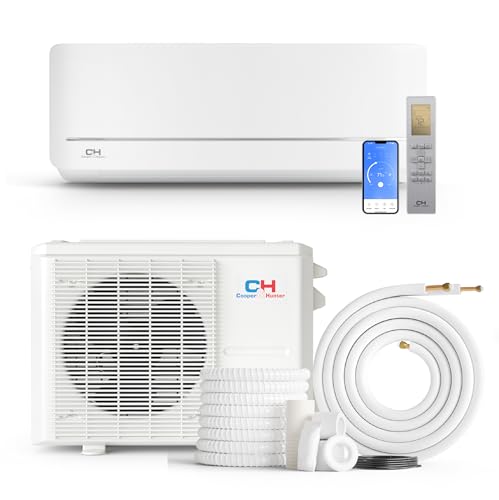 ← 31.57 in wide (12K indoor unit) →
Spec sheet
| Rated heat @ 47°F | 12K: 12,000 · 18K: 18,800 · 24K: 24,000 Btu/h |
| Heat @ 5°F (share of rated) | 12K: 6,600 (55%) · 18K: 11,500 (61%) · 24K: 17,000 (71%) Btu/h |
| Heating range (outdoor) | 5-75°F, all sizes |
| SEER2 / HSPF2 (Region IV) | 12K: 21.2 / 8.7 · 18K: 19.2 / 9.6 · 24K: 18.7 / 9.3 |
| Voltage + max fuse | 12K: 115V, 20 A (19 A MCA) · 18K/24K: 208-230V, 20 A |
| Install type | Vacuum pump + manifold + micron gauge to 500 microns; not quick-connect |
| Line set | 25 ft precharged; max 82 ft (12K), 98.4 ft (18K), 164 ft (24K) |
| ENERGY STAR (ENERGY STAR data) | 24K certified, cold climate; 12K and 18K not listed |
| Warranty | 7-yr compressor / 5-yr parts only with licensed HVAC install + registration in 60 days |
| Owner-reported failure | Refrigerant leaks, then refused warranty claims (C&H mini-splits, series not named) |
Verdict
Owner reports come from r/hvacadvice threads about Cooper & Hunter wall-mount mini-splits. None of the owners names the current R454B MIA series, and some units predate it, so treat these as brand-level evidence. The split is real: owners with no complaints (one of them past four years) on one side, refrigerant leaks and refused warranty claims on the other, with installers arguing that bad flare connections cause many of the leaks.
Read full take ↓


We'd put a Cooper & Hunter MIA in a garage or shop on one condition: a licensed HVAC tech installs it and registers it. The Cooper & Hunter MIA 12,000 BTU 115V mini-split and its 18,000 and 24,000 BTU siblings are efficient on paper and cheap next to the brands installers push. The problem is how they're sold. Cooper & Hunter's own warranty policy says its limited warranty "applies only to products installed by a licensed HVAC technician." Buy one on Amazon, hang it yourself, and you own a mini-split with no manufacturer warranty.
All three sizes are single-zone wall-mount heat pumps from the current MIA line, on R454B refrigerant, with model numbers that start CH-RLS. The 12K runs on 115V; the 18K and 24K need 208-230V. None of them is a pre-charged quick-connect kit. The manual calls for a vacuum pump, a manifold gauge and a micron gauge, which puts the MIA in a different install class from the DIY kits it sits next to in search results.
Size it by the 5°F number, not the one on the box. The 12K 115V makes 6,600 BTU/h at 5°F, 55% of its rating, and the rated heating range on every size stops at 5°F. The 24K holds 71% and is the only one of the three in ENERGY STAR's database, even though Cooper & Hunter's leaflet ticks a cold-climate box for every size.
Owner experience with Cooper & Hunter mini-splits splits cleanly. Several owners have had no trouble, one for four-plus years, and an installer counts a single warranty repair across 50 to 100 installs. The bad stories cluster around refrigerant leaks and warranty claims turned down, including one on a professionally installed pair, and that pattern pulls our reliability score down further than any spec does.
Buy it with an installer, skip it without one
Buy the MIA if a licensed installer is part of the plan and your winters mostly stay above the teens. Skip it if you're installing it yourself or you need heat on nights well below 5°F.
For it:
- Cooling efficiency for the money: 21.2 SEER2 on the 12K 115V, 19.2 on the 18K, 18.7 on the 24K.
- 115V option: a 12,000 BTU heat pump that runs on 115V, for a garage without a 240V circuit.
- The 24K in the cold: it keeps 17,000 BTU/h at 5°F and carries ENERGY STAR's cold-climate flag.
- In the box: Wi-Fi kit and remote, a 150 W base pan heater for the outdoor unit, and a 46°F freeze-protection mode listed on the 12K.
Against it:
- Warranty: it needs a licensed HVAC install, registration within 60 days and the installer's license number. A DIY install gets none of it.
- Install: flare-and-vacuum, so it needs a contractor's tools, and attaching gauges is one of the activities EPA's Section 608 rules name.
- 12K heat: the 12K 115V falls to 9,000 BTU/h at 17°F and 6,600 at 5°F, and no size is rated to heat below 5°F.
- Track record: recurring owner reports of refrigerant leaks and refused warranty claims on Cooper & Hunter mini-splits.
Which garages and climates it fits
The MIA makes sense in a narrower set of spaces than its price suggests.
- Mild-winter garage or shop: cooling is the main job and the coldest nights stay in the teens or above.
- Contractor install: a licensed HVAC contractor is doing the install and will register the unit with their license number inside 60 days.
- Cold-weather heat with a 230V circuit: if you want real winter heat from a contractor-installed unit, that points to the 24K, the only size that clears ENERGY STAR's cold-climate bar.
- Installing it yourself: pick something else. Look at the Klimaire DIY 5th Gen, a pre-charged quick-connect system whose manual says DIY installation is permitted, or the Della Serena, whose web warranty policy covers registered DIY installs. Both have caveats, which we cover below.
- Winters below 5°F: that's where the MIA's rated heating range ends. Klimaire's DIY 5th Gen is rated to heat down to -13°F, and a contractor-installed hyper-heat unit is the other route.
- Rooms under 7.3 ft tall: the manual's R454B rules require at least that ceiling height, plus an indoor unit mounted 6 ft or more off the floor and a minimum room area from its table.
Heat and efficiency by size
Nameplate heat is rated at 47°F, and every heat pump loses capacity as it gets colder outside. Figures for 17°F and 5°F are NEEP's listing data, in BTU/h with the percentage of rated heat; the rest come from Cooper & Hunter's submittals. HSPF2 is Region IV.
Size | 47°F | 17°F | 5°F | COP at 5°F | SEER2 | HSPF2 | EER2 | MCA / max fuse | Max line run |
|---|---|---|---|---|---|---|---|---|---|
12K 115V | 12,000 | 9,000 (75%) | 6,600 (55%) | 1.84 | 21.2 | 8.7 | 10.1 | 19 A / 20 A | 82 ft |
18K 208-230V | 18,800 | 14,000 (74%) | 11,500 (61%) | 2.15 | 19.2 | 9.6 | 10.8 | 15 A / 20 A | 98.4 ft |
24K 208-230V | 24,000 | 20,800 (87%) | 17,000 (71%) | 2.14 | 18.7 | 9.3 | 10.0 | 19 A / 20 A | 164 ft |
All three heat from 5-75°F outdoors and cool from 5-122°F, and all three ship with a 25 ft precharge. Indoor sound (Hi/Med/Lo) is 40.5/32.5/25 dB(A) on the 12K, 45/36/24 on the 18K and 45/41.5/27 on the 24K, with outdoor maximums of 54, 56 and 59.5 dB(A).
Run the arithmetic the listing skips. At 5°F the 12K 115V delivers 6,600 BTU/h. One watt of resistance heat is 3.412 BTU/h, so a 1,500 W plug-in heater makes about 5,100 BTU/h. On a 5°F night, the 12K MIA is worth roughly 1.3 space heaters of output while drawing about half the electricity per BTU (that's what a COP of 1.84 means). That's useful in a well-sealed one-car shop and thin in an uninsulated two-car garage. The 18K's 11,500 BTU/h at 5°F is a real step up, and the 24K's 17,000 is the only figure here we'd call a primary heat source for a cold-climate garage.
The same numbers explain the ENERGY STAR gap. ENERGY STAR's cold-climate criteria ask for a COP of at least 1.75 at 5°F and at least 70% of 47°F heating capacity at 5°F. All three MIA sizes clear the COP bar. Only the 24K clears the capacity bar: 17,000 divided by 24,000 is 70.8%. The 12K (55%) and 18K (61%) don't, and ENERGY STAR's dataset doesn't list either of them, while NEEP shows both with ENERGY STAR marked false. Cooper & Hunter's 2025 MIA leaflet still ticks "Energy Star for Cold Climate" under every size. Go by ENERGY STAR's own listing if a rebate depends on it.
One more check before you click buy. ENERGY STAR's database still carries an older generation of MIA pairs under a different model-number format, so the series name alone doesn't tell you which unit you're getting. The current line's model numbers read CH-RLS, then the size, then MIA, and the spec sheets list R454B. The SEER2 figure in the listing title is the other tell: 21.2, 19.2 and 18.7 match the current 12K 115V, 18K and 24K. Federal rules still allow older higher-GWP systems to be installed if their components were made before January 1, 2025, so old stock hasn't been forced off the shelves. If what arrives doesn't say R454B and CH-RLS on the nameplate, it isn't the unit these specs describe.
What the install involves
The MIA's outdoor unit ships with refrigerant for a 25 ft run, but the lines aren't pre-charged quick-connects. The owner's manual tells you to evacuate the indoor unit and lines with a vacuum pump and manifold gauge, and to run the vacuum for at least 15 minutes or until a micron gauge reads 500 microns. Budget for those three tools if you're doing any of this yourself, plus whatever it takes to make leak-free line connections at both ends. Bad flare connections cause a large share of mini-split leaks, by installers' accounts, and we think they're the single biggest install risk on this unit.
Then there's the legal side. EPA's Section 608 guidance says any person "servicing, installing or disposing of stationary appliances" must be a Section 608 certified technician, and it lists attaching hoses and gauges to measure pressure among the activities that count. A flare-and-vacuum install puts gauges on the system. Read EPA's rules before you plan a weekend install, and know that Cooper & Hunter's manual says installation "must be performed by an authorized dealer or specialist" anyway.
Line length matters more than it looks. The precharge covers 25 ft. Beyond that, the spec sheets list added refrigerant per foot (0.16 oz/ft on the 12K and 18K, 0.32 oz/ft on the 24K), which is a technician's job. Cooper & Hunter's paperwork disagrees on what's in the box. The 12K's product page and the 2025 leaflet list a line set, a 16 ft communication cable and a drain line, while the owner's manual marks the refrigerant piping and connection cable "purchase separately." Confirm with the seller what ships with your unit, and measure your run before you plan the mounting spots.
Electrical comes next. The 12K 115V lists a 19 A minimum circuit ampacity and a 20 A max fuse. The manual says to connect the unit only to an individual branch circuit outlet and not to connect another appliance to that outlet. With a 20 A max fuse, that means a dedicated 20 A circuit; a garage circuit shared with a compressor or saw won't do. The 18K and 24K need a 208-230V circuit with a 20 A max fuse. The manual calls for wiring by a licensed electrician, and a new circuit usually means a permit. Get that quote early, because in a garage it's often the line item that decides between the 115V and 230V sizes.
R454B is an A2L refrigerant, so the manual adds placement rules you won't see on older mini-splits: the indoor unit at least 6 ft above the floor, a room at least 7.3 ft tall, and a minimum room area by charge size. Most garages pass easily; a low basement shop may not. Plan a drain path for the indoor unit's condensate, and remember the outdoor unit sheds meltwater during defrost in heating mode. Keep it off the driveway where that water will freeze.
The warranty, in its own words
This is the section that should decide whether you buy from Amazon at all. Cooper & Hunter's current warranty documents say:
- Coverage: 7 years on the compressor and 5 years on parts "to the original registered end-user," 1 year on the remote. Labor is not covered.
- Refrigerant: excluded. The policy says refrigerant costs, including the refrigerant itself, "are not covered under any circumstances," and that "Cooper&Hunter does not cover any claims related to the lack of refrigerant in new products, discovered upon arrival, or during installation, as well as subsequent refrigerant loss occurring at any time afterward."
- Parts shipping: approved parts are free, but the policy says "the shipping costs for the part will be the sole responsibility of the owner of the product."
- Who installs: "C&H Limited Warranty applies only to products installed by a licensed HVAC technician." The September 2025 warranty leaflet repeats it: units "must be installed by a licensed HVAC Technician to qualify for Limited Warranty."
- Registration: within 60 days of installation, and "Units not registered within 60 Days will not be eligible for warranty." Registration asks for the installer's license number, and the leaflet excludes registrations that can't be verified, naming an "invalid license number" as the example. The policy page adds one exception: "Products in states with Express and Implied Warranties do not need to be registered for C&H Warranty," though an installation invoice is still required for warranty support.
- Online purchases: the 2026 no-registration "Out-of-Box" warranty applies to units bought by technicians at authorized distributor locations, and the policy notes that "online distributors is not considered an 'Authorized Distributor'" for it.
- Transfer and location: first original owner only, at the original install location, not transferable.
Put together, an MIA bought on Amazon and installed by its owner has no manufacturer warranty. An MIA bought on Amazon and installed by a licensed tech who registers it within 60 days gets the 7-year compressor and 5-year parts coverage, and you still pay labor, refrigerant and parts shipping on any repair. The documents also contradict each other twice. The leaflet says warranty periods begin on the date of original installation, while the policy page says the same in one section and, in another, that warranty begins on the date of registration. And the leaflet excludes installs outside North America while the policy page says outside the continental United States. Save a copy of both on the day you register.
Reliability and living with it
No owner report names the current R454B MIA by series, and some of the units described predate it. Read this as evidence about Cooper & Hunter wall-mount mini-splits as a brand, with that caveat attached.
Several owners have had no trouble. A 24K has gone four-plus years, the only multi-year figure on record. Self-installers report a pair running problem-free after a year, and an 18K single-zone and a 3-zone unit that both work great. An installer who has put in 50 to 100 of them since early 2022 counts a single warranty repair, a blower motor.
The bad reports share a shape, and refrigerant leaks are it: two professionally installed units leaking within months, a wall-unit coil leak at about 18 months, and a unit that lost half its charge in under a year. Installers argue that most mini-split leaks start at flare connections rather than in the factory, and some of these installs drew criticism from the owners' own photos. We can't settle each case from the outside. The warranty process afterward is the consistent part. Cooper & Hunter asks for nitrogen and dye testing or a bubble-test video. One owner sent a bubble-test video they say showed the leak plainly and was refused anyway; the owner of the professionally installed pair asked to submit a report or statement instead of the test and was turned down; and a self-installed unit's reversing-valve claim was refused. Leaks are also where the paperwork is weakest: the policy excludes refrigerant loss "occurring at any time afterward," so even an approved leak repair leaves you paying for the recharge.
The hardware isn't a lemon, but Cooper & Hunter's warranty works best when a contractor handles it. The installer with one repair in up to 100 installs finds tech support accommodating toward contractors, and an owner whose claim was refused now advises having the HVAC tech call in the diagnosis. If you go this route, hire someone who'll own the install and the claim.
Owners say little about noise either way, so we'll stick to the published figures: 25 dB(A) on low for the 12K indoor head, and 54-59.5 dB(A) max outdoors depending on size. The base pan heater kicks on below about 37°F in heating mode to keep ice from building in the outdoor unit.
How it compares
Unit | Heat at 5°F | Heating ends | Install | Warranty on a DIY install | Price vs MIA |
|---|---|---|---|---|---|
Cooper & Hunter MIA 12K / 18K | 6,600 / 11,500 | 5°F | Flare and vacuum | None | Reference |
Della Serena 18K | 13,500 (ENERGY STAR, cold-climate certified) | No figure | Flare and vacuum | Free parts at Della's discretion if registered (web policy) | About the same at 18K |
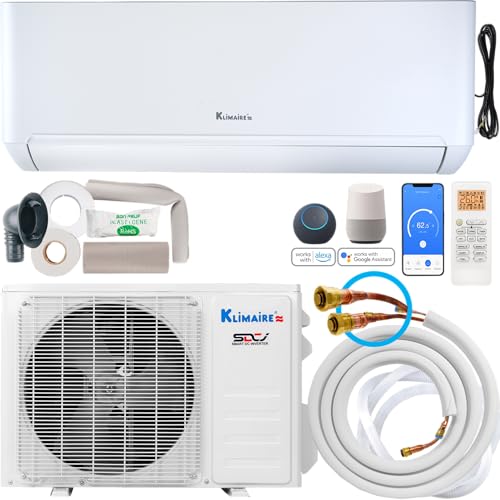
Klimaire DIY 5th Gen 12K 115V | 8,900 (max) | -13°F | Pre-charged quick connect, no vacuum pump or gauges | DIY allowed; claims ask for a licensed installer invoice | More |
Against the Della Serena 18K: same install, more heat at 5°F, and cold-climate certification the 18K MIA lacks. The bigger difference is paperwork. Della's web warranty policy says registered DIY installs get replacement parts free at Della's discretion, with the owner paying shipping after year one, and lifetime parts coverage for units registered within 100 days. Its printed manual still says the extended warranty is for professional installation, so screenshot the web policy when you register. The same EPA rules apply to its install, but for a self-installer we'd still take the Della over the MIA 18K.
Against the Klimaire DIY 5th Gen: this is the pre-charged quick-connect option, with no vacuum pump or gauges according to Klimaire. Its 2026 manual says DIY installation is permitted, and Klimaire's current DIY warranty allows owner installs, but its claim procedure still asks for a licensed tech's install invoice. You're paying to skip the tools and the 5°F floor, not for a guaranteed DIY warranty.
Against Gree's Livo R32, another contractor-leaning value brand on Amazon: same story on the warranty, which applies only to systems installed by a state certified or licensed HVAC contractor. If you're paying a contractor anyway, compare each brand's 5°F figure and pick the unit your installer will stand behind.
Our call on the MIA
Buy the MIA if you're paying a licensed contractor to install it and they'll register it with their license number within 60 days. In that case it's a good-value heat pump, and the 24K is the size we'd pick for any garage that sees real winter: 17,000 BTU/h at 5°F, ENERGY STAR cold-climate listed, and the strongest heating numbers in the line.
Skip it if you're buying on Amazon to install yourself. You'd be doing a contractor's install with contractor tools and no warranty behind the result. For that buyer we'd point to the Della Serena if you're comfortable with a vacuum pump, or the Klimaire DIY 5th Gen if you want quick-connect lines and heat below 5°F.
Score breakdown
Efficiency is strong for the price: 21.2 SEER2 on the 12K 115V and HSPF2 from 8.7 to 9.6 across the three sizes. Cold-weather heat is where the sizes split. The 24K keeps 71% of its rated heat at 5°F, the 12K 115V keeps 55%, and every size stops at a rated 5°F heating floor.
Several owners report no trouble with their Cooper & Hunter mini-splits, one after four-plus years, and an installer reports one warranty repair across 50 to 100 installs. Refrigerant leaks and refused warranty claims recur, including on a professionally installed pair. The warranty only exists if a licensed HVAC technician installs and registers the unit, and it excludes refrigerant loss, which removes the safety net for most Amazon buyers.
The sticker is low for a 19-21 SEER2 heat pump, and the 12K 115V undercuts most quick-connect DIY kits. Add a licensed install to keep the warranty, or the tools to do it without one, and the gap narrows fast. Della's Serena costs about the same at the 18K size with better 5°F numbers and a warranty policy that covers registered DIY installs.
Cooper & Hunter MIA Mini-Split on Amazon.
The Evidence Behind Our Verdict
Owner reports come from r/hvacadvice threads about Cooper & Hunter wall-mount mini-splits. None of the owners names the current R454B MIA series, and some units predate it, so treat these as brand-level evidence. The split is real: owners with no complaints (one of them past four years) on one side, refrigerant leaks and refused warranty claims on the other, with installers arguing that bad flare connections cause many of the leaks.
Our rating above is our own editorial call. What follows is the field evidence we weighed to reach it: first-hand reports from owners on Reddit and independent HVAC and DIY forums, which we lean on more than manufacturer-influenced published reviews because unsponsored owners tend to be the more candid signal.
What Reddit Is Saying
“Have a 24k btu ch mini split. Works great now for 4+ years.”
“I bought 2 C&H and installed them myself and I've had no problems for a year now.”
“I bought 2 cooper hunter mini splits one 18000 btu single zone and one 28000 btu 3 zone. They work great. Its possible you got a bad one out of the box, but I know for a fact professional HVAC guys just do a quick pressure check/vacuum check. When i installed mine and I am a diy'er...i pressure checked each unit with Nitrogen isolated overnight about 12 hours to confirm there were no leaks. I then vacuumed and applied nitrogen 3 times to get out any moisture before doing the final vacuum down below 250 microns.”
“I bought two mini split AC units from the Cooper and Hunter company last summer and had two professional HVAC technicians install it for residential usage. After using it for a month I noticed the air was losing its coolness so the HVAC technicians came and found out there’s a leak inside the compressor. I called the warranty department of the company and they require a very expensive bubble or dye test to find the leak inside the compressor which cost hundreds of dollars.”
“Update: One of my units only 1.5 years old developed a leak in the wall unit coils. I called C&H and they said I had to send proof (bubble test) showing the bubbles. I did and they still denied the warranty even though my video showed obvious bubbles and you could see a tiny spot where it was flickering and leaking. They said my video showed no "new" bubbles. I had already disconnected the unit so didn't have a way to pressurize it and redo the bubble test. I like their ACs but the warranty is not worth beans.”
“I agree with you op, Cooper and hunter would not honor my warranty either. I installed it and had an HVAC guy do a vacuum test for leaks. Ran for 6 months then quit... Had my HVAC guy take a look at it, said it was the reversing valve was bad.... Called on the warranty and they refused to fix it... I will never buy a C&H.”
“I have three mini splits. One is a C&H and the others are senville. No issues with the others. The C&H started freezing over less than a year after installation. Called an AC guy out and I was missing half of my gas.”
Frequently asked questions
Is the Cooper & Hunter MIA Mini-Split worth it?
The sticker is low for a 19-21 SEER2 heat pump, and the 12K 115V undercuts most quick-connect DIY kits. Add a licensed install to keep the warranty, or the tools to do it without one, and the gap narrows fast. Della's Serena costs about the same at the 18K size with better 5°F numbers and a warranty policy that covers registered DIY installs.
How reliable is the Cooper & Hunter MIA Mini-Split?
Several owners report no trouble with their Cooper & Hunter mini-splits, one after four-plus years, and an installer reports one warranty repair across 50 to 100 installs. Refrigerant leaks and refused warranty claims recur, including on a professionally installed pair. The warranty only exists if a licensed HVAC technician installs and registers the unit, and it excludes refrigerant loss, which removes the safety net for most Amazon buyers.
How well does the Cooper & Hunter MIA Mini-Split perform?
6 across the three sizes. Cold-weather heat is where the sizes split. The 24K keeps 71% of its rated heat at 5°F, the 12K 115V keeps 55%, and every size stops at a rated 5°F heating floor.
What do real owners say about the Cooper & Hunter MIA Mini-Split?
Owner reports come from r/hvacadvice threads about Cooper & Hunter wall-mount mini-splits. None of the owners names the current R454B MIA series, and some units predate it, so treat these as brand-level evidence. The split is real: owners with no complaints (one of them past four years) on one side, refrigerant leaks and refused warranty claims on the other, with installers arguing that bad flare connections cause many of the leaks.
Options Worth Checking Out


DELLA Serena 18,000 BTU 22 SEER2 Mini-Split
Same flare-and-vacuum install as the MIA, but ENERGY STAR lists 13,500 BTU/h at 5°F (75%) and Della's web warranty policy gives registered DIY installs free parts. Our pick if you're doing the work yourself.
Read our full review: we scored it 7.3/10
You Might Also Need
Accessories worth grabbing alongside your purchase


