MrCool Olympus Hyper Heat Review: Old vs New Generation
By Wendell Asaro · Updated October 2026
Independent editorial review. We never accept payment for coverage, though we may earn a commission if you purchase through our links.
 ← Indoor unit 38.98 in wide (2022 Hyper Heat 18k) →
Spec sheet
| Rated heat (current E Star, MrCool) | 12,000 / 12,000 / 18,000 / 29,000 BTU/h (9k / 12k / 18k / 24k) |
| Heat at 5°F (NEEP, R-454B) | 11,500 BTU/h on 9k and 12k; 18,000 on 18k; 24,200 on 24k |
| Heat at 17°F (NEEP vs MrCool submittal) | NEEP 12,000 / 12,000 / 18,000 / 22,200; submittal 9,800 / 9,800 / 16,600 / 21,000 |
| Lowest published heating point | -22°F; 18k makes up to 8,000 BTU/h there (NEEP) |
| SEER2 / HSPF2 (current, MrCool) | 27.4 / 12.5 (9k); 25.4 / 10.5 (12k); 21.4 / 11 (18k); 21 / 13.5 (24k) |
| Amazon 18k listing (legacy R-410A) | Model O-HH-18-HP-230E (system kit), no refrigerant listed; "20 SEER" matches the 2022 R-410A O-HH-18-HP-C-230 (old test) |
| Line set (current) | 24.6 ft pre-charge; 82 ft max (9k/12k), 98.4 ft (18k), 164 ft (24k submittal; manual 213) |
| Install and electrical | HVAC pro required per MrCool; vacuum pump and micron gauge; 208/230V only |
| Warranty | 7 yr compressor / 5 yr parts; legacy needs licensed install; current "may be necessary"; no labor |
| Owner-reported issues | R-410A parts unavailable (1 owner, ducted 12k); tone in AC on a multi-zone (1 owner) |
Verdict
Olympus owner discussion is thin and comes from r/hvacadvice, r/DIYHeatPumps and Garage Journal, and nearly all of it is about the older R-410A Hyper Heat. Single-zone owners report theirs working well, including a 24k heating a garage down to -6°F. The negatives are single reports: an owner who couldn't find R-410A parts for an older Olympus eStar 12k on a ducted head, and a tone in cooling mode on a multi-zone system. There are no owner reports yet on the current R-454B E Star 4th Gen.
Read full take ↓


If an installer quotes you a current Olympus E Star at a fair price, take it: its cold-weather numbers are among the best of any unit we cover. The MrCool Olympus Hyper Heat 18k on Amazon is a different machine and a harder call. Amazon gives its model as O-HH-18-HP-230E, a system kit number, and the listing names no refrigerant. Its "20 SEER" matches MrCool's 2022 brochure for the R-410A O-HH-18-HP-C-230, and that's a number from the old SEER test, not SEER2. The current single-zone Olympus is the E Star 4th Gen, an R-454B line whose outdoor model numbers end in -230C-O1 (O-ES-18-HP-C-230C-O1 on the 18k), and we didn't find it on Amazon. Both generations look strong on paper for cold climates. NEEP's cold-climate list rates the current 18k at 18,000 BTU/h at 5°F, its full rated output, and MrCool publishes heating down to -22°F.
Neither generation is a DIY unit. MrCool's own FAQ asks whether the Olympus is a do-it-yourself system and answers "No, an HVAC professional must install the Olympus mini-split system." The install manual has the installer evacuate the lines with a vacuum pump and a micron gauge. Whatever you pay for the box, a contractor's bill comes with it.
The Amazon 18k is the older refrigerant, it cost more than the Senville Aura 18k when we checked, and the Aura's published ratings match the Olympus value for value. We'd only buy it with an installer already lined up who is happy to commission R-410A equipment.
Which Olympus you are looking at
MrCool's documents show at least three single-zone wall-mount Olympus versions from the last few years, plus an older E-Star, and the paperwork differs between them. Read the outdoor model number before anything else.
Version | Refrigerant | Outdoor / wall models | Ratings |
|---|---|---|---|
Olympus Hyper Heat, 2022 | R-410A | O-HH-09/12/18/24-HP-C-230 with O-xx-HP-WMAH-230A wall units | Old SEER/HSPF test: 20.0 SEER and 10.3 HSPF on the 18k |
Olympus Hyper Heat, 2024 | R-410A | Same family with a -230B suffix (NEEP also lists -230A pairings, as sold in Canada) | SEER2/HSPF2: 21.5 SEER2 and 11.3 HSPF2 on the 18k |
Olympus E Star 4th Gen (current) | R-454B | O-ES-09/12/18/24-HP-C-230C-O1 with O-xx-HP-WMAH-230C-O wall units | See the tables below |
Older E-Star | R-410A | O-ES-09/12/18/24-HP-C-230B, beside the O-HH-...-230B units | Covered in MrCool's February 2023 manual |
- The Amazon listings: the "18k BTU 20 SEER" listing matches the 2022 Hyper Heat, though Amazon gives the model as O-HH-18-HP-230E and lists no refrigerant. Amazon's 24k Olympus listing (O-HH-24-HP-230E) advertises 20.5 SEER, the 2022 brochure's figure for the R-410A 24k.
- 2022 vs 2024: don't compare the 2024 unit's 21.5 SEER2 to the 2022 unit's 20 SEER; they come from different tests.
- The current line: the E Star 4th Gen is what MrCool's product pages and configurator show today. NEEP also lists R-454B "O-HH-...-230C-O" Hyper Heat pairings with ratings identical to the O-ES units, but MrCool's own tools only show the O-ES condensers.
- The older E-Star: MrCool's February 2023 Olympus manual covers "Single-Zone (Hyper Heat & E-Star)" models and writes its piping and charging tables for R410A. Same O-ES prefix as today's line, older refrigerant.
Two naming traps. Neither the words "E Star" nor the O-ES prefix prove you have the current unit. MrCool's 2023 manual pairs O-ES...-230B condensers with R410A charging tables, and one owner describes their 12k "Olympus eStar" condenser as part of MrCool's R-410A equipment. Look for R-454B on the nameplate and an outdoor model number ending in -230C-O1 instead. And "Hyper Heat" here is MrCool's name, not a link to Mitsubishi's cold-climate line; nothing in MrCool's documents ties the two. MrCool's old Olympus Hyper Heat product page now returns an error, which fits a line that has been replaced.
Does the generation matter if you buy the Amazon unit? Mostly for service. EPA's current rule lets residential R-410A split systems still be installed where all the specified components were manufactured or imported before January 1, 2025, so an R-410A Olympus isn't illegal to install. Parts are the open question. The owner with the R-410A Olympus eStar said "the MrCool 410a stuff is unavailable" and couldn't find a matching wall unit for sale. That's one owner's experience with a ducted setup, but it's the risk you take buying a superseded refrigerant generation.
Strengths and weak spots
What we like:
- Cold-weather output on the current line: 11,500 BTU/h at 5°F on the 9k and 12k, 18,000 on the 18k and 24,200 on the 24k (NEEP), with ENERGY STAR Cold Climate status on all four.
- Deep-cold data: heating published down to -22°F on both generations, with NEEP capacity data at -22°F for every current size.
- Efficiency: 27.4 SEER2 on the current 9k and 25.4 on the 12k, per MrCool.
- Long line runs: 82 ft on the 9k and 12k, 98.4 ft on the 18k, and at least 164 ft on the 24k.
- Owner record: single-zone Hyper Heat units have a good one, including a garage down to -6°F.
What we don't:
- Not a DIY unit: MrCool says an HVAC professional must install it, and the install needs a vacuum pump and micron gauge.
- Amazon stock: the only Olympus listings on Amazon when we checked were the older R-410A Hyper Heat (18k and 24k), and the 18k cost more than a Senville Aura 18k with matching published ratings.
- Conflicting 17°F numbers: MrCool's own submittal prints lower 17°F capacity than NEEP for every current size.
- Electrical: 208/230V only, so most houses need a new circuit.
- Warranty: a 7-year compressor term, three years shorter than the Aura's if the 10-year term in Senville's spec table applies to the unit you buy, and labor is never covered.
- No current-model history: no owner reports yet on the current R-454B E Star single-zone units.
Which spaces and climates it fits
The Olympus is built for the house that heats through real winters: a main living area in New England or the upper Midwest where you want to stop burning oil or propane most of the season, a finished basement or addition that the furnace never reached, a garage or shop you keep above freezing. Every current wall pairing is on NEEP's cold-climate list, and the published 5°F output on the 9k, 12k and 18k is essentially the full rated capacity.
Where it fits best:
- Load-matched rooms: rooms whose heat loss at 5°F lands close to the unit's 5°F capacity, sized from a Manual J or a careful load estimate.
- Contractor installs: buyers working with an HVAC contractor who sells MrCool, or who will install equipment you supply.
- Long line runs: long or awkward line runs, where 82-164 ft of allowed piping gives the installer room.
- Cold garages and shops: heated garages and shops in cold climates. A 24k has kept a 24x26 garage running down to -6°F.
Pick something else:
- DIY installs: if you plan to install it yourself. MrCool's DIY 5th Gen ships a pre-charged Quick Connect line set and a warranty that allows owner installs, at the cost of cold-weather heat (12,800 BTU/h at 5°F on the 18k, against 18,000 here).
- Amazon buyers: if you're buying on Amazon and paying a pro either way. The Senville Aura publishes the same ratings and Senville's spec tables list a 10-year compressor term, though the Amazon listing we link gives 2 years parts / 7 compressor.
- Mild winters: if your winters rarely drop below freezing and cooling is the main job. You'd be paying for low-temperature capacity you won't use.
- 115V only: if all you have is a 115V outlet. Every Olympus size is 208/230V.
Cold-weather output by size
Nameplate heat is rated at 47°F, and it tells you little about a January night. The figures that matter are 17°F and 5°F. For the current R-454B E Star line, the table combines MrCool's rated heating capacity with NEEP's AHRI-sourced figures for the O-ES wall pairings. Capacities are BTU/h; every size is 208/230V.
Size | Rated (47°F) | 17°F (NEEP) | 17°F (MrCool submittal) | 5°F | Max at -22°F | SEER2 | HSPF2 |
|---|---|---|---|---|---|---|---|
9k | 12,000 | 12,000 | 9,800 | 11,500 | 5,100 | 27.4 | 12.5 |
12k | 12,000 | 12,000 | 9,800 | 11,500 | 5,900 | 25.4 | 10.5 |
18k | 18,000 | 18,000 | 16,600 | 18,000 | 8,000 | 21.4 | 11 |
24k | 29,000 | 22,200 | 21,000 | 24,200 | 11,900 | 21 | 13.5 |
MrCool's own submittal for the same units disagrees at 17°F, all below NEEP, while both sources agree at 5°F. We use NEEP as the certified listing, but if your load calculation leans on the 17°F number, plan around the submittal's lower figure. Both sources also show the 24k making more heat at 5°F than at 17°F; we report that as published.
The older R-410A Hyper Heat, from NEEP's listings for the -230B pairings (NEEP lists these as sold in Canada; the no-suffix version the Amazon listing matches has no NEEP listing we could find):
Size | 17°F | 5°F | Notes |
|---|---|---|---|
9k | 9,500 | 10,600 | |
12k | 10,000 | 12,000 | |
18k | 15,000 (up to 19,200) | 18,000 | 21.5 SEER2 and 11.3 HSPF2 on the -230B. NEEP lists the -230A pairing with the same figures. |
24k | 21,200 | 25,000 |
So the Amazon 18k gives up nothing at 5°F against the current 18k on paper, and trails it by 3,000 BTU/h at NEEP's 17°F point. Its heat-mode range in the legacy manual is -22°F to 75°F, the same span MrCool publishes for the E Star.
The rest of the current sheet: outdoor units are rated 56 dB(A) on the 9k and 12k, 59 on the 18k and 61.5 on the 24k. The 9k wall unit runs from 19.5 dB(A) on Silent to 38 on Turbo, the 18k from 19.5 to 49.5. Wall units are 33.74 in wide on the 9k and 12k, 40.31 in on the 18k and 47.13 in on the 24k. For the 2022 Amazon 18k, MrCool lists 45.5/36/29.5 dB(A) indoors on high, mid and low, and a 38.98 in wide wall unit. These are MrCool's figures, not our measurements.
Running the numbers on a cold night
Say a load calculation puts a room at 15,000 BTU/h of heat loss on a 5°F night. The current Olympus 18k's 18,000 covers it with 3,000 to spare, and so does the R-410A Amazon 18k on its NEEP rating. MrCool's own DIY 5th Gen 18k, at 12,800, comes up 2,200 short. That gap is most of what the Olympus's vacuum install and contractor bill buy you.
Drop to -22°F and the picture changes. NEEP's maximum for the 18k there is 8,000 BTU/h, about 44% of its 18,000 rating, while the same room is losing more than 15,000 because it's colder outside. You'd need at least 7,000 BTU/h of backup for those nights, and more as the load climbs. Stepping up to the 24k doesn't close it: 11,900 BTU/h at -22°F is still short, and with 29,000 BTU/h rated at 47°F it is more unit than the load needs most of the season. Its NEEP minimum at 47°F is 11,800 BTU/h, against 11,200 for the 18k, so the bigger unit doesn't turn down any lower on a mild day. We'd keep the 18k and plan a backup heater for the coldest week.
Efficiency clears the cold-climate bar with room to spare. ENERGY STAR's cold-climate criteria call for at least 8.5 HSPF2 on a non-ducted split and at least 70% of 47°F capacity at 5°F. The current 12k delivers about 96% of its rating at 5°F, and the 24k about 83%.
What the install involves
This is a conventional vacuum install for a licensed tech, and MrCool says so. The current outdoor units carry enough refrigerant for 24.6 ft of line on every size. Maximum piping length is 82 ft on the 9k and 12k (49.2 ft of height difference) and 98.4 ft on the 18k (65.6 ft). On the 24k, MrCool's submittal lists 164 ft and 82 ft of rise, while the install manual allows 213 ft and 98.4 ft; your installer should work to the manual that ships with the unit. On a longer run, adjusting the charge is the installer's job under the manual.
Before the refrigerant valves are opened, the manual has the installer evacuate the lines with a vacuum pump, running it "for at least 15 minutes, or until the vacuum measured using micron gauge to 500 microns." Item 45 of the manual's safety list adds a hold test for the evacuation: once the specified vacuum is reached, "the refrigeration system shall be isolated from the vacuum pump and the pressure shall not rise above 1500 microns within 10 minutes." We'd want to see the 500-micron reading confirmed rather than a timed pull, and that hold test passed before the valves open. A licensed installer brings the pump, gauges and micron gauge.
- Electrical: 208/230V on every size, which in most houses means a new circuit. Have a licensed electrician size and run it from the unit's nameplate and the manual.
- Refrigerant: R-454B on the current E Star, R-410A on the Hyper Heat models including the Amazon 18k. Under EPA's Section 608 rules, attaching gauges and hoses or adding and removing refrigerant is technician work, and the regulatory definition of a technician can include owners.
- Outdoor unit: a pad or wall bracket, and a plan for the water a heat pump sheds during defrost.
- Line set: confirm what ships with the unit you order and size any additional line to the limits above.
Line up the contractor before you order. If you're buying the current E Star, the simplest path is a contractor who sells MrCool and handles the whole job. If you're buying the Amazon unit, ask up front whether the company will install customer-supplied equipment, whether it will commission R-410A, and what it charges to evacuate and start a system.
The warranty, old and new
Both generations carry the same headline terms, 7 years on the compressor and 5 years on parts, but the fine print changed.
The current Olympus 4th Gen warranty states that "the unit comes standard with a five (5) year parts and seven (7) year compressor warranty," and MrCool lists no registration requirement. Its installer language is softer than you'd expect from a pro-only product: "When required by law or when required for diagnostic testing as directed by MRCOOL, a State or province certified or licensed HVAC contractor may be necessary." That's the same "may be necessary" wording MrCool uses on its DIY line. It doesn't change MrCool's product FAQ, which says an HVAC professional must install the Olympus, and we'd treat the FAQ as the rule.
The legacy warranty linked from MrCool's Hyper Heat 18k page is stricter. It gives "Seven (7) years on compressor and Five (5) years on all parts to the original registered end-user," plus one year on the remote, and says the limited warranty "applies only to systems that are installed by a state certified or licensed HVAC contractor." Coverage starts on the date of original installation, or 120 days from the date of manufacture if that date can't be verified. If you buy the Amazon R-410A unit, keep the contractor's license number and the install date on the invoice.
Labor is excluded under the current terms, including costs for diagnosing, repairing, removing, installing or shipping parts. On a pro-installed system that's the bill that hurts when something fails, so ask your installer what labor warranty they offer on their own work.
Reliability and living with it
The owner record is short and leans positive, and it's almost all about the older Hyper Heat. There are no owner reports yet on the current R-454B E Star single-zone wall units, so for those we go on the published figures.
Single-zone Hyper Heat owners are happy with them. A 12k and an 18k carrying a first floor through spring and fall ahead of the boiler work great for heating and cooling with no issues. The standout is a 24k in a 24x26 garage with a 12 ft scissor truss: in its first winter it kept working down to -6°F, holding the garage at 45°F in Freeze Protection mode, though it ran defrost often in that mode. A 12k self-installed in a two-car garage has run fine for two summers and a winter, its owner's only question being whether its power cycling in heat mode was normal. That self-install is exactly what the legacy warranty excludes, so don't read it as a path to coverage.
The problems are one-offs. The owner of that first-floor pair also has an Olympus two-zone system upstairs, and both of its wall units make a loud tone from time to time in cooling mode; that's a multi-zone unit, not the single-zone models we rate. The more useful warning comes from a trailer. A 12k R-410A Olympus eStar condenser on a concealed ducted air handler struggled to keep up, its owner replaced it with another brand's 18k, and they couldn't find a MrCool wall unit to reuse the condenser because the R-410A equipment had been discontinued. A ducted head in a trailer is a hard job for any 12k, but the parts problem applies to anyone buying R-410A now.
A 27K Olympus, a size outside the 9k-24k range we rate, heats and cools well and drew about 1,000 W while heating near freezing outside; its owner couldn't tell whether that was good. Without a load figure for the room, neither can we.
On longevity, the only signal of any size is an installer's count: 15-20 Advantage and Olympus units professionally installed without a failure of any kind. That isn't owner data, but it points the same way as the owners.
How it compares
Heat at 5°F is NEEP's figure in BTU/h.
Unit | Heat at 5°F | Heating range ends | Install | Warranty |
|---|---|---|---|---|
MrCool Olympus E Star 12k / 18k | 11,500 / 18,000 | -22°F | Vacuum, HVAC professional per MrCool | 5 yr parts, 7 yr compressor; no labor |
Senville Aura 12k | 11,500 (5,900 max at -22°F; 25.4 SEER2, 10.5 HSPF2) | -22°F | Vacuum; warranty requires a licensed HVAC contractor outright | Spec tables: 5 yr parts, 10 yr compressor. Amazon listing we link: 2 yr parts / 7 compressor |
MrCool DIY 5th Gen 12k / 18k | 8,400 / 12,800 | -13°F | 25 ft pre-charged Quick Connect, no vacuum step per MrCool | 5 yr parts, 7 yr compressor; owner installs allowed |
Pioneer Diamante Pro 12k 230V | 9,000 | -4°F | Vacuum to 500 microns with a 4-hour hold | Policy doesn't require a licensed installer |
- Senville Aura: identical published ratings to the current E Star on NEEP for each 9k to 24k wall pairing, and the older R-410A Aura listings match the Hyper Heat the same way. Confirm the warranty term for the model you receive, and check the model and refrigerant on any Aura listing too. The Aura 18k cost less than the Olympus 18k on Amazon when we checked.
- DIY 5th Gen: built for owner installs. The trade is heat.
- Pioneer Diamante Pro: cost far less when we checked. A milder-climate unit.
You'll hear that the DIY series is the Olympus with quick-connect fittings. The published numbers don't support it. At 5°F, NEEP lists the DIY 5th Gen 18k at 12,800 BTU/h and the Olympus E Star 18k at 18,000, and the DIY line's heating range stops at -13°F. Whatever the two share inside, they don't perform the same in the cold.
You may also see an AHRI certificate cited, by an installer on a forum, showing 10,800 BTU/h at 17°F for an Olympus Hyper Heat 18k, below the 11,300 cited for MrCool's DIY 18k of that time. We couldn't find that certificate. It's well under NEEP's 15,000 for the -230A and -230B Hyper Heat 18k, and NEEP has no listing for the no-suffix model in the Amazon title, so we can't rule out that an earlier rating differed.
Olympus, Aura or DIY 5th Gen?
If a contractor is installing it, the Olympus and the Aura are the same choice on performance, so pick on paperwork and price. Neither Senville nor MrCool says who builds these units, and we won't guess; the matching published data is a strong sign of a shared platform, not proof. The Aura gives you a strict licensed-install clause and, if the 10-year term in Senville's spec table applies to the unit you buy, three more years on the compressor (the Amazon listing we link gives 2 years parts / 7 compressor); the current Olympus gives you 7 years with looser written wording, but MrCool still says a pro must install it. When you're paying a pro either way, the Aura is the better deal if that 10-year term holds for your unit, unless an Olympus quote comes in meaningfully lower. If you want to do the work yourself, neither is for you; the DIY 5th Gen is.
Who should buy an Olympus
Buy the current Olympus E Star 4th Gen if you heat through winters that hit 5°F or colder, a contractor who sells MrCool quotes it at a fair price, and you want one indoor unit to carry a room most nights. The 12k and 18k hold essentially their full rating at 5°F, and the published data runs to -22°F. Size it from a load calculation, not as insurance, and plan backup heat for the deep-cold nights.
Think hard before buying the Amazon 18k. It's a capable R-410A heat pump on paper, but it's a superseded generation, its legacy warranty requires a licensed contractor, and it cost more than the Aura 18k when we checked, with matching published ratings. Buy it only with an installer who'll commission R-410A, and only if the price beats the alternatives. And if the vacuum pump is what's stopping you, skip the Olympus entirely and look at MrCool's DIY 5th Gen.
Score breakdown
The same published cold-weather numbers as the Senville Aura: 11,500 BTU/h at 5°F on the current 12k and 18,000 on the 18k, close to full rated output, with ENERGY STAR Cold Climate status and NEEP data down to -22°F. The older R-410A Amazon 18k also holds 18,000 at 5°F on NEEP. A 24k has heated a garage at -6°F. We stop short of a 9 because MrCool's own submittal prints lower 17°F figures than NEEP for every current size.
Three single-zone Hyper Heat owners report theirs working well, and one installer reports no failures across 15-20 Advantage and Olympus installs. Against that: no owner reports yet on the current R-454B units, one owner who couldn't source R-410A parts, a tone complaint on a multi-zone system, a 7-year compressor term that trails the Aura's 10 if the 10-year term in Senville's spec table applies to the unit you buy, and no labor coverage.
The only Olympus listings on Amazon when we checked were the older R-410A Hyper Heat (18k and 24k), and the 18k cost more than a Senville Aura 18k with matching published ratings when we checked; buy it only with an installer who'll commission R-410A. The current E Star sells through HVAC retailers, and a licensed contractor is part of the price either way. It earns its keep only where you need its 5°F output and the quote is competitive.
MrCool Olympus Hyper Heat on Amazon.
The Evidence Behind Our Verdict
Olympus owner discussion is thin and comes from r/hvacadvice, r/DIYHeatPumps and Garage Journal, and nearly all of it is about the older R-410A Hyper Heat. Single-zone owners report theirs working well, including a 24k heating a garage down to -6°F. The negatives are single reports: an owner who couldn't find R-410A parts for an older Olympus eStar 12k on a ducted head, and a tone in cooling mode on a multi-zone system.
There are no owner reports yet on the current R-454B E Star 4th Gen.
Our rating above is our own editorial call. What follows is the field evidence we weighed to reach it: first-hand reports from owners on Reddit and independent HVAC and DIY forums, which we lean on more than manufacturer-influenced published reviews because unsponsored owners tend to be the more candid signal.
What Reddit Is Saying
“Two Olympus Hyper Heats 12k +18k wall mounts on the first floor that we use the heat function in the Spring/Fall before turning on the boiler for winter. They work great for heating and cooling.”
“I have a 12kbtu MrCool Olympus eStar condenser hooked to a concealed ducted unit in a trailer, and it's struggling to keep up. I bought a different manufacturer's 18k equivalent to replace it, as the MrCool 410a stuff is unavailable.”
What Owner Forums Say
“I just put in a Mrcool Olympus hyper heat 24K unit (24x26, 12' @center scissor truss) So far ambeint as low as -6F it has worked fine. It has a Freeze Protection mode that maintains a 45F garage. it does seem to run on Defrost quite a bit in this mode”
Frequently asked questions
Is the MrCool Olympus Hyper Heat worth it?
The only Olympus listings on Amazon when we checked were the older R-410A Hyper Heat (18k and 24k), and the 18k cost more than a Senville Aura 18k with matching published ratings when we checked; buy it only with an installer who'll commission R-410A. The current E Star sells through HVAC retailers, and a licensed contractor is part of the price either way. It earns its keep only where you need its 5°F output and the quote is competitive.
How reliable is the MrCool Olympus Hyper Heat?
Three single-zone Hyper Heat owners report theirs working well, and one installer reports no failures across 15-20 Advantage and Olympus installs. Against that: no owner reports yet on the current R-454B units, one owner who couldn't source R-410A parts, a tone complaint on a multi-zone system, a 7-year compressor term that trails the Aura's 10 if the 10-year term in Senville's spec table applies to the unit you buy, and no labor coverage.
How well does the MrCool Olympus Hyper Heat perform?
The same published cold-weather numbers as the Senville Aura: 11,500 BTU/h at 5°F on the current 12k and 18,000 on the 18k, close to full rated output, with ENERGY STAR Cold Climate status and NEEP data down to -22°F. The older R-410A Amazon 18k also holds 18,000 at 5°F on NEEP. A 24k has heated a garage at -6°F.
What do real owners say about the MrCool Olympus Hyper Heat?
Olympus owner discussion is thin and comes from r/hvacadvice, r/DIYHeatPumps and Garage Journal, and nearly all of it is about the older R-410A Hyper Heat. Single-zone owners report theirs working well, including a 24k heating a garage down to -6°F. The negatives are single reports: an owner who couldn't find R-410A parts for an older Olympus eStar 12k on a ducted head, and a tone in cooling mode on a multi-zone system.
Options Worth Checking Out
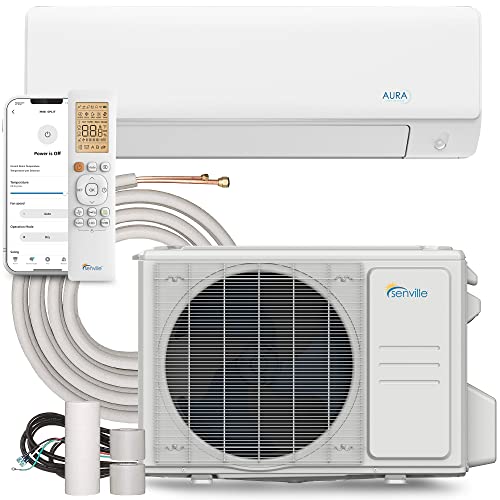
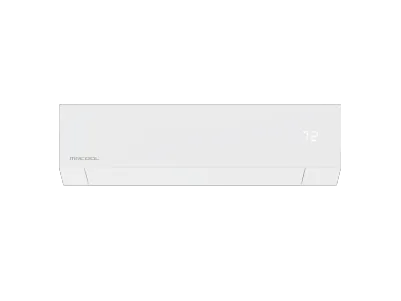
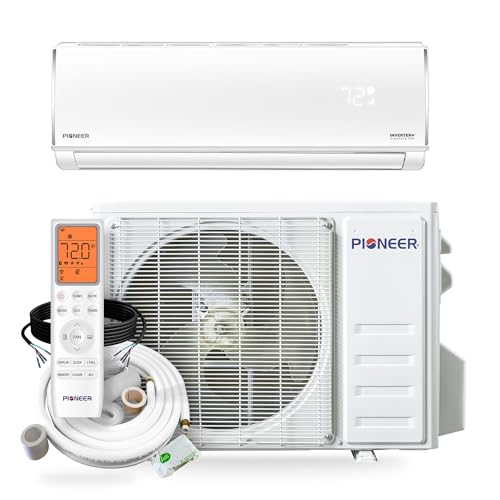

MRCOOL DIY 5th Gen 12,000 BTU 115V Mini-Split
The MrCool to buy if you will install it yourself: a pre-charged Quick Connect line set, no vacuum step, and a warranty that allows owner installs. You give up cold-weather heat, 8,400 BTU/h at 5°F against the Olympus 12k's 11,500.
Read our full review: we scored it 6.9/10
You Might Also Need
Accessories worth grabbing alongside your purchase

More MrCool Reviews
See all →


How Does It Compare?
Side-by-side breakdowns featuring this product
