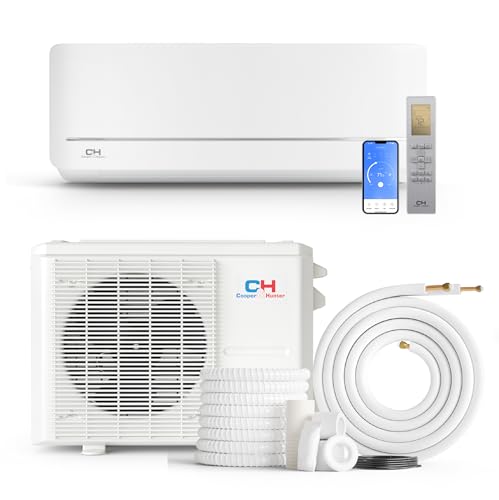
Klimaire DIY 5th Gen Mini-Split Review: Strong Specs, Shaky Paperwork
By Wendell Asaro · Updated October 2026
Independent editorial review. We never accept payment for coverage, though we may earn a commission if you purchase through our links.
 ← Indoor unit 43-1/4 in wide (18K) →
Spec sheet
| Rated heat at 47°F (18K) | 19,000 BTU/h (NEEP, AHRI 218067070) |
| Heat at 17°F (18K) | 15,000 BTU/h rated, 17,500 max (NEEP) |
| Heat at 5°F (18K) | 13,600 BTU/h rated and max, 72% of 47°F (NEEP) |
| Lowest heating temp | -13°F (9K-24K), 9,000 BTU/h max on the 18K (NEEP); 36K stops at -4°F |
| SEER2 / HSPF2 (18K) | 23.0 / 10.0 (Region IV), 8.2 (Region V) (NEEP) |
| Electrical (18K) | 208-230V, 12 A min circuit ampacity, 20 A max fuse |
| Install type | Pre-charged quick connect, no vacuum per Klimaire; fittings are one-time per manual |
| Line length (18K) | 25 ft in the box (16 ft on 24K/36K listings); 10 ft min recommended, 65 ft max |
| Warranty | 5 yr parts / 7 yr compressor if registered in 45 days. DIY install allowed; claims ask for a licensed installer invoice; line sets excluded |
| Owner-reported failure (older Klimaire DIY) | Weak cooling after 1 year, 1 owner (2023 report, predates the 5th Gen) |
Verdict
Klimaire owner talk on r/hvacadvice and r/HVAC is sparse, and none of it is confirmably about the R-454B DIY 5th Gen; the support and failure threads were posted in 2025 or earlier, before it was NEEP-listed. So every quote here is brand-level, and the review names the line wherever the owner gave one: a KSIO009, a 36K KSIV, a 3-zone system and a 2-head system. It leans negative. Two owners reported getting no support, including the author of a "do not buy" warning that no other owner in its thread corroborated; one owner reported a fast warehouse-error replacement, then an older-generation DIY system struggling to cool after a year. An older non-quick-connect KSIO009 lost its outdoor fan motor at about six years, a 5-year-old 3-zone system has noisy heads, and one owner's self-installed 2-head system has run ten years without an issue. One owner couldn't find a local pro willing to work on their Klimaire, and one installer said their shop avoids DIY brands.
Read full take ↓


On paper the Klimaire DIY 5th Gen 18,000 BTU quick-connect mini-split is the strongest quick-connect system we've looked at for cold-weather heat. On paper is the catch. It ships with a 25 ft line set that's factory pre-charged with R-454B, and Klimaire says the install needs no vacuuming, gauges or refrigerant handling. It rates 23 SEER2, and on NEEP's cold-climate heat pump list it makes 15,000 BTU/h at 17°F and 13,600 at 5°F, with heating listed down to -13°F. Klimaire also sells a very different mini-split on Amazon under the same brand name, so read the title before you buy.
Buy it with your eyes open. Klimaire's current DIY warranty now says DIY-designated models don't need a licensed installer, but its claim procedure still asks for an installation invoice from a licensed HVAC technician, it excludes refrigerant line sets, and it says Klimaire supports only its dealers and licensed technicians. Owner reports on the brand are few, predate the 5th Gen, and lean negative: a couple of owners got no support, and the "do not buy" warning thread you'll find turns out to be one person's account.
From 9K to 24K, its heating numbers put it at the front of the quick-connect field down to 5°F. The paperwork and the thin service record are why it isn't our first pick for a DIY install, and why you should read the warranty section below before you check out.
DIY 5th Gen or Entrada
Amazon carries two Klimaire wall-mount lines right now, and the listings look alike until you read the numbers.
DIY 5th Gen (this review) | Entrada | |
|---|---|---|
Model numbers | Start KIWQ (indoor) and KOIQ (outdoor), end -45T; e.g. KIWQ18H2-45T + KOIQ18H2-45T for the 18K | Start KIWE and KOIE, end -31X |
Refrigerant | R-454B | R-32 |
SEER2 | 23 on the 12K 115V, 18K and 24K | 17 |
Line set | Factory pre-charged quick-connect: 25 ft on the 12K and 18K Amazon listings, 16 ft on the 24K and 36K | 16 ft flared copper, not quick-connect |
Amazon title | "Klimaire DIY ... 23 SEER2 Quick Connect," in 12K (115V), 18K, 24K and 36K (230V) | "Klimaire Entrada ... 17 SEER2," in 12K, 18K and 24K |
Klimaire's own product page calls the Entrada the KIWE-KOIE Series and labels it "3rd Generation"; the Entrada name appears in its brochure and spec sheet. The older 4th Gen DIY used the same KIWQ and KOIQ prefixes, with model numbers like KOIQ18H2-4 + KIWQ18H2-4T, and Klimaire's page lists every 4th Gen size at 19.0 SEER2. Its store variants show as unavailable. So KIWQ/KOIQ alone doesn't tell you it's the 5th Gen; the tell is the -45T suffix plus R-454B.
The fastest tell between the two current lines is the title: "23 SEER2 Quick Connect" is the DIY 5th Gen, "17 SEER2" is the Entrada. Then confirm the -45T suffix and R-454B. One wrinkle on the 36K: Amazon's 36K DIY listings carry "23 SEER2" in the title, but their bullets say "up to 19 SEER2," and NEEP lists the 36K at 19.0. Believe the 19. The DIY and the Entrada are not two trims of one machine. The Entrada is a flare-and-vacuum system whose manual says only technicians certified for A2L refrigerants may install it, and the warranty terms that appear to apply to it require a licensed HVAC install. If you're buying Klimaire to install it yourself, the Entrada is the wrong box.
You'll also see older non-quick-connect Klimaire lines, such as KSIO, KSIV and KSWT units, plus multi-zone systems and PTACs. Those are different products again, and we name the line in each owner report below when the owner gave one.
Which spaces and climates it fits
Put it in a single room, garage, shop or addition that you want on its own system, where you'll mount the units and connect the lines yourself and hire out the electrical. For a bedroom, the 12K is the size most people will look at: it runs on 115V, and Klimaire rates its indoor unit at 30 dB(A) on Mute. The 18K is for a bigger space on a 208-230V circuit, when a load estimate calls for it.
Size it from the cold numbers, not the box. Say a heat-loss estimate puts an insulated two-car garage at 12,000 BTU/h on a 5°F night (an illustration; your number comes from a Manual J or a careful heat-loss estimate). NEEP lists the 18K at 13,600 BTU/h at 5°F, and its rated and maximum figures there are the same number, so that's 1,600 BTU/h to spare. On a 17°F night the rated figure is 15,000 against a smaller load. Below zero the margin goes away: NEEP's -13°F figure is a 9,000 BTU/h maximum, and the garage's heat loss on that night will be higher than 12,000. If you see those temperatures, keep backup heat.
Below zero, the comparison depends on the size. NEEP lists -13°F maximums of 6,100 BTU/h on the 9K, 6,680 on both 12K versions, 9,000 on the 18K and 17,000 on the 24K. The Della Serena and Cooper & Hunter MIA stop publishing at 5°F, and the Pioneer Diamante Pro at -4°F. Against the MrCool DIY 5th Gen, the edge holds on the 12K (6,680 vs 3,800) and flips on the 18K, where MrCool lists 12,200. Don't upsize "to be safe," though: an oversized unit short-cycles through spring and fall and does a poor job pulling humidity out in summer.
Pick something else if you want a warranty that unambiguously covers your own install (the MrCool DIY 5th Gen), if you need an 18K that holds the most heat at -13°F (also the MrCool), if you're comfortable evacuating lines and want nearly the same heat for less money (the Della Serena 18K, or the Pioneer Diamante Pro 18K a step behind), or if you want a contractor to sell, install and service the system as one package.
Heat by size and outdoor temperature
From the AHRI-certified ratings on NEEP's cold-climate heat pump list (the 18K is AHRI 218067070), in BTU/h. Figures are NEEP's rated numbers unless marked max; where rated and maximum are the same (the 12K 115V at 17°F and 5°F, the 18K at 5°F), we show one number. NEEP publishes only a maximum at the coldest point. Circuit is Klimaire's minimum circuit ampacity and maximum fuse.
Size / voltage | 47°F | 17°F | 5°F | Coldest point (max) | SEER2 | HSPF2 | Circuit |
|---|---|---|---|---|---|---|---|
9K 115V (not on Amazon when we checked) | 10,000 | 8,000 | 7,100 (7,500 max) | 6,100 at -13°F | 23.0 | 9.5 | No figure |
12K 115V | 12,400 | 10,000 | 8,900 | 6,680 at -13°F | 23.0 | 10.0 | 16 A / 25 A |
12K 208-230V | 12,600 | 10,000 | 9,100 | 6,680 at -13°F | 24.0 | 10.0 | No figure |
18K 208-230V | 19,000 (23,700 max) | 15,000 (17,500 max) | 13,600 | 9,000 at -13°F | 23.0 (12.5 EER2) | 10.0 Region IV, 8.2 Region V | 12 A / 20 A |
24K 208-230V | 25,000 | 21,000 (22,000 max) | 18,600 (18,900 max) | 17,000 at -13°F | 23.0 | 9.5 | 17 A / 25 A |
36K 208-230V | 36,000 | 23,400 | 20,400 | 16,700 at -4°F, where its heating range ends | 19.0 (not ENERGY STAR) | 9.0 | No figure |
Klimaire's own technical spec sheet prints lower 17°F figures on every size (11,000 BTU/h on the 18K against NEEP's 15,000) and a 9.5 HSPF2 for the 18K against NEEP's 10.0. We go with the certified listing.
Divide 5°F by 47°F and the 9K through 24K keep 71% to 74% of their rated heat; the 36K keeps 57%. On the 18K, 13,600 of 19,000 is 72%, a touch below the Della Serena 18K's 75% (13,500 of 18,000) at nearly the same output.
The rest of the 18K sheet: indoor sound of 50, 47, 43, 38 and 34 dB(A) from Turbo down to Mute, 53 dB(A) outdoors, and an indoor unit 43-1/4 in wide. The 12K indoor unit is 36-1/4 in wide and rated 46 dB(A) on Turbo down to 30 on Mute. Cooling is listed from 5°F to 131°F outdoors on the 9K through 24K. These are Klimaire's figures, not our measurements.
The Entrada 18K isn't NEEP-listed, so its numbers come from its spec sheet: 16,500 BTU/h at 47°F, 10,000 at 17°F and a 9,500 maximum at 5°F, with the bottom of its heating range at 5°F. (Its product page header says -5°F; its own size table and spec sheet say 5°F, and we go with the tables.) It also lists cooling only from 53.6°F outdoors, and it isn't ENERGY STAR. It's a cheaper, cooling-first unit, not a cold-climate heater.
What the install involves
The refrigerant side is what Klimaire designed out. The outdoor unit and the line set arrive pre-charged with R-454B, and the product page says the kit needs "no vacuuming, gauges, or refrigerant handling," with a pre-attached communication cable that plugs in rather than being wired in the field. Follow the manual for the connections; we don't paraphrase connection steps, and nothing about this kit asks you to add, remove or vent refrigerant.
Treat the fittings as a one-shot job, because Klimaire's 2026 DIY manual says so: "EZ-Fast Connect fittings are designed for one-time tightening. Do not loosen and reconnect them, as this may cause leaks and void the warranty." That bites when a part has to be swapped. One owner of an earlier Klimaire DIY system got a replacement indoor unit after the system was already connected and had to have someone hook it up, because the DIY lines are a one-shot deal. Plan the route, make each connection once, and don't kink the line.
Decide the line length before you drill. Amazon's 12K and 18K listings say 25 ft, the 24K and 36K listings say 16 ft, and the manual says the kit is 16 ft or 25 ft, with 16 ft or 25 ft extension kits and adaptors sold separately for longer runs. The spec sheet lists a minimum recommended line set of 10 ft and a maximum line length of 65 ft on the 18K (49 ft on the 12K), with a maximum height difference of 49 ft on the 18K. Because the fittings are one-time, settle whether you need an extension, and confirm with Klimaire which one matches your size, before the first connection.
Hire out the electrical. The 18K needs 208-230V with a 12 A minimum circuit ampacity and 20 A maximum fuse; the 12K runs on 115V at 16 A and 25 A. Klimaire's manual says all electrical connections must be performed by a qualified or licensed electrician where required, and your town may want a permit. Whether an existing circuit can carry the unit is the electrician's call.
The usual handyman work is still yours: a hole through the wall, a pad or bracket for the outdoor unit, a condensate route for the indoor head, and a plan for defrost water, because a heat pump sheds water in heating mode. R-454B is an A2L, mildly flammable refrigerant, and the manual sets placement limits: the indoor unit at least 6.0 ft above the floor, a room height of at least 7.3 ft, and a minimum room floor area from a table keyed to the refrigerant charge. Check that table before you pick a small room or a low ceiling.
On who may install it, the DIY manual contradicts itself. Under "DIY Installation Permitted" it says the system "is designed for homeowner installation without the need for licensed HVAC technicians." In its A2L safety section it says "Only qualified technicians trained to handle A2L refrigerants may install, service, or decommission this appliance." The Entrada manual is plainer and stricter: technicians "certified" for A2L refrigerants, on a flare system with a 16 ft copper line set that has to be evacuated with a vacuum pump. EPA's Section 608 Q&A says "Any person servicing, installing or disposing of stationary appliances (except the disposal of small appliances) must be a section 608 certified technician." EPA hasn't published a plain statement on whether connecting a factory-charged quick-connect kit counts as that kind of installing, and we won't tell you it does or it doesn't.
The warranty: DIY allowed, but read the claim clause
This decides whether the Klimaire is a DIY bargain or a gamble, so here's each document in its own words.
- The warranty-information page: under DIY Mini-Split Systems, base coverage with no registration is 3 years on parts; registered residential use gets 5 years on parts and 7 on the compressor; registration is required within 45 days of purchase; and "DIY installation allowed (must follow local code)." The Amazon listing goes further: "install it yourself without voiding the warranty."
- The DIY warranty PDF (KOIQ-KIWQ and KMIP-KIWP lines): the current version (copyright 2025) says "For DIY-designated models, professional installation by a licensed HVAC contractor is not required to maintain warranty coverage, but all safety guidelines and code requirements must still be followed." Its claim procedure, though, still asks for the purchase invoice "and an installation invoice from a licensed HVAC technician showing model and serial numbers of the unit." An earlier 2023 version limited coverage to systems installed by a licensed contractor.
- Exclusions (clauses 6 and 9): clause 6 lists "refrigerant, refrigerant line sets," so the pre-charged line set the whole kit is built around isn't covered. Clause 9 says refrigerant costs "are not covered under any circumstances," including refrigerant missing on arrival or lost at any time afterward.
- Support (clauses 13 and 7): clause 13 says KPI "WILL ONLY SUPPORT AND PROVIDE TECHNICAL ASSISTANCE TO ITS DEALERS OR HVAC LICENSED TECHNICIANS," and that the "Owner must first contact the installer who installed the product, or any other qualified contractor, to determine the cause of the failure and diagnose the product." Clause 7 excludes damage from "repair, or service by anyone other than an authorized KPI dealer or a licensed contractor."
- Maintenance and labor: the PDF says the owner must supply proof of maintaining the equipment at least twice a year over the life of the warranty, and that labor and field materials for replacing a defective part remain the owner's responsibility.
So the install clause and the claim clause now point in different directions, and the PDF also contradicts itself on the base term: one clause says the unregistered base warranty runs up to three years, a later one says up to one year. The page says three.
What we'd do: register within 45 days, screenshot the warranty-information page on the day you buy, and email Klimaire to confirm in writing that a claim on a homeowner install of your model won't need a licensed tech's installation invoice. Line up a local contractor who'll diagnose a Klimaire before you need one, since clause 13 starts every claim there. Keep a simple maintenance log with dates and photos. If Klimaire won't put the DIY terms in writing, buy the MrCool DIY 5th Gen instead, whose warranty allows owner installs with no registration and lists the pre-charged line sets as covered parts.
The Entrada's terms are stricter still. Its product page advertises 7 years on the compressor and 5 on parts. Klimaire doesn't sell the Entrada as DIY, so its ductless (non-DIY) terms on the warranty page appear to apply: 1 year on parts and compressor without registration, 5 and 7 if registered, and "Must be installed by a licensed HVAC technician."
Reliability, support and the "do not buy" post
The DIY 5th Gen has no owner record yet. No Klimaire owner report says it's about that unit, and the support and failure reports all date from 2025 or earlier, before the R-454B 5th Gen appeared on NEEP's list in March 2026. What exists is brand-level, spread across older and unnamed lines, so read it as a picture of Klimaire's support and service access rather than a forecast for this machine.
The post most buyers will find is titled "Klimaire - DO NOT BUY - WARNING," and it's one person's account. They called the low online price a bait and switch, said the company, which they identified as Heat and Cool in FL, wouldn't support the product, said it would break immediately, and called the online reviews fake, without naming a model or line or describing the failure. The same person repeated the warning twice more elsewhere, saying they threw their unit away after a year, that nobody answered the phone and that parts couldn't be replaced. Nobody else in the warning thread backed it up with a failure of their own; the one response came from someone who doesn't say they own a Klimaire and pointed to contractors' warnings about buying equipment online. One owner, three posts.
On support, the record is split. A 36K KSIV, an older non-quick-connect line its owner self-installed and evacuated with a vacuum pump, wouldn't power on, and its owner said the seller was useless and the manufacturer hadn't responded. The best support story is also the most sobering one: a DIY system, in a report from 2023, arrived with an indoor unit for the 220V system and a 115V outdoor unit, and Klimaire responded almost immediately, blamed a warehouse mix-up and shipped a replacement quickly. After a year of running well, that same system was struggling to cool even after the owner's HVAC pro looked at it, and they wouldn't recommend the brand. That's an older Klimaire DIY generation, not the 5th Gen.
The rest are single reports, both ways. A self-installed KSIO009 that cost about $750 lost its outdoor fan motor at about six years old. A 3-zone Klimaire about five years old has three indoor units making the same noise, and the few pros its owner called wouldn't touch Klimaire units. A 2-head system installed ten years earlier has never had an issue, including two years of heavy use. A renter reported constant noise from a Klimaire in cooling mode, which may be the compressor vibrating the lines.
Service access is what we'd plan around, though the evidence for it is thin: the 3-zone owner above couldn't get local pros to touch their Klimaire, and one installer said their shop doesn't work on DIY brands because it buys equipment from supply houses. The warranty PDF makes that matter more, because it routes diagnosis through a contractor and support through dealers and licensed techs (clauses 13 and 7 above). Find a contractor who'll work on a Klimaire before you buy. You'll read that Klimaire units are made by Midea; we didn't find that in Klimaire's documents, so treat it as unconfirmed, though it's been pointed to as a way to track down compatible equipment.
On the design itself, a quick-connect kit removes the skipped-vacuum failure that sinks many flare installs. That's a reliability advantage on a DIY install. It doesn't make up for a support record we can't vouch for.
How it compares
At 18K, in BTU/h on NEEP's list unless noted.
Unit | 17°F | 5°F | Below 5°F | Install | Warranty on a DIY install |
|---|---|---|---|---|---|
Klimaire DIY 5th Gen 18K | 15,000 | 13,600 | 9,000 max at -13°F | 25 ft pre-charged quick connect | DIY allowed per current PDF; claims ask for a licensed installer invoice; line sets excluded |
13,400 | 12,800 | 12,200 max at -13°F | 25 ft pre-charged quick connect | Owner installs allowed, no registration, line sets covered | |
Della Serena 18K | 15,000 | 13,500 | Nothing published | Flare; vacuum pump required | Free parts for a registered DIY install, at Della's discretion |
Pioneer Diamante Pro 18K (230V) | 13,000 | 12,500 | 9,600 max at -4°F, where heating ends | Flare; nitrogen-assisted evacuation to 500 microns | No figure |
No figure | 11,500 | Nothing published | Flare and vacuum | Licensed-technician installs only | |
Klimaire Entrada 18K (spec sheet) | 10,000 | 9,500 max | No heating below 5°F | A2L-certified technician per its manual | Ductless terms that appear to require a licensed install |
- MrCool DIY 5th Gen: the Klimaire makes more heat down to 5°F; the MrCool holds more at -13°F. The 12K tips Klimaire's way all the way down: 10,000 vs 8,500 at 17°F, 8,900 vs 8,400 at 5°F and 6,680 vs 3,800 at -13°F.
- Della Serena: a tie and a near-tie with the Klimaire, for less money.
- Pioneer Diamante Pro: costs less, but it isn't ENERGY STAR.
- Cooper & Hunter MIA: not a DIY candidate.
- Klimaire Entrada: far cheaper, at 17 SEER2.
For the full quick-connect field, including MrCool's Easy Pro and DIY Select, see our best DIY mini-split guide.
Who should buy the Klimaire DIY
Buy the DIY 5th Gen if you want quick-connect lines and the most heat at 17°F and 5°F, size for size from 9K to 24K, of the quick-connect systems we've covered, and especially if you're shopping the 12K for a place that drops below zero, where it holds far more heat at -13°F than the MrCool 12K. Get the DIY warranty terms in writing first, register within 45 days, find a contractor who'll service it, and keep your maintenance records.
Skip it if a clean DIY warranty matters more to you than a couple thousand BTU at 17°F; the MrCool DIY 5th Gen is the safer paper. Skip the 18K, too, if your winters sit well below zero, because the MrCool 18K holds 12,200 BTU/h at -13°F to the Klimaire's 9,000. If you'll vacuum lines yourself or hire a startup, the Della Serena 18K makes nearly the same heat at 17°F and 5°F for less money. And read the title for 23 SEER2 and Quick Connect, so the Entrada doesn't show up on your doorstep.
What we like
- No vacuum step: no vacuum pump or gauges. Klimaire says the pre-charged line set needs "no vacuuming, gauges, or refrigerant handling."
- Cold-weather heat: on NEEP's AHRI-certified list, the 18K makes 15,000 BTU/h at 17°F and 13,600 at 5°F, more than the MrCool DIY 5th Gen 18K at both temperatures.
- Efficiency: 23 SEER2 and 10.0 HSPF2 on the 18K, ENERGY STAR on 9K through 24K, and NEEP-listed on every size.
- Range: heating listed down to -13°F on the 9K through 24K.
What we'd change
- Mixed warranty signals: the current PDF allows DIY installs on DIY-designated models, but its claim procedure still asks for an installation invoice from a licensed HVAC technician. Get Klimaire's answer in writing before you rely on it.
- Exclusions: the PDF also excludes refrigerant line sets and refrigerant costs, and says Klimaire supports only its dealers and licensed technicians.
- A manual at odds with itself: "DIY Installation Permitted" in one place, A2L-trained technicians only in another.
- Deep cold on the 18K: at -13°F the 18K falls to a 9,000 BTU/h maximum, less than the MrCool 18K holds.
- Owner record: thin, negative-leaning, and older than the 5th Gen. Labor is never covered, and the PDF asks for proof of maintenance twice a year.
Score breakdown
On NEEP's AHRI-certified list, the 18K makes 15,000 BTU/h rated at 17°F and 13,600 at 5°F, ahead of the MrCool DIY 5th Gen 18K at both points and level with the Della Serena, with 23 SEER2 and 10.0 HSPF2. That's why it scores higher here than the MrCool or Della. It stops short of the top because the 18K falls to a 9,000 BTU/h maximum at -13°F, behind the MrCool 18K's 12,200, and the 36K drops to 19 SEER2, trails the MrCool 36K at 5°F and stops heating at -4°F.
There's no owner record on the 5th Gen; the brand-level reports predate it and lean negative: a DIY system struggling to cool after a year, a unit thrown away after a year, and a self-installed KSIV that wouldn't power on. Two owners reported no support from Klimaire, one reported a fast replacement, and one owner's 10-year-old system has never had an issue. The quick-connect design removes the skipped-vacuum failure, but the warranty excludes line sets, sends diagnosis through a contractor, and asks for a licensed installer's invoice on claims even though it allows DIY installs.
The Klimaire 12K cost less than the MrCool DIY 5th Gen 12K when we checked, and it out-heats it at every temperature NEEP lists. Flare units like the Della Serena make nearly the same 17°F and 5°F heat for much less if you'll evacuate lines, and a warranty that excludes the line set and routes claims through a contractor takes a bite out of what the quick-connect premium is supposed to buy.
Klimaire DIY 5th Gen Mini-Split on Amazon.
The Evidence Behind Our Verdict
Klimaire owner talk on r/hvacadvice and r/HVAC is sparse, and none of it is confirmably about the R-454B DIY 5th Gen; the support and failure threads were posted in 2025 or earlier, before it was NEEP-listed. So every quote here is brand-level, and the review names the line wherever the owner gave one: a KSIO009, a 36K KSIV, a 3-zone system and a 2-head system. It leans negative.
Two owners reported getting no support, including the author of a "do not buy" warning that no other owner in its thread corroborated; one owner reported a fast warehouse-error replacement, then an older-generation DIY system struggling to cool after a year. An older non-quick-connect KSIO009 lost its outdoor fan motor at about six years, a 5-year-old 3-zone system has noisy heads, and one owner's self-installed 2-head system has run ten years without an issue. One owner couldn't find a local pro willing to work on their Klimaire, and one installer said their shop avoids DIY brands.
Our rating above is our own editorial call. What follows is the field evidence we weighed to reach it: first-hand reports from owners on Reddit and independent HVAC and DIY forums, which we lean on more than manufacturer-influenced published reviews because unsponsored owners tend to be the more candid signal.
What Reddit Is Saying
“I installed my own 2 head mini splits 10 years ago (klimaire). I have never had any issue with it. I used it to grow weed for 2 years so it was high usage.”
“Klimaire mini-split (model# KSIO009-H124-O). about 6 years old. The unit will power on, but stops and flashes error code F5 after about 30 seconds. When turning on, the outside unit hums but the condenser fan does not spin.”
“Klimaire did ship the replacement unit quickly, but of course I had to have someone come hook it up because the DIY lines are a one shot deal. Also, after a year of running great it’s struggling to cool this summer even after some attention from my HVAC pro. So, I definitely don’t recommend this brand.”
“I had to throw mine away after 1 yr. They dont answer the phone, u cant replace parts, complete scam”
“The few pros I’ve called in my area won’t touch the klimaire units, but I’ll check out YouTube and keep calling around.”
“The seller is useless and still haven’t heard from the manufacture for support.”
Frequently asked questions
Is the Klimaire DIY 5th Gen Mini-Split worth it?
The Klimaire 12K cost less than the MrCool DIY 5th Gen 12K when we checked, and it out-heats it at every temperature NEEP lists. Flare units like the Della Serena make nearly the same 17°F and 5°F heat for much less if you'll evacuate lines, and a warranty that excludes the line set and routes claims through a contractor takes a bite out of what the quick-connect premium is supposed to buy.
How reliable is the Klimaire DIY 5th Gen Mini-Split?
There's no owner record on the 5th Gen; the brand-level reports predate it and lean negative: a DIY system struggling to cool after a year, a unit thrown away after a year, and a self-installed KSIV that wouldn't power on. Two owners reported no support from Klimaire, one reported a fast replacement, and one owner's 10-year-old system has never had an issue. The quick-connect design removes the skipped-vacuum failure, but the warranty excludes line sets, sends diagnosis through a contractor, and asks for a licensed installer's invoice on claims even though it allows DIY installs.
How well does the Klimaire DIY 5th Gen Mini-Split perform?
0 HSPF2. That's why it scores higher here than the MrCool or Della. It stops short of the top because the 18K falls to a 9,000 BTU/h maximum at -13°F, behind the MrCool 18K's 12,200, and the 36K drops to 19 SEER2, trails the MrCool 36K at 5°F and stops heating at -4°F.
What do real owners say about the Klimaire DIY 5th Gen Mini-Split?
Klimaire owner talk on r/hvacadvice and r/HVAC is sparse, and none of it is confirmably about the R-454B DIY 5th Gen; the support and failure threads were posted in 2025 or earlier, before it was NEEP-listed. So every quote here is brand-level, and the review names the line wherever the owner gave one: a KSIO009, a 36K KSIV, a 3-zone system and a 2-head system. It leans negative.
Options Worth Checking Out
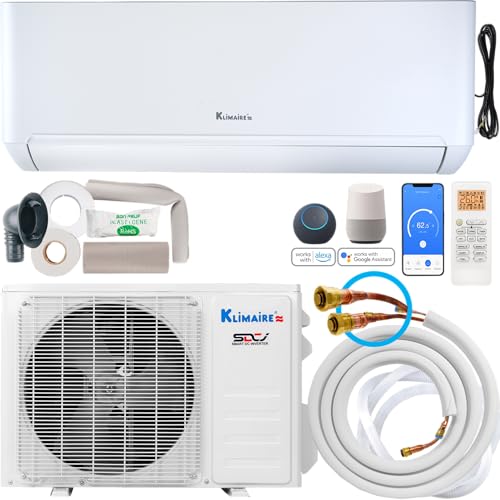

MRCOOL DIY 5th Gen 12,000 BTU 115V Mini-Split
The quick-connect kit with the cleaner paperwork: a 25 ft pre-charged line set and a 5-year parts, 7-year compressor warranty that allows owner installs with no registration. It makes 8,400 BTU/h at 5°F but only 3,800 at -13°F.
Read our full review: we scored it 6.9/10

DELLA Serena 22 SEER2 18,000 BTU Mini-Split (230V)
For an owner who will run a vacuum pump: 13,500 BTU/h at 5°F and 15,000 at 17°F for much less than the Klimaire 18K, and free parts for a registered DIY install at Della's discretion. Nothing is published below 5°F.
Read our full review: we scored it 7.3/10

You Might Also Need
Accessories worth grabbing alongside your purchase