MrCool DIY 5th Gen Review: Who the No-Vacuum Premium Is For
By Wendell Asaro · Updated October 2026
Independent editorial review. We never accept payment for coverage, though we may earn a commission if you purchase through our links.
 ← Indoor unit 31.57 in wide (9k/12k) →
Spec sheet
| Rated heat (12k 115V) | 12,000 BTU/h (MRCOOL rating) |
| Heat at 5°F (12k) | 8,400 BTU/h, 70% of rated (NEEP) |
| Heat at 5°F / -13°F (18k) | 12,800 BTU/h / 12,200 BTU/h max (NEEP) |
| Lowest heating temp | -13°F outdoors, all sizes (install manual) |
| SEER2 / HSPF2 (12k) | 23.5 / 10.2 (Region IV) |
| Electrical (12k) | 115V, 18 A min circuit ampacity, 20 A max breaker |
| Install type | Pre-charged Quick Connect, no vacuum per MRCOOL |
| Line set | 25 ft included; 75 ft max per install manual (MRCOOL web data lists more) |
| Warranty | 5 yr parts, 7 yr compressor; DIY allowed, no registration; no labor |
| Owner-reported failure | Compressor at 2 years, 1 DIY owner (generation not stated) |
Verdict
MRCOOL DIY discussion on r/hvacadvice is loud but thin on the current model. Only two owner reports are confirmably the R-454B 5th Gen, and both are early (a loose part after install, a fishy smell in cooling mode). The rest is older 3rd and 4th Gen ownership, owners who didn't name a generation, buyers weighing the DIY against MRCOOL's other lines or Senville, and non-owners talking about MRCOOL as a brand; only owners are quoted below. Owners who installed one describe an easy refrigerant side; two hired an electrician and a third planned to. The sharpest criticism comes from non-owners, some of them working techs, who say local shops won't service a homeowner-installed MRCOOL. Two warranty claims were honored: a DIY 18k of unstated generation whose compressor MRCOOL was taking care of, with the reinstall and shipping on the owner, and an older-generation unit installed about ten years ago that MRCOOL replaced at no cost after a leak at year four, with the swap work on the owner.
Read full take ↓


Buy the MRCOOL DIY 5th Gen if a vacuum pump is the one thing standing between you and a mini-split. It's the first name most people hear when they ask about a mini-split they can install themselves, sold on Amazon as the MRCOOL DIY 5th Gen 12,000 BTU 115V mini-split and in sizes from 9,000 to 36,000 BTU. What you pay for is the line set. It ships as a 25 ft Quick Connect set pre-charged with R-454B refrigerant, and MRCOOL says setup "doesn't require vacuuming." Every other brand we compare here, Pioneer, Della and Senville, ships flare fittings that have to be evacuated with a vacuum pump before the unit runs.
The owner it suits is conditioning a garage, shop or single room, will not own a vacuum pump, won't pay a tech to run one, and wants a warranty that survives an owner install. MRCOOL's DIY warranty allows that install and runs 5 years on parts and 7 on the compressor with no registration. For that owner, the premium over a flare-fitting unit buys something.
For the money, it isn't the strongest heater. The 12k makes 8,400 BTU/h at 5°F, 70% of its rating, which trails the Pioneer Diamante Pro 12K and Della Serena 12K and falls well short of the Senville Aura 12k. Most owner history is about MRCOOL as a brand or about older DIY generations, so we say which generation each story covers.
Make sure it is a 5th Gen
MRCOOL sells several lines with "DIY" somewhere near the name, and they are different machines with different warranties. Read the model number before you order.
Line | Model number | Line set | SEER2 | Warranty (parts / compressor) |
|---|---|---|---|---|
DIY 5th Gen (this review) | Starts DIY-, ends D25-O: DIY-12-HP-C-115D25-O (12k outdoor), DIY-12-HP-WMAH-115D25-O (its wall unit) | 25 ft pre-charged Quick Connect, R-454B | 18-23.6 | 5 yr / 7 yr |
DIY Select | Starts DIYS-; outdoor units end A11-O, wall units A13-O | 11.5 ft | 16.5-17.5 | 1 yr / 2 yr |
Easy Pro (current) | Starts EZPRO-, ends 11511DE-O | 11.5 ft | 18.9-20.2 | 3 yr / 5 yr, and the parts definition excludes line sets |
Easy Pro (earlier) | Ends 11516D-O | 16 ft kit | No figure | 1 yr / 2 yr, void unless bought from an authorized dealer and installed in line with its licensing terms |
- "E Star" in a title: MRCOOL also used "E Star" for its older R-410A 4th Gen DIY series, so those words don't identify a 5th Gen. Confirm R-454B and the D25-O suffix instead.
- DIY Select: MRCOOL calls it the "most cost-effective option in the DIY lineup." Its ENERGY STAR status is muddled: MRCOOL's product data and NEEP's list say no, while MRCOOL's catalog calls the 9k-24k ENERGY STAR certified. The naming is inconsistent too. MRCOOL's product data calls it "DIY Select 1st Gen" while its warranty is titled for the "5th Generation DIY Select Series." A listing that says "5th Gen" and "Select" is the cheaper line.
- Easy Pro: Some Amazon listings still say "16ft Lineset," so read the suffix.
- Olympus, Advantage and Universal: other MRCOOL lines, not this kit. MRCOOL's FAQ says an HVAC professional must install the Olympus.
- Older DIY generations: the 3rd and 4th Gen carry different electrical ratings and error-code meanings. Owner reports about them are history, not a forecast for the 5th Gen.
Line-set length won't separate a 5th Gen from an older DIY generation, so check two things on any listing: R-454B refrigerant and a model number of the form DIY-...D25-O. An 11.5 ft line set does point to a DIY Select or current Easy Pro. On Amazon, one listing names the model DIY-12-HP-C-115D25-O but calls itself a "Condenser" with the line set, so confirm the matching wall unit is in the box or on the order before you check out. The full-system listing we link gives its model as DIY-12-HP-WM-115D25O, a 5th Gen suffix; it's sold as a system, but confirm with the seller that the outdoor unit is in the box before you pay.
Which spaces and climates it fits
Put it in a garage, workshop, bonus room, basement or single bedroom that you want on its own system, where you'll do the mounting and line work yourself and hire out only the electrical. One garage owner did exactly that with a 24k DIY, paying an electrician for the 240V run.
Size it with the 5°F column, not the box number. Say a heat-loss estimate puts an insulated two-car garage at 12,000 BTU/h on a 5°F night. That's an illustration; your number comes from a Manual J or a careful heat-loss estimate. The 12k's 8,400 BTU/h covers 70% of that, leaving you 3,600 BTU/h short. The 18k's 12,800 BTU/h covers it with 800 to spare. The 24k's 16,100 covers it easily on a 5°F night.
Then look at -13°F, where the numbers stop following the size chart. NEEP lists the 18k at a maximum of 12,200 BTU/h there and the 24k at only 10,100, so the 24k makes less than the 18k at -13°F; only the 36k makes more (14,400 BTU/h max per NEEP), and it's a lot of unit for a garage. If your coldest nights are the reason you're shopping, the 18k is the size to look at in this line. Your load also climbs as it gets colder, so neither one will hold a garage that needed 12,000 BTU/h at 5°F once it's -13°F outside. Plan backup heat for those nights. And don't upsize "to be safe": an oversized unit short-cycles in mild weather and does a poor job pulling humidity in summer.
Pick something else if you'll vacuum lines yourself or pay someone to (the Pioneer Diamante Pro and Della Serena make more heat at 5°F for less money), if real winter heat is the priority and a licensed installer is fine (the Senville Aura 12k publishes 11,500 BTU/h at 5°F), or if you want one contractor who sells, installs and services the system.
Heat by size and temperature
Rated capacity is MRCOOL's; the 17°F, 5°F and -13°F figures are NEEP's cold-climate listings for each wall-unit pairing. The circuit column is MRCOOL's minimum circuit ampacity and maximum breaker for the outdoor unit.
Size / voltage | Rated (47°F) | 17°F | 5°F | Max at -13°F | SEER2 | HSPF2 | Circuit | ENERGY STAR / Cold Climate |
|---|---|---|---|---|---|---|---|---|
9k 115V | 10,000 | 7,500 | 7,300 | 3,800 | 23.6 | 11.5 | 18 A / 20 A | Yes / Yes |
12k 115V | 12,000 | 8,500 | 8,400 | 3,800 | 23.5 | 10.2 | 18 A / 20 A | Yes / Yes |
18k 208/230V | 18,000 | 13,400 (up to 20,300) | 12,800 | 12,200 | 22.5 | 11.5 | 18 A / 20 A | Yes / Yes |
24k 208/230V | 24,000 | 17,900 | 16,100 | 10,100 | 22.7 | 9.5 | 24 A / 25 A | Yes / No per NEEP |
36k 208/230V | 36,000 | 23,400 | 22,000 | 14,400 | 18 | 8.5 | 33 A / 35 A | No / No |
All capacities are BTU/h. The install manual lists a heating range of -13°F to 75°F outdoors for every size, and NEEP publishes nothing colder than -13°F. At -13°F the 9k and 12k are down to a 3,800 BTU/h maximum, about a third of the 12k's rating. Treat that as the edge of the range, not a heating plan.
On the 24k, MRCOOL and NEEP disagree. MRCOOL's catalog ticks ENERGY STAR Cold Climate for the 9k through 24k, while NEEP's record for the 24k wall pairing says ENERGY STAR yes, Cold Climate no. ENERGY STAR's cold-climate bar includes at least 70% of the 47°F capacity at 5°F. Using MRCOOL's 24,000 BTU/h rating as the 47°F figure, the 24k's 16,100 at 5°F works out to 67%, under the bar; the 12k sits right at 70% and the 18k at 71%. If a rebate depends on the Cold Climate label, check the program's own list before you buy the 24k.
Size the circuit from the nameplate on the unit you receive, not from the table. The ratings change between generations: one buyer ordered a 3rd Gen 18k, the seller shipped a 4th Gen, and the new label listed different ampacity and breaker figures than the one they had planned around. Whether your existing circuit qualifies, what disconnect you need and what your town permits are questions for a licensed electrician.
Noise, per MRCOOL: the 9k and 12k wall units are rated 43 dB(A) on Turbo down to 18 on Silent, and their outdoor units 54 dB(A). The 18k and 24k outdoor units are rated 58.5 and the 36k 60.5. These are MRCOOL's figures, not our measurements. The 9k and 12k wall units are 31.57 in wide, the 18k and 24k 42.52 in, and the 36k 49.57 in.
What the install involves
The refrigerant side is what MRCOOL designed out. The outdoor unit and the 25 ft Quick Connect line set arrive pre-charged with R-454B, and MRCOOL's product description says the setup "doesn't require vacuuming." Follow the install manual for making the connections; we don't paraphrase connection steps, and nothing about this kit asks you to add, remove or vent refrigerant. Treat the connections as a one-shot job. The DIY 5th Gen manual says "The line sets are designed to only be installed once. The seal within the line set cannot be guaranteed if they are installed more than once. This will void the warranty." For the outdoor unit it adds: "If you disconnect and reconnect the refrigerant pipes, it could cause it to leak. This will also void the warranty." Pick the wall and the pad before you make a single connection.
What's left is ordinary handyman work, and it's where DIY installs succeed or fail. You'll need a hole through the wall for the line set, a pad or wall bracket for the outdoor unit, a route for the condensate drain, and a plan for defrost water, because a heat pump sheds water in heating mode. The pre-charged line set is close to plug-and-play; the thing to get right is not kinking it. The manual's minimum bend radius is 4 inches.
Decide on line-set length before you drill. The kit includes 25 ft. MRCOOL's install manual lists a 24.6 ft standard length and a 75 ft maximum pipe length for every size, with maximum rise of 49.2 ft on the 9k and 12k, 65.6 ft on the 18k, and 75 ft on the 24k and 36k. MRCOOL's own online product data lists far longer maximums (82 ft on the 9k and 12k, up to 213.2 ft on the 36k), and those figures closely track its pro-installed Olympus line. For a quick-connect install we follow the manual's 75 ft, and we'd ask MRCOOL which pre-charged line sets it approves before planning any run past the 25 ft in the box. If you end up with slack, the manual's instruction is to keep the excess coiled, wrap it with protective tape and store it behind the condenser lying flat with the ground. Plan the outdoor unit's spot with room for that coil.
Hire out the electrical. A couple of owners hired an electrician, one for the 240V run and one for the whole install, and another planned to. MRCOOL publishes the circuit ratings above, and its warranty requires the install to meet electrical codes and permits.
On the legal side, MRCOOL says the DIY is "designed for full homeowner installation" with "No license." Federal refrigerant rules are less tidy. EPA's Q&A on its refrigerant sales restriction says "Any person servicing, installing or disposing of stationary appliances (except the disposal of small appliances) must be a section 608 certified technician." It doesn't mention quick-connect kits. EPA also stayed that sales restriction for pre-charged split systems in 1995, so the equipment can be sold to anyone. In that notice, EPA wrote that information from Hamilton Home Products, the quick-connect distributor that petitioned it, indicated the release risk from assembling quick-connect systems "may be small." EPA hasn't published a plain statement on whether connecting a quick-connect kit counts as technician work under Section 608, and we won't pretend to settle it. Local permit rules vary; check yours.
R-454B is classed A2L, mildly flammable, and the 5th Gen's service manual lists refrigerant-sensor codes such as EH C1, "Refrigerant Sensor Detects Leakage." The DIY 5th Gen manual says the indoor unit should be installed at least 6.0 ft above the floor, that the room can't be less than 7.3 ft tall, and it sets a minimum room area by refrigerant charge. Check those before you pick a low basement or garage wall.
What the warranty says about a DIY install
This is the document that justifies the price, so read it rather than the listing. The DIY 5th Gen warranty (revision 07.03.25) gives 5 years on parts and 7 on the compressor, "With no registration required." It lists "pre-charged line sets" among the covered parts, which the current Easy Pro warranty does not.
It doesn't require a licensed installer. It does require that the system be "installed according to the installation instructions" and to local codes and permits, including electrical codes. It adds that "When required by law or when required for diagnostic testing as directed by MRCOOL," a certified or licensed HVAC contractor "may be necessary," and that written proof of diagnostic tests from a licensed or certified tech "may be required at MRCOOL's discretion." So you can install it yourself and keep coverage, but a claim may still cost you a tech's visit.
There's a DIY-specific way to lose that coverage, and it's in the install manual rather than the warranty. Installing the line sets more than once voids the warranty, per the manual, and so does disconnecting and reconnecting the refrigerant pipes at the outdoor unit. If you think you might move the unit, change the wall, or swap the line set for a longer one later, settle that before the first connection.
Labor is excluded, along with "other costs incurred for diagnosing, repairing, removing, installing, shipping" parts or replacement units. Expect a covered failure to leave the swap to you. A DIY 18k of unstated generation lost its compressor after two years; MRCOOL covered it, but the owner had to reinstall the outdoor unit and lines and objected to paying for shipping. An older Mr. Cool installed in a barn about ten years ago leaked at the wall unit in year four, and MRCOOL shipped a complete replacement at no cost while the removal and reinstall were on the owner.
Two more terms. MRCOOL's Extended Limited Lifetime Replacement Warranty is available only through its paid Care Kit program, "which has a fee," and only when "certain conditions/requirements are met," so read its terms before you count on it to extend your coverage. And the warranty includes binding arbitration; you can opt out by emailing MRCOOL within 30 days of purchase, using the address printed in the warranty. If you want out of arbitration, send that email the week the box arrives.
Reliability and living with it
There's no long record on the 5th Gen yet. Only two owner reports say outright they're about a 5th Gen unit, and both come from right after install: a small part that couldn't be identified after an 18k went in, and a fishy smell in cooling mode only on an 18k an electrician had put in a couple of weeks earlier. The advice on that one was a local HVAC visit to rule out a refrigerant leak. Neither is a pattern.
The longer stories are older generations or don't say which. A 3rd Gen DIY owner with three units went two years without trouble, apart from one unit serving a barely heated room that shut down in extreme cold last winter until the outdoor unit defrosted. A 4th Gen 36k in a 500 sq ft space drifted from 65-68°F in the morning to 78°F in the afternoon at a 72°F setpoint, and MRCOOL's tech said the unit may hold a 4-6 degree differential. A 36k is a lot of capacity for 500 sq ft, and oversized units cycle; we can't diagnose it from here, but it's a reason to size from a load estimate. Add a 4th Gen multi-zone with a recurring PC 03 code and the two-year compressor failure above, and that's the record so far, none of it confirmably 5th Gen.
On error codes, use the 5th Gen tables, not a forum chart. The same code can mean different things across generations: EL 0C reads "Refrigerant leak detected" on the 4th Gen and "System Lacks Refrigerant" on the 5th Gen, and PC 03 is low-pressure protection on the 4th Gen but "Pressure Protection (low or high pressure)" on the 5th. Some displays aren't faults at all. "DF" is defrost, and "FP" means the unit is heating a room below 46.4°F, which you may well see in a cold garage.
The harshest criticism comes from techs and other non-owners: HVAC shops won't service a MRCOOL or a homeowner-installed system, they say, and some call the units disposable. We give that weight on one point. Plan on doing your own diagnosis with MRCOOL's support, because a local shop may not take the call. We haven't seen a report of a quick-connect fitting leaking on a 5th Gen; the claim that MRCOOL units leak within a year comes with no word on which line or whether the person ever owned one.
How it compares
Each rival in its 12k size, against the MRCOOL 12k. Heat is BTU/h at 5°F.
Unit | Heat at 5°F | Heating range ends | Install | Warranty terms |
|---|---|---|---|---|
8,400 | -13°F | 25 ft pre-charged Quick Connect, no vacuum | 5 yr parts, 7 yr compressor; owner install allowed, no registration, line sets covered | |
Pioneer Diamante Pro 12K 115V | 9,000 | -4°F | 16 ft line set, flare fittings; nitrogen-assisted evacuation to 500 microns with a 4-hour hold | No licensed installer required; registration for the 5-year term; excludes install faults and refrigerant loss |
Della Serena 12K 115V | 9,200 (ENERGY STAR Cold Climate) | Nothing published below 5°F | Flare fittings, vacuum pump required | Web policy: free replacement parts at Della's discretion for a registered non-professional install; the Amazon listing says the system "mandates professional installation." Labor never covered. |
Senville Leto 12k 115V | 6,600 | Designed down to 5°F | Vacuum install | Requires a licensed contractor |
Senville Aura 12k | 11,500 | -22°F | Vacuum install, 230V only | Requires a licensed installer |
MRCOOL Easy Pro 12k | 6,700 | No figure | 11.5 ft line set | 3 yr parts, 5 yr compressor, line sets excluded |
MRCOOL DIY Select 12k | 6,200 | No figure | 11.5 ft line set | 1 yr parts, 2 yr compressor |
- Pioneer Diamante Pro: more heat for noticeably less money, if you will vacuum the lines.
- Senville Leto: cheaper, and a weaker heater in the cold.
- Senville Aura: far ahead of the MRCOOL in the cold. The Amazon listing we link may be the older R-410A Aura, so check the model and refrigerant.
- MRCOOL Easy Pro: 19.5 SEER2 and not ENERGY STAR. It saves money and gives up cold-weather heat and warranty.
- MRCOOL DIY Select: 17.5 SEER2, with ENERGY STAR status disputed between MRCOOL's own sources. The cheapest way into the DIY quick-connect idea, and the weakest version of it.
Our verdict on the DIY 5th Gen
Buy the DIY 5th Gen if the vacuum pump is the thing standing between you and a mini-split. For a garage or shop, we'd look at the 18k first if you have a 208/230V circuit: 12,800 BTU/h at 5°F, and more heat at -13°F than the 24k. On a 115V circuit, the 12k is the size, as long as your 5°F heat loss sits under about 8,400 BTU/h or you have backup heat. You get a warranty that covers your own install and a line set that's covered as a part.
Skip it if you're comfortable evacuating lines or hiring someone who is. The Pioneer Diamante Pro and Della Serena make more heat at 5°F for less, and the Senville Aura is the better cold-climate heater if a licensed install fits your budget. Whichever you choose, confirm the model number starts DIY- (not DIYS-) and ends D25-O before you pay a 5th Gen price.
What we like
- No vacuum step: no vacuum pump, gauges or nitrogen, per MRCOOL. The 25 ft line set arrives pre-charged and connects with Quick Connect fittings.
- A warranty written for owner installs: 5 years parts, 7 years compressor, no registration, and the pre-charged line sets are listed as covered parts.
- Heat in deep cold: every size lists heating down to -13°F outdoors, and the 18k still publishes up to 12,200 BTU/h there.
- Efficiency: 23.5 SEER2 and 10.2 HSPF2 on the 12k, 22.5 and 11.5 on the 18k.
What we'd change
- 12k cold output: the 12k gives up heat in the cold: 8,400 BTU/h at 5°F, behind cheaper flare-fitting rivals.
- Line-set limits: the line set is 25 ft, and MRCOOL publishes two different maximum lengths. The install manual says 75 ft.
- One-time connections: MRCOOL's manual says installing the line set more than once, or disconnecting and reconnecting it at the outdoor unit, voids the warranty.
- Claims: labor is never covered, and MRCOOL can ask for a licensed tech's written diagnosis before it pays a claim.
- Service: plenty of local shops won't touch a homeowner-installed MRCOOL, and some working techs say so outright.
- Price: it costs noticeably more than the flare-fitting units it competes with.
Score breakdown
Efficiency is near the top of its class (23.5 SEER2 and 10.2 HSPF2 on the 12k), and every size lists heat down to -13°F, where the 18k still publishes 12,200 BTU/h. The score stops short because the popular 12k makes 8,400 BTU/h at 5°F, less than the Pioneer and Della 12K units and far less than the Senville Aura, and the 24k and 36k fall off in deep cold.
The R-454B 5th Gen has no multi-year record yet; only two owner reports are confirmably this generation, and both are early. Older and unstated generations include a compressor failure at two years and a 3rd Gen that ran two years without trouble. The quick-connect design removes the skipped-vacuum failure that sinks many flare installs, and the 5-year parts, 7-year compressor warranty covers owner installs and line sets. Many local shops won't service it, though.
It costs noticeably more than the flare-fitting units it competes with, and those make more heat at 5°F. What the premium buys is no vacuum pump, gauges or tech visit, plus a warranty that survives your own install. Labor and shipping on any claim are still yours.
MrCool DIY 5th Gen on Amazon.
The Evidence Behind Our Verdict
MRCOOL DIY discussion on r/hvacadvice is loud but thin on the current model. Only two owner reports are confirmably the R-454B 5th Gen, and both are early (a loose part after install, a fishy smell in cooling mode). The rest is older 3rd and 4th Gen ownership, owners who didn't name a generation, buyers weighing the DIY against MRCOOL's other lines or Senville, and non-owners talking about MRCOOL as a brand; only owners are quoted below.
Owners who installed one describe an easy refrigerant side; two hired an electrician and a third planned to. The sharpest criticism comes from non-owners, some of them working techs, who say local shops won't service a homeowner-installed MRCOOL. Two warranty claims were honored: a DIY 18k of unstated generation whose compressor MRCOOL was taking care of, with the reinstall and shipping on the owner, and an older-generation unit installed about ten years ago that MRCOOL replaced at no cost after a leak at year four, with the swap work on the owner.
Our rating above is our own editorial call. What follows is the field evidence we weighed to reach it: first-hand reports from owners on Reddit and independent HVAC and DIY forums, which we lean on more than manufacturer-influenced published reviews because unsponsored owners tend to be the more candid signal.
What Reddit Is Saying
“I installed some Mr Cool DIY 3rd Gen 2 years ago, and they seem to be doing fine so far. (Depending on the climate of where you are, they may not be able to handle the extreme cold, I had a case last winter where 1 of my 3 units shut down due to the extreme cold [the indoor head was in an area that I wasn’t keeping very warm anyway, and there just wasn’t enough heat in that area to defrost the outdoor unit when it was needed. Once it defrosted, it worked fine after that])”
“I just put in a Mr cool 24k DIY instead and paid an electrician for the 240 run”
“Basically, I bought a 3rd gen because it says Max Fuse 20A (and my disconnect is 12 AWG on 20A breaker), but they shipped a 4th gen unit that says Minimum Ampacity 18A and Max Fuse 30A.”
“I DIY a 18k btu minisplit from Mr cool 2 years ago and the compressor just died this year. It's under warranty and Mr cool is taking care of it... but I will have to reinstall the outdoor unit and lines again bleh!”
“Just had this Mr Cool minisplit installed a couple weeks ago and when I'm running AC it smells like fish. I do NOT have the same issue when running the heater. It's a 5th gen, 230V, 18,000 BTU.”
“I set my temperature to 72° and when I wake up in the morning the room is regularly 65 to 68° and by afternoon it gets up to 78°. In my mind this is completely unacceptable.”
Frequently asked questions
Is the MrCool DIY 5th Gen worth it?
It costs noticeably more than the flare-fitting units it competes with, and those make more heat at 5°F. What the premium buys is no vacuum pump, gauges or tech visit, plus a warranty that survives your own install. Labor and shipping on any claim are still yours.
How reliable is the MrCool DIY 5th Gen?
The R-454B 5th Gen has no multi-year record yet; only two owner reports are confirmably this generation, and both are early. Older and unstated generations include a compressor failure at two years and a 3rd Gen that ran two years without trouble. The quick-connect design removes the skipped-vacuum failure that sinks many flare installs, and the 5-year parts, 7-year compressor warranty covers owner installs and line sets.
How well does the MrCool DIY 5th Gen perform?
2 HSPF2 on the 12k), and every size lists heat down to -13°F, where the 18k still publishes 12,200 BTU/h. The score stops short because the popular 12k makes 8,400 BTU/h at 5°F, less than the Pioneer and Della 12K units and far less than the Senville Aura, and the 24k and 36k fall off in deep cold.
What do real owners say about the MrCool DIY 5th Gen?
MRCOOL DIY discussion on r/hvacadvice is loud but thin on the current model. Only two owner reports are confirmably the R-454B 5th Gen, and both are early (a loose part after install, a fishy smell in cooling mode). The rest is older 3rd and 4th Gen ownership, owners who didn't name a generation, buyers weighing the DIY against MRCOOL's other lines or Senville, and non-owners talking about MRCOOL as a brand; only owners are quoted below.
Options Worth Checking Out

Della Serena 22 SEER2 18,000 BTU 230V Mini-Split
For a 230V garage: 13,500 BTU/h at 5°F, more than the MRCOOL 18k. The listing says it mandates professional installation; Della's web warranty policy still gives a registered DIY install parts at its discretion. Needs a vacuum.
Read our full review: we scored it 7.3/10
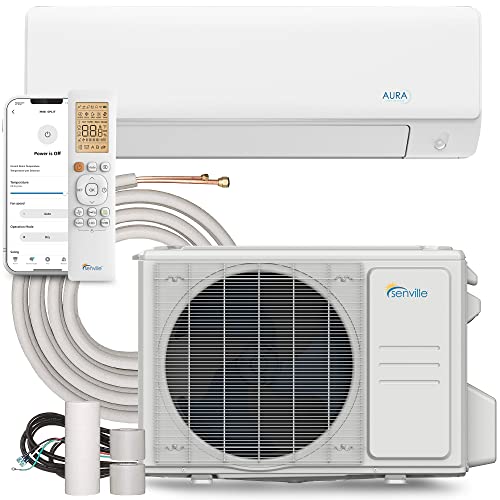
Senville AURA 12,000 BTU Mini-Split Heat Pump
Cold-climate pick if a licensed installer is fine: the current R-454B 12k makes 11,500 BTU/h at 5°F. This listing may be the older R-410A Aura, so check the model and refrigerant. 230V only, vacuum install, licensed contractor.
Read our full review: we scored it 7.5/10
You Might Also Need
Accessories worth grabbing alongside your purchase

More MrCool Reviews
See all →


How Does It Compare?
Side-by-side breakdowns featuring this product
