MrCool DIY 5th Gen vs Mitsubishi Hyper-Heat: DIY or Contractor
By Wendell Asaro · Updated October 2026
Independent editorial review. We never accept payment for coverage, though we may earn a commission if you purchase through our links.

Verdict
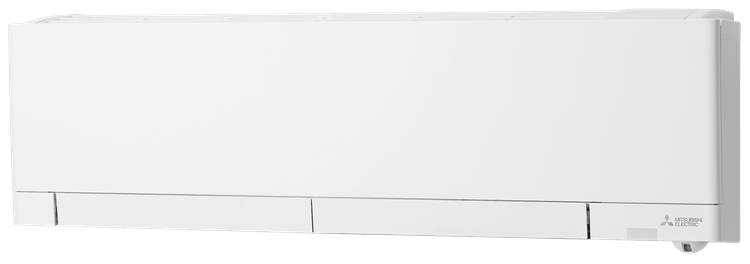
Mitsubishi FX Hyper-Heat (12k)
MrCool DIY 5th Gen (12k 115V)
No one on r/hvacadvice, r/HVAC, r/HomeImprovement, r/heatpumps or r/woodworking owned both current models, and none of the owner reports names the R-454B Mitsubishi FX or a confirmed MrCool DIY 5th Gen. Mitsubishi owners mostly describe long service (one unit at 14 years with no service, one that failed at 9) and Hyper-Heat systems holding through sub-zero nights; three people described installing a Mitsubishi themselves, which Mitsubishi's warranty does not cover. Installed prices posted for one Mitsubishi head, one paid and one quoted, ran $7,500 to $9,800. MrCool owners describe easy installs in garages. A three-zone Mitsubishi owner is considering a MrCool for a bedroom and garage, and one shopper got Mitsubishi quotes and installed a MrCool instead for less than a third of the quote.
Read full take ↓


If you're heating a house through winters that go below zero, we'd buy Mitsubishi's FX Deluxe wall-mounted Hyper-Heating system (MSZ-FX12NL indoor, MUZ-FX12NLHZ outdoor), have a licensed contractor install it, and register it. For a space you'll condition yourself, buy the MRCOOL DIY 5th Gen 12,000 BTU 115V mini-split. The two sit at opposite ends of one decision. The MrCool comes in a box with a pre-charged line set you connect yourself. The Mitsubishi is sold through licensed contractors, and its warranty exists only if one of them installs it.
As heat pumps, it isn't close. On NEEP's cold-climate listings the Mitsubishi makes 16,200 BTU/h at 5°F to the MrCool's 8,400, nearly twice the heat from the same 12,000 BTU nameplate, and Mitsubishi publishes operation down to -22°F where the MrCool's heating range ends at -13°F. It's rated more efficient in both modes too.
The MrCool wins a different contest: a garage, shop, bonus room or bedroom you want to condition yourself on a 115V circuit, with a warranty that survives your own install. Owner-reported installed prices for one Mitsubishi head, one paid and one quoted, ran $7,500 to $9,800, several times what the MrCool kit costs. The route we'd steer you away from is the in-between one, buying a Mitsubishi online and installing it yourself; Mitsubishi's own terms leave that unit with no warranty. We earn nothing on the Mitsubishi. It's here because it's the unit DIY shoppers measure the MrCool against.
Which Mitsubishi we compared
Mitsubishi sells several 12k wall units under its M-Series, and quotes and listings mix them up. We compare the FX indoor unit with the MUZ-FX12NLHZ outdoor unit, which Mitsubishi's contractor site lists as the "1-ton FX Deluxe Single-zone Hyper-heating Outdoor Unit." It runs on R-454B, like the MrCool 5th Gen. Check the outdoor model on any quote, because its neighbors are different machines.
Pairing | Heat at 5°F (NEEP) | What it is |
|---|---|---|
FX with MUZ-FX12NLHZ | 16,200 BTU/h | The unit in this comparison |
GX with MUZ-GX12NLHZ | 12,300 BTU/h | Also a Hyper-Heat pairing |
GX with plain MUZ-GX12NL (no HZ) | 10,100 BTU/h | Not Hyper-Heat |
JX (MSZ-JX12WL) | 8,600 BTU/h | About what the MrCool 12k makes |
FS, GS and GL | No figure | The older R-410A generation. Most Mitsubishi owner reports here are about units of that age or an unstated model. |
P-Series | No figure | A separate Mitsubishi line. A P-Series quote is not this unit. |
On the MrCool side, 5th Gen model numbers start DIY- and end D25-O. The Easy Pro, DIY Select, Olympus and Advantage are other MrCool lines with different line sets and warranties; our MrCool review explains how to tell them apart.
Side by side
12k against 12k. Cold-weather capacity is from NEEP's cold-climate heat pump list; the rest is each manufacturer's published data.
Spec | MrCool DIY 5th Gen 12k | Mitsubishi FX 12k |
|---|---|---|
Rated heat at 47°F | 12,000 BTU/h | 13,200 BTU/h (NEEP rated) |
Heat at 17°F (NEEP) | 8,500 BTU/h rated, also its maximum | 9,300 rated, up to 18,200 |
Heat at 5°F (NEEP, rated equals maximum on both) | 8,400 BTU/h | 16,200 BTU/h |
Coldest published point | 3,800 BTU/h maximum at -13°F, the end of its heating range per its install manual | 8,700 BTU/h maximum at -22°F per NEEP; 14,500 at -5°F and 13,200 at -10°F maximums on its submittal |
SEER2 / EER2 / HSPF2 | 23.5 / 12.5 / 10.2 | 29.9 / 15.4 / 12.4 |
Electrical | 115V, 18 A minimum circuit ampacity, 20 A maximum breaker | 208/230V, 14 A minimum circuit ampacity, 15 A maximum overcurrent protection, 15 A recommended breaker |
Refrigerant side | 25 ft pre-charged Quick Connect line set in the box, no vacuum per MRCOOL | Flare connections on a line set bought separately, with a nitrogen pressure test and an evacuation to 500 microns that its manual assigns to a licensed contractor |
Line length | 75 ft maximum, 49.2 ft of rise per its install manual | 65 ft maximum, 40 ft of height difference; factory charge covers 25 ft, then 0.22 oz of refrigerant per extra foot |
Noise (per each maker) | Wall unit 43 dB(A) on Turbo down to 18 on Silent; outdoor unit 54 | Wall unit 44 down to 20 in cooling; outdoor unit 49 cooling, 51 heating |
Wall unit width | 31.57 in | About 39.3 in (39-9/32 in on Mitsubishi's submittal) |
Warranty | 5 years parts, 7 compressor, no registration, owner installs allowed | 5 and 7 after a licensed contractor's install; 10 years if registered in an owner-occupied home; 12 years through a Diamond Contractor; nothing on a non-licensed install |
What's the same on both: a 12,000 BTU/h cooling rating, R-454B refrigerant, ENERGY STAR and ENERGY STAR Cold Climate status on NEEP's list, and no labor coverage from the manufacturer.
Heat on the coldest night
Both are sold as 12,000 BTU units, and the box tells you nothing about January. At 5°F NEEP lists the MrCool at 8,400 BTU/h, 70% of its rating, and the Mitsubishi at 16,200, more than its own 13,200 BTU/h rating at 47°F. That's 7,800 BTU/h more from the same nameplate. At 17°F the rated points sit closer, 9,300 against 8,500, but NEEP lists a maximum alongside each rated figure, and the Mitsubishi's maximum at 17°F is 18,200, a little over twice the MrCool's 8,500 ceiling. On a cold night the maximum is what tells you how far a unit can stretch.
Put that against a room. Say a heat-loss estimate puts a finished basement or an insulated one-car garage at 10,000 BTU/h on a 5°F night (an illustration; your number comes from a Manual J or a careful heat-loss estimate, not from us). The MrCool comes up 1,600 BTU/h short. The Mitsubishi covers it with 6,200 to spare. Don't read that as a reason to buy a bigger unit of either brand "to be safe"; an oversized unit short-cycles in mild weather and pulls less humidity in summer. Size from the load at your design temperature.
Below zero the gap widens. MrCool lists heating down to -13°F, where NEEP puts its maximum at 3,800 BTU/h, about a third of its rating. Mitsubishi's submittal promises "100% heating performance at outdoor temperatures -10° F with guaranteed operation down to -22° F," lists a 13,200 BTU/h maximum at -10°F, and NEEP lists an 8,700 BTU/h maximum at -22°F. At -22°F the Mitsubishi still makes more than twice what the MrCool makes at -13°F. Hyper-Heat owners back the brand on this, with systems carrying them through a night at -4°F, another at -7°F, and a winter with most nights below zero. None of them named the current FX.
Efficiency runs the same way. 29.9 SEER2 against 23.5 means the MrCool uses about 27% more electricity for the same seasonal cooling on the ratings (29.9 divided by 23.5), and 12.4 HSPF2 against 10.2 works out to about 22% more in heating. On a garage you heat some evenings, that's small money. On a house heated all winter it's the part of the Mitsubishi premium that pays some of itself back; how much depends on your rates and hours.
Who installs it, and what that costs
The MrCool's refrigerant side arrives done. The outdoor unit and the 25 ft Quick Connect line set come pre-charged with R-454B, MRCOOL's product description says setup "doesn't require vacuuming," and its warranty allows an owner install. Make each connection once: the install manual says the line sets "are designed to only be installed once," and that installing them more than once voids the warranty. It runs on 115V with a 20 A maximum breaker. Whether your circuit qualifies and what disconnect you need are questions for a licensed electrician.
The Mitsubishi's install manual opens with "Do not install the unit by yourself (user)," and says "Units should be installed by licensed contractor according to local code requirements." What it asks of that contractor is a flare install: a flare tool, gauge manifold and vacuum pump on the required-tools list, a nitrogen pressure test at 601 psig that the manual says must hold for 24 hours, and an evacuation to 500 microns, read on a micron gauge, that must hold for at least an hour. We list those so you know what a quote is paying for and can ask the installer whether they do it, not as steps to follow. The line set isn't in the box; Mitsubishi sells them separately. It also needs a 208/230V circuit with a 15 A breaker, so a garage or room with only 120V at hand needs a new circuit.
That install is what the Mitsubishi price pays for. A single Mitsubishi head has cost $7,500 installed, a Hyper-Heat unit added to a garage on a new build (the builder called it their normal price), and drawn a $9,800 quote for a 12k from a Diamond installer in the DC area with the outdoor disconnect already in place. An $8,000 quote for a garage unit, brand not named, made a Mitsubishi owner in Washington state balk. Quotes of $10,000-12,000 for two single-head Mitsubishi systems sent one shopper to install a two-head MrCool themselves for about $3,000. MrCool owners describe something closer to the box price: about $1,000 for one that was easy to install alone, and about $1,500 for a 24k plus a few hundred for a contractor who installed it while building the garage. These are owner-reported numbers from different years and regions, not a quote you should expect.
The obvious workaround is to buy a Mitsubishi and install it yourself, and some people do: one paid about $2,000 plus $200-300 in vacuum pump and gauges and finished in an afternoon, one installed a three-zone system, and one is an HVAC tech with the tools and years of experience. We'd skip that route unless you're the tech. Mitsubishi's warranty statement covers products "installed by a licensed heating, ventilation and air conditioning (HVAC) contractor," and its page on resales says warranty protection and support are not available for purchases "through the Internet, an auction, or other resale channels" that don't meet that requirement. A Mitsubishi bought online and installed by you has no factory warranty, which the $2,000 buyer accepted when they said they'd risk theirs. You may hear from an installer that Mitsubishi's basic 5-year parts, 7-year compressor coverage applies no matter who installs it. The current statement covers products installed by a licensed contractor, so we'd go by the document.
Then the legal side. EPA's Q&A on its refrigerant sales restriction says "Any person servicing, installing or disposing of stationary appliances (except the disposal of small appliances) must be a section 608 certified technician," and the federal definition of a technician lists attaching or detaching hoses and gauges and adding or removing refrigerant among the activities that count, and a flare install's evacuation attaches hoses and gauges to the refrigerant circuit. EPA hasn't published a plain statement on whether connecting a quick-connect kit like the MrCool's counts, and we won't pretend to settle it. Check your local permit rules, and put the wiring of either one in a licensed electrician's hands.
The warranties, term by term
Both start at 5 years on parts and 7 on the compressor. The differences are who has to install it, how far it can stretch, and what you need to make a claim. We read the residential M-Series statement Mitsubishi lists as current, effective June 1, 2026, which names the FX models, and the two statements before it going back to October 2025 carry the same terms. Mitsubishi dates each statement by purchase, so check the one that matches your purchase date on its warranty page.
Term | MrCool DIY 5th Gen | Mitsubishi FX |
|---|---|---|
Installer | Systems "installed according to the installation instructions" and to codes and permits; a licensed contractor "may be necessary" for diagnosis when MRCOOL directs it | Licensed HVAC contractor required; failures from "installation, alteration, repair or service by anyone other than a licensed contractor" excluded |
Length | 5 and 7, "With no registration required." | 5 and 7 from the date of a licensed install; 10 years on parts and compressor in an owner-occupied home registered within 90 days of installation; 12 years if a Diamond Contractor installs and registers it within 90 days. Longer terms last "So long as the original purchaser resides in the residence." Residents of California, Connecticut, Florida and Georgia get the 10-year term without registering. |
Claims | MRCOOL may ask for a licensed or certified tech's written diagnosis "at MRCOOL's discretion." | Through the installing contractor, another licensed contractor or servicer, or an authorized distributor, with proof of the licensed install date |
Line sets | "Pre-charged line sets" are listed among covered parts | Covered Product excludes "the refrigerant piping, electrical wiring, controls and accessories." |
Surges and moves | Excludes units moved from their original installation address | Excludes power surges; covers only units "remaining at the site of the original installation." |
Both exclude labor. The labor coverage you see on Mitsubishi quotes comes from the contractor (one shopper's quote listed 5 years), so get it in writing. Both include binding arbitration, and both let you opt out in writing within 30 days of purchase.
Run a failure through them. A compressor that dies in year three is covered on both, provided the Mitsubishi had a licensed install; the labor to swap it is yours either way, and on the Mitsubishi it comes off a contractor's rate card unless their own labor warranty covers it. A compressor that dies in year eight is past the MrCool's 7 years and still covered on a licensed-installed Mitsubishi registered in an owner-occupied home. A self-installed Mitsubishi is covered in neither year.
Service, parts and the room it goes in
This is where the Mitsubishi premium buys something an owner install can't. Warranty parts come through licensed contractors and distributors, and installers describe Mitsubishi parts as easy to get; one can still get parts for Mitsubishi units from the mid-1990s. That's installers talking, not owners. The MrCool's problem runs the other way. You'll hear, including from a working tech, that shops won't work on a MrCool or a homeowner-installed system. With the MrCool, plan on doing your own diagnosis with MRCOOL's support. And a self-installed Mitsubishi without a contractor's warranty keeps only one advantage over the MrCool DIY: a better chance of getting it serviced.
One install detail matters in basements. Both run on R-454B, an A2L (mildly flammable) refrigerant, and both manuals set limits for it. MRCOOL's DIY 5th Gen manual wants the indoor unit at least 6.0 ft above the floor and a room at least 7.3 ft tall. Mitsubishi's FX manual sets a 5.9 ft minimum mounting height and a minimum room area based on the refrigerant charge, without a room-height minimum. One shopper with a 7 ft basement ceiling asked MRCOOL about its Easy Pro, which carries the same 7.3 ft figure, and was told installing below it is not advised. If your ceiling is under 7.3 ft, that rules out the MrCool before price does.
What owners report about each
Mitsubishis tend to run a long time with little attention, though no owner on record named the current FX. One unit is 14 years old without ever needing service, in a room where its owner expected chlorine to kill it. Another ran 9 years with nothing but cleaning before it failed. In Maine, about $9,000 bought two Hyper-Heat units with three heads that their owner calls worth every penny, and a single 12k Hyper-Heat Plus head heats and cools an 800 sq ft basement elsewhere. The complaints are a loud defrost noise on a self-installed three-zone Mitsubishi that its owner hadn't fixed, and a tech's diagnosis of a refrigerant leak on a Mitsubishi AC unit.
MrCool owners call it enough for a garage: a 24k DIY in a 1,000 sq ft garage installed over a weekend, a 24k in a 600 sq ft detached garage that a contractor installed, and a cheap one that was easy to install alone. None said they had a 5th Gen. Our MrCool review covers the generation question and the few reports that are confirmably 5th Gen.
Nobody on record owns both current models. One three-zone Mitsubishi owner was weighing a MrCool for the last bedroom and the garage, and one shopper got Mitsubishi quotes, then installed a MrCool. We see the trade the way one garage shopper laid it out: the Mitsubishi as the higher-quality, longer-lasting unit that needs a pro, the MrCool as the cheap one you can do yourself.
Which one we would buy
For a house, or a room you live in, through winters that go below 0°F: the Mitsubishi FX. It makes nearly twice the MrCool's heat at 5°F, keeps running to -22°F, rates better on efficiency in both modes, and through a Diamond Contractor with registration it carries 12 years on parts and compressor. Get at least three quotes, confirm the contractor's state license (and Diamond status if you want the 12-year term), ask what labor warranty they write, and make sure the registration happens within 90 days.
For a garage, shop, bonus room or bedroom you'll install yourself on a 115V circuit, where -13°F is rare: the MrCool DIY 5th Gen 12k. You give up about half the Mitsubishi's heat at 5°F and the contractor relationship; you get no evacuation, a warranty that covers your own install, and a total cost owners put at a fraction of an installed Mitsubishi. Plan backup heat for the nights its 3,800 BTU/h at -13°F won't hold the room.
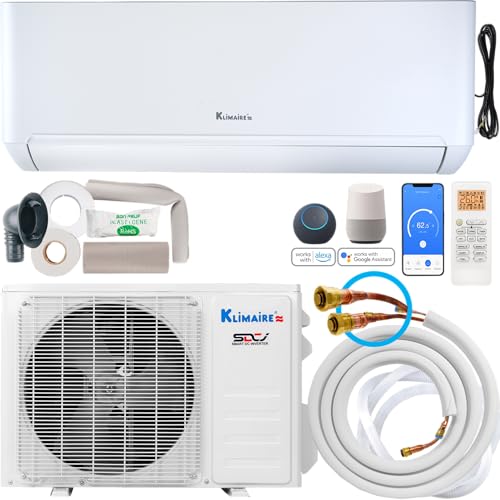
Skip the middle path. A Mitsubishi bought online and installed by you has none of the warranty that justifies its price. If you want more cold-weather heat than the MrCool and still want to do the install, the quick-connect Klimaire 12K lists 8,900 BTU/h at 5°F and a 6,680 maximum at -13°F on NEEP; our best cold-climate mini-split guide covers it and the Senville Aura. The full MrCool numbers are in our MrCool DIY 5th Gen review, and MrCool vs Pioneer covers the cheaper flare-install alternative.
Scores at a Glance
MrCool DIY 5th Gen (12k 115V)
Mitsubishi FX Hyper-Heat (12k)
Our pick
Filled circle = category winner. Scores are our editorial assessments on a 1 to 10 scale.
Reliability & Durability
Neither current R-454B model has a long owner record. Mitsubishi owners report units running 9 and 14 years with little service, contractors handle parts and claims, and the warranty reaches 12 years through a Diamond Contractor, but it disappears on a non-licensed install. The MrCool removes the evacuation step and its warranty covers your own install, while many shops won't service one, by several accounts.
Performance & Results
The Mitsubishi FX is the stronger heater by a wide margin: 16,200 BTU/h at 5°F against the MrCool's 8,400 on NEEP's listings, a 13,200 BTU/h maximum at -10°F on its submittal, and operation to -22°F where the MrCool's range ends at -13°F. It also rates higher on efficiency, 29.9 SEER2 and 12.4 HSPF2 against 23.5 and 10.2. The MrCool's score is the one in our review.
Value
Owner-reported installed prices for one Mitsubishi head, one paid and one quoted, ran $7,500 to $9,800, several times the MrCool kit, and a self-installed Mitsubishi bought online has no warranty, so there's no cheap way in. Its efficiency pays some of that back on a house heated all winter. For a garage or single room the MrCool is the better use of the money.
The Evidence Behind Our Verdict
No one on r/hvacadvice, r/HVAC, r/HomeImprovement, r/heatpumps or r/woodworking owned both current models, and none of the owner reports names the R-454B Mitsubishi FX or a confirmed MrCool DIY 5th Gen. Mitsubishi owners mostly describe long service (one unit at 14 years with no service, one that failed at 9) and Hyper-Heat systems holding through sub-zero nights; three people described installing a Mitsubishi themselves, which Mitsubishi's warranty does not cover. Installed prices posted for one Mitsubishi head, one paid and one quoted, ran $7,500 to $9,800.
MrCool owners describe easy installs in garages. A three-zone Mitsubishi owner is considering a MrCool for a bedroom and garage, and one shopper got Mitsubishi quotes and installed a MrCool instead for less than a third of the quote.
Our rating above is our own editorial call. What follows is the field evidence we weighed to reach it: first-hand reports from owners on Reddit and independent HVAC and DIY forums, which we lean on more than manufacturer-influenced published reviews because unsponsored owners tend to be the more candid signal.
MrCool DIY 5th Gen (12k 115V) owners
“I just got quotes last year and it was $10-12k for Mitsubishi with 2 single head condensers. I don't mind paying for work, but $7k+ for labor is ridiculous. Did Mr Cool myself one condenser with 2 heads for 3k in an afternoon.”
“I did the 24k mr. cool diy in my 1000sq foot garage this weekend. It’s a game changer. Absolutely amazing machine and Costco’s price can’t be beat.”
“I have a cheap Mr Cool mini split. It's excellent and it cools too. I am sure there are better options but this thing was like $1000 and easy to install alone.”
“I have a 600 square foot detached garage and did a Mr. Cool unit. I know many have a love/hate relationship with them but I have a 24k btu unit (very high ceilings in the garage) and use it for heat and air when I need to. It doesn’t run constantly.”
Mitsubishi FX Hyper-Heat (12k) owners
“My Mitsubishi mini split is 14 years old and has never required service. It is in a room with a swim.sps and I figured the chlorine would kill it in a few years but it is still working great.”
“I paid about $9000 for everything. I have 2 Mitsubishi hyper heat units with 3 mini splits and it was worth every penny to have them done professionally. It took them (2) seven hour days to complete the work. I ran them all winter too and I'm in Maine.”
“I have a Mitsubishi hyper heat and I've exclusively used it during this winter storm where it for down to -20 C (-4 F) without any issue whatsoever.”
“We're able to condition the entire 800-square-foot basement with a single head and single condenser. With the doors open and the head blowing down the hallway, the temperature stays surprisingly even. For us, a 12k Mitsubishi Hyper-Heat Plus has been enough for the whole basement.”
“I purchased the unit myself (Mitsubishi at ~$2000), as well as a ~$200-300 worth of supplies (Vacuum pump & Manifold gauges). Took me 4 hours top end on a Saturday afternoon, and I could do it in 2 hours the second time. No way was that worth the >$1000/hr for the install. I respect the need for tradesmen to make a living and that I am paying for their experience... but for those kinds of prices I will do it myself and risk my warrantee.”
“I have 3 zone Mitsubishi in this house. Really want to add one zone unit for only bedroom not covered with this Mitsubishi. I live in WA, seems MrCool could be a good option for this last bedroom and garage.”
“I currently have Mitsubishi and it just went after 9 years. Never needed any maintenance besides cleaning during that time.”
“We’re putting an extra mini split mitsu HH in our garage and paying $7500 installed. They also put in three ducted HH splits in our new build, so maybe they gave us a discount on this extra one, but our builder said that’s their normal price.”
“Actually a bit easier then installing my mitsubishi 3 zone. My mitsu 3 zone cost was 3x as expensive and it is having issues making a 240hz defrost noise that is god awful. Not sure yet what the fix is. Customer support great.”
Frequently asked questions
Should I buy the MrCool DIY 5th Gen (12k 115V) or the Mitsubishi FX Hyper-Heat (12k)?
The MrCool wins a different contest: a garage, shop, bonus room or bedroom you want to condition yourself on a 115V circuit, with a warranty that survives your own install. Owner-reported installed prices for one Mitsubishi head, one paid and one quoted, ran $7,500 to $9,800, several times what the MrCool kit costs. The route we'd steer you away from is the in-between one, buying a Mitsubishi online and installing it yourself; Mitsubishi's own terms leave that unit with no warranty.
How do the MrCool DIY 5th Gen (12k 115V) and Mitsubishi FX Hyper-Heat (12k) compare on construction?
Neither current R-454B model has a long owner record. Mitsubishi owners report units running 9 and 14 years with little service, contractors handle parts and claims, and the warranty reaches 12 years through a Diamond Contractor, but it disappears on a non-licensed install. The MrCool removes the evacuation step and its warranty covers your own install, while many shops won't service one, by several accounts.
What do real owners say about the MrCool DIY 5th Gen (12k 115V) and the Mitsubishi FX Hyper-Heat (12k)?
No one on r/hvacadvice, r/HVAC, r/HomeImprovement, r/heatpumps or r/woodworking owned both current models, and none of the owner reports names the R-454B Mitsubishi FX or a confirmed MrCool DIY 5th Gen. Mitsubishi owners mostly describe long service (one unit at 14 years with no service, one that failed at 9) and Hyper-Heat systems holding through sub-zero nights; three people described installing a Mitsubishi themselves, which Mitsubishi's warranty does not cover. Installed prices posted for one Mitsubishi head, one paid and one quoted, ran $7,500 to $9,800.
Top Picks
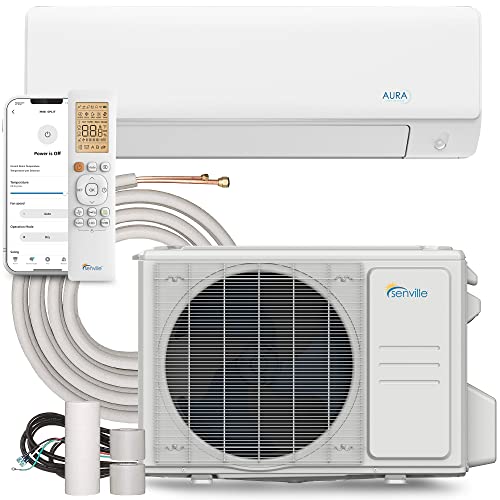
Senville AURA 12,000 BTU Mini-Split Heat Pump
Cold-weather heat closer to the Mitsubishi on a unit Amazon sells: NEEP rates the R-454B Aura 12k at 11,500 BTU/h at 5°F, heating to -22°F. This link's SENA-12HF-16 matches the older R-410A Aura; confirm the model. Licensed install only.
Read our full review: we scored it 7.5/10
You Might Also Need
Accessories worth grabbing alongside your purchase
Full Individual Reviews
Deep-dive on each, individually
