MrCool DIY 5th Gen vs Pioneer Diamante Pro: It Comes Down to the Vacuum Pump
By Wendell Asaro · Updated October 2026
Independent editorial review. We never accept payment for coverage, though we may earn a commission if you purchase through our links.

Verdict
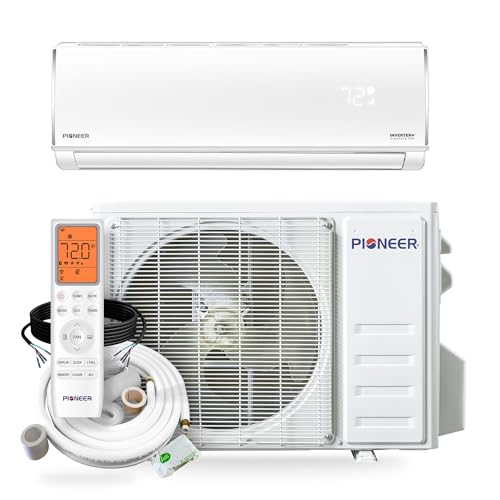
Pioneer Diamante Pro (12K 115V)
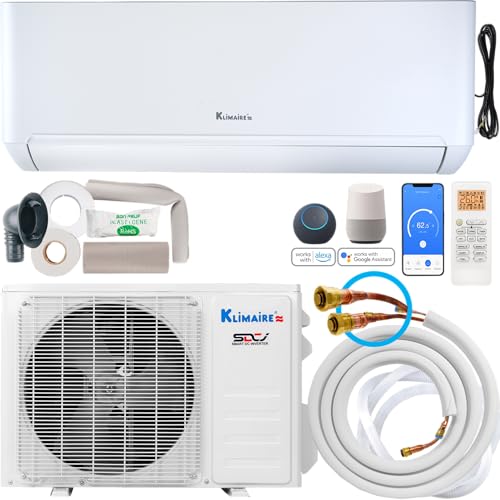
MrCool DIY 5th Gen (12k 115V)
No one on r/hvacadvice, r/HomeImprovement or the other boards owned both. Two shoppers weighed them, one against Pioneer's older WYS line. None of the owner reports is confirmably about the current R-454B MrCool DIY 5th Gen or Pioneer SI20RL Diamante Pro, so we label each: the MrCool quotes come from two DIY-line owners who didn't give a generation and two who didn't name the line, and the Pioneer quotes from owners of older or unnamed Pioneer units, one of them a WYS owner quoted only on flare fittings against pre-charged lines. Pioneer owners mostly report units that kept running, at least three hired out the refrigerant side, and two said Pioneer refused a warranty claim on their own install. Five owners described MRCOOL honoring a claim across older or unstated generations.
Read full take ↓


Buy the Pioneer Diamante Pro 12,000 BTU 115V mini-split if you'll pay a tech for the vacuum, and the MRCOOL DIY 5th Gen 12,000 BTU 115V mini-split if you won't. They come up together whenever someone wants a mini-split in a garage, shop or spare room without paying an installer's quote, and on the spec sheet they're close. The Pioneer makes a little more heat at 5°F, 9,000 BTU/h against 8,400, and costs far less. The MrCool is more efficient, keeps heating down to -13°F where the Pioneer stops at -4°F, and does one thing the Pioneer can't: its 25 ft line set arrives pre-charged with Quick Connect fittings, and MRCOOL says setup doesn't require vacuuming.
That last difference decides it. Pioneer's install manual calls for a nitrogen-assisted triple evacuation that ends at 500 microns and a 4-hour hold, and says qualified, well-trained personnel must do it. If you'll pay a certified tech for that startup, or you already own the tools and hold an EPA Section 608 card, the Pioneer gives you more heat at 5°F for much less money and a warranty that doesn't demand a licensed installer. If you won't, the MrCool's warranty is written for owner installs, with 5 years on parts, 7 on the compressor, no registration and the line sets covered, and it takes the step most likely to go wrong in a first-time flare install off the job.
Nobody on record owns both. The owner reports below are labeled by line and generation wherever the owner gave one, and none of them is confirmably about either current R-454B model, so the verdict rests on the two manufacturers' documents and NEEP's cold-climate listings.
The two units, and how to be sure you get them
MRCOOL DIY 5th Gen: model numbers start DIY- and end D25-O, for example DIY-12-HP-C-115D25-O for the 12k outdoor unit and DIY-12-HP-WMAH-115D25-O for its wall unit, on R-454B refrigerant. The Amazon system listing we link gives its model as DIY-12-HP-WM-115D25O. Two cautions: MRCOOL also used "E Star" for its older R-410A 4th Gen DIY series, and retailers sell the cheaper Easy Pro (an 11.5 ft line set on the current version, 16 ft on the older one) under "5th Gen" wording too. Check the prefix, the suffix and the 25 ft line set together, and confirm with the seller that the outdoor unit is in the box.
Pioneer Diamante Pro: the current full sets end SI20RL and run on R-454B; the 12K 115V is WYT012ALSI20RL. The older R-410A Diamante Pro Series ends FI19RL and is rated to heat down to -13°F, and Pioneer's WYS line is a separate, older series. Confirm SI20RL or R-454B with the seller before you pay. We compare the 115V version because it matches the MrCool 12k's voltage. The 230V Diamante 12K (WYT012GLSI20RL) shares the 17°F and 5°F ratings, lists a 6,800 BTU/h maximum at -4°F instead of 6,100, and wants a 15 A double-pole breaker. Our Pioneer review recommends the 9K 230V for a bedroom; for a garage or shop, the 12K is the like-for-like size.
Side by side
12K against 12K, both on 115V. Ratings are each manufacturer's; cold-weather capacity is from NEEP's cold-climate heat pump list, which matches Pioneer's own submittal figures.
Spec | MrCool DIY 5th Gen 12k | Pioneer Diamante Pro 12K 115V |
|---|---|---|
Heat at 17°F / 5°F (NEEP rated; same as the maximum on both) | 8,500 / 8,400 BTU/h | 10,000 / 9,000 BTU/h |
Coldest published point | 3,800 BTU/h maximum at -13°F; heating range -13°F to 75°F per its install manual | 6,100 BTU/h maximum at -4°F; heating range -4°F to 86°F per its submittal |
SEER2 / EER2 / HSPF2 | 23.5 / 12.5 / 10.2 | 20.0 / 10.5 / 9.5 (Region IV) |
ENERGY STAR (NEEP) | ENERGY STAR and ENERGY STAR Cold Climate | Neither; its 10.5 EER2 is under ENERGY STAR's 11.0 floor for split heat pumps |
Refrigerant side | 25 ft pre-charged Quick Connect line set, no vacuum per MRCOOL | 16 ft pre-flared copper line set, then a nitrogen-assisted triple evacuation to 500 microns with a 4-hour hold per its manual |
Line length | 75 ft maximum, 49.2 ft maximum rise per its install manual (MRCOOL's online data lists 82 ft) | 50 ft maximum, 33 ft of rise; factory charge covers up to 25 ft |
Electrical | 18 A minimum circuit ampacity, 20 A maximum breaker | 25 A single-pole breaker |
Noise (per each maker) | Wall unit 43 dB(A) on Turbo down to 18 on Silent; outdoor unit 54 | Wall unit 45 on Turbo down to 28 on Mute; outdoor unit 55 |
Wall unit width | 31.57 in | 31-7/8 in |
Warranty | 5 years parts, 7 compressor, no registration, owner installs allowed, line sets covered | Up to 5 years on parts and compressor if registered, 1 year if not; no licensed-installer requirement; faulty installation and refrigerant loss excluded |
What's the same on both: 12,000 BTU/h of rated heat at 47°F, 115V power, R-454B refrigerant, and no labor coverage from the manufacturer.
Heat when it gets cold
Both are rated 12,000 BTU/h at 47°F, so the box tells you nothing. At 5°F the Pioneer keeps 75% of its rating and the MrCool 70%, a 600 BTU/h edge for the Pioneer, about 7%. At 17°F, where a lot of northern winter nights sit, the gap is wider: 10,000 against 8,500, about 18% more heat from the Pioneer. Put that against a room. Say a heat-loss estimate puts an insulated one-car garage at 10,000 BTU/h on a 5°F night (an illustration; your number comes from a Manual J or a careful heat-loss estimate, not from us). The Pioneer comes up 1,000 BTU/h short and the MrCool 1,600 short. Neither 12K carries that garage alone on that night.
Below 5°F the picture changes. Pioneer publishes a 6,100 BTU/h maximum at -4°F and nothing colder, and its heating range ends there. The MrCool keeps going to -13°F, where NEEP lists a 3,800 BTU/h maximum, about a third of its rating. NEEP publishes no -4°F figure for the MrCool, so we can't put the two side by side at that temperature. If your winters regularly go below -4°F, the MrCool is the only one of these two still making heat, but 3,800 BTU/h won't hold much of a garage; plan backup heat with either one. If cold nights are the reason you're shopping, look at the MrCool 18k on a 208/230V circuit instead: 12,800 BTU/h at 5°F and up to 12,200 at -13°F, per our MrCool review. Don't upsize "to be safe" with either brand. An oversized unit short-cycles in mild weather and pulls less humidity in summer.
Efficiency runs the other way. 23.5 SEER2 against 20.0 means the Pioneer uses about 17% more electricity for the same seasonal cooling on the ratings (23.5 divided by 20.0), and 10.2 HSPF2 against 9.5 works out to about 7% more in heating. Over years of running, that trims the purchase-price gap; how fast depends on your rates and hours. The ENERGY STAR difference only matters if a rebate or utility program you're counting on requires it, and then only the MrCool 12k qualifies.
The install: plug together, or flare and evacuate
The MrCool's refrigerant side is what MRCOOL designed out. The outdoor unit and the 25 ft Quick Connect line set arrive pre-charged with R-454B, MRCOOL's product description says setup "doesn't require vacuuming," and its DIY page calls the line "designed for full homeowner installation" with "No license." Follow the install manual for the connections; nothing in the kit asks you to add, remove or vent refrigerant. Make each connection once. The manual says "The line sets are designed to only be installed once. The seal within the line set cannot be guaranteed if they are installed more than once. This will void the warranty," and that disconnecting and reconnecting the refrigerant pipes at the outdoor unit voids it too. Keep bends to at least the manual's 4 in radius.
The Pioneer's refrigerant side is a technician's job by its own manual. All the refrigerant piping arrives pre-flared, and once the flare connections are made the manual calls for a triple evacuation: down to 8,000 microns, a break with nitrogen, down to 5,000, another nitrogen break, then down to "a reading of 500 Microns (0.5 Torr)," and "Hold the vacuum without movement for a minimum of 4 hours to ensure a moisture-free system." It names "a vacuum pump and manifold gauge" for the job and says "Qualified and well-trained personnel must complete the evacuation of the refrigerant circuit." Plenty of owners install a Pioneer themselves anyway, all on older or unnamed lines, and the hardest part, as one put it, is getting the vacuum pump and gauges.
At the level of what to buy, that evacuation means a two-stage vacuum pump (we'd get one listed as A2L-rated, since R-454B is an A2L refrigerant), a manifold gauge set, a nitrogen cylinder and regulator for the breaks, a digital micron gauge to read the 500-micron target and watch the hold, and a flare-nut torque wrench. It adds up. One DIYer who installed a flare system, brand not named, tallied $671.07 in vacuum and test gear, plus about $25 to fill the nitrogen tank, before the tube bender, torque wrench and hole saw any install needs. Hiring it out costs less if you can find someone. Pioneer owners have paid about $250 for the startup (in one case per unit), and one paid a tech $1,500 to run the lines, mount the unit and wire it after doing the conduit, pad and line set covers themselves. With a $250 startup, the Pioneer still cost less than the MrCool when we checked; a $1,500 install erases that gap.
The catch is finding the tech. Many HVAC companies won't install customer-supplied equipment, and it comes up too often to dismiss. The DIYer with the tool tally above posted locally for someone to do the nitrogen test and vacuum and got no replies. Call around before you order the Pioneer, and ask specifically for an evacuation and startup on customer-supplied equipment. If nobody will take it, the MrCool's premium buys you a unit you can finish yourself.
Then the legal side. EPA's Q&A on its refrigerant sales restriction says "Any person servicing, installing or disposing of stationary appliances (except the disposal of small appliances) must be a section 608 certified technician," and the federal definition of a technician lists attaching or detaching hoses and gauges and adding or removing refrigerant among the activities that count, with owners named among the people who can be technicians. A flare evacuation attaches hoses and gauges to the refrigerant circuit, which is why we'd hand that step to a certified tech if you don't hold the card. The quick-connect side is less settled. EPA has stayed its sales restriction as it applies to pre-charged split systems since 1995, so anyone can buy either unit, and it hasn't published a plain statement on whether connecting a quick-connect line set counts as technician work. We won't pretend to settle it. Check your local permit rules too, and put the wiring of either one in a licensed electrician's hands.
Line sets and where the outdoor unit can go
The MrCool ships 25 ft of pre-charged line, and the manual's answer to extra length is to coil it, wrap it with protective tape and store it behind the condenser lying flat with the ground. If the outdoor unit sits right behind the wall, plan room for that coil. For a longer run, the install manual lists a 75 ft maximum pipe length; we'd ask MRCOOL which pre-charged line sets it approves before planning past the 25 ft in the box.
The Pioneer ships 16 ft, and Pioneer's store says that length can't be changed at purchase. The factory charge covers up to 25 ft of connected line, so a longer line bought separately works up to that point. Past 25 ft the run goes beyond the factory charge, and only Section 608 certified technicians can buy refrigerant for stationary systems, so a long run puts you back in a tech's hands. The submittal allows up to 50 ft with 33 ft of rise. One Pioneer owner found that trimming and re-flaring excess line on a second install wasn't worth the hassle; with flare fittings, every fitting you make is one more place to get the torque and the evacuation right.
The warranties, clause by clause
Both allow an owner install on paper. MRCOOL's DIY 5th Gen warranty (revision 07.03.25) applies to systems "installed according to the installation instructions" and in line with codes and permits, and says a licensed HVAC contractor "may be necessary" when required by law or for diagnostic testing as directed by MRCOOL. Pioneer's warranty policy, published by Parker Davis HVAC, has no licensed-installer requirement. The differences are in the terms and the exclusions.
Clause | MrCool DIY 5th Gen | Pioneer Diamante Pro |
|---|---|---|
Term | 5 years on parts and 7 on the compressor, "With no registration required." | Unregistered: the Basic Warranty, "up to one year." Registered: the Standard Warranty, "up to five years," on parts and the compressor |
Registration | None | Product page: "within 90 days of purchase." Warranty policy: "within one week after the Product is properly installed." |
Install faults | The evacuation is gone, though the manual makes a second line-set connection void the warranty | Excludes "Damages or repairs arising as a result of a faulty installation" and moisture, air or dirt let in during installation, which is where a bad evacuation lands |
Refrigerant and lines | "Pre-charged line sets" are listed among covered parts | Does "not cover any claims related to the lack of refrigerant in new Products," or "subsequent refrigerant losses occurring at any time afterward." |
Claims | Written proof of diagnostic tests from a licensed or certified tech "may be required at MRCOOL's discretion." | The owner "must first contact the installer or any other qualified contractor" to diagnose the failure |
Shipping | Shipping and freight charges excluded | Replacement-part shipping covered only "at its own discretion" |
Moving and selling | Excludes products moved from their original installation address; no transfer clause either way | Standard Warranty runs only while the original registered owner owns and lives in the home, and "is not transferable to the subsequent owners." |
Labor is excluded on both. Pioneer also excludes electrical surges and over- or undervoltage, so a surge-killed board is your bill; we'd put a surge protector on either one. For the Pioneer, satisfy both registration deadlines: install within 90 days and register the same week. For the MrCool, ask MRCOOL before you count on the warranty passing with the house.
Run a few failures through those terms. A compressor that dies in year six is covered on the MrCool (7 years) and outside the Pioneer's 5. A board that fails in year three is covered on both, if you registered the Pioneer; unregistered, it ran out after year one. A slow leak is where they part most. On the Pioneer, refrigerant loss is excluded at any time, and a leak at a flare you made sits right next to the faulty-installation exclusion. On the MrCool, the pre-charged lines are a covered part, and a 4th Gen DIY 36k that leaked its whole charge through a failed low-pressure switch got a replacement outdoor unit with a new pre-charged line set.
Owner warranty stories line up with that. MRCOOL has honored claims for five owners on record, none of them on a confirmed 5th Gen: a compressor at two years on an 18k (with the reinstall and shipping on the owner), a 24k that wouldn't cool on day one, the 4th Gen 36k leak, a wall-unit leak at year four on a unit installed about ten years ago, and a Costco unit with a compressor error that never ran. Pioneer refused two owners' claims on their own installs, one a leaking coil from a 2020 install whose owner couldn't show HVAC credentials, and on another unit sent a replacement control board under warranty for its owner to install. Pioneer's current written policy doesn't require a license. One refusal was on a 2020 install that predates the current Diamante Pro; the other owner didn't give a model or a date. Either way, a leak on a DIY install falls near two of the policy's exclusions. Register, photograph your micron gauge reading at the end of the hold, and keep the photo.
What owners report about each
Pioneers tend to keep running. Two 12k units have run since 2018, two 9,000 BTU units installed in August 2020 were still working with no maintenance, two more ran constantly for two years in Tucson Airbnbs, and one went about five years without problems. The bad reports: a unit that rusted out after eight years, a 12K that threw a compressor-failure code at 7-8 years after a power surge had already taken out its control board, an owner whose emails about a gurgling condensate pump and a freezing base pan Pioneer stopped answering, and the two warranty refusals above. None of these owners named the current SI20RL model.
MrCool DIY owners call the install the easy part: about four hours with basic tools plus an electrician for the wiring, a three-head DIY system whose owner recommends reading the manual and watching videos first, and two units running eight years that took a weekend each, line unstated. The loudest criticism doesn't come from owners. You'll hear, including from a working tech, that shops won't work on a MRCOOL or a homeowner-installed one. Pioneer has a version of the same problem in the customer-supplied-equipment refusals above, so with either brand, plan on doing your own diagnosis with the manufacturer's support.
Shoppers who weigh the two land where we do. One comparing a MrCool DIY 18k with a Pioneer from the older WYS line figured the Pioneer would mean hiring an HVAC tech to finish the install, and a garage shopper balking at an $8,000 installed quote wanted to know whether MrCool and Pioneer were any good. One Pioneer owner who did their own flare installs would probably have used pre-charged line sets, given the chance to go back.
Which one we would buy
It depends on the vacuum. If you'll pay a certified tech for the evacuation and startup, or you own the gear and hold a Section 608 card, buy the Pioneer Diamante Pro 12K. It makes more heat at 17°F and 5°F, costs far less even after a hired startup, and its warranty doesn't require a licensed installer. Register it the week it's installed, keep a record of the evacuation, and buy the 230V version if you have the circuit: it's a little stronger at -4°F and takes a 15 A double-pole breaker.
If the vacuum pump is what stands between you and a mini-split, buy the MrCool DIY 5th Gen 12k. You give up 600 BTU/h at 5°F and pay noticeably more; you get no evacuation step, heat listed down to -13°F, better efficiency ratings, ENERGY STAR Cold Climate status, and a warranty that covers your own install, the line sets and the compressor for two years longer. If you live where nights go below -4°F, it's the only one of the two still running then. The full numbers are in our MrCool DIY 5th Gen review and our Pioneer Diamante Pro review, and our best DIY mini-split guide covers the rest of the field, including the Klimaire DIY 12K, a quick-connect unit with cold-weather numbers close to the Pioneer's.
Scores at a Glance
MrCool DIY 5th Gen (12k 115V)
Pioneer Diamante Pro (12K 115V)
Our pick
Filled circle = category winner. Scores are our editorial assessments on a 1 to 10 scale.
Reliability & Durability
Neither has a multi-year owner record on its current R-454B generation, and the brand-level reports for both are mostly good with a few failures. The MrCool removes the evacuation, the step most likely to go wrong in a first DIY install, and its warranty lists the line sets as covered parts. The Pioneer's warranty excludes faulty installation and refrigerant loss at any time, and two owners said Pioneer refused a claim on their own install.
Performance & Results
The Pioneer 12K makes more heat where most winter nights sit: 10,000 BTU/h at 17°F and 9,000 at 5°F against the MrCool's 8,500 and 8,400. The MrCool answers with efficiency (23.5 SEER2 and 10.2 HSPF2 against 20.0 and 9.5), ENERGY STAR Cold Climate status the Pioneer 12K lacks, and heat listed to -13°F where the Pioneer stops at -4°F. Both scores are the ones in our reviews, and they're a tenth apart.
Value
The Pioneer costs far less and makes more heat at 5°F, and it stays cheaper even after a hired startup, which two owners reported paying about $250 for. That lead holds only if you can find a tech to do the evacuation or already own the gear. The MrCool's premium buys no evacuation, a longer compressor term with no registration, and a warranty written for your own install.
The Evidence Behind Our Verdict
No one on r/hvacadvice, r/HomeImprovement or the other boards owned both. Two shoppers weighed them, one against Pioneer's older WYS line. None of the owner reports is confirmably about the current R-454B MrCool DIY 5th Gen or Pioneer SI20RL Diamante Pro, so we label each: the MrCool quotes come from two DIY-line owners who didn't give a generation and two who didn't name the line, and the Pioneer quotes from owners of older or unnamed Pioneer units, one of them a WYS owner quoted only on flare fittings against pre-charged lines.
Pioneer owners mostly report units that kept running, at least three hired out the refrigerant side, and two said Pioneer refused a warranty claim on their own install. Five owners described MRCOOL honoring a claim across older or unstated generations.
Our rating above is our own editorial call. What follows is the field evidence we weighed to reach it: first-hand reports from owners on Reddit and independent HVAC and DIY forums, which we lean on more than manufacturer-influenced published reviews because unsponsored owners tend to be the more candid signal.
MrCool DIY 5th Gen (12k 115V) owners
“I did the Mr. Cool DIY with three heads and I love it. While it's simple to install in principle, I'd recommend reading the installation instructions and watching a couple of videos to make sure you won't have any snags and that you're up for it before purchasing.”
“5-6k is about normal for a quote, but that's why people love Mr. Cool. Two of them running strong for 8 years now. Cost me $1200 each and a weekend to install.”
“I bought and installed a Mr. Cool DIY mini split, it was something like $4k, plus $600 for my electrician to wire it. Took 4 hours for me to install with basic tools.”
“Anyways, mini split install was ok, 5-6 hours and helps if you have a friend. Our compressor had a p4 error (internal compressor error) and the unit never worked. Called MR COOL, they send a new unit, but by then my patience had run out and I got the HVAC installed and returned the MR COOL shipment.”
Pioneer Diamante Pro (12K 115V) owners
“Found a retired HVAC specialist who powered them up and balanced them for $250 per unit. I may have been able to do that myself, but I haven’t the gauges and don’t fully trust the pre-pressurized lines.”
“I had my Pioneer mini split installed last year in the DFW area for 1.5k. However I bought the unit, installed the conduit, pad and line set covers. The technician had to install the lines, mount the unit and attach the electrical. Took him maybe 3 hours at the most and you could see he was taking his time. This was in the off season and before the big freeze we get. To this day it is by far the best money I have ever spent.”
“I've installed two Pioneer mini-splits so far. About two years in, they are running fine. We're in HOT Tucson, AZ. These are in Airbnb units, where they are left on constantly.”
“If I could go back to the first two and used precharged line sets, I probably would.”
“I installed a Pioneer ductless split last summer. It was not without it's challenges. Most of the roadblocks I came across where easy to look up on YouTube. The hardest part for me was getting the vacuum pump and gauges as the unit came pre-charged.”
“I did a pioneer install in 2020. Unfortunately they would not warranty a leaking coil because I am not a licensed hvac tech and couldn’t show any credentials. It was cheaper yes, but not really a good option for do it yourself.”
“I had a pioneer diy, they wouldn’t warranty it. Just go with the diy options. Way less hassle and headache.”
“Skip Pioneer. They were great with support right after I bought (couple questions on shipping and then on winter use) and now don't answer any emails (emails on gurgling condensate pump and freezing base pan) what so ever.”
Frequently asked questions
Should I buy the MrCool DIY 5th Gen (12k 115V) or the Pioneer Diamante Pro (12K 115V)?
Nobody on record owns both. The owner reports below are labeled by line and generation wherever the owner gave one, and none of them is confirmably about either current R-454B model, so the verdict rests on the two manufacturers' documents and NEEP's cold-climate listings.
How do the MrCool DIY 5th Gen (12k 115V) and Pioneer Diamante Pro (12K 115V) compare on construction?
Neither has a multi-year owner record on its current R-454B generation, and the brand-level reports for both are mostly good with a few failures. The MrCool removes the evacuation, the step most likely to go wrong in a first DIY install, and its warranty lists the line sets as covered parts. The Pioneer's warranty excludes faulty installation and refrigerant loss at any time, and two owners said Pioneer refused a claim on their own install.
What do real owners say about the MrCool DIY 5th Gen (12k 115V) and the Pioneer Diamante Pro (12K 115V)?
No one on r/hvacadvice, r/HomeImprovement or the other boards owned both. Two shoppers weighed them, one against Pioneer's older WYS line. None of the owner reports is confirmably about the current R-454B MrCool DIY 5th Gen or Pioneer SI20RL Diamante Pro, so we label each: the MrCool quotes come from two DIY-line owners who didn't give a generation and two who didn't name the line, and the Pioneer quotes from owners of older or unnamed Pioneer units, one of them a WYS owner quoted only on flare fittings against pre-charged lines.
Top Picks
You Might Also Need
Accessories worth grabbing alongside your purchase


Full Individual Reviews
Deep-dive on each, individually
