Pioneer Diamante Pro Mini-Split Review: The 9K Is the One to Buy
By Wendell Asaro · Updated October 2026
Independent editorial review. We never accept payment for coverage, though we may earn a commission if you purchase through our links.
 ← Indoor unit 31-7/8 in wide (9K/12K) →
Spec sheet
| Rated heat at 47°F (9K 230V) | 10,000 Btu/h |
| Heat at 5°F (9K 230V) | 7,400 Btu/h, 74% of rated (COP2 1.9) |
| Lowest published point (9K) | -4°F, 6,200 Btu/h max; heating range ends there |
| SEER2 / HSPF2 (9K 230V) | 20.0 / 10.0 (Region IV) |
| Electrical (9K 230V) | 208-230V, 15 A double-pole breaker |
| Line set | 16 ft included; factory charge covers 10-25 ft; 50 ft max (9K/12K) |
| Install type | Flare; nitrogen-assisted triple evacuation to 500 microns, 4-hour hold |
| ENERGY STAR | 9K sizes only (incl. Cold Climate); 12K-24K not certified |
| Warranty | 1 yr unregistered; up to 5 yr parts and compressor registered; no labor or refrigerant |
| Owner-reported failure | Control boards, 2 reports (models not confirmed as SI20RL) |
Verdict
Pioneer owner discussion lives on r/hvacadvice, r/heatpumps and r/DIYHeatPumps, and nearly all of it predates the 2025 R-454B Diamante Pro, so we read it as evidence about Pioneer as a brand and about the older Diamante, not about the current unit. Owners who installed carefully describe quiet, steady units, with one pair of 2020 installs still running and another unit lasting 7-8 years. The criticism comes mostly from non-owners: two say most shops won't install homeowner-bought equipment, one self-described pro says local support can be thin, and another argues a warranty that never pays labor is worth less than it sounds. Two owners reported control board failures, and one of those boards was replaced under warranty.
Read full take ↓


Buy the 9K. The current Diamante Pro, which Amazon sells as the Pioneer Diamante Pro 9,000 BTU 230V mini-split and its siblings from 9,000 to 36,000 BTU, is a 2025 redesign on R-454B refrigerant, with full-set model numbers ending in SI20RL. Pioneer has sold something called the "Diamante Pro" for years, though, and the older Diamante Pro Series, model numbers ending in FI19RL, runs on R-410A, carries a -13°F low-ambient rating, and is in Pioneer's final sellout. They share a name and a model prefix, and almost nothing else on the spec sheet.
The 230V 9K publishes 7,400 Btu/h of heat at 5°F against a 10,000 Btu/h rating at 47°F, which is 74% retention, with 20.0 SEER2 and 10.0 HSPF2, and it's the only size besides the 9K 115V that carries ENERGY STAR and ENERGY STAR Cold Climate status. The 12K, 18K and 24K don't. The whole new line also stops heating at -4°F, nine degrees warmer than the R-410A model it replaced, and it's no quick-connect kit. Pioneer's install manual requires a nitrogen-assisted triple evacuation that ends at 500 microns with a 4-hour hold, done with a vacuum pump and manifold gauge, and says qualified, well-trained personnel must complete it. The manual says the same about the installation itself, and about repair, servicing and maintenance.
It's a good buy for a bedroom, office, nursery or small addition in a climate whose coldest nights stay above about 0°F, as long as you'll pay a certified tech for the evacuation and startup or already own the tools and the EPA card. Pioneer's warranty policy doesn't demand a licensed installer, unlike Senville's and Cooper & Hunter's. It does exclude damage from a faulty installation, never pays labor, excludes lost refrigerant at any point, and gives two different registration deadlines in two different documents. Register the week it's installed.
Where the Diamante wins and loses
What we like:
- Cold retention on the 9K: the 9K 230V keeps 7,400 Btu/h at 5°F (74% of its rating) with a COP of 1.9 there, enough for ENERGY STAR Cold Climate status.
- Efficiency for the money: 20.0 SEER2 and 10.0 HSPF2 on the 9K 230V, 20.0 SEER2 and 9.5 HSPF2 on both 12K versions.
- Warranty for DIY: Pioneer's warranty policy doesn't require a licensed installer, and a registered system gets up to 5 years on parts and the compressor.
- NEEP-listed: every size we checked, 9K through 24K, is on the NEEP cold-climate heat pump list.
What we'd change:
- Cold floor: heating stops at -4°F, down from -13°F on the older R-410A Diamante Pro.
- Install: no quick-connect option: flare connections and a nitrogen-assisted triple evacuation ending at 500 microns with a 4-hour hold, by qualified personnel per the manual.
- ENERGY STAR: only the 9K sizes. The 12K 115V, 18K and 24K fall short of the program's EER2 floor, and the 12K 230V isn't certified either.
- Line set and exclusions: the included line set is a fixed 16 ft, and the warranty excludes labor and any refrigerant loss and covers part shipping only at Pioneer's discretion.
- Registration: the window reads 90 days on the product page and one week after installation in the warranty policy.
Telling the generations apart
This matters more for Pioneer than for most brands, because the old and new units share a name and a model prefix. The current Diamante Pro full sets are WYT009ALSI20RL and WYT012ALSI20RL on 115V, and WYT009GLSI20RL, WYT012GLSI20RL, WYT018GLSI20RL and WYT024GLSI20RL on 208-230V, with 31,500 and 36,000 BTU sizes above them. The suffix is the tell: SI20RL is the R-454B generation; FI19RL is the older R-410A Diamante Pro Series. Pioneer also sells a Diamante Essenza and a Diamante Ultra, and its WYS line is a separate, older series. None of those share the specs on this page. Before you order, confirm on the listing or with the seller that the model ends in SI20RL or that the refrigerant reads R-454B.
The trade between generations is real. On the 12K 115V, the older FI19RL lists 19 SEER2, 8.5 HSPF2 and a -13°F low-ambient rating. The SI20RL 12K 115V lists 20.0 SEER2 and 9.5 HSPF2, but its heating range ends at -4°F. You get better efficiency ratings and give up nine degrees at the cold end. Under EPA's current rule, an R-410A split system can still be installed if its components were made or imported before January 1, 2025, and existing R-410A systems can still be repaired, so the older unit isn't illegal to buy. We'd still buy the R-454B unit for a new install in most of the country, and pick the older one only if you live where -4°F to -13°F nights are routine and you can confirm it's new stock.
Owner reports need the same filter. Most of what's been posted about the "Pioneer Diamante" predates the 2025 line; an owner of two 12K Diamantes who lives somewhere "bound to get colder than the -13F limit" clearly has the older model. We label every owner report below by what it can and can't tell you about the current unit.
Which spaces and climates it fits
The Diamante Pro 9K fits a single room you want to heat and cool on its own schedule: a bedroom, a nursery, a home office, a converted garage bay used as an office, a small addition. Its published capacity runs from 2,050 to 12,200 Btu/h in heating, so it can throttle down for a well-insulated room instead of cycling on and off. It fits best where your winter design temperature sits at or above 0°F, because the published data and the heating range both end at -4°F.
Do the math with the 5°F column, not the box number. Say a heat-loss calculation puts your bedroom at 7,000 Btu/h on a 5°F night. That's an illustration; your number comes from a Manual J or a careful heat-loss estimate. The 9K 230V's 7,400 Btu/h covers it with about 400 Btu/h, about 6%, to spare. Drop to -4°F and NEEP lists a maximum of 6,200 Btu/h, about 89% of that load, so the room drifts cold unless the load also falls or you add backup heat. Below -4°F, Pioneer publishes nothing and the heating range is over.
The size chart won't show you this. Moving up to the 12K buys more heat at 5°F: 9,000 Btu/h, which is 1,600 Btu/h more than the 9K 230V. At -4°F it buys almost nothing. NEEP lists the 12K 115V at a 6,100 Btu/h maximum there, slightly less than the 9K's 6,200, and the 12K 230V at 6,800. If your problem is the coldest nights, a bigger Diamante isn't the fix; backup heat or a unit rated lower is. And don't oversize "to be safe": a unit too big for the room short-cycles in mild weather and dehumidifies poorly in summer.
Pick something else if your nights regularly go below 0°F, if you want an install with no vacuum pump, or if you want a local contractor who sells, installs and services the system as one package. The comparison below covers the alternatives.
Output, efficiency and breakers by size
From Pioneer's submittal sheets and the NEEP cold-climate listings, which agree on every figure we checked. Capacities in Btu/h; -4°F is a maximum. HSPF2 is Region IV / Region V.
Size / model | 47°F | 17°F | 5°F | Max at -4°F | SEER2 | HSPF2 | Breaker | ENERGY STAR / Cold Climate |
|---|---|---|---|---|---|---|---|---|
9K 115V (WYT009ALSI20RL) | 10,000 | 8,000 | 7,300 | 6,200 | 19.0 | 9.5 / 8.0 | 25 A single-pole | Yes / Yes |
9K 230V (WYT009GLSI20RL) | 10,000 | 8,000 | 7,400 | 6,200 | 20.0 | 10.0 / 8.5 | 15 A double-pole | Yes / Yes |
12K 115V (WYT012ALSI20RL) | 12,000 | 10,000 | 9,000 | 6,100 | 20.0 | 9.5 / 8.2 | 25 A single-pole | No |
12K 230V (WYT012GLSI20RL) | 12,000 | 10,000 | 9,000 | 6,800 | 20.0 | 9.5 / 8.2 | 15 A double-pole | No |
18K 230V (WYT018GLSI20RL) | 18,000 | 13,000 | 12,500 | 9,600 | 21.0 | 9.5 / 8.2 | 20 A double-pole | No |
24K 230V (WYT024GLSI20RL) | 24,000 | 17,900 | 15,600 | 12,000 | 21.0 | 9.5 / 8.2 | 25 A double-pole | No |
ENERGY STAR's base criteria for a split heat pump, before any cold-climate badge, are SEER2 of at least 15.2, EER2 of at least 11.0 and HSPF2 of at least 7.8. The cold-climate badge adds at least 70% of the 47°F capacity at 5°F, a COP of at least 1.75 at 5°F, and HSPF2 of at least 8.5 on a ductless split. Both 9K models clear both sets (EER2 11.7 and 12.0, 73-74% retention, COP2 1.9). The 12K 115V, 18K and 24K each list an EER2 of 10.5, so they fall short of the base EER2 floor before the cold-climate tests even come up. The 30K and 36K list 9.0 EER2, and NEEP shows neither as ENERGY STAR. The 12K 230V is the odd one: its published numbers (EER2 11.2, HSPF2 9.5, 75% retention, COP2 1.8) look like they'd clear both sets, yet NEEP's record shows it isn't ENERGY STAR certified. We can't tell from the published data why. Certification is a listing, not a calculation you can do at home, so if a rebate or tax program requires ENERGY STAR, only the 9K sizes qualify.
The 115V models aren't plug-in appliances. Pioneer calls for a 25 A single-pole breaker on the 9K and 12K 115V, which means a dedicated circuit sized to the manual rather than a spare bedroom outlet. The 230V 9K and 12K want a 15 A double-pole breaker. Either way you're likely looking at a new circuit from the panel, which is a job for a licensed electrician and whatever permit your town requires.
Noise, per Pioneer: the 9K 230V indoor head is rated 43 / 41 / 36 / 31 / 29 dB(A) from Turbo down to Mute, and the 12K 45 / 42 / 35 / 30 / 28. The outdoor units are rated 54 dB(A) (9K), 55 (12K and 18K) and 58 (24K). These are Pioneer's figures, not our measurements. The 9K and 12K indoor heads are 31-7/8 in wide; the 18K grows to 39-3/4 in and the 24K to 46-7/8 in.
What the install involves
The Diamante Pro ships as a full set: indoor head, outdoor unit, a 16 ft insulated copper line set, 16 ft of signal cable and a 10 ft drain hose. The outdoor unit holds the factory charge, which Pioneer says supports 10-25 ft of line. Per Pioneer's own store, the 16 ft line set can't be swapped for a different length at purchase, so a longer run means buying line separately, and anything past 25 ft goes beyond the factory charge. The maximum run is 50 ft with 33 ft of rise on the 9K and 12K, and 65 ft with 50 ft of rise on the 18K and 24K.
The connections are flared (the manual says all refrigerant piping from Pioneer arrives pre-flared), and the manual is specific about what comes next. It calls for a triple evacuation with nitrogen breaks between the pulls, finishing at "a reading of 500 Microns (0.5 Torr)," and then says to "Hold the vacuum without movement for a minimum of 4 hours to ensure a moisture-free system." It names the equipment as "a vacuum pump and manifold gauge," and says "Qualified and well-trained personnel must complete the evacuation of the refrigerant circuit." That's a long way from the older Diamante, whose instructions asked for as little as 15 minutes of vacuum on a 9K, by one DIYer's account. Plan around the current manual.
At the level of what to buy, the manual's evacuation assumes a vacuum pump (we'd get a two-stage one), a manifold gauge set, a nitrogen cylinder with a regulator for the nitrogen breaks, a digital micron gauge to read the 500-micron target and watch the hold, and a flare-nut torque wrench. The nitrogen rig is the item first-time buyers tend not to budget for. R-454B is classed A2L (mildly flammable) in EPA's SNAP table, so we'd buy a pump listed as A2L-rated. Add a wall bracket or pad for the outdoor unit and a plan for the drain line.
Then there's the legal side, which the listing doesn't mention. EPA's Section 608 guidance says anyone installing stationary air-conditioning equipment must be a certified technician, and the federal definition of a technician names owners as well as installers when the work involves attaching hoses and gauges to the refrigerant circuit. Refrigerant itself can only be bought by Section 608 certified technicians, which matters if a long run needs added charge. Pre-charged split systems sit in a corner of the refrigerant sales rule that EPA stayed in 1995 and never resolved, but the evacuation and startup is the step we'd hand to a certified tech if you don't hold the card.
Finding that tech can be the hard part. Plenty of HVAC companies won't install equipment a homeowner bought, partly because they can't warranty the install. Call around before you order, and ask specifically for an evacuation and startup on customer-supplied equipment.
Pick the outdoor spot with winter and the bedroom wall in mind. A heat pump sheds water in heating mode when it defrosts, and an outdoor unit by a door can ice up the deck, so route the drain accordingly. Wall brackets can also carry compressor noise into the house: one owner's Pioneer sends "a fair amount of compressor noise" through its wall mounts, and a ground mount or pad helps. Over a bedroom wall, we'd use a pad if the yard allows it.
The warranty, clause by clause
For a DIY buyer, Pioneer's warranty beats Senville's and Cooper & Hunter's on one point and is stricter on several others. The headline: the warranty policy Parker Davis HVAC publishes for Pioneer systems doesn't require a licensed installer. Senville and Cooper & Hunter both void or deny coverage without one.
That isn't a blank check. The same policy excludes "Damages or repairs arising as a result of a faulty installation," and Pioneer's manual says "Qualified and well-trained personnel must complete the installation, repair, servicing, and maintenance of the unit." Nothing in the policy voids coverage because you did the install yourself, but a failure traced to the install isn't covered, and the manual expects qualified hands either way.
The tiers: an unregistered system gets the Basic Warranty, "a period of up to one year." A properly registered one gets the Standard Warranty, "up to five years," and only "as long as the original registered owner, own and reside in the dwelling" where it was installed. The policy adds that the warranty "is not transferable to the subsequent owners," so it doesn't pass to a buyer if you sell the house. The submittal sheet puts it as up to 5 years on the compressor and 5 years on other parts, provided the system is "installed within 90 days and registered properly."
The deadline is where the documents disagree. The product page says "Warranty Registration is required within 90 days of purchase." The warranty policy says to register "within one week after the Product is properly installed." We can't tell you which one Pioneer enforces, so we'd satisfy both: install within 90 days of purchase and register in the same week as the install.
What's excluded matters more than the term. Labor and field materials "remain the responsibility of the owner." Shipping for a replacement part "may also be covered" at Pioneer's expense, "at its own discretion," so don't count on it. Damage from moisture, air or dirt "allowed into the system by improper handling" during installation is excluded, which is a polite way of saying a bad evacuation is on you. And Pioneer "does not cover any claims related to the lack of refrigerant in new Products, discovered upon arrival, or during installation, as well as subsequent refrigerant losses occurring at any time afterward." A slow flare leak in year three is your bill, start to finish.
Two more clauses catch people. To start a claim, the owner "must first contact the installer or any other qualified contractor" to diagnose the failure, so even a DIY owner needs a contractor's diagnosis. And the warranty start date can't be later than 6 months after the manufacture date coded in the serial number, so a unit that sat in a warehouse may arrive with part of its clock already run. Check the serial date when it lands.
In practice the part is free and the labor is yours. You'll hear the parts-and-compressor warranty called "practically worthless" because Pioneer doesn't pay labor or shipping, on the argument that a contractor repair often costs more than a new unit. That's true if you pay a contractor. When one owner's control board failed, Pioneer sent a replacement under warranty for them to install themselves.
Reliability and living with it
The SI20RL generation has no long record. It reached Pioneer's store in 2025, and no owner report can be confirmed as that model yet. What exists is evidence about Pioneer as a brand and about the older Diamante, and we treat it that way.
On that evidence, Pioneers last. A pair of 9,000 BTU units installed in August 2020 is still working without any maintenance. A 12K went 7-8 years before it threw a compressor-failure code, after a power surge had already taken out its main control board earlier; its owner called that somewhat premature but not terrible, and is buying another. A second control board failure was replaced under warranty. Two board failures, one of them surge-related, are a pair of anecdotes rather than a pattern, but put a surge protector on it anyway. It's cheap, it's recommended for these units specifically, and the policy excludes damage from "electrical surges," so a surge-killed board is your bill.
Day to day, the older Diamante is quiet and quick. A first-time DIYer's 9K 230V held the room within about a degree in its first weeks, and the outdoor unit couldn't be heard from more than about ten feet away. A 12K can take a room from 55°F to over 75°F in minutes on a cold morning. Neither is about the current refrigerant generation, and neither covers years of ownership.
Support depends on who's asking. An installer who works with both Pioneer and Della lists copper quality, customer service and simple operation as Pioneer's strengths, and price and shipping delays as its weaknesses. Phone support walked one owner with a dead board through testing terminals with a multimeter. Local Pioneer support can be poor in some areas, by one pro's account, and the shops that won't install homeowner-supplied gear are a support problem of their own. Pioneer does publish its install manuals and per-model submittal sheets openly, which helps if you end up doing the diagnosis yourself.
How it compares
Heat at 5°F is NEEP's figure, in Btu/h.
Unit | Heat at 5°F | Heating ends | Install | Warranty |
|---|---|---|---|---|
Pioneer Diamante Pro 9K / 12K | 7,300-7,400 / 9,000 | -4°F | Flare, nitrogen-assisted evacuation | No licensed installer required; registration; no labor |
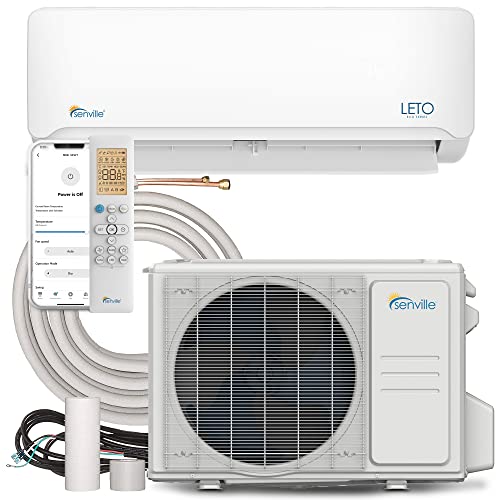
Senville Leto 9K | 6,500 (115V), 7,000 (230V) | 5°F, per Senville | Same vacuum install | Warranty certificate requires a licensed contractor |
Cooper & Hunter MIA 12K 115V | 6,600 (55% of its rating) | 5°F | Flare and vacuum | Licensed-technician installs only, registered within 60 days with the installer's license number |
Della Serena 12K 115V | 9,200 (ENERGY STAR Cold Climate) | Nothing published below 5°F | Flare and vacuum | Lifetime parts if registered within 100 days |
MRCOOL DIY 5th Gen 12K 115V | 8,400 | -13°F (3,800 max there) | Pre-charged quick connect, no vacuum pump | 5-year parts, 7-year compressor, no registration required |
Older R-410A Diamante Pro (FI19RL) | No figure | -13°F | Flare and vacuum | No figure |
- Senville Leto: usually a little cheaper. For a DIY buyer, the Diamante wins.
- Cooper & Hunter MIA: buy it only if a licensed installer is doing the job anyway.
- Della Serena: a hair ahead of the Diamante 12K at 5°F, with the Cold Climate status the Diamante 12K lacks, but no published heat below 5°F where the Diamante goes to -4°F.
- MRCOOL DIY 5th Gen: a little less heat than the Diamante 12K at 5°F, and it costs noticeably more. If you won't touch a vacuum pump or pay someone who will, it's the better buy.
- Older Diamante Pro: lower SEER2 and HSPF2 ratings and the refrigerant the industry is moving off. Worth it only for a cold-climate buyer who can confirm new stock.
Who should buy the Diamante Pro
Buy the 9K, ideally the 230V version, if you're conditioning one room in a climate whose winter lows stay above about 0°F, you can run a dedicated circuit, and you'll either do the manual's nitrogen-assisted evacuation to 500 microns with a 4-hour hold or pay a certified tech to. For that buyer it pairs ENERGY STAR Cold Climate numbers with a warranty that, unlike Senville's and Cooper & Hunter's, doesn't require a licensed installer.
Think harder about the 12K and up. They're efficient and on NEEP's list, but they aren't ENERGY STAR, and at -4°F the 12K 115V delivers no more than the 9K. Skip the line entirely if you need heat below -4°F, want a no-tools install, or expect a local dealer to own the service. For the no-tools buyer, the MRCOOL DIY 5th Gen is the better fit; if your winters go well below zero, look at units that publish capacity below -4°F.
Score breakdown
The 9K is strong for its class: 7,400 Btu/h at 5°F on the 230V model (74% of its rating), 20.0 SEER2, 10.0 HSPF2 and ENERGY STAR Cold Climate status. The score stops short because the whole line quits heating at -4°F, nine degrees warmer than the model it replaced, and the 12K through 24K sizes aren't ENERGY STAR.
There's no multi-year record on the 2025 R-454B generation yet. Brand-level reports are decent, with one pair of 2020 units still running and another unit lasting 7-8 years, but two owners lost control boards and opinions of Pioneer's support are split. The flare-and-vacuum install adds a failure path a quick-connect kit avoids, and the warranty excludes install damage and refrigerant loss.
The 9K sits in the budget tier of the brands we compare and outperforms most of them at 5°F. Its warranty covers DIY installs, which Senville and Cooper & Hunter don't. Budget for a vacuum pump, manifold gauges, a micron gauge and a nitrogen rig, or a certified tech, plus all labor on any future repair.
Pioneer Diamante Pro Mini-Split on Amazon.
The Evidence Behind Our Verdict
Pioneer owner discussion lives on r/hvacadvice, r/heatpumps and r/DIYHeatPumps, and nearly all of it predates the 2025 R-454B Diamante Pro, so we read it as evidence about Pioneer as a brand and about the older Diamante, not about the current unit. Owners who installed carefully describe quiet, steady units, with one pair of 2020 installs still running and another unit lasting 7-8 years. The criticism comes mostly from non-owners: two say most shops won't install homeowner-bought equipment, one self-described pro says local support can be thin, and another argues a warranty that never pays labor is worth less than it sounds.
Two owners reported control board failures, and one of those boards was replaced under warranty.
Our rating above is our own editorial call. What follows is the field evidence we weighed to reach it: first-hand reports from owners on Reddit and independent HVAC and DIY forums, which we lean on more than manufacturer-influenced published reviews because unsponsored owners tend to be the more candid signal.
What Reddit Is Saying
“I had two 9000 BTU Pioneer A/Cs installed in August 2020 and they are still working perfectly well without any maintenance.”
“I’ve only had it running a week or two. Seems fine so far. Quiet, efficient, seems to keep the room temperature pretty steady within one degree. Time will tell, I’m sure.”
“In the mornings my little 12k unit can bring the room from 55F to 75+F in mere minutes. It's amazing.”
“In case someone is using this for troubleshooting, it was the control board. parker davis hvac was wonderful and gave me the board on warranty for me to install.”
“I had a power surge that took out the main control board on a 12K btu Pioneer. I called and the person on the phone walked me through what terminals to touch with a VOM to determine what the problem might be. So that was nice. The unit made it 7-8 years and it recently came up with an error code indicating a compressor failure.”
“My Pioneer likes to send a fair amount of compressor noise through my wall mounts. No a big problem since it's my garage, but if there comes a time to move things around I'd isolate it from the building.”
Frequently asked questions
Is the Pioneer Diamante Pro Mini-Split worth it?
The 9K sits in the budget tier of the brands we compare and outperforms most of them at 5°F. Its warranty covers DIY installs, which Senville and Cooper & Hunter don't. Budget for a vacuum pump, manifold gauges, a micron gauge and a nitrogen rig, or a certified tech, plus all labor on any future repair.
How reliable is the Pioneer Diamante Pro Mini-Split?
There's no multi-year record on the 2025 R-454B generation yet. Brand-level reports are decent, with one pair of 2020 units still running and another unit lasting 7-8 years, but two owners lost control boards and opinions of Pioneer's support are split. The flare-and-vacuum install adds a failure path a quick-connect kit avoids, and the warranty excludes install damage and refrigerant loss.
How well does the Pioneer Diamante Pro Mini-Split perform?
0 HSPF2 and ENERGY STAR Cold Climate status. The score stops short because the whole line quits heating at -4°F, nine degrees warmer than the model it replaced, and the 12K through 24K sizes aren't ENERGY STAR.
What do real owners say about the Pioneer Diamante Pro Mini-Split?
Pioneer owner discussion lives on r/hvacadvice, r/heatpumps and r/DIYHeatPumps, and nearly all of it predates the 2025 R-454B Diamante Pro, so we read it as evidence about Pioneer as a brand and about the older Diamante, not about the current unit. Owners who installed carefully describe quiet, steady units, with one pair of 2020 installs still running and another unit lasting 7-8 years. The criticism comes mostly from non-owners: two say most shops won't install homeowner-bought equipment, one self-described pro says local support can be thin, and another argues a warranty that never pays labor is worth less than it sounds.
Options Worth Checking Out

MRCOOL DIY 5th Gen 12,000 BTU Mini-Split (115V)
The pick if you will not vacuum lines: pre-charged quick-connect lines, heating listed to -13°F and a 5-year parts, 7-year compressor warranty with no registration. It makes a bit less heat than the Diamante 12K at 5°F.
Read our full review: we scored it 6.9/10

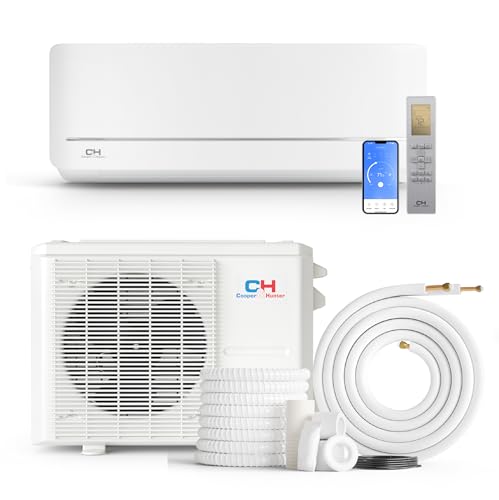
Cooper & Hunter MIA 12,000 BTU 21.2 SEER2 Mini-Split (115V)
Only if a licensed installer is doing the job: its warranty requires one, registered within 60 days. It is efficient at 21.2 SEER2 but makes 6,600 Btu/h at 5°F and stops heating there, well behind the Diamante.
Read our full review: we scored it 6.2/10
You Might Also Need
Accessories worth grabbing alongside your purchase


How Does It Compare?
Side-by-side breakdowns featuring this product