Best Through-the-Wall Air Conditioner: Start With Your Sleeve
By Teo Varnadoe · Updated October 2026
Independent editorial guide. We never accept payment for coverage, though we may earn a commission if you purchase through our links.
Quick Take
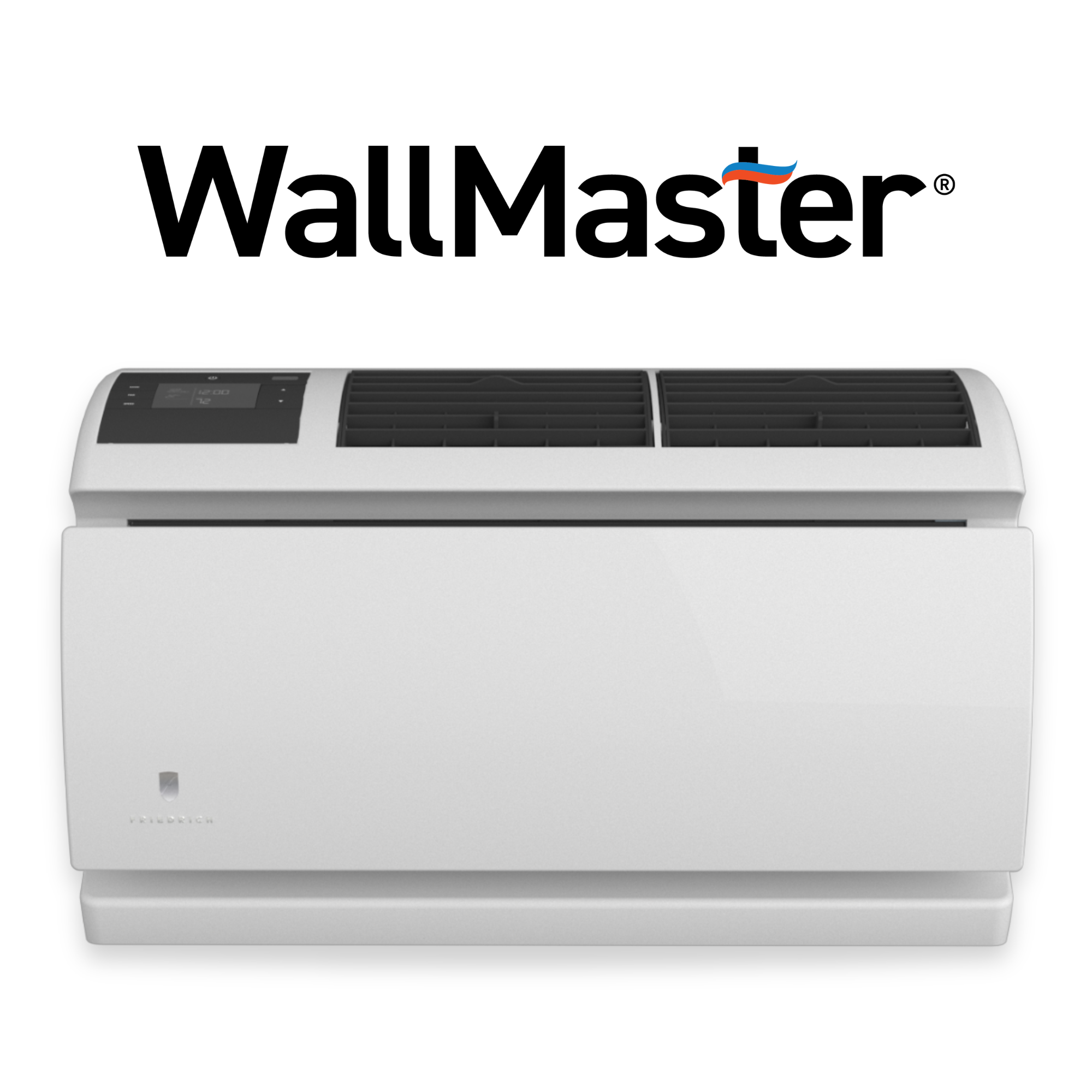
If you're replacing a dead wall unit, buy for the sleeve that's already in the wall. For the common 24 to 26 inch class of sleeve, our default is the LG 8,000 BTU through-the-wall unit (LT0816CER): LG's manual covers sleeves from nine other brands, it plugs into a standard 115-volt grounding outlet, and it costs less than Friedrich's Uni-Fit. For a 27 inch sleeve, the Friedrich WallMaster is the unit made for that hole, and its inverter makes it the efficient choice.
Two catches. None of the LG sizes heats, so if the room needs heat, a heat-pump PTAC like the Distinctions by Amana 12k is the better wall unit; it needs 208/230 volts, and its listing says it fits a standard 42 inch PTAC sleeve. And the LG's CEER of 10.6 sits below DOE's new minimums for room air conditioners manufactured from May 26, 2026. ENERGY STAR now lists 24-inch-class inverter wall units at CEER 13.9 to 14.1, so check your local appliance store for one of those, and confirm with its maker that it fits your sleeve, before you settle.
For an existing sleeve, a 27 inch opening, or a room that needs heat, here is what we would buy. See picks ↓

Measure the sleeve before you shop. A through-the-wall air conditioner looks like a window unit, but it lives in a metal sleeve built into the wall, and that sleeve decides almost everything about what you can buy. A wrong sleeve means cutting siding, patching drywall or watching a new unit short-cycle in a hole two inches too wide. A matching sleeve makes the swap an afternoon: pull the old chassis, slide the new one in, plug it in.
These units also split into two families that share a wall but not much else. Room air conditioners built for a sleeve, like LG's LT series and Friedrich's Uni-Fit and WallMaster, are rated on CEER like window units. PTACs (packaged terminal air conditioners), the 42 inch boxes under hotel windows, are a separate category in DOE's rules, and they're the common way to get heat-pump heat through a wall.
Every number here comes from manufacturer manuals, spec sheets and DOE and ENERGY STAR data; what happens after install comes from owners. We don't measure noise or capacity ourselves.
Start with the sleeve you already have
Pull the old chassis and measure the sleeve's inside width and height, then check from outside whether it has louvers on the sides or only at the back. Those three facts sort you into one of four holes.
Sleeve class | What fits | Dimensions (maker) |
|---|---|---|
24 to 26 inch | Most universal-fit units. LG says its units fit competitive 26-inch standard sleeves, and its manual gives procedures for sleeves from GE, Whirlpool, Frigidaire, Fedders, Emerson, Carrier and Friedrich. | LG AXSVA1: 25-7/8 x 15-17/32 x 16-23/32 in. Friedrich USC (Uni-Fit): 25-7/8 x 15-1/2 x 16-3/4 in. Same width, within 1/32 inch on height and depth. |
27 inch | Friedrich says its WallMaster offers the only perfect fit for existing 27 inch sleeves, including Fedders A and B (B needs a baffle kit). | Friedrich WSE: 27 x 16-3/4 in |
Side-vented | A sleeve with louvers on its sides was built for a unit that breathes through its sides. Friedrich's Kuhl and Chill Premier units reportedly breathe through the sides and back and can only use the sleeves they come with. | No figure |
42 inch PTAC | PTACs only. None of the room units in this guide is built for it, and a PTAC doesn't fit the smaller holes. | Amana catalog industry standard: 42 x 16-1/16 in |
Reusing an old sleeve is allowed, with conditions. LG strongly recommends removing the old sleeve and fitting a new LG one; if you keep it, its manual says you have to redirect the old sleeve's rear louvers, and a failure from skipping that isn't covered by LG's warranty. Friedrich says a Uni-Fit can go straight into many competitors' sleeves if the sleeve is in good condition, and tells you to check its manual on whether the old grille has to be replaced or a baffle adapter used. Friedrich is blunt about the WallMaster: the wrong rear grille, or no baffle kit in a 19-3/4 inch deep sleeve, recirculates discharge air and may lead to premature compressor failure.
Buy the unit sized to your sleeve, a WallMaster in a 27 inch opening, rather than the universal one. Friedrich's Uni-Fit chassis is 24-1/4 inches wide and its trim ring covers gaps up to 1 inch on the sides and 1/2 inch on top. One owner who put an 8,000 BTU Uni-Fit into a 27 inch sleeve found 2 to 3 inches of gap on three sides, and the unit short-cycled from hot and cold air mixing. If you're stuck with a gap, rigid foam board and tape beat expanding foam, because the unit can still come out for service.
Depth matters on brick and block. One owner lost two Friedrich units, not rear-discharge models, within a year each, and blames a brick exterior that put too much of the unit inside the wall. If your wall is thick, a unit that breathes only through the back is the safer buy.
Window unit in a wall sleeve: why we would not
It's tempting, because window units cost less and there are more of them. The difference is in how they breathe. In ENERGY STAR's certified list, every through-the-wall model sits in DOE's 'without louvered sides' efficiency classes and every window model sits in a 'with louvered sides' class. Midea's U-shaped window unit manual, for one, says: "Side louvers and the rear of the AC must have clear air space to allow enough airflow through the condenser for heat removal." A sleeve wrapped around those side louvers takes that air space away.
Owners report both outcomes, four with no trouble (one for seven years) and two with water problems. One who had no trouble lined the wall up with the solid front section of the case so the side vents stayed outside. The leaks came from a window unit in an old Friedrich sleeve that dripped instead of draining out the back, and one slightly too tall for its sleeve. If the wall is thin enough that every side louver sits fully outdoors and the unit is properly supported, it can work, but you're outside what the maker designed for, and a unit built for the sleeve costs less than a ruined floor.
Heat: none, a strip, or a heat pump
Through-the-wall heat comes three ways, and they're not close in running cost.
- None: LG's four current LT sizes are cooling only; their modes are Energy Saver, Cool, Fan and Dry.
- Electric strip: Friedrich's Uni-Fit UET models add a resistance heater. The only 115-volt one is the UET08B11A, at 4,200 BTU of heat and 13 amps on heat; the 230-volt UET10B33A and UET12B33A make 10,600 BTU. Friedrich pitches them as primary heat in moderate climates and supplemental heat in colder ones. A resistance strip turns one watt into one watt of heat.
- Heat pump: Friedrich's WallMaster heat pump model heats effectively down to 45 degrees, per Friedrich, and its 230-volt models switch to backup electric heat when it's too cold for efficient heat pump operation. The Distinctions by Amana PTAC publishes heating operation from 23°F to 76°F outdoors and switches to its 3.5 kW strip automatically if the compressor fails or the load exceeds its capacity. Amana's own J and K PTACs lock the heat pump out when the outdoor coil reaches about 27°F.
The Distinctions heat pump is rated at a COP of 3.2, so at its rating condition it delivers about 3.2 times the heat per watt of the strip. That's a mild-weather rating, and the gap narrows as it gets colder, which is exactly when these units hand off to the strip anyway. For a room that needs real heat through a whole winter, we'd pick a heat-pump PTAC over a strip-heat room unit, and a mini-split over both if you can run a line set.
Expect to need 230 volts for meaningful heat. In Friedrich's Uni-Fit line, the UET08B11A is the lone 115-volt heat model, and one shopper looking for heat on 115 volts found only that one 8,000 BTU option and resigned themselves to adding a 230-volt outlet.
115V or 230/208V: read the plug before the box
Match the unit to the receptacle that's already in the wall unless you're prepared to pay an electrician. Here's what each maker's documents call for; we don't give wiring steps, and a new circuit or receptacle is a job for a licensed electrician, possibly with a permit.
Unit | Plug / receptacle | Circuit |
|---|---|---|
LG LT0816CER, LT1016CER, LT12124CNR | 125-volt, three-wire grounding receptacle rated 15 A | 15 A time-delay fuse or breaker |
LG LT1430CNR (14,000 BTU) | 250-volt, 15 A grounding receptacle | No figure |
Friedrich Uni-Fit, 115V cool-only | NEMA 5-15P | 125V 15A |
Friedrich Uni-Fit, 230V cool-only | 6-15P | 250V 15A |
Friedrich Uni-Fit, 230V heat | 6-20P | 250V 20A |
Friedrich WallMaster, 115V inverter | 5-15P | No figure |
Friedrich WallMaster, 230V cool-only | 6-15P | No figure |
Friedrich WallMaster heat pump | 6-20P | 250V 20A |
Amana PTAC, 3.5 kW heater | NEMA 6-20P into a 6-20R receptacle | 20 A maximum overcurrent device |
LG's manual says not to use an extension cord. The Distinctions 12k's Amazon listing says 20 A for the 3.5 kW unit, but the plug type isn't in any Distinctions document we could verify, so read the cord tag and nameplate when it arrives.
Size for the room the unit sits in, and don't count on it reaching the rooms around it. One buyer ordered LG's 14,000 BTU LT1430CNR because it fit their sleeve and plug, for a bedroom of about 160 square feet that is the only spot for a unit in a 700 square-foot condo, where the cold air from that room hardly reaches the kitchen. Fitting the sleeve and plug meant no electrician; it doesn't make the unit the right size for the bedroom, or push its air around corners. LG rates that model for 700 square feet, and ENERGY STAR's chart puts 150 up to 250 square feet at 6,000 BTU.
Efficiency: CEER, and what the 2026 rule changes
Through-the-wall room units are rated on CEER (combined energy efficiency ratio), the same DOE Appendix F yardstick window units use, in BTU per watt-hour. Higher is better, and power use scales with 1 divided by CEER. PTACs are a separate category in DOE's definitions; makers rate them on EER and COP, so don't line a PTAC's EER up against a room unit's CEER.
Unit | CEER | Power vs the LG for the same cooling | Notes |
|---|---|---|---|
LG LT0816CER, LT1016CER | 10.6 | Baseline | Rotary, no inverter listed, not ENERGY STAR qualified |
LG LT12124CNR | 10.2 on LG's spec sheet (10.5 on its product page) | No figure | Same |
LG LT1430CNR | 9.3 | No figure | Same |
Friedrich Uni-Fit UCT08B10A, UCT10B10A | 10.1 | About 5% more (10.6 ÷ 10.1) | The pricier unit |
Friedrich WallMaster inverter WCVT10B10B, 115V | 13 in Friedrich's brochure; ENERGY STAR lists 14.2 at 10,100 BTU | No figure | The brochure's numbers match ENERGY STAR's records for the older A models |
Friedrich WallMaster inverter WCVT12B10B, 115V | 13.2 in Friedrich's brochure | About 20% less | No figure |
New 24-inch class (Frigidaire, Midea and others), 8,000 and 10,000 BTU | 14.1 | About 25% less (10.6 ÷ 14.1 = 0.75) | Variable speed, 24.1 in wide, 14.7 in tall, first available in 2026 |
We couldn't find any of the new 24-inch units on Amazon when we checked, and we haven't seen a maker's statement on which existing sleeves they fit, so ask before you buy one for an old sleeve.
The shelf is changing for a reason. DOE's room air conditioner minimum for a cool-only unit of 8,000 to 10,999 BTU without louvered sides was 9.6 from June 2014; for products manufactured starting May 26, 2026, the minimum for that class is 14.1 (and 16.0 for units with louvered sides from 8,000 to 13,900 BTU, the class ENERGY STAR's window units fall in). Every 2026 minimum for a cool-only unit of 8,000 to 19,900 BTU, with or without louvered sides, is 13.7 or higher. LG's 10.6 and the Uni-Fit's 10.1 sit below all of them. So do the WallMaster figures in Friedrich's brochure, 13 and 13.2 against 13.9 for their 11,000 to 13,900 BTU class, though ENERGY STAR's newer record for the WCVT10B10B, at 10,100 BTU and CEER 14.2, clears the 14.1 bar for its class. The rule is written for products manufactured from that date. It doesn't say units built earlier can't be sold, and that is our best explanation for why units rated below it are still listed; we haven't confirmed when any listed unit was built. We read it as a sign that this generation of on/off wall units is on its way out, and a reason to look hard at the 14.1 units before buying a 10.6.
A regular who answers a lot of wall-unit questions said they knew of no inverter model in the 24-inch universal-fit size from a reputable brand yet. ENERGY STAR's 2026 listings say that has changed. We haven't reviewed any of those units, and there are no owner reports on them yet.
Noise: what is published and what owners hear
Almost nobody publishes a usable decibel figure for wall units. LG lists 56/55/53 dBA on high, mid and low for its 8,000 and 9,800 BTU sizes, without a test distance. Friedrich publishes percentages instead: the Uni-Fit as much as 25% quieter than leading rotary-compressor models in Friedrich's own testing, the WallMaster as much as 45% quieter than competitors. Neither Amana nor Distinctions publishes an operating dBA for its PTACs; Amana gives only an STC rating. One shopper hunting for a quiet 14,000 BTU universal unit found everything was either 58 dBA or louder or had no data.
If quiet matters, buy an inverter. It's the one design change that should cut noise, because it can run at low speed instead of slamming on and off; the WallMaster's 115-volt models list a low cooling output of 5,000 to 6,000 BTU against 11,000 to 13,500 nominal. Owner reports are thin and mixed. Uni-Fit owners who mention noise find theirs a bit louder than ideal, or, with two units, one of them very loud. A regular who answers a lot of wall-unit questions calls the Uni-Fit the quietest universal-fit unit they know of, and points buyers with existing sleeves to the WallMaster Inverter models as the quietest they can get. Whatever you buy, a tight seal between chassis and sleeve keeps rattle and outdoor noise down.
Cutting a new hole: carpentry first, then pick the unit
If there's no sleeve yet, the job is framing, not HVAC. An opening in an exterior wall means cutting studs and framing a header over the hole, then flashing and sealing the sleeve against the siding. Ask your building department whether it needs a permit. Friedrich publishes finished-hole sizes: 15-3/4 by 26-1/8 inches for the Uni-Fit's USC sleeve and 17-1/4 by 27-1/4 for the WallMaster's WSE sleeve. LG doesn't publish a rough opening for its sleeve, only the sleeve's outside dimensions, so plan around a sleeve you have in hand.
For a new hole, we'd buy the sleeve and the unit from the same maker at the same time, and pick a sleeve family you'll be able to buy into again. The case made for the WallMaster is that its size has never changed, so a new one slides into a 30-year-old sleeve, while models that can go in a window or a wall change size every few years. One buyer bought a 230-volt unit, couldn't find a sleeve made for it, and faced filling in a 17 inch tall hole around a 14 inch unit.
Then ask whether a wall unit is the right buy at all. For a room you own and will heat and cool for years, a ductless mini-split heats far more efficiently than a strip and publishes much quieter indoor sound figures, and a through-the-wall unit wins only on install simplicity. Where a wall unit does earn a new hole: a shed or shop you only cool in summer, a rental where the building controls the exterior, or a room where a PTAC's heat-and-cool-in-one-box simplicity beats running a line set.
How we would buy
Your situation | What we would buy |
|---|---|
Existing 24 to 26 inch sleeve, cooling only, 115V outlet | The LG LT0816CER for a bedroom up to about 330 square feet, or the LT1016CER for a room near 440. Or one of the new 14.1 CEER 24-inch units if a local store has one and its maker confirms it fits your sleeve. |
Existing 27 inch sleeve | The Friedrich WallMaster inverter. The Uni-Fit fits too, with a trim ring and gaps you'll have to seal. |
A sleeve brand LG's manual doesn't list, or a Uni-Fit you're replacing | The Friedrich Uni-Fit, after checking its manual on grille and baffle. |
Room needs heat, and you have or can add 208/230V | A heat-pump PTAC like the Distinctions by Amana 12k, which its listing says fits a standard 42 inch PTAC sleeve. |
Only a window | A window unit. Don't push one into a sleeve built for something else. |
Two warranty notes before you pay. LG's one-year card applies only when you buy from an LG authorized dealer, and when we checked, the LG and Uni-Fit listings we link were sold by third parties, so ask the seller. Friedrich gives the Uni-Fit one year of parts and labor and the WallMaster two, starting on the purchase date, and excludes faulty installation.
The picks
Products we recommend for this guide.

LG 8,000 BTU Through-the-Wall Air Conditioner (LT0816CER)
Our default for a bedroom with a working 24 to 26 inch class sleeve: LG's manual covers sleeves from nine other brands. 8,000 BTU per LG, CEER 10.6, 115V on a 15 A grounding outlet. Cooling only; one-year warranty; sleeve sold separately.
Read our full review: we scored it 6.0/10

Friedrich Uni-Fit 10,000 BTU Through-the-Wall AC (UCT10B10A)
For a sleeve LG does not list: Friedrich says it fits 24-1/2 to 27 inch sleeves, with a trim ring for small gaps. 10,000 BTU, 115V, 5-15P plug, CEER 10.1 (a bit below the LG). Friedrich claims it runs quieter; no dBA published.
Read our full review: we scored it 5.1/10


What owners say
Real owner reports from the threads and editorial sources we drew on for this guide.
“I have a Friedrich 8000 BTU brand new UniFit through the wall air conditioner in a 27 inch sleeve in a 250 sq ft room in an apartment. Given that the AC is smaller than a sleeve (it doesn’t fit like a Frederick Wall Master) there is a 2 to 3 inch gap on the left, top, and right side of the AC unit within the sleeve. While the AC came with prepackaged adhesive gaskets to use as insulation, they aren’t sufficient, and the unit is short cycling because of hot and cold air mixing as the seal is not tight.”
“Just purchased three wall masters to replace old decrepit ones and it cost me an arm and a leg. It was the easier option but I’m wondering if I should’ve spent half the money and just went with three unifits instead.”
“I ended up shelling out for the Friedrich Uni-Fit Series - since I need "Thru-The-Wall " units as opposed to window units and options were very limited. I'm happy with my prchase so far, the app works well and my only complaint is that they're a bit louder than i'd want in an ideal world... but based on what i've read, that's a pretty small nit.”
“I had two friedrich units, both blew out within a year and I believe it’s because I have a brick exterior that adds 4 or 5 inches and too much of the unit is in the wall and the friedrich I have is not rear discharge so I think rod causing the issue.”
“I used a window unit in my wall sleeve for 7 years before I switched to a through the wall. It’s probably fine but may reduce the life of your unit”
“I'm having difficulty finding a sleeve for this unit. Apparently Whirlpool doesn't make one? This is a replacement for a 2008 Frigidaire and the hole in the wall isn't lining up perfectly so in addition to not being able to find a sleeve we'll also have to fill in a couple of inches off the height of the whole which is 17" but the newer AC is only 14".”

