LG Through-the-Wall AC Review: Fits Old Sleeves, Cools Only
By Teo Varnadoe · Updated October 2026
Independent editorial review. We never accept payment for coverage, though we may earn a commission if you purchase through our links.
 ← 24 in wide chassis (all four sizes) →
Spec sheet
| Sizes (LG ratings) | 8,000 / 9,800 / 11,800 BTU at 115V; 14,000 BTU at 230/208V |
| CEER (LG) | 10.6 (8,000 and 9,800); 10.2-10.5 (11,800, LG sources conflict); 9.3 (14,000) |
| ENERGY STAR | Not qualified per LG spec sheets; no LT model in ENERGY STAR data |
| Compressor / refrigerant | Rotary, no inverter listed; R32 |
| Heat | None; modes are Energy Saver, Cool, Fan, Dry |
| Noise, LG dBA | 8,000 and 9,800: 56/55/53 (high/mid/low); 11,800: 60 indoor; 14,000: 62/60/58 |
| Receptacle (LG manual) | 115V sizes: 125V 15 A grounding, 15 A time-delay fuse or breaker; 14,000: 250V 15 A |
| Sleeve | LG AXSVA1 sold separately, 25-7/8 x 15-17/32 x 16-23/32 in; fits 26 in standard sleeves per LG |
| Old sleeve (LG manual) | LG strongly recommends a new LGE sleeve; if reused, rear louvers must be redirected or failure is not covered |
| Warranty (LG) | 1 year parts and labor; no sealed-system term; LG authorized dealer purchase |
Verdict
Owner discussion of LG's current through-the-wall units is thin. These comments come from r/hvacadvice, r/AirConditioners, r/HomeImprovement and r/Appliances; the two quoted owners both have the LT1430CNR. Four people own an LG wall unit: three have the 14,000 BTU LT1430CNR and one the LT1237HNR heat model. Two of the LT1430CNR owners describe problems: a compressor clunk the owner suspects is the old outlet, and a CH10 code with a fan that wouldn't start. There are no owner reports on the LT0816CER, LT1016CER or LT12124CNR. Sleeve-size and brand comments from non-owners and a Friedrich owner are summarized in the text, not quoted as owner cards. Read them as context, not as a reliability record for the whole line.
Read full take ↓
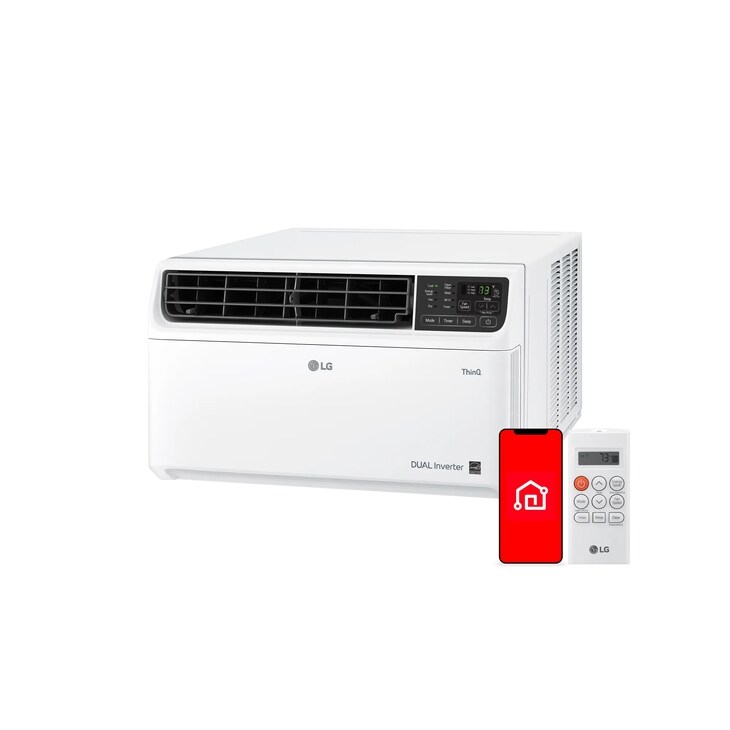


Buy the LG 8,000 BTU Through-the-Wall Air Conditioner (LT0816CER) to replace a dead wall unit in a bedroom, as long as the room only needs cooling and the wall already has a 26-inch-class opening. Its three siblings share the same 24-inch-wide chassis: the 9,800 BTU LT1016CER, the 11,800 BTU LT12124CNR and the 14,000 BTU LT1430CNR. The first three plug into a 115-volt receptacle; the 14,000 needs 230/208 volts. All four are cool-only units with rotary compressors. LG's specs mention no inverter, there's no heat mode and no ENERGY STAR label, and LG rates them between CEER 9.3 and 10.6.
What they do well is fit. LG says these universal units go into competitive 26-inch standard wall sleeves, and the owner's manual gives install procedures for old sleeves from GE, Whirlpool, Frigidaire, Fedders, Emerson, Carrier and Friedrich. LG's own first choice is different: its manual strongly recommends pulling the old sleeve and fitting a new LG sleeve. If a wall unit just died in your apartment or your older house, replacing it through the same opening is the job these units are built for.
The paperwork is thin. LG covers these units for one year on parts and labor with no longer compressor term, and excludes failures caused by reusing an old sleeve without redirecting its rear louvers. If the room needs heat, a heat-pump PTAC is the better wall unit. If you're cutting a new hole in a house you own, we'd spend the money on a mini-split instead.
What we like
- Universal sleeve fit: LG says the units fit competitive 26-inch standard sleeves, and the manual covers sleeves from nine other brands.
- One chassis: all four sizes share a 24-inch chassis, so moving up or down a size later uses the same sleeve.
- Plug-in power: the three 115-volt sizes plug into a standard 15-amp grounding receptacle, per LG's manual.
- Consistent numbers: LG's published watts and BTU agree with its EER figures, so the efficiency numbers hang together.
What we'd change
- Efficiency: no inverter and no ENERGY STAR qualification. CEER 10.6 at best, against 15 for LG's own inverter window units.
- No heat: the modes are Energy Saver, Cool, Fan and Dry.
- Warranty: one year of parts and labor is all of it, and LG requires purchase through an authorized dealer.
- Sleeve rules: LG strongly recommends a new LG sleeve. If you reuse an old one without redirecting its rear louvers, the failures that follow aren't covered.
- Noise: loud on paper: LG lists 53-56 dBA indoors for the 8,000 and 9,800 BTU sizes.
- Owner record: thin. The only problem reports are on the 14,000 BTU LT1430CNR, and there's nothing from owners of the three smaller sizes.
Which rooms and walls it fits
Size by the room, and expect even the smallest LG to be more than a small bedroom needs. ENERGY STAR's room air conditioner sizing chart, which assumes an 8-foot ceiling, calls for 5,000 BTU for 100 up to 150 square feet, 6,000 BTU for 150 up to 250, and 8,000 BTU only at 300 up to 350. LG's own estimated cooling areas are in the table below. Oversizing matters: ENERGY STAR warns that a unit that's too large will cool the room before it has a chance to remove the humidity, leaving it damp and clammy, and these on/off rotary units can't throttle down the way an inverter does.
The wall matters more than the room. These are sleeve units: the chassis slides into a metal sleeve that's built into the wall, and LG sells that sleeve separately. The easy case is an existing sleeve in good shape from LG or one of the brands LG's manual lists. The hard case is a bare wall. LG doesn't publish a rough opening for its own sleeve in the manual or on the sleeve's product page, only the sleeve's outside dimensions, so a new opening means framing work planned around a part you have in hand.
Size for the room the unit sits in, not the rooms around it. One buyer ordered the 14,000 BTU LT1430CNR for a bedroom of about 160 square feet because it was the only spot for a unit in a 700 square-foot condo, and because it fit their sleeve and plug. LG's 700 square-foot rating is more than four times that bedroom, and ENERGY STAR's chart puts a room of 150 up to 250 square feet at 6,000 BTU. The advice they got was that the unit was fine, with a fan on the floor by the bedroom door to push the cold air into the living room. We'd be more cautious. A wall unit blows into the room it's in; a fan in the doorway helps a little, but the far rooms stay warm and the bedroom gets the short, clammy cycles of an oversized unit.
A shed or detached shop is the one new-opening job where we'd still consider these units. The LT0816CER gets suggested for a 10 by 10 shed, and the logic holds: frame a hole, set a sleeve, slide the unit in, with no refrigerant work at all. That's a fair use for a space you only cool in summer. Two cautions. A 100 square-foot shed is under a third of the smallest size's 330 square-foot rating, and ENERGY STAR's chart sizes 100 up to 150 square feet at 5,000 BTU, so it will cycle short. And LG's manual calls for a grounding receptacle on a 15-amp fuse or breaker and says plainly, "Do not use an extension cord," so a shed fed by a cord from the house needs a proper circuit first, which is a job for a licensed electrician.
Pick something else if:
- The room needs heat: none of these four has a heat mode; a heat-pump PTAC or a mini-split does.
- Your sleeve is 42 inches wide: that's a PTAC sleeve. Amana's catalog lists 42 inches wide for its PTAC sleeves, a different hole from the 26-inch class these LG units fit.
- You're opening a new wall in a home you own: a ductless mini-split costs more, heats as well as cools, and publishes far lower indoor noise figures.
- You have a window and no sleeve: an inverter window unit uses about 29% less electricity for the same cooling (see the specs below).
The four sizes on paper
Read the LG model number, not the Amazon headline. Figures below are LG's spec sheets unless noted; EER is LG's rated cooling divided by its rated watts, and it matches the EER LG publishes, so the numbers check out internally.
Model | Cooling (LG) | Amazon title says | Area (LG) | CEER | Watts / EER | Rated amps | Weight |
|---|---|---|---|---|---|---|---|
LT0816CER | 8,000 BTU, 115V | 7,800 | 330 sq ft (product page: 350) | 10.6 | 750 W / 10.7 | 7 A | 65 lb |
LT1016CER | 9,800 BTU, 115V | 10,000 | 440 sq ft | 10.6 | 920 W / 10.7 | 8.5 A | 70 lb |
LT12124CNR | 11,800 BTU, 115V | No figure | 530 sq ft | 10.2 (product page: 10.5) | 1,110 W / 10.6 | 10.2 A | 76 lb (product page: 82) |
LT1430CNR | 14,000 BTU at 230 and 208V | No figure | 700 sq ft | 9.3 | 1,500 W / 9.3 | 7.6 A at 230V, 6.9 A at 208V | No figure |
LG's page for the older LT1216CER lists the same 11,800 BTU cooling figure as the LT12124CNR (its title says 12,000), and LG's current manual covers the LT12124CNR, not the LT1216CER.
CEER (combined energy efficiency ratio) is the room air conditioner rating, the same yardstick window units use, and higher means more cooling per watt. Electricity use scales with 1 divided by CEER. LG's own 8,500 BTU Dual Inverter window unit, the LW8024IVSM, is ENERGY STAR certified at CEER 15, so for the same cooling the 8,000 BTU wall unit draws about 41% more power (15 ÷ 10.6 = 1.42), or put the other way, the window unit uses about 29% less. The 14,000 at CEER 9.3 uses about 14% more per unit of cooling than the 115-volt sizes at 10.6. LG's spec sheets mark the LT0816CER, LT1016CER and LT12124CNR as not ENERGY STAR qualified, and no LG LT-series wall model appears in ENERGY STAR's certified room air conditioner data.
Federal minimums also rose for units manufactured starting May 26, 2026: a cool-only wall unit of 8,000 to 10,900 BTU now needs CEER 14.1, up from 9.6. The rule applies by manufacture date, so our reading is that units built before then can still be sold; we haven't confirmed when any listed unit was built. Our through-the-wall guide covers the newer inverter wall units that meet the higher bar.
Every LG spec table lists a rotary compressor and none mentions an inverter, so these run fully on or fully off, at 1,500 watts for the 14,000 on LG's spec sheet. An inverter window unit can throttle down on mild days instead of cycling at full power. All four LG units use R32 refrigerant inside a sealed system you never open. Don't count on a quieter inverter alternative in the same 24-inch hole, either: none of these four LG sizes lists one, and as of 2025 a regular who answers a lot of wall-unit questions knew of no inverter model in the 24-inch universal-fit size from any reputable brand. Check current listings, since that can change. For 27-inch Fedders-legacy or Friedrich WallMaster sleeves, Friedrich's WallMaster Inverter models are the usual suggestion; we haven't reviewed them.
Noise is LG's figure, without a stated test distance, so use it to rank LG's sizes against each other. The product pages list 56/55/53 dBA on high, mid and low for the 8,000 and 9,800 BTU sizes, only 3 dBA apart from high to low, and 60 dBA indoors and 66 outdoors for the 11,800. For the 14,000, LG's product page lists two figures side by side, 62/60/58 dBA on high, mid and low, and 58 dBA indoor with 70 outdoor; its spec sheet gives the 58/70 pair. We don't measure sound.
There's no heat. LG's manual lists four modes, Energy Saver, Cool, Fan and Dry, and a thermostat set range of 60-86°F. The 14,000 lists moisture removal at 4.2 pints per hour on its spec sheet's detail table (the same sheet's summary says 3.9 and LG's product page says 4.6). LG sells separate 230-volt wall models with supplemental heat, which aren't covered in this review.
Where LG's own numbers disagree
LG's paperwork for this line has a few contradictions. Where it matters, we plan on the less flattering figure:
- CEER on the LT12124CNR: 10.5 on LG's product page, 10.2 on the LG spec sheet. Plan on 10.2.
- Weight on the LT12124CNR: 76 lb on the spec sheet, 82 lb on the product page, which also carries the same garbled dimensions that appear on LG's LT1216CER and LT1237HNR pages. Plan on lifting 82.
- Cooling area on the LT0816CER: 330 sq ft on the spec sheet, 350 on the product page. We use 330.
- Noise on the LT1430CNR: the product page lists both 62/60/58 dBA (high/mid/low) and 58/70 dBA (indoor/outdoor), and the spec sheet gives 58/70. We quote both.
- Capacity on Amazon: 7,800 and 10,000 BTU in the titles for units LG rates at 8,000 and 9,800.
What the install involves
No refrigerant work and no wiring inside the unit. You set or reuse a sleeve, slide the 65 to 82-pound chassis in, fit the front grille and plug it in. LG's manual is plain about the lift: "Two or more people are needed to move and install the unit." Where the rest of the work lands depends on the sleeve.
LG's own sleeve, the AXSVA1, measures 25-7/8 inches wide, 15-17/32 inches tall and 16-23/32 inches deep on the outside, per LG's manual and product page. LG also sells it as the AXSVA4 with a stamped aluminum rear grille, and the grille alone as the AXRGALA01. The chassis itself is 24 inches wide, 14-13/32 inches tall and 20-3/32 inches deep.
Reusing an old sleeve is reasonable if it's sound, from a listed brand, and you do the louver step, but LG would rather you didn't. Its manual says, "We strongly recommend the removal of the old wall sleeve and the installation of a new LGE Wall Sleeve." If you keep the old one anyway, the manual lists sleeve widths and an install procedure for each brand it supports:
Old sleeve brand (LG manual) | Sleeve width |
|---|---|
White-Westinghouse, Frigidaire, Carrier 52F | 25-1/2 in |
Carrier 51S | 25-3/4 in |
Whirlpool | 25-7/8 in |
GE, Hotpoint | 26 in |
Fedders, Emerson | 27 or 26-3/4 in |
Friedrich | 27 in |
LG's sleeve uses one procedure; the others use a second or third. The step that matters most is the old sleeve's rear louvers. LG's manual says that if you keep the existing sleeve, you have to redirect them, and that if you don't, you risk poor performance or product failure that isn't covered under the LG warranty. Do that step even if the old unit ran fine. A new LG sleeve is what LG recommends and leaves the least room for a warranty dispute.
Measure before you order. Pull the old chassis and measure the sleeve's inside width and height, then match it to LG's list. If the old sleeve is rusted through or isn't a listed brand, it has to come out, and then the opening has to suit LG's sleeve. One homeowner replacing a 1989 Friedrich found a wall cutout of about 26 by 17.25 inches. LG's sleeve would fill that width with about 1/8 inch to spare, but leave about 1-23/32 inches of height (17.25 minus 15-17/32) to shim and trim. That's carpentry and exterior flashing, not HVAC work.
Three sleeve widths cover most of what's out there: the 27-inch Fedders legacy size, the 26-inch GE size, and the 24-inch universal fit that LG builds to. A 24-inch unit goes into all three openings, though it may not look cosmetically pleasing in the wider ones. That lines up with LG's own claim that these units fit competitive 26-inch standard sleeves and with the brand list in LG's manual.
Power, from LG's manual and nothing more. The 115-volt sizes need a standard 125-volt, three-wire grounding receptacle rated 15 amps, protected by a 15-amp time-delay fuse or 15-amp circuit breaker. The 14,000 BTU LT1430CNR needs a standard 250-volt, three-wire grounding receptacle rated 15 amps with the same 15-amp protection. The cord may include a current interrupter device with TEST and RESET buttons on the plug. The manual says "Do not use an extension cord," warns that extension cords could cause serious injury or death, and says not to use surge protectors or multi-outlet adapters either. LG lists a 72-inch cord on the LT0816CER. If the wall where your old unit lived has only a 115-volt outlet and you want the 14,000, that's electrical work for a licensed electrician, and possibly a permit where you live.
Building maintenance staff or handymen usually handle wall-sleeve units, not HVAC companies, and that matches the job: it's lifting, sealing and trim. If you rent, ask the building before you buy anything.
Reliability and living with it
There isn't enough owner history to judge these units, so lean on the warranty and buy from an authorized seller. What owner record exists sits at the big end of the line, mostly the 14,000 BTU LT1430CNR, plus one owner of the LT1237HNR, a 230-volt LG heat model we don't review here. There's nothing at all from owners of the LT0816CER, LT1016CER or LT12124CNR.
The two LT1430CNR problem reports aren't the same problem. One owner self-installed a new unit in a wall that has held a through-the-wall unit for at least 40 years and hears a clunk when the compressor starts. Their previous unit did the same at 10 years old, they suspect the old 240-volt outlet, and they say the new unit may be a little out of level, so the wall and the receptacle are suspects as much as the LG. The other unit flashed a CH10 code; the condenser could be heard kicking on, but the fan never engaged, and inside the case was a plug hanging loose with nowhere obvious to go. We don't know that unit's age or how it ended, and LG's error-code list isn't in the documents we checked, so we won't guess at what CH10 means. Two reports with different symptoms are anecdotes, not a failure pattern.
The rest of the owner record says nothing about longevity. One LT1430CNR was a free unit whose new owner wanted to mount it in a window. The LT1237HNR owner reused the sleeve from old GE units, found everything the right size, and got stuck on the last step of the instructions.
Brand-level opinion is split and thin. A Friedrich owner weighing a Friedrich against an LG heat/cool wall unit called LG decent but leaned Friedrich for longevity. An older comment, from when LG's line still included the LT1216CER, put LG on a short list of brands with a good reputation and said Friedrich units are frequently reported to have inconsistent quality. Neither comes from an owner of these LG models, and we give each the weight of one opinion.
If your unit throws a fault, call LG rather than opening the case. In its power-cord cautions, LG's manual says "This unit cannot be user-serviced" and tells you not to open the tamper-resistant sealed portion. And because these units carry flammable R32 refrigerant, the manual says service should only be performed by technicians properly trained and certified in the use of flammable refrigerants, adding: "Any service performed by unauthorized servicers/individuals will void all warranties."
That leaves the warranty as the reliability evidence we can stand behind, and it's thin. LG's through-the-wall warranty covers internal and functional parts and labor for one year from the date of purchase. There's no separate sealed-system or compressor term in either the warranty card or the manual. The coverage applies only when the product is purchased through an LG authorized dealer or distributor and used in the United States, and the card excludes repairs when the unit is used in other than normal and usual household use, naming rental and commercial use as examples. When we checked, the featured seller on most of the Amazon listings we link was a third party rather than Amazon, so look at who's selling and ask whether they're an LG authorized dealer before you buy. On top of that sit the service rule above and the sleeve-louver exclusion, which applies to every reused non-LG sleeve.
How it compares
Each maker's own figures. SEER2 isn't the same test as CEER, so don't divide one by the other, and no maker here states its noise test setup.
Unit | Efficiency | Heat | Indoor noise | Power | Opening | Warranty |
|---|---|---|---|---|---|---|
LG LT0816CER (8,000 BTU) | CEER 10.6, rotary | None | 53-56 dBA | 115V plug | 26 in class sleeve, 24 in chassis | 1 yr parts and labor |
LG LW8024IVSM window unit | CEER 15, inverter, ENERGY STAR | None | No figure | 115V plug | Window | No figure |
Distinctions by Amana DHP123J35BA (PTAC) | EER 10.5 | Heat pump 10,800/10,500 BTU at COP 3.2, plus 3.5 kW strip | No figure | 208/230V | 42 in PTAC sleeve, 110 lb | Owner-occupied: whole unit yr 1, sealed system with labor through yr 5 |
Pioneer Diamante Pro 9K 115V (mini-split) | 19.0 SEER2 | 7,300 BTU/h at 5°F, runs to -4°F | 28-42 dBA | 115V | Flare install, nitrogen-assisted evacuation | No figure |
- LG Dual Inverter window units: if you have a window and no sleeve, buy the window unit. Window units are built for windows, though; for a wall sleeve, buy a unit made for the sleeve.
- Heat-pump PTAC: the right wall unit when the room needs heat. Distinctions by Amana is a PTAC line from Daikin Comfort Technologies sold under the Amana name, which its brochure says is used under license. It's also the pick in our Amana PTAC review over Amana's own J-series PTH123J35AXXX, which rates a better EER of 11.5 but costs a lot more and needs a wall thermostat. The Distinctions 12k is rated 12,000/11,800 BTU cooling at 230/208 volts with an EER of 10.5, essentially the LT12124CNR's 10.6. A COP of 3.2 means the heat pump delivers about three times the heat per watt of the resistance strip, which runs at a COP of 1, though that's a mild-weather rating. Distinctions publishes a heating operating range of 23°F to 76°F outdoors and says the unit switches to electric resistance heat automatically if the compressor fails or the heating load exceeds the unit's capacity; it doesn't publish a switchover temperature.
- PTAC warranty and fit: the Distinctions owner-occupied residence warranty covers the whole unit in year one and sealed-system repairs, labor and refrigerant included, through year five; functional parts in years two to five are parts only, and labor credit needs an authorized PTAC servicer. Commercial and non-owner-occupied installs fall under separate Distinctions warranties. Its Amazon listing says it fits a standard 42-inch PTAC sleeve, and Amana's catalog lists 42 inches wide as the industry standard for Amana's own sleeves, a different hole from LG's 26-inch class.
- Ductless mini-split: the better buy for a room you own and will heat and cool for years. The Pioneer's dBA figures sit well under the 53-56 LG lists for its 8,000 and 9,800 BTU sizes, though read that as a direction, not a measurement. The cost is the install: Pioneer's manual requires a nitrogen-assisted evacuation to 500 microns with a 4-hour hold, which means a vacuum pump, gauges and either the skills or a pro.
- Friedrich and other sleeve brands: LG's manual lists Friedrich's 27-inch sleeve among those it supports, so cross-shopping on brand alone is possible. We haven't reviewed Friedrich's current wall units. Opinion pulls both ways: one Friedrich owner leans Friedrich for longevity, a wall-unit regular calls Friedrich's Uni-Fit the quietest universal-fit unit they know of, and an older comment says Friedrich quality is inconsistent. None of it comes with numbers, so we'd decide on sleeve fit, voltage and warranty first.
Which size we would buy
For a bedroom up to about 330 square feet with a 26-inch-class opening and a 115-volt outlet, the 8,000 BTU LT0816CER. Step to the 9,800 BTU LT1016CER for a living room up to 440 square feet; it's the same box with the same published noise figures, and 70 pounds against 65 on LG's spec sheets. Buy the 11,800 BTU LT12124CNR only for a room near 530 square feet, and plan on its weaker 10.2 CEER and 82 pounds. Take the 14,000 BTU LT1430CNR only if the wall already has a 250-volt, 15-amp receptacle and the room is big; it's the least efficient of the four.
Whichever size you choose, either fit LG's new sleeve, as LG recommends, or redirect the old sleeve's louvers. Buy from an LG authorized seller and keep the receipt, and run the unit hard in its first month, while the one-year warranty has the most time left on it.
Score breakdown
These cool to LG's rating and no further: rotary compressors with no inverter, CEER 10.6 on the 8,000 and 9,800 BTU sizes and 9.3 on the 14,000, and no ENERGY STAR qualification on any of them. LG lists 56 dBA on high and 53 on low for the two smaller sizes. There is no heat mode on any size.
The owner record is too small to call a pattern. It's mostly the 14,000 BTU LT1430CNR, with two different problems reported: a clunk at compressor start in an old wall with an old outlet, and a CH10 code with a fan that never started. There's nothing from owners of the three smaller sizes. The warranty is one year of parts and labor with no sealed-system term, requires purchase through an LG authorized dealer, and excludes failures from a reused sleeve whose rear louvers weren't redirected. LG's manual strongly recommends a new LG sleeve, and says only technicians certified in flammable refrigerants should service these R32 units.
The value is the universal sleeve fit: swapping a dead wall unit without rebuilding the opening saves real carpentry. Against that, LG's inverter window units use about 29% less electricity for the same cooling, and a heat-pump PTAC adds heat and five years of sealed-system coverage for more money. Worth it for an existing sleeve; poor value for a new opening.
LG Through-the-Wall AC on Amazon.
The Evidence Behind Our Verdict
Owner discussion of LG's current through-the-wall units is thin. These comments come from r/hvacadvice, r/AirConditioners, r/HomeImprovement and r/Appliances; the two quoted owners both have the LT1430CNR. Four people own an LG wall unit: three have the 14,000 BTU LT1430CNR and one the LT1237HNR heat model.
Two of the LT1430CNR owners describe problems: a compressor clunk the owner suspects is the old outlet, and a CH10 code with a fan that wouldn't start. There are no owner reports on the LT0816CER, LT1016CER or LT12124CNR. Sleeve-size and brand comments from non-owners and a Friedrich owner are summarized in the text, not quoted as owner cards.
Read them as context, not as a reliability record for the whole line.
Our rating above is our own editorial call. What follows is the field evidence we weighed to reach it: first-hand reports from owners on Reddit and independent HVAC and DIY forums, which we lean on more than manufacturer-influenced published reviews because unsponsored owners tend to be the more candid signal.
What Reddit Is Saying
“So the last unit was making clunking noises on the compressor, but that was 10 years old. This is doing the same and my gut is giving me signs it may be the outlet.”
“I have a through the wall LG LT1430CNR that's flashing CH10. I narrowed it down to the fan but when I opened the case there was 1 plug just hanging there unplugged.”
Frequently asked questions
Is the LG Through-the-Wall AC worth it?
The value is the universal sleeve fit: swapping a dead wall unit without rebuilding the opening saves real carpentry. Against that, LG's inverter window units use about 29% less electricity for the same cooling, and a heat-pump PTAC adds heat and five years of sealed-system coverage for more money. Worth it for an existing sleeve; poor value for a new opening.
How reliable is the LG Through-the-Wall AC?
The owner record is too small to call a pattern. It's mostly the 14,000 BTU LT1430CNR, with two different problems reported: a clunk at compressor start in an old wall with an old outlet, and a CH10 code with a fan that never started. There's nothing from owners of the three smaller sizes.
How well does the LG Through-the-Wall AC perform?
3 on the 14,000, and no ENERGY STAR qualification on any of them. LG lists 56 dBA on high and 53 on low for the two smaller sizes. There is no heat mode on any size.
What do real owners say about the LG Through-the-Wall AC?
Owner discussion of LG's current through-the-wall units is thin. These comments come from r/hvacadvice, r/AirConditioners, r/HomeImprovement and r/Appliances; the two quoted owners both have the LT1430CNR. Four people own an LG wall unit: three have the 14,000 BTU LT1430CNR and one the LT1237HNR heat model.
Options Worth Checking Out



More LG Reviews
See all →

How Does It Compare?
Side-by-side breakdowns featuring this product

