Pioneer WYS Mini-Split Review + Whether the Sellout Units Are Worth It
By Wendell Asaro · Updated October 2026
Independent editorial review. We never accept payment for coverage, though we may earn a commission if you purchase through our links.
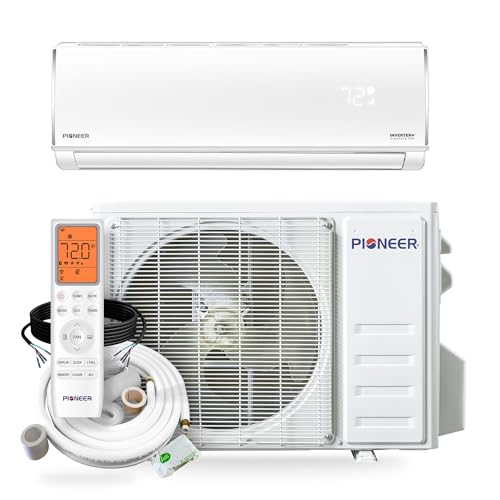
Product image pending
← Indoor unit 31-1/2 in wide (9K/12K) →Spec sheet
| Refrigerant / status | R-410A; Pioneer tags it final sellout; only the 18K showed available (Oct 2026) |
| Heat at 5°F (NEEP) | 6,500 BTU/h on the 12K 115V (54%); 16,600 on the 24K (64%) |
| Heating range | -13°F to 75°F outdoor, every size |
| SEER2 (Pioneer) | 22.7 (115V sets), 24.0 (9K 230V), 23.1 (12K 230V), 23.7 (18K), 21.0 (24K) |
| HSPF2 Region IV (Pioneer) | 10.0 / 11.4 / 9.3 / 10.3 / 9.0 (115V, 9K, 12K, 18K, 24K) |
| Max line run | 82 ft (9K/12K), 100 ft (18K), 164 ft (24K); charge optimized for 16 ft |
| Install type | Flare connections; vacuum pump and manifold gauge per the manual |
| Warranty | Up to 5 yr parts / 5 yr compressor if registered; no licensed-installer clause; labor and refrigerant excluded |
| Owner-reported issues | Head reads ceiling air, room runs cool unless Follow Me is used; fiddly Wi-Fi pairing; a compressor failure at 3 years |
Verdict
WYS-specific owner discussion came from r/hvacadvice, r/heatpumps, r/HomeImprovement and r/DIYHeatPumps. Five owners name the WYS series, the Inverter++ version or a WYS model number; a sixth describes two Inverter++ units without a model number. Three quotes are about Pioneer as a brand and are labeled that way in the text. Most posts are support questions (temperature sensing, Wi-Fi pairing, a leaking coil), so they describe failure modes and warranty outcomes, not a failure rate. Reports about the newer Diamante, Quantum and Hyperformance lines were set aside.
Read full take ↓


Don't go looking for a Pioneer WYS mini-split unless you already own one or you've found the 18K new at a price that beats Pioneer's current line. The WYS was the efficient, cheap-to-run Pioneer that a lot of DIYers put in bedrooms and garages over the last several years, and on cooling efficiency it still looks good: 21.0 to 24.0 SEER2 across the six sets. It's also an R-410A unit in its final sellout. Pioneer tags every current WYS set "R410aFinalSellout", its store showed only the 18K as available when we checked, and we couldn't find a WYS system on Amazon at all.
The heating side is the weak half. The heating range stops at -13°F, the 12K 115V that NEEP lists makes 6,500 BTU/h at 5°F, 54% of its 12,000 BTU/h rating, and neither WYS wall pairing on NEEP's list carries ENERGY STAR Cold Climate status. If you heat through real winters, Pioneer's own R-454B Diamante Pro 12K makes 9,000 BTU/h at 5°F, and the Senville Elite 12K makes 13,500.
There is one thing the WYS gets right that most of its rivals don't. Pioneer's warranty policy doesn't require a licensed installer, and when it works, it works well: one WYS owner with a leaking indoor coil was offered a whole new system for the cost of shipping. So this review is mostly for two readers: the WYS owner deciding whether to repair or replace, and the shopper staring at a leftover WYS 18K wondering if it's a bargain. We'll take both.
Which WYS is this?
Pioneer has used the WYS prefix for years, and the generations don't share specs. This review covers the last one, the series Pioneer's store titles "EStar" and its brochure calls the "WYS SERIES, Inverter ++ Version": full sets ending in MFI22RL, with WS indoor heads and YN outdoor units. If your model number ends in 17RL, 19RL or a dash-17 or dash-20 suffix, it's an older WYS, and the numbers below don't apply.
Full set | Voltage | Indoor / outdoor | Pioneer store status (Oct 18, 2026) |
|---|---|---|---|
WYS009AMFI22RL (9K) | 115V | WS009AMFI22HLE / YN009AMFI22RPE | Unavailable |
WYS012AMFI22RL (12K) | 115V | WS012AMFI22HLE / YN012AMFI22RPE | Unavailable |
WYS009GMFI22RL (9K) | 208/230V | WS009GMFI22HLE / YN009GMFI22RPE | Unavailable |
WYS012GMFI22RL (12K) | 208/230V | WS012GMFI22HLE / YN012GMFI22RPE | Unavailable |
WYS018GMFI22RL (18K) | 208/230V | WS018GMFI22HLE / YN018GMFI22RPE | Available |
WYS024GMFI22RL (24K) | 208/230V | WS024GMFI22HLE / YN024GMFI22RPE | Unavailable |
Every one of them runs on R-410A. There's no R-454B or R-32 WYS. Pioneer's current wall-mount sets all start with WYT: the Diamante Pro, Diamante Essenza, Quantum Ultra, Quantum Hyperformance and Quantum Fresh. Even the web address Pioneer used for its WYS collection now lists only those WYT units. If a seller calls something a "new WYS," check the refrigerant on the nameplate.
Buying R-410A is still legal in the case that matters here. Under EPA's current rule, a new R-410A split system can be installed if its components were made or imported before January 1, 2025, and existing R-410A systems can still be serviced. The catch is practical, not legal: R-410A parts and refrigerant get scarcer every year from here on, and a WYS bought today is the last of its line.
What we like and what we don't
- Cooling efficiency: 22.7 SEER2 on both 115V sets, 24.0 on the 9K 230V and 23.7 on the 18K, better than the Diamante Pro's 19.0 to 21.0.
- Warranty for DIY: Pioneer's policy has no licensed-installer clause, and the registered term is up to 5 years on parts and the compressor.
- Quiet indoor heads: Pioneer's store page rates the 12K 115V head at 36.0 dB(A) on high and 23.0 on low.
- Owner record: years of DIY installs behind it, including Vermont winters.
- Cold weather: heating ends at -13°F, 54% retention at 5°F on the one 12K NEEP lists, and no Cold Climate certification.
- Availability: final sellout; only the 18K showed available at Pioneer, and no WYS system is listed on Amazon.
- Refrigerant: R-410A, so every future repair leans on a shrinking parts and refrigerant supply.
- Temperature sensing: the head reads air at the ceiling, and owners run Follow Me to keep the room on target.
Heating numbers, size by size
Pioneer's brochure and store pages are the main source here, because NEEP lists WYS wall pairings for only two of the six sets, and both of those are marked as sold in Canada. Capacities are in BTU/h. Where NEEP and Pioneer disagree, the table shows NEEP and the note below gives Pioneer's figure.
Set | Heat at 47°F | Heat at 17°F | Heat at 5°F | SEER2 | HSPF2 (IV) | COP at 5°F | Cold Climate |
|---|---|---|---|---|---|---|---|
9K 115V | 10,500 | 7,800 | No figure | 22.7 | 10.0 | 2.00 | No figure |
12K 115V | 12,000 | 8,400 (NEEP) | 6,500 (NEEP) | 22.7 | 10.0 | 2.00 | No (NEEP) |
9K 230V | 10,000 | 6,000 | No figure | 24.0 | 11.4 | 2.18 | No figure |
12K 230V | 12,000 | 7,800 | No figure | 23.1 | 9.3 | 2.24 | No figure |
18K 230V | 18,000 | 11,500 | No figure | 23.7 | 10.3 | 2.39 | No figure |
24K 230V | 26,000 | 18,000 (NEEP) | 16,600 (NEEP) | 21.0 | 9.0 | 1.92 | No (NEEP) |
Pioneer's brochure lists 7,800 BTU/h at 17°F for the 12K 115V and 15,000 for the 24K, lower than NEEP's 8,400 and 18,000. Pioneer's store page for the 9K 115V repeats the 12K 115V's capacity ranges word for word, so we use the brochure's 10,500 for its heating rating. Every set shares the same heating range, -13°F to 75°F outdoors. Pioneer publishes a 5°F COP for every size, so the units were tested there, but it doesn't publish the 5°F capacity for four of them.
What 6,500 BTU/h means on a cold night
Say a heat-loss calculation puts a bedroom at 7,000 BTU/h on a 5°F night. That's an illustration, not your number. The WYS 12K 115V's 6,500 leaves the room 500 BTU/h short. The Diamante Pro 12K that replaced it in Pioneer's line covers it with 2,000 to spare at 9,000, and the Senville Elite 12K covers it nearly twice over at 13,500. The 24K WYS holds up better at 64% of its rating, which makes it the most cold-capable WYS on paper, but it still isn't a cold-climate unit.
Owners in cold places run them anyway, and the -13°F floor holds. A WYS on a Vermont mountainside ran at -27°C (about -17°F) and kept heating, then threw a P3 code at -30°C (-22°F). That's past the published range, and the unit did what the spec sheet says it would. Treat it as a heat pump for a room you can back up with something else, and size it to the 5°F number, not the box.
Living with one
The most common complaint from WYS owners isn't failure. It's the thermostat. The indoor head senses temperature at its return air, up near the ceiling, so a room can sit several degrees below the set point while the unit thinks it's done. One renter's pair of Inverter++ units left the house 5 to 10 degrees cooler than the remotes said, and a tech who checked the charge found nothing wrong. The fix owners use is Follow Me, which moves the sensing to the remote. On the WYS, Follow Me doesn't time out; one owner runs four units on it permanently because the temperatures otherwise run wildly off and the units short-cycle.
Skip the Wi-Fi dongle if you need an app to work out of the box. Getting the WYS USB module into pairing mode is fiddly enough that a 12K 230V owner gave up on it, and Pioneer's support answered with canned replies. Owners who stuck with it found an AP setting on the remote itself, described in the paper manual, and some swapped the dongle for a third-party ESPHome module that runs local control.
On durability, the record is mixed, which is what we'd expect from a budget line that sold in big numbers. Some Pioneers run for years without a service call; one owner's ran nonstop at a lake cabin for about five years. A WYS 12K Inverter++ lost its compressor at three years, and its owner, who holds an EPA 608 card, replaced the whole system rather than braze in a new compressor. We don't have enough reports to call a failure rate, and neither does anyone else.
The warranty, and how it plays out
Pioneer's warranty policy, published by its distributor Parker Davis HVAC, is the reason so many DIYers chose a Pioneer in the first place. It doesn't require a licensed installer. A registered system gets the Standard Warranty, up to five years, and an unregistered one gets the Basic Warranty, up to one year. Pioneer's store pages for every WYS set list 5 years on parts and 5 years on the compressor.
The exclusions matter more than the term. The policy excludes damage from a faulty installation, never pays labor, and doesn't cover lost refrigerant at any point, including leaks discovered on arrival. It also requires a diagnosis from the installer or another qualified contractor before a claim, and the warranty start date can't be later than six months after the manufacture date coded in the serial number. That last clause matters for a sellout unit: a WYS that sat in a warehouse may arrive with part of its coverage already used up. Check the serial date the day it lands, and register within a week of installation, which is what the policy text asks.
How it plays out depends on the claim. The best outcome on record is very good: a WYS owner with a leaking evaporator coil filed online, Pioneer accepted it without asking for pictures, and offered either a replacement head after a wait of several weeks or a whole new system, line set included, for $325 in shipping. The worst outcomes are bad. A household that bought a whole-home Pioneer system directly from Pioneer says the compressor never worked after multiple parts and two HVAC companies, and another owner paid $200 for a board with four months left on the warranty because the system was never registered and the serial date put it out of coverage. Register the unit. It's the one step entirely in your control.
What the install involves
The WYS is a flare-fitting system, not a quick-connect kit. The outdoor unit holds a full R-410A charge that Pioneer's brochure says is optimized for a 16 ft line set; the install manual adds refrigerant only past 25 ft. Pioneer sold the sets with 10, 16, 25, 33 or 50 ft line kits, or none. Maximum runs are 82 ft with 33 ft of rise on the 9K and 12K (the manual's table says 80 ft for units under 15,000 BTU), 100 ft with 66 ft on the 18K, and 164 ft with 82 ft on the 24K.
The install manual says installation must be performed by a licensed and trained technician, and it calls for a vacuum pump and manifold gauge to evacuate the lines. Its own target is modest: run the pump at least 15 minutes or until the gauge reads -30 inHg, then watch for a rise over five minutes. Pioneer's newer Diamante Pro manual asks for 500 microns and a 4-hour hold. We'd hold a WYS install to that newer standard, read on a micron gauge, which is one more reason to hand the evacuation to a certified tech. The warranty excludes damage from moisture or air let in during installation, so a sloppy evacuation is a cost you carry.
- Electrical: the 115V sets call for a 20 A single-pole breaker per Pioneer's store pages (25 A max fuse in the brochure), the 230V 9K and 12K a 15 A double-pole, the 18K 20 A and the 24K 25 A. Plan on a dedicated circuit run by a licensed electrician.
- Refrigerant law: EPA's Section 608 rules treat attaching gauges and hoses to the refrigerant circuit as certified-technician work, and refrigerant itself can only be bought by certified technicians. Either get the card or pay a certified tech for the evacuation and startup.
- Outdoor unit: a pad or bracket, a surge protector (the policy excludes surge damage), and a plan for defrost water.
How it compares
The 12K in each line, with heat at 5°F from NEEP or the maker's published figure, in BTU/h.
Unit | Heat at 5°F | Heating ends | Refrigerant | Install | Warranty for DIY |
|---|---|---|---|---|---|
Pioneer WYS 12K 115V | 6,500 | -13°F | R-410A | Flare and vacuum | No licensed-installer clause; registration |
9,000 | -4°F | R-454B | Flare, nitrogen-assisted evacuation | No licensed-installer clause; registration | |
13,500 | -22°F | R-454B | Flare and vacuum (500-micron target) | Licensed professional required | |
MrCool DIY 5th Gen 12K | 8,400 | -13°F | R-454B | Pre-charged quick connect, no vacuum | Owner installs allowed |
6,600 | 5°F | R-454B | Flare and vacuum | Licensed contractor required | |
Della Serena 12K 115V | 9,200 | Nothing published below 5°F | R-454B | Flare and vacuum | Lifetime parts if registered within 100 days |
- Diamante Pro: the closest replacement: same brand, same no-licensed-installer warranty, R-454B, and 2,500 BTU/h more at 5°F than the WYS 12K 115V. You give up a few points of SEER2 and the -13°F floor (it stops at -4°F).
- Senville Elite: the one to buy if heat is the job. It needs a licensed installer for its warranty, which is the whole trade.
- MrCool DIY 5th Gen: for a no-tools install. It heats about 1,900 BTU/h more than the WYS 12K 115V at 5°F.
- Leto: about the same cold-night output as the WYS on 115V, with a stricter warranty.
Repair it, replace it, or buy the leftover?
If you own a WYS and it's under warranty, file the claim and register first if you haven't. A coil or board failure inside the term has a real chance of ending well. Out of warranty, a failed compressor on a WYS is usually a replacement, not a repair, given the cost of recovering and recharging R-410A, and the Diamante Pro is the like-for-like swap.
If you're shopping, we'd pass on a leftover WYS for most rooms. The 18K is the one size still on Pioneer's store, and it's a strong cooler at 23.7 SEER2, so it can make sense for a garage or shop in a hot, mild-winter climate if the price is clearly below a Diamante Pro 18K. Everywhere winter matters, buy an R-454B unit with published 5°F numbers instead. We earn nothing on the WYS link above; Pioneer sells it directly.
Score breakdown
Strong cooling efficiency (21.0 to 24.0 SEER2) and quiet heads, but weak cold-weather heat: 6,500 BTU/h at 5°F on the 12K 115V (54% of its rating), 16,600 on the 24K (64%), heating that ends at -13°F, and no ENERGY STAR Cold Climate status on either NEEP-listed wall pairing. Four of six sets have no published 5°F capacity. Scored just above the Senville Leto, below the Diamante Pro.
A long owner record with units running for years, a warranty that doesn't demand a licensed installer, and one standout claim (a whole new system for $325 shipping). Against that: a compressor failure at three years, a whole-home system that never worked, a $200 board charge for an unregistered unit, and R-410A parts that will only get scarcer.
Hard to recommend new. It's in final sellout with only the 18K available at Pioneer and no Amazon listing, it's an R-410A unit when Pioneer's own R-454B Diamante Pro heats better at 5°F under the same DIY-friendly warranty, and a warehouse-aged unit can lose part of its warranty clock before you install it.
The Evidence Behind Our Verdict
WYS-specific owner discussion came from r/hvacadvice, r/heatpumps, r/HomeImprovement and r/DIYHeatPumps. Five owners name the WYS series, the Inverter++ version or a WYS model number; a sixth describes two Inverter++ units without a model number. Three quotes are about Pioneer as a brand and are labeled that way in the text.
Most posts are support questions (temperature sensing, Wi-Fi pairing, a leaking coil), so they describe failure modes and warranty outcomes, not a failure rate. Reports about the newer Diamante, Quantum and Hyperformance lines were set aside.
Our rating above is our own editorial call. What follows is the field evidence we weighed to reach it: first-hand reports from owners on Reddit and independent HVAC and DIY forums, which we lean on more than manufacturer-influenced published reviews because unsponsored owners tend to be the more candid signal.
What Reddit Is Saying
“I filed the warranty claim online with a description of the problem. They accepted the claim with no questions asked and didn’t even ask to see pictures. I was then presented with two options. Wait an indeterminate several weeks for a replacement indoor unit (which makes sense since it’s a discontinued R410A model) or they’ll give me an entire new system including lineset for shipping cost of $325 and I don’t even need to send back the old unit.”
“Pioneers are just rebadges of Mideas budget mini splits. They are exceptionally reliable if installed properly. I have a pioneer that has been running for basically 5 years nonstop without a single issue at my lake cabin.”
“Pioneer WYS Inverter++ series. Mountainside in Vermont, USA. I’ve run them as cold as -27C without issue so I’m eager to see if I can set a new personal record tonight. Update 7:30am: -18c outdoor temperature -29c outdoor unit air temperature +43c indoor unit air temperature Update 5:30pm: -24c outdoor temperature -30c outdoor unit air temperature +35c indoor unit air temperature Update Saturday 6am: -30c outdoor temperature P3 error code.”
“Not sure which Pioneer 12K mini split you have-- but I have 4 of the WYS series and the "follow me" on my units does not time out-- it stays on indefinitely, until my remote batteries die about once a year. I use "follow me" 100% of the time as otherwise the temperatures are wildly off and the units short-cycle.”
“I recently put in a 12k BTU Pioneer minisplit Inverter++ (WYS012GMFI22RL-16). The thing works fine, but I can't get the WIFI to work.”
“I had a pioneer 12kbtu unit pioneer inverter++ with R410a, the compressor went after 3 years. I am not sure about the diy warranty now, but when I did it, they wanted a business. I have my epa608. Their customer service on the phone was great, they have tech support and you can order whatever part, pay them, parker will ship quick.”
“I have 2 pioneer mini split inverter ++ units in a ~450 square fr house (one in the bedroom and one in the living room). They're not heating properly. No matter what I set the remotes/units to, the house will be 5-10 degrees cooler (set to 78, itll be 70-72, set to 70, itll be 62-63).”
“Just make sure if you buy from Pioneer, you "register" your system. They just charged us $200 for a new board even though there is 4 months left on our warranty (we have the original order paperwork) all because we didn't register it, so it shows the unit was built the year before, putting us out of warranty.”
“We purchased a whole home system directly from them and we are out nearly $10,000 between product and installation. The compressor has never worked and after multiple parts sent and 2 HVAC companies, we are left with a non-working system.”
Frequently asked questions
Is the Pioneer WYS Mini-Split worth it?
Hard to recommend new. It's in final sellout with only the 18K available at Pioneer and no Amazon listing, it's an R-410A unit when Pioneer's own R-454B Diamante Pro heats better at 5°F under the same DIY-friendly warranty, and a warehouse-aged unit can lose part of its warranty clock before you install it.
How reliable is the Pioneer WYS Mini-Split?
A long owner record with units running for years, a warranty that doesn't demand a licensed installer, and one standout claim (a whole new system for $325 shipping). Against that: a compressor failure at three years, a whole-home system that never worked, a $200 board charge for an unregistered unit, and R-410A parts that will only get scarcer.
How well does the Pioneer WYS Mini-Split perform?
0 SEER2) and quiet heads, but weak cold-weather heat: 6,500 BTU/h at 5°F on the 12K 115V (54% of its rating), 16,600 on the 24K (64%), heating that ends at -13°F, and no ENERGY STAR Cold Climate status on either NEEP-listed wall pairing. Four of six sets have no published 5°F capacity. Scored just above the Senville Leto, below the Diamante Pro.
What do real owners say about the Pioneer WYS Mini-Split?
WYS-specific owner discussion came from r/hvacadvice, r/heatpumps, r/HomeImprovement and r/DIYHeatPumps. Five owners name the WYS series, the Inverter++ version or a WYS model number; a sixth describes two Inverter++ units without a model number. Three quotes are about Pioneer as a brand and are labeled that way in the text.
Options Worth Checking Out

Senville Elite 12,000 BTU Mini-Split (230V)
For a room you heat through real winters: 13,500 BTU/h at 5°F, heat to -22°F and 29.4 SEER2 on NEEP's list. Sold by Senville. Its warranty needs a licensed professional install, so budget the contractor along with the unit.
Read our full review: we scored it 7.6/10

MrCool DIY 5th Gen 12,000 BTU 115V Mini-Split
If you'd rather skip the vacuum pump entirely: pre-charged quick-connect lines, a warranty that allows owner installs, and 8,400 BTU/h at 5°F, about 1,900 more than the WYS 12K 115V. Heating stops at -13°F, same as the WYS.
Read our full review: we scored it 6.9/10

DELLA Serena 22 SEER2 18,000 BTU Mini-Split (230V)
The alternative to a leftover WYS 18K: 22 SEER2, 13,500 BTU/h at 5°F, R-454B, and lifetime parts if registered within 100 days. Nothing published below 5°F, and it's a flare install that needs a vacuum pump or a certified tech.
Read our full review: we scored it 7.3/10

