Heat Pump vs Furnace: Can a Mini-Split Replace Your Heat?
By Wendell Asaro · Updated October 2026
Independent editorial guide. We never accept payment for coverage, though we may earn a commission if you purchase through our links.
Quick Take
Yes, a cold-climate mini-split heat pump can carry most of the heat for a room, a floor or even a whole house, and it can do it without the furnace ever leaving. Whether it saves you money depends on what you burn now. Against oil, propane or electric baseboard, each heat pump in our picks costs less per unit of heat at the example rates we use below, even at its rated 5°F efficiency. Against natural gas, it's often a wash or more expensive. For most DIY owners we'd start with the MrCool DIY 5th Gen 12K in the room you use most and keep the furnace as backup.
The catch is cold. A heat pump's output and efficiency both fall as the outdoor air gets colder, so size it to what NEEP says it makes at 5°F, not the number on the box. And don't count on the federal home improvement tax credit: the IRS says you can claim it for improvements made through December 31, 2025.
Our DIY pick, a bigger quick-connect unit for an open floor, a contractor-installed unit that keeps more heat at 5°F, and the premium option Amazon doesn't sell are below. See picks ↓

If you heat with oil, propane or baseboard, a heat pump will almost certainly cut your bill. If you heat with cheap natural gas, it may not, and the furnace is worth keeping either way. That's the short answer to the question you came with, whether your furnace is getting old, your oil and propane bills are getting ugly, or the baseboard heaters in the back bedroom can't keep up. Some owners who made the switch cut their heating bill by more than a third. Others watched their electric bill double or worse, and one switched to the gas baseboards after a single month.
Both camps are telling the truth. A heat pump moves heat instead of making it, so it delivers more heat than the electricity it uses, but it buys that electricity at your utility's price, and it gets less efficient as the weather gets colder. The choice comes down to how cold your winters get, what you pay for each fuel, and whether you replace the furnace or keep it.
We work through it with published numbers: NEEP's certified capacity and COP figures for the mini-splits we cover, the government's fuel energy content and efficiency definitions, and a running-cost method you can redo with your own bills. If you haven't sized the unit yet, our mini-split sizing guide covers that first.
How a heat pump loses heat as it gets colder
A furnace makes the same heat at 40°F as at -10°F. A heat pump pulls heat out of the outdoor air, so as that air gets colder, it has less to pull from. Two things fall at once: how much heat it makes (capacity) and how much heat it makes per unit of electricity (COP, the coefficient of performance). ENERGY STAR defines COP as the ratio of the average rate of space heating delivered to the average rate of electricity the heat pump uses, determined at a single set of operating conditions. So a COP of 2 means two units of heat for every unit of electricity, at that one condition.
Nameplate heat is rated at 47°F. NEEP's cold-climate list carries each unit's rated figures from its AHRI certificate at 47°F and 17°F (and at 5°F when the unit is rated there, as these four are), plus maximum output at the lowest temperature the maker publishes data for. Here's what it lists for the four units in our picks. Each COP is at the rated point where NEEP lists one, and at maximum output at the coldest point:
Unit | 47°F (BTU/h, COP) | 17°F | 5°F | Coldest published point (maximum) |
|---|---|---|---|---|
MrCool DIY 5th Gen 12K (115V) | 12,000 rated, COP 3.52 | 8,500, COP 2.4 | 8,400, COP 2.09 | 3,800 at -13°F, COP 1.37; MrCool's heating range ends at -13°F |
Klimaire DIY 5th Gen 18K (208-230V) | 19,000 rated, COP 3.64 | 15,000 rated, COP 2.56 | 13,600, COP 1.8 | 9,000 at -13°F, COP 1.36 |
Senville Aura 24k (current R-454B, 208/230V) | 29,000 rated, COP 3.41 | 22,200 rated, COP 2.88 | 24,200, COP 2.34 | 11,900 at -22°F, COP 1.45 |
Mitsubishi FX 12k (MSZ-FX12NL / MUZ-FX12NLHZ, 208/230V) | 13,200 rated, COP 4.2 | 9,300 rated, COP 3.41 (its 18,200 maximum runs at COP 2.48) | 16,200, COP 2.2 | 8,700 at -22°F, COP 1.8 |
Two things in that table matter for a furnace decision. First, the coldest-night output is what you size to, and it can be far below the box number: the MrCool 12K keeps 70% of its 47°F rating at 5°F and makes less than a third of it at -13°F. Second, even at the bottom of its range, running at the maximum output NEEP lists there, each of these units still delivers more heat per kilowatt-hour than electric baseboard, which turns one unit of electricity into one unit of heat (COP 1.36 to 1.8 against 1). That's why replacing baseboard is the easiest case to win. Low speed is a different story at those temperatures: NEEP's minimum-output COP is 0.94 for the MrCool at -13°F and 0.98 for the Aura at -22°F, no better than baseboard.
Below each unit's lowest published point, plan on the furnace or another source carrying the house. Our cold-climate mini-split guide ranks more units by their 5°F and below-zero output.
What "cold climate" means on a label
ENERGY STAR's cold-climate criteria for a ductless split include at least 70% of the 47°F heating capacity at 5°F, a COP of at least 1.75 at 5°F, and an HSPF2 of at least 8.5, on top of its other requirements. NEEP's own specification (version 4.0) asks for the same 1.75 COP at 5°F at maximum capacity but lists no capacity-retention requirement. NEEP says the spec is aimed at IECC climate zone 4 and colder and that meeting it doesn't necessarily mean a product is appropriate for all applications.
All four units above carry ENERGY STAR's Cold Climate flag on their NEEP listings. They still aren't equal in the cold. At 5°F the MrCool 12K keeps 70% of its 47°F rating, the Klimaire 18K 72%, the Aura 24k 83%, and the Mitsubishi FX 12k 123%, because Mitsubishi rates it to make more heat at 5°F than its 47°F rated point. The label tells you a unit clears a bar. The 5°F number tells you how far over it is.
Running cost: price per unit of fuel times efficiency
Compare cost per unit of heat delivered into the house; that settles most arguments. You need three numbers for each option: what you pay per unit of fuel, how much heat is in that unit, and how efficiently the equipment turns it into heat.
- Heat content: from the U.S. Energy Information Administration: 1 kilowatt-hour of electricity is 3,412 Btu, 1 therm of natural gas is 100,000 Btu, 1 gallon of heating oil is 138,500 Btu, and 1 gallon of propane is 91,452 Btu.
- Furnace efficiency: is AFUE. ENERGY STAR describes it, in general, as the percentage of the heat in the fuel that becomes space heat instead of being lost. ENERGY STAR-certified gas furnaces are rated 95% AFUE or better in the South and 97% or better in the North; certified oil furnaces are 87% or better. The old furnaces owners replace are often 80% units.
- Heat pump efficiency: is COP at a given temperature, or HSPF2 over a season. ENERGY STAR defines HSPF2 as the total heat needed over a Region IV heating season in Btu divided by the electricity the heat pump uses in watt-hours. Divide HSPF2 by 3.412 and you get a rough season-average COP (our conversion, not a published figure): the MrCool 12K's Region IV HSPF2 of 10.2 works out to about 3.0, and the 7.6 NEEP lists for Region V works out to about 2.2.
Now the math with example rates. These are illustrations, not current prices, so swap in the numbers from your own bills: electricity at $0.18 per kWh, natural gas at $1.50 a therm, heating oil at $4.00 a gallon and propane at $3.00 a gallon.
Heat source | Cost per million Btu delivered | Break-even heat pump COP |
|---|---|---|
Electric baseboard (COP 1) | About $52.75 | No figure |
Natural gas, 95% AFUE | About $15.79 | 3.34 |
Natural gas, 80% AFUE | About $18.75 | 2.81 |
Heating oil, at an example 85% AFUE | About $33.98 | 1.55 |
Propane, 95% AFUE | About $34.53 | 1.53 |
MrCool DIY 12K at 47°F (COP 3.52) | About $14.99 | No figure |
MrCool DIY 12K at 17°F (COP 2.4) | About $21.98 | No figure |
MrCool DIY 12K at 5°F (COP 2.09) | About $25.24 | No figure |
The break-even COP is the efficiency a heat pump needs to match each fuel at these rates. Against oil and propane, the MrCool 12K beats it even at 5°F. Against an efficient gas furnace, it only wins on mild days. Change the rates and the answer moves: the break-even COP is the electric price per million Btu divided by the fuel's, so cheap power or expensive gas pulls it down fast.
For a whole season, start with how much fuel you burn for heat alone. If gas also heats your water or runs your stove, average your summer months, when the furnace is off, multiply by 12, and subtract that from the year's total. Say that leaves 600 therms a year in an 80% furnace: that's 48 million Btu delivered, or $900 of gas at the example rate. Since HSPF2 is Btu per watt-hour, a heat pump matching the MrCool 12K's Region IV figure of 10.2 would use about 4,700 kWh for the same heat (48 million divided by 10.2, in watt-hours), about $847 at $0.18. At its Region V figure of 7.6, it's about 6,300 kWh and $1,137. The colder your winters, the more hours the unit spends near its 5°F COP and the closer you get to the higher number, or past it.
Two line items get missed. If you drop gas entirely, the fixed monthly connection charge goes away too; one owner whose gas and electric costs came out about even still saves about $50 a month all year by closing the gas account. And a heat pump also cools, so if you'd otherwise replace an old central AC or run window units, part of its cost is buying air conditioning you'd buy anyway.
What owners who switched paid
Owners' bills line up with the math. Of the owners who heated with a heat pump instead of their old system and said whether it cost more or less to run, 13 said less and 9 said more. Many of these are ducted central systems rather than mini-splits, but the fuel math is the same. What decided it was the fuel they left:
Switched from | What happened |
|---|---|
Oil, propane or electric resistance | All six who said which way costs went paid less. Baseboard that cost about $1,200 a month to hold 55°F became about $750 at 72°F. A $2,500 heating year on oil became at least $1,500 in savings at $0.15 per kWh. One owner leaving propane saved over $2,000 a year. |
Natural gas, paid less | Seven owners, five of them in the San Francisco Bay Area, where one owner pays over $3 a therm. |
Natural gas, paid more | All nine who said it cost more were leaving gas. One owner's bills came out lower only because of a large solar array; in Massachusetts, one electric bill doubled from $200 to $400 a month while gas use stayed about the same. |
Ductless owners tell the same split story. Five Mitsubishi Hyper Heat mini-splits heating a New York home instead of oil saved about $1,500 in a winter. In Rhode Island, the mini-splits that came with a house ran in heat mode for one November, produced a $600 bill, and the owner ran the gas baseboards for the rest of the winter, with a highest bill of about $350. A New England owner of Fujitsu mini-splits who stopped running their oil heat got a $500 December electric bill, against a usual $100 or so, without saying how that compared with what the oil would have cost.
Comfort comes up as much as cost. Some owners who pay more still find the house more comfortable, and one dual-fuel owner likes the heat pump's steady output so much more than the furnace that they may lower their switchover temperature. The usual complaint runs the other way: heat pump air feels cooler than furnace air. You don't get that blast of warm air, as one owner who moved from oil to Mitsubishi wall units puts it; the system just holds the room's temperature.
Keep the furnace: dual fuel and backup heat
You don't have to choose, and plenty of owners don't: they keep a furnace, boiler, fireplace or stove alongside the heat pump. With a ducted heat pump on a furnace (a dual-fuel setup a contractor installs), the thermostat switches between them at an outdoor temperature you set. Seven owners shared the switchover they use, and it ranged from 30°F to 50°F. Set yours by cost: one owner did the math for their rates, found gas got cheaper below 38°F, and set the thermostat there.
A typical wall-mounted mini-split runs on its own remote or app, separate from the furnace thermostat. The simple way to run both is to set the furnace thermostat a few degrees below the mini-split's setpoint, so the furnace only fires when the mini-split falls behind or on the coldest nights. Plenty of mini-split owners run theirs alongside the old heat that way, with oil, propane or a boiler helping or taking over on the coldest days.
Backup also covers failures and outages. A heat pump needs electricity to run, and so do a modern furnace's blower and controls. The furnace usually draws less: a small $500 generator easily runs one owner's gas furnace, while one big enough for a mini-split would cost close to 10 times as much by their estimate, though one owner's mini-split runs off a 3,500-watt inverter generator. Don't shut the old system off entirely in a freezing climate until you know the heat pump keeps every room warm: one first-winter owner who stopped running the oil heat had pipes burst, and another turns the baseboard on when it's -13°F or colder to keep the pipes from freezing. If your backup burns fuel, CPSC recommends battery or battery-backup CO alarms on every level of the home and outside sleeping areas.
Room by room or the whole house: ductless vs ducted
A ductless mini-split heats the room it hangs in. That makes it a great answer for a cold addition, a bedroom the furnace never reached, a finished basement or a house heated with baseboard, where there are no ducts to reuse. A single head heats one 1,800 sq ft house in Maine, with propane upstairs on the coldest days. In a house with gas hot water baseboards, added heat pumps left a lot of cold spots, and that owner prefers the old heat. Open floor plans do well; closed doors and far rooms need their own head or their old heat.
If your house already has good ducts, a ducted heat pump or a heat pump added to the existing furnace is usually the cleaner whole-house answer, and it's contractor work: matching the indoor coil or air handler, sizing for the ducts, and setting up the controls. Check where the ducts run. After one oil-to-dual-fuel conversion, heat pump air going through ducts in an uninsulated attic arrived too cool to be comfortable on the coldest days. If you have no ducts, adding them is expensive; one Maine owner priced ductwork alone and went with mini-splits.
Size each head to the load of the space it serves, at your coldest likely temperature. Oversizing makes a unit cycle on and off and pull less humidity in summer. Our sizing guide walks through the load and the NEEP minimums.
Installing it: quick-connect DIY or a contractor
This is where a mini-split differs most from a furnace swap. Some are built for owner installs; most are not.
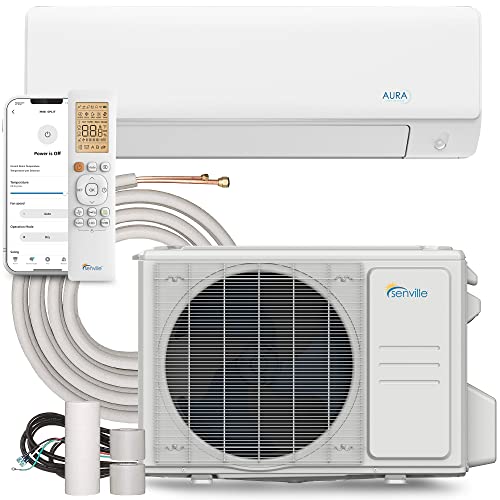
- MrCool DIY 5th Gen: pre-charged 25 ft Quick Connect line sets, no vacuum pump. The warranty (5 years parts, 7 compressor, no registration) allows owner installs, covers the line sets as parts, and excludes labor. The manual says the line sets are designed to be installed once, and reconnecting them voids the warranty. The 12K runs on 115V with a 20 A maximum breaker.
- Klimaire DIY 5th Gen 18K: quick-connect lines (25 ft on the listing we link), 208-230V, 12 A MCA and 20 A maximum fuse. Klimaire's current DIY warranty allows owner installs, but its claim procedure asks for an installation invoice from a licensed HVAC technician, and it excludes line sets. Get the terms in writing before you buy.
- Senville Aura: Senville's FAQ answers "Can I install the system myself?" with "No," and the warranty certificate requires a licensed contractor. It's a vacuum-and-flare system.
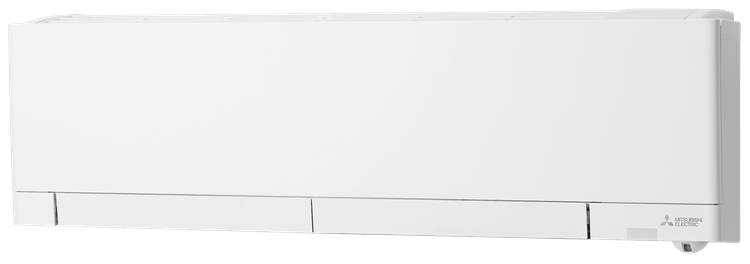
- Mitsubishi FX: the install manual says "Do not install the unit by yourself (user)." and the warranty requires a licensed HVAC contractor's install.
Any of them may need a new circuit; check whether your town requires a licensed electrician and a permit for it. On the refrigerant side, EPA's Section 608 Q&A says "Any person servicing, installing or disposing of stationary appliances (except the disposal of small appliances) must be a section 608 certified technician." EPA hasn't published a plain statement on whether connecting a factory-charged quick-connect line counts, and we won't tell you it does or doesn't. One owner who replaced a badly installed Fujitsu system got their 608 certification first and did the work themselves.
On money: don't plan on the federal home improvement tax credit. The IRS page for the Energy Efficient Home Improvement Credit says "You can claim the credit for improvements made through December 31, 2025." Check your state and utility for programs that are still running, and read who is responsible if a rebate application is denied.
What we would do in your house
Gas furnace that still works, cheap gas: keep it. Add a MrCool DIY 5th Gen 12K to the room that's always cold or the one you live in, use it for cooling and mild-weather heat, and let the furnace take the coldest days. Run your own break-even COP before you heat the whole house with it.
Oil, propane or electric baseboard: this is where a heat pump pays. Put the heads where you spend your time and let them carry the heat, and keep the old system for the coldest nights until you've seen a full winter. For an open floor you'll install yourself, the Klimaire DIY 18K makes 13,600 BTU/h at 5°F. For a big zone with a contractor doing the work, the Senville Aura 24k holds 24,200 at 5°F.
Furnace dead, whole-house replacement, cold winters: that's a contractor job, and the choice is a ducted cold-climate heat pump, dual fuel with a new furnace, or multi-zone ductless. If you're paying for a pro install anyway, the Mitsubishi FX holds more heat at 5°F than its rating at 47°F; our MrCool vs Mitsubishi comparison covers what that premium buys. And if a new unit isn't putting out heat, start with our mini-split not heating guide.
The picks
Products we recommend for this guide.

MRCOOL DIY 5th Gen 12,000 BTU 115V Mini-Split
Our pick to add heat pump heat beside a furnace or replace baseboard in one room: you install it yourself, it runs on 115V, and NEEP rates it 8,400 BTU/h at 5°F (COP 2.09). Keep the furnace for nights below its -13°F floor.
Read our full review: we scored it 6.9/10

Klimaire DIY 5th Gen 18,000 BTU Quick Connect (230V)
For an open floor you want to install yourself: quick-connect lines, 13,600 BTU/h at 5°F and a 9,000 max at -13°F per NEEP, on a 230V circuit. DIY installs allowed, but claims ask for an invoice from a licensed installer; get it in writing.
Read our full review: we scored it 6.7/10
What owners say
Real owner reports from the threads and editorial sources we drew on for this guide.
“My house is ancient and poorly insulated, and this is our first winter with the heat pumps. Our electric bill this month is about $750, which stings lol. But it’s way better than $1200 last year for electric baseboard that barely kept our house at 55 degrees. We’re a toasty 72 degrees now.”
“I installed 5 Mitsubishi Hyper Heat mini splits (5 condensers) in my 1951 built brick home in NY in 2019. I got 1,000 rebate for each condenser from the utility company (500), Mitsubishi (250), and the diamond dealer for not financing (250). Last winter I saved roughly 1,500 dollars versus burning oil.”
“We ran it as we would have our normal oil heat. Well the first really cold month (december), we ran up a $500 electric bill (when we’re normally in the $100 range in the winter) and we’re well on our way to another one by the time our eyes rolled out of our heads when that bill arrived.”
“I’d heard so much great stuff about how efficient heat pumps are so I tried using the mini splits in heat mode for November (not even very cold yet) and the bill was $600. F that. We ran the gas baseboards the rest of the winter, and highest bill was like 350.”
“We have electric baseboards and upgraded to a mini split heat pump. It's been awesome. We have 7 heads, two of which are ceiling casettes. The left and right side of the house has their own seperate condenser. I keep the house about 20°C, and it only uses about 1kw per hour (per side). A single baseboard would be 2-3Kw per hour and that would have been for ONE room, rather than the whole house.”
“My electricity bill went up around $100 to$120 for 3 months and up around $50 to 80 months for the rest of year comparing with when using oil furnace. 2024 heating bill was around $2500, I'm saving at least $1500 with the heat pump for 2025. Gonna take around 6 to 8 years to recoup my heat pump cost. My kWh is $0.15 tho.”
“We went to heat pumps when we replaced our old AC units. Two 4 ton units. We live in No cal where it gets cold in the winter but rarely if ever close to actual freezing. It’s been a full year. And I can say that the HPs use almost 2x the amount of electricity in the winter as we used to. They worked fine but literally 2x the electricity. We kept our gas furnaces for when it’s below 40 degree outside. We used about 1/4 the amount of gas. Without full blown solar, it would have been more expensive to run the HPs.”
“We converted from a gas water heater and gas furnace to a heatpump for both, and my gas usage plummeted, and the extra electricity usage only pushed the electric bill up a small amount, less than what the gas bill went down by. In January of 2023, we used 65 therms at a cost of $190. In January of 2024 we used 5 therms at a cost of $8. The electricity usage for the two was 278 kWh. At an average rate of 42 cents a kWh (we're on Time of Use EV2-A), that comes to $116. Compared to last year, that's a savings of $66.”
“In MA, move from gas to a dual heat pump this season. Our electric monthly bills have doubled from last year ($400 vs. $200) and gas consumptions is roughly the same at $60/mo. Definitely costing us way more! That being said, the house is more comfortable than with our told gas only furnace.”
“I have one head mini split in my newer build about 1800 sq ft in Maine. Heats the whole house use some propane on 2nd floor when really cold.”
“I had heat pumps installed in October but I prefer my existing gas forced hot water baseboards. I found when running the heat pumps there were lots of cold spots in the house. I got the minisplits mainly to replace loud and failing through-wall ACs. The heat is a bonus.”
“I did some manual calculations and roughly and arrived at 38F as the point where heating with gas is cheaper so I just set my thermostat to go gas only if it gets under this temp. We have had fast-rising utility rates in the PNW (As does everywhere) and this has kept my costs quite reasonable.”
