Midea 22 Pint Dehumidifier Review: A Real 22 for One Damp Room
By Ingrid Tamsett · Updated October 2026
Independent editorial review. We never accept payment for coverage, though we may earn a commission if you purchase through our links.
 ← Bucket-style portable; Midea publishes no dimensions for the 22 →
Spec sheet
| Capacity (DOE 65°F / 60% RH, ENERGY STAR) | 22.31 pints/day |
| Efficiency (ENERGY STAR) | IEF 1.70 L/kWh; 278 kWh/yr |
| Operating range (manual) | 41-90°F; coils frost below 41°F |
| Humidity setting (manual) | 35-85% in 5% steps; display ±5% |
| Drainage (manual) | Bucket or gravity hose (not included); no pump |
| Clearance (manual) | 8 in all sides, 16 in at the air outlet; not for small spaces |
| Noise (listing) | 47 dBA; fan speed not stated |
| Refrigerant (ENERGY STAR) | R-32, 3.9 oz |
| Warranty (manual) | 1 year; owner pays diagnostics, removal, transport |
Verdict
Owner discussion of this exact model is thin: most Midea dehumidifier owners online have the Cube or Costco's 50-pint pump model. One Hearth.com owner clearly describes the MAD22C1AWS (bought on Amazon in 2023) and is quoted here. Midea now sells a second 22-pint model, so check the model number before you buy; the specs here are ENERGY STAR's and Midea's manual.
Read full take ↓


The Midea 22 Pint Dehumidifier (MAD22C1AWS) is a sensible buy for one damp room: a bedroom, a home office or a small finished basement room that stays above 41°F. ENERGY STAR certifies it at 22.31 pints a day on the current DOE test (65°F, 60% relative humidity), so the 22 on the box is real. It drains to a hose, restarts itself after a power cut, and costs less than Midea's Cube 20.
Two catches. Its efficiency (IEF 1.70) is the small-dehumidifier tier: Midea's 35-pint sibling pulls 65% more water per day and uses about 15% less electricity per pint. And ignore the "1,500 sq ft" on the listing. ENERGY STAR sizes dehumidifiers by how damp the space is, and a very damp room calls for 25 to 40 pints.
There isn't much owner history on this exact model; most Midea owners online have the Cube or Costco's 50-pint pump unit. So our verdict rests on the certification, Midea's manual and the arithmetic.
Who it suits
- Good fit: one room or a small basement room that is damp but not wet, at or above 41°F, where a hose can run downhill to a drain or you can empty a bucket daily.
- Size up to the 35: if the room sits at 75% humidity or more, or you will run it most of the day. The 35 removes 65% more water for 40% more electricity a year, and does it more efficiently per pint.
- Buy a crawl space unit: for anything that drops below 41°F. The listing names crawlspaces; Midea's manual says to keep it where the temperature won't fall below 41°F because the coils frost over.
- Look elsewhere: for a sealed closet. The manual says not to run it in small spaces and wants 8 inches of air on every side and 16 inches at the outlet. It also says a dehumidifier does little for an adjacent closet unless air moves in and out of it.
Placement decides how well it works. Close the room's doors and windows while it runs, as both ENERGY STAR and Midea's manual advise, and keep it away from a clothes dryer, heater or radiator. Expect the room to get a little warmer; a dehumidifier releases the heat it pulls out of the air, and ENERGY STAR calls that normal. In a bedroom, put it where the warm outlet air isn't blowing at the bed.
The numbers behind the 22
ENERGY STAR's records, current DOE test (65°F, 60% RH):
Model | Pints/day | IEF (L/kWh) | kWh per year | Drain |
|---|---|---|---|---|
Midea MAD22C1AWS (this one) | 22.31 | 1.70 | 278 | Bucket or gravity hose |
Midea MAD35C1AWS-A | 36.71 | 2.01 | 388 | Bucket or gravity hose |
20.16 | 1.70 | 249 | Cube bucket or gravity hose | |
Frigidaire FHDD2233Y1 | 22.27 | 1.70 | 276 | No figure |
Do the efficiency math. A full rated day on the 22 removes about 10.6 liters and uses about 6.2 kWh. The 35 removes about 17.4 liters for about 8.6 kWh. Per pint, the 22 uses roughly 18% more electricity (2.01 ÷ 1.70). If the room needs the dehumidifier running most of the day, the bigger unit finishes sooner and costs less per pint; ENERGY STAR itself says it's better to oversize a dehumidifier than undersize it. If it only runs a few hours a day, the 22's lower purchase price wins.
Watch the old ratings when you compare. In June 2019 DOE moved the portable test from 80°F to 65°F, and capacities fell for the same machines. ENERGY STAR's rough conversion puts an old-test 30 at about 20 pints today and an old 40 at about 25. So if you're replacing a pre-2019 dehumidifier labeled 30 or 35 pints, a current 22 has roughly the same capacity, not less. ENERGY STAR calls that table a rough correlation, and so do we.
The "1,500 sq ft" on the listing isn't a measurement. ENERGY STAR's sizing chart for a small or medium space asks for 20 to 30 pints when the air is slightly to moderately damp (50 to 75% RH) and 25 to 40 pints when it's very damp (75 to 90%). A 22 fits the first case. In the second, buy the 35.
Living with it
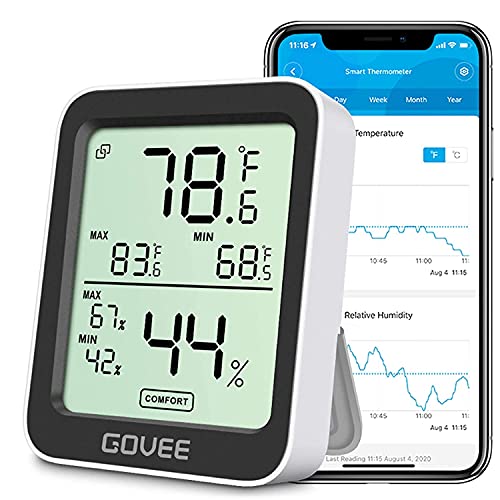
- Humidity control: set from 35% to 85% in 5% steps. The display reads the room from 30% to 90%, and Midea quotes its accuracy at plus or minus 5%, so put a cheap hygrometer across the room in week one. EPA guidance is below 60%, ideally 30-50%.
- Modes: Turbo or normal fan, Continuous (runs regardless of the setpoint) and Comfort (sets the level itself), plus a 0-24 hour timer.
- Drainage: empty the bucket, or attach an ordinary garden-type hose (not included) to the rear outlet and run it level or downhill to a drain. There's no pump. If the drain is higher than the unit, you need a condensate pump or a raised shelf.
- Power cuts: it restarts with its previous settings automatically.
- Filter: the manual says clean it every two weeks; a light reminds you every 250 hours of running.
- First use: run it continuously for 24 hours, per the manual.
- Noise: Midea's listing says 47 dBA without naming a fan speed. Expect a compressor and a fan.
- Bucket and weight: Midea doesn't publish either for the 22 in its manual, support page or Amazon bullets. If you can't run a hose, ask the seller before you buy.
One owner on a home-heating forum put a plug-in meter on theirs in a basement: about 250 watts while running, roughly a dollar a day, holding the space near 50%. Their only complaint was the 5% humidity steps.
Reliability, service and the warranty
We have no model-specific failure pattern to report, good or bad, which is itself a reason to buy where returns are easy. Dehumidifiers of every brand tend to fail the same ways: iced coils or a sealed system that stops pulling water after a few years. This one uses R32, a flammable refrigerant, and the manual says only a Midea-authorized servicer should touch it.
The manual's error codes are worth knowing: AS (humidity sensor), ES (coil sensor), P2 (bucket full or out of place) and EC (refrigerant leak detected). Midea says to unplug and replug for AS and ES, and to call service if they persist.
The warranty is one year from purchase. Midea pays for parts and repair of defects through its authorized servicers; you pay for diagnostics, removal, transportation and reinstallation. Midea service is 1-866-646-4332. Register it and keep the receipt.
How it compares
- Midea MAD35C1AWS-A: Midea's 35-pint bucket model: 36.71 pints a day at IEF 2.01. It costs a little more and is the better buy for a very damp room or a small basement.
- Midea Cube 20: slightly less capacity (20.16 pints), the same efficiency, and the Cube's lift-off design; it cost more than the 22 when we checked. Our Midea Cube review covers its humidity-reading quirk.
- Frigidaire FHDD2233Y1: matches the Midea on paper (22.27 pints, IEF 1.70) and cost a little less when we checked. It came on the market in 2025, so it has even less owner history.
- A 50-pint: for a whole basement, skip the small sizes. Our LG 50-pint review compares the certified 50s, all at IEF 2.01.
Should you buy it?
Yes, for one moderately damp room above 41°F with a drain within reach or a person willing to empty a bucket. It's a certified 22, it costs less than the Cube 20, and it restarts on its own. If the room is very damp or the unit will run most of the day, pay a little more for the 35-pint sibling and save on every pint. And set a separate hygrometer beside it; the built-in reading is good to plus or minus 5%.
Score breakdown
ENERGY STAR certifies 22.31 pints a day at the current 65°F DOE test, so the label is honest, and it has a gravity drain, auto restart and a 41°F floor. Its IEF of 1.70 means about 18% more electricity per pint than Midea's 35, and there's no pump. Midea quotes 47 dBA without a fan speed and doesn't publish the bucket size.
There's too little owner history on the MAD22C1AWS to show a failure pattern either way. The warranty is one year of parts and repair through Midea's servicers, with you paying diagnostics, removal and transport. It uses R32, and the manual allows only Midea-authorized service.
It cost less than the Cube 20 when we checked and removes about 11% more water at the same efficiency. Frigidaire's FHDD2233Y1 matches it on paper for a little less. If the dehumidifier will run most of the day, the 35-pint sibling's better efficiency pays back its higher price.
Midea 22 Pint Dehumidifier on Amazon.
The Evidence Behind Our Verdict
Owner discussion of this exact model is thin: most Midea dehumidifier owners online have the Cube or Costco's 50-pint pump model. One Hearth.com owner clearly describes the MAD22C1AWS (bought on Amazon in 2023) and is quoted here. Midea now sells a second 22-pint model, so check the model number before you buy; the specs here are ENERGY STAR's and Midea's manual.
Our rating above is our own editorial call. What follows is the field evidence we weighed to reach it: first-hand reports from owners on independent HVAC and DIY forums, which we lean on more than manufacturer-influenced published reviews because unsponsored owners tend to be the more candid signal.
What Owner Forums Say
“I just bought a Midea 22 pint unit on Amazon. Cheap enough and it keeps the basement humidity around 50%. Only 250 watts when in use. About $1 a day according to my killawatt meter. I do wish the humidity setting was in increments of 1 instead of 5.”
Frequently asked questions
Is the Midea 22 Pint Dehumidifier worth it?
It cost less than the Cube 20 when we checked and removes about 11% more water at the same efficiency. Frigidaire's FHDD2233Y1 matches it on paper for a little less. If the dehumidifier will run most of the day, the 35-pint sibling's better efficiency pays back its higher price.
How reliable is the Midea 22 Pint Dehumidifier?
There's too little owner history on the MAD22C1AWS to show a failure pattern either way. The warranty is one year of parts and repair through Midea's servicers, with you paying diagnostics, removal and transport. It uses R32, and the manual allows only Midea-authorized service.
How well does the Midea 22 Pint Dehumidifier perform?
31 pints a day at the current 65°F DOE test, so the label is honest, and it has a gravity drain, auto restart and a 41°F floor. 70 means about 18% more electricity per pint than Midea's 35, and there's no pump. Midea quotes 47 dBA without a fan speed and doesn't publish the bucket size.
Options Worth Checking Out


You Might Also Need
Accessories worth grabbing alongside your purchase
More Midea Reviews
See all →


How Does It Compare?
Side-by-side breakdowns featuring this product


