MrCool Easy Pro Review: The 11.5 ft Line Set Decides It
By Wendell Asaro · Updated October 2026
Independent editorial review. We never accept payment for coverage, though we may earn a commission if you purchase through our links.
 ← Indoor unit 31.57 in wide (12k) →
Spec sheet
| Rated heat (12k 115V) | 12,000 BTU/h (MRCOOL rating) |
| Heat at 5°F (12k) | 6,700 BTU/h, 56% of rated (NEEP) |
| Heat at 5°F / -13°F (24k) | 17,000 BTU/h / 10,600 BTU/h max (NEEP) |
| Lowest operating temp | -13°F outdoors (MRCOOL brochure) |
| SEER2 / HSPF2 (12k) | 19.5 / 9.3 (Region IV); not ENERGY STAR |
| Electrical (12k) | 115V, 19.5 A min circuit ampacity, 20 A max breaker (MRCOOL) |
| Install type | Pre-charged Quick Connect, no vacuum per MRCOOL |
| Line set | 11.5 ft included; 16/25/35/50 ft sold separately; 75 ft max; valves one-time install |
| Warranty (11511DE / 23011DE) | 3 yr parts, 5 yr compressor; line sets and labor excluded |
| Older 16 ft version | 1 yr parts, 2 yr compressor; authorized dealer required |
Verdict
No owner on r/hvacadvice or the other boards we searched reported how an MRCOOL Easy Pro held up after install. Five people named it: a buyer checking the R-454B room-height minimum, three people sorting out its electrical requirements (one of them ordering the older 16 ft version), and one asking about multi-zone compatibility. A sixth person, not an owner, recommended it by linking to an Easy Pro listing. The ownership quotes below are about MRCOOL's DIY line with the line and generation unstated, as noted here. Counted by owner, two reported no trouble and four reported a problem (a unit that wouldn't cool on day one, a compressor at two years, a wall-unit leak at year four, compressor noise just past five years); MRCOOL helped in three of the four, with the swap work on the owner. Three or more non-owners dismissed the brand without citing a failure of their own.
Read full take ↓


We'd buy the Easy Pro for one job: a bedroom, office or small addition in a mild-to-moderate climate, where the outdoor unit can sit almost directly behind the wall the indoor head hangs on. It's MRCOOL's middle child, a pre-charged, quick-connect mini-split like the DIY 5th Gen, sold for less, with a shorter included line set, lower efficiency and a thinner warranty. On Amazon it turns up as the MrCool Easy Pro DIY mini-split with the 11.5 ft line set, in sizes from 9,000 to 24,000 BTU (our link opens on the 12k, the size we compare throughout). MRCOOL says the pre-charged Quick Connect line set eliminates vacuum pumps and refrigerant handling, the same promise the DIY 5th Gen makes.
In that one room, the included 11.5 ft line set is enough, the 9k or 12k runs on 115V, and you keep a warranty that lets you do the refrigerant side yourself, with the wiring left to a licensed electrician as the manual requires.
Outside it, the savings cost more than they look. The Easy Pro 12k makes 6,700 BTU/h at 5°F, 1,700 less than the DIY 5th Gen 12k and 2,200 less than the Klimaire DIY 12K, which cost less than the Easy Pro 12k when we checked. Its warranty runs 3 years on parts and 5 on the compressor, and it excludes the line sets. And Amazon still sells an older Easy Pro with a 16 ft kit and a much weaker warranty, under titles that also say "5th Gen." No owner has reported yet how an Easy Pro held up after install, so this review leans on MRCOOL's documents, the published ratings and, where we say so, reports about MRCOOL's DIY line in general.
Current version or the old 16 ft one
MRCOOL has sold more than one Easy Pro, and the name won't tell the two on Amazon apart. The performance ratings are the same for the 12k: NEEP lists identical heating capacities for the old and new versions. The line set and the warranty are not.
Current version | Earlier version | |
|---|---|---|
Outdoor unit suffix | 11511DE-O (9k and 12k, 115V) or 23011DE-O (18k and 24k, 208/230V), e.g. EZPRO-12-HP-C-11511DE-O | 11516D-O or 23016D-O |
Wall unit suffix | 115DE-O or 230DE-O | 115D-O or 230D-O |
Line set | 11.5 ft pre-charged Quick Connect, R-454B | 16 ft kit |
MRCOOL warranty | 3 years parts, 5 years compressor | 1 year parts, 2 years compressor; doesn't apply to any unit not bought from an authorized dealer and installed in line with applicable laws, codes, permits, policies and licensing |
"5th Gen" in a title doesn't settle it. Two Amazon listings bundled with an IWAE labor warranty call themselves "5th Generation" and advertise a "16ft Lineset," which is the older version, and one buyer ordered an "Easy Pro 5th Gen" 24k that came with a 16 ft line and R-454B. Another Amazon listing for a 24k "Easy Pro Series" system gives the part number EZPRO-24-HP-23016-MPN, the old 16 ft model. And an air-handler-only listing with the older 115D-O suffix lists a 2-year parts, 1-year compressor warranty, which matches neither MRCOOL document. Read the line-set length and the model suffix, not the generation label.
The listing we link is the 12k size of an Easy Pro bundle with IWAE's labor warranty, whose product details describe an "11.5ft DIY Line Set" and 18.9 to 20.2 SEER2, both current-version figures. It doesn't show the model number for each size, so before you pay, ask the seller to confirm the outdoor unit ends 11511DE-O (9k/12k) or 23011DE-O (18k/24k). That listing also advertises a 1-year labor warranty from IWAE. We haven't seen its terms; MRCOOL's own warranty excludes labor.
Two more lines to keep straight. The DIY 5th Gen (model numbers start DIY- and end D25-O) ships a 25 ft line set with a 5-year parts, 7-year compressor warranty that covers the line sets. The DIY Select (model numbers start DIYS-) is the cheapest of the three, with an 11.5 ft line set and 1 year on parts, 2 on the compressor. The Easy Pro is a single-zone system: one outdoor unit, one wall unit.
Which rooms and climates it fits
Put it in a bedroom, home office or small addition where the indoor head and the outdoor unit can sit on opposite sides of one wall, and where winter lows rarely reach the single digits. In that room, a 9k or 12k on 115V covers cooling and shoulder-season heat, and the short line set is a feature: there's less slack to coil and store.
Do the 5°F arithmetic before you count on it for heat. Say a heat-loss estimate puts a bedroom at 6,000 BTU/h on a 5°F night. That's an illustration; your number comes from a Manual J or a careful heat-loss estimate. The Easy Pro 9k's 6,200 BTU/h at 5°F covers it with 200 to spare, and the 12k's 6,700 covers it with 700. Now take a small insulated garage at 12,000 BTU/h on the same night. The Easy Pro 12k comes up 5,300 short and the 18k 2,200 short. Only the 24k, at 17,000, covers it. The DIY 5th Gen 18k, at 12,800, also covers it, on a smaller unit and with a 25 ft line set.
Don't upsize "to be safe." An oversized unit short-cycles in mild weather and does a poor job pulling humidity in summer, which is most of what a bedroom unit does. Size to the load, then check the 5°F column, then plan backup heat for the nights below it.
Pick something else if your winters regularly go below zero (the DIY 5th Gen 18k holds 12,200 BTU/h at -13°F, double the Easy Pro 18k's 6,000), if you'd rather have a warranty that covers the line set, or if the outdoor unit has to sit well away from the wall and you don't want to pay for a longer pre-charged line set on top of the unit. If you'll vacuum lines yourself or hire someone to, the Pioneer Diamante Pro 12K makes 9,000 BTU/h at 5°F on 115V for less money.
Heat, efficiency and circuits by size
Rated capacity is MRCOOL's; the 17°F, 5°F and -13°F figures are NEEP's cold-climate listings for each wall-unit pairing, with -13°F a maximum because NEEP publishes no rated point there. Capacities are BTU/h. The circuit column is MRCOOL's minimum circuit ampacity and maximum fuse (breaker) for the outdoor unit.
Size / voltage | Rated (47°F) | 17°F | 5°F | Max at -13°F | SEER2 | HSPF2 | Circuit | ENERGY STAR |
|---|---|---|---|---|---|---|---|---|
9k 115V | 10,000 | 7,000 | 6,200 | 3,300 | 20.2 | 9.2 | 17 A / 20 A | Yes (not Cold Climate) |
12k 115V | 12,000 | 7,400 | 6,700 | 3,400 | 19.5 | 9.3 | 19.5 A / 20 A | No |
18k 208/230V | 18,000 heat (17,000 cooling) | 11,500 (up to 18,700) | 9,800 | 6,000 | 20 | 8.5 | 15 A / 20 A | No |
24k 208/230V | 25,000 | 16,300 (up to 19,700) | 17,000 | 10,600 | 18.9 | 8.7 | 19 A / 20 A | No |
Two oddities in those numbers. The 18k is an 18,000 BTU/h heater but a 17,000 BTU/h air conditioner, per MRCOOL's own data, so it's a little smaller in summer than the name says. And NEEP's 24k record lists a higher rated capacity at 5°F (17,000) than at 17°F (16,300), which is unusual; we report it as listed. MRCOOL's brochure says the Easy Pro operates from -13°F to 122°F outdoors, and at -13°F the 9k and 12k are down to a third or less of their ratings.
Efficiency is where the savings come back to bite. On the 12k, the Easy Pro's 19.5 SEER2 against the DIY 5th Gen's 23.5 means it needs about 20% more electricity for the same cooling on the ratings (23.5 divided by 19.5). In heating, 9.3 HSPF2 against 10.2 works out to about 10% more. Over many years of running a bedroom unit, that difference eats into the purchase-price gap; how fast depends on your rates and hours.
The circuit figures come from MRCOOL's product data (minimum circuit ampacity) and brochure (a 20 A maximum fuse on every size), and the install manual's table agrees: minimum and maximum amperage of 17/20, 19.5/20, 15/20 and 19/20 A, smallest to largest size, with 12 AWG as the minimum wire size (which it calls a recommendation, adding that local codes come first). Confirm both numbers on the nameplate of the unit you receive. They've changed between versions, which explains the higher figures in older posts: a 2022 spec for the Easy Pro 9k gave 20 A minimum circuit ampacity and a 30 A maximum breaker, and a buyer of the older 16 ft 24k was told by MRCOOL's phone rep that the breaker should be 25 A rather than the 30 A they'd heard elsewhere. Neither matches today's documents.
The manual is plain about who does the wiring: "All wiring must comply with local and national electrical codes, regulations, and must be installed by a licensed electrician." Which circuit, disconnect and permit your house needs is that electrician's call.
Noise, per MRCOOL: the 12k wall unit is rated 44.5 dB(A) on Turbo down to 17.5 on Silent, and the 9k and 12k outdoor units 54 dB(A). The 18k outdoor unit is 55 and the 24k 61, louder than the DIY 5th Gen 24k's 58.5. These are MRCOOL's figures, not our measurements. The wall units are 28.7 in wide (9k), 31.57 in (12k), 38.23 in (18k) and 42.6 in (24k).
What the install involves
The refrigerant side is what you're paying to skip. MRCOOL's product description says the 11.5 ft Quick Connect line set "arrives factory pre-charged" with R-454B, "eliminating vacuum pumps and refrigerant handling." Follow the install manual for the connections; we don't paraphrase connection steps, and nothing about this kit asks you to add, remove or vent refrigerant.
Treat each connection as permanent. The Easy Pro manual says its quick-connect valves are only designed for one-time installation, that their seal can't be guaranteed if they're installed more than once, and that doing so voids the warranty. The DIY 5th Gen manual says the same about its line sets. Combine that with a warranty that excludes line sets, and a kinked or re-made line is a cost you carry. Pick the wall, the pad and the route before the first connection.
The short line set decides the layout. The install manual lists an 11.5 ft standard length and a 75 ft maximum pipe length for every size, with maximum elevation of 49.2 ft on the 9k and 12k, 65.6 ft on the 18k and 75 ft on the 24k. MRCOOL's brochure says pre-charged line sets come in 16, 25, 35 and 50 ft lengths "AS AN OPTIONAL PURCHASE," and that you can "Combine two standard line sets with our Quick Connect® Coupler for custom-length installations." So a longer run is possible; it costs extra, and a coupled run adds a connection. Match any set to your size's pipe diameters, which the brochure lists as 1/4 and 3/8 in on the 9k and 12k, 1/4 and 1/2 in on the 18k, and 3/8 and 5/8 in on the 24k. With the 11.5 ft in the box, picture the run (a rough illustration; your geometry will differ): mount the head about 7 ft up and set the outdoor unit on a ground pad, and something like 5 to 6 ft of line goes to dropping down the wall, leaving roughly 5 to 6 ft to go sideways. That works for a unit directly below the head. With the included set, it doesn't work for a unit around a corner.
The rest is ordinary handyman work: a hole through the wall, a pad or bracket for the outdoor unit, a route for the condensate drain, and a plan for defrost water, since a heat pump sheds water in heating mode. Electrical is the part the manual assigns to a licensed electrician, and it's where Easy Pro buyers get stuck: most of the questions about this unit are about its electrical requirements.
Check the room before you pick a low wall. R-454B is a mildly flammable (A2L) refrigerant, and the current Easy Pro install manual (page 16) says the indoor unit should be installed at least 6.0 ft above the floor and that the height of the room cannot be less than 7.3 ft. One buyer with a 7 ft basement ceiling says MRCOOL told them installing below that height isn't advised. In a basement with a 7 ft ceiling, we'd treat that as a no unless MRCOOL tells you otherwise in writing.
On the legal side, EPA's Q&A on its refrigerant sales restriction says "Any person servicing, installing or disposing of stationary appliances (except the disposal of small appliances) must be a section 608 certified technician." It doesn't mention quick-connect kits, and EPA has stayed that sales restriction for pre-charged split systems since 1995, so anyone can buy one. EPA hasn't published a plain statement on whether connecting a quick-connect line set counts as technician work, and we won't pretend to settle it. Check your local permit rules too.
What the warranty covers
The current Easy Pro warranty (revision 12.01.25) gives 3 years on parts and 5 on the compressor, "With no registration required." It doesn't require a licensed HVAC installer, but it "applies only to systems that are installed according to the installation instructions," and in line with applicable laws, electrical codes and permits. The install manual adds that the warranty is only valid if the lines are installed as it describes, and it puts the wiring with a licensed electrician. Read together, the owner install these documents allow is the mechanical and refrigerant side (mounting the units, routing the lines and making the quick connections, by the book), with the wiring going to an electrician. It also says that "When required by law or when required for diagnostic testing as directed by MRCOOL," a certified or licensed HVAC contractor "may be necessary." Plan on the possibility of paying for a tech's diagnosis before a claim is approved.
Then the exclusions. The warranty defines "Parts" as any part of the system "except the compressor or line sets." The compressor has its own 5-year term; the line sets aren't covered at all. The DIY 5th Gen warranty lists its pre-charged line sets as covered parts, and that's the single biggest paper difference between the two. Labor is excluded, along with other costs "incurred for diagnosing, repairing, removing, installing, shipping" defective parts. Clause 10 excludes shipping or freight charges and damage in transit, and clause 12 excludes products moved from their original installation address, so a unit you take with you when you move leaves its coverage behind. An Extended Limited Lifetime Replacement Warranty exists only through MRCOOL's Care Kit program, "which has a fee," and only when "certain conditions/requirements are met."
The older 16 ft version's terms are shorter and stricter: 1 year parts, 2 years compressor, and no coverage at all unless the unit was bought from an authorized dealer and installed in adherence with applicable laws, codes, permits, policies and licensing. Its wording on licensed contractors is firmer too: one "is necessary" when required by law or for diagnostics. If you end up looking at a 16 ft listing, find out whether the seller is an authorized MRCOOL dealer before you pay. We'd skip it and buy the current version.
The 5-year compressor term is tight. One MRCOOL DIY 18K owner's compressor started making noise 14 days after the 5-year mark. On the Easy Pro's term, that timing would land just outside coverage; on the DIY 5th Gen's 7-year term, inside it.
Reliability and living with it
The Easy Pro has no long-term record. The handful of people who name it are still shopping or installing: checking the room-height rule, sorting out the electrical, asking whether its wall unit works on a multi-zone outdoor unit. Nobody has reported how one held up. So the closest evidence is MRCOOL's DIY line in general, from owners who didn't say which line or generation they had.
That evidence is small and mixed, and it points one way: MRCOOL tends to ship parts or whole units, and you do the swap. A new DIY 24k that wouldn't cool on day one got a new outdoor unit and new pre-charged lines from MRCOOL support, and then worked. A DIY 18k's compressor died at two years; MRCOOL covered it, but the owner had to reinstall the outdoor unit and lines and objected to paying shipping. On the good side, a DIY 18k in a North Carolina garage "worked great," and a MRCOOL 12K in a woodshop shed went in over a single morning and runs year-round. Add a wall-unit leak at year four on a system installed about ten years ago (MRCOOL shipped a complete replacement) and the compressor noise just past five years, and MRCOOL helped in three of the four problem cases. None of those owners said they had an Easy Pro.
On the Easy Pro, a replacement line set wouldn't be a covered part, and the one-time-install rule means a swap may mean new lines. Budget for that.
You'll read that MRCOOL units last about five years at most. Nobody making that claim cites a failure of their own, so we set it aside. The better argument against the brand is about price: buy another brand plus a vacuum pump, put in an extra half hour of work, and you can save hundreds to thousands. We take that one seriously.
How it compares
Each rival at 12k, against the Easy Pro 12k. Capacities are BTU/h from NEEP's list.
Unit | 17°F | 5°F | Max at -13°F | SEER2 | Line set in the box | Warranty |
|---|---|---|---|---|---|---|
MRCOOL Easy Pro 12k | 7,400 | 6,700 | 3,400 | 19.5 | 11.5 ft, quick connect | 3 yr parts, 5 yr compressor; line sets excluded |
No figure | 8,400 | No figure | 23.5 (ENERGY STAR Cold Climate) | 25 ft, quick connect | 5 yr parts, 7 yr compressor; line sets covered | |
Klimaire DIY 12K (115V) | 10,000 | 8,900 | 6,680 | 23.0 | 25 ft, quick connect | DIY allowed; claims ask for a licensed installer invoice; line sets excluded |
Pioneer Diamante Pro 12K (115V) | No figure | 9,000 | Heating ends at -4°F | No figure | 16 ft, flare; nitrogen-assisted evacuation to 500 microns | No figure |
MrCool DIY Select 12k | No figure | 6,200 | No figure | 17.5 | 11.5 ft, quick connect | 1 yr parts, 2 yr compressor |
- DIY 5th Gen: costs more. At 18k the gap is 12,800 against 9,800 at 5°F. At 24k the Easy Pro edges ahead in the cold (17,000 against 16,100 at 5°F) while giving up efficiency and warranty.
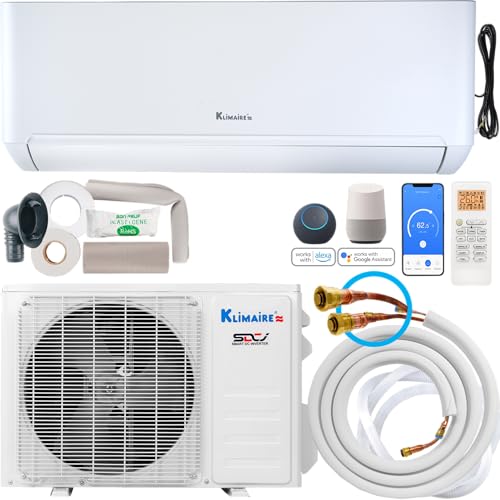
- Klimaire DIY 12K: another quick-connect kit, and it cost less than the Easy Pro 12k when we checked. The catch is paperwork and support: Klimaire's warranty PDF says it supports only its dealers and licensed technicians.
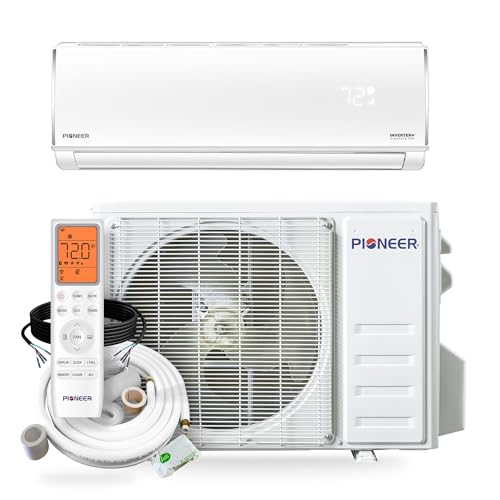
- Pioneer Diamante Pro 12K: much less money, but not a no-vacuum kit. It's the better buy if you'll hire the startup.
- DIY Select 12k: cheaper still, and weaker on every count that matters to us.
For the broader field of no-vacuum systems, see our guide to the best DIY mini-split.
Our call on the Easy Pro
For most people shopping a 12k, our default is the DIY 5th Gen, which is why it's the top pick below rather than the Easy Pro. It costs more, and on the 12k you get 25% more heat at 5°F, about 17% less electricity for cooling on the ratings, more than twice the line set in the box, and a warranty that runs two years longer and covers the lines.
The Klimaire DIY 12K is the awkward comparison. It cost less than the Easy Pro 12k when we checked and beats it on paper at 17°F, 5°F and -13°F, on SEER2 and on included line length. We don't make it the default because of its documents: a warranty that allows DIY installs but asks for a licensed installer's invoice on claims, and support that it limits to dealers and licensed technicians. If you get Klimaire to confirm your homeowner install is covered, in writing, it's more machine for less money than the Easy Pro.
Buy the current Easy Pro, the one with the 11.5 ft line set and an 11511DE-O (9k/12k) or 23011DE-O (18k/24k) model suffix, when the price gap to the DIY 5th Gen matters, you'd rather have MRCOOL's plain no-registration warranty than Klimaire's paperwork, and the job is a bedroom or small room where the outdoor unit can sit right behind the wall and winters stay mostly above the single digits. The 9k has the highest SEER2 of the line, and it's the only ENERGY STAR size. For a garage that needs real heat, the 24k is the one Easy Pro size we'd consider, provided you have a 208/230V circuit. And skip any Easy Pro listing that says 16 ft, whatever generation it claims.
What we like
- No vacuum: a pre-charged Quick Connect line set; MRCOOL says no vacuum pump and no refrigerant handling.
- Warranty terms: no registration and no licensed HVAC installer needed for the refrigerant side: 3 years parts, 5 years compressor on the current version.
- 115V: the 9k and 12k run on it.
- The 24k in the cold: 17,000 BTU/h at 5°F and up to 10,600 at -13°F on paper, per NEEP, a little more than the DIY 5th Gen 24k at both points.
What we'd change
- Cold output: the 9k, 12k and 18k give up a lot of heat in the cold: 62%, 56% and 54% of their ratings at 5°F.
- Line set: the included 11.5 ft set limits where the outdoor unit can go (longer pre-charged sets cost extra), and the manual says the quick-connect valves are for one-time installation.
- Klimaire: the Klimaire DIY 12K cost less than the Easy Pro 12k when we checked and out-heats it at every temperature NEEP lists.
- Line sets not covered: the warranty's definition of parts excludes them, so a damaged line set is your cost.
- Efficiency: only the 9k is ENERGY STAR certified; the 12k is rated 19.5 SEER2 against 23.5 for the DIY 5th Gen 12k.
- The old version: Amazon still carries the 16 ft Easy Pro, whose warranty is 1 and 2 years and requires an authorized-dealer purchase.
Score breakdown
The 9k, 12k and 18k keep only 54-62% of their rated heat at 5°F, and the popular 12k makes 6,700 BTU/h there, well behind the DIY 5th Gen 12k's 8,400. Efficiency trails too (19.5 SEER2 and 9.3 HSPF2 on the 12k, and only the 9k is ENERGY STAR). The 24k is the exception, with 17,000 BTU/h at 5°F per NEEP.
No owner has reported how an Easy Pro held up, so this rests on the design and the paperwork. The quick-connect line set removes the skipped-vacuum failure, but the valves are one-time-use and the warranty's 3 years on parts excludes line sets. Brand-level DIY reports are mixed, with MRCOOL shipping replacements and owners doing the swap.
It's priced below the DIY 5th Gen, but the savings buy less heat at 5°F on most sizes, roughly 10-20% higher energy use on the 12k's ratings, a shorter included line set and a shorter warranty that skips the lines. Worse for its value case, the Klimaire DIY 12K cost less than the Easy Pro 12k when we checked and beats it at 5°F (8,900 against 6,700 BTU/h on NEEP's list), on SEER2 and on line-set length. What the Easy Pro keeps is a plain no-registration DIY warranty, where Klimaire's documents conflict and its support runs through dealers and licensed techs.
MrCool Easy Pro on Amazon.
The Evidence Behind Our Verdict
No owner on r/hvacadvice or the other boards we searched reported how an MRCOOL Easy Pro held up after install. Five people named it: a buyer checking the R-454B room-height minimum, three people sorting out its electrical requirements (one of them ordering the older 16 ft version), and one asking about multi-zone compatibility. A sixth person, not an owner, recommended it by linking to an Easy Pro listing.
The ownership quotes below are about MRCOOL's DIY line with the line and generation unstated, as noted here. Counted by owner, two reported no trouble and four reported a problem (a unit that wouldn't cool on day one, a compressor at two years, a wall-unit leak at year four, compressor noise just past five years); MRCOOL helped in three of the four, with the swap work on the owner. Three or more non-owners dismissed the brand without citing a failure of their own.
Our rating above is our own editorial call. What follows is the field evidence we weighed to reach it: first-hand reports from owners on Reddit and independent HVAC and DIY forums, which we lean on more than manufacturer-influenced published reviews because unsponsored owners tend to be the more candid signal.
What Reddit Is Saying
“Mr/Mrs cool were great to work with. Very responsive (via email). Started out with basic questions and “advanced” to checking ohms across condenser. Idk if numbers were good or bad but they sent a new outdoor unit and new PRECHARGED lines. I just finished installing and it cools & heats as advertised!”
“Installed a MRCOOL 12K for my small woodshop shed. I did my part in a single morning and had my electrician come out to connect it to my electrical service which took him 40 minutes. I’m now working on my daily in 74 F temperature year round.”
“The compressor on my Mr. Cool 18K DIY just started making noise. 14 days after the 5 years”
What Owner Forums Say
“I installed a Mr Cool DIY 18k after Ingrams recommended that size for my garage - 32x22x12 with R19 walls and R30 ceiling. Worked great, was easy to install and best part is it comes pre-charged.”
Frequently asked questions
Is the MrCool Easy Pro worth it?
It's priced below the DIY 5th Gen, but the savings buy less heat at 5°F on most sizes, roughly 10-20% higher energy use on the 12k's ratings, a shorter included line set and a shorter warranty that skips the lines. Worse for its value case, the Klimaire DIY 12K cost less than the Easy Pro 12k when we checked and beats it at 5°F (8,900 against 6,700 BTU/h on NEEP's list), on SEER2 and on line-set length. What the Easy Pro keeps is a plain no-registration DIY warranty, where Klimaire's documents conflict and its support runs through dealers and licensed techs.
How reliable is the MrCool Easy Pro?
No owner has reported how an Easy Pro held up, so this rests on the design and the paperwork. The quick-connect line set removes the skipped-vacuum failure, but the valves are one-time-use and the warranty's 3 years on parts excludes line sets. Brand-level DIY reports are mixed, with MRCOOL shipping replacements and owners doing the swap.
How well does the MrCool Easy Pro perform?
The 9k, 12k and 18k keep only 54-62% of their rated heat at 5°F, and the popular 12k makes 6,700 BTU/h there, well behind the DIY 5th Gen 12k's 8,400. 3 HSPF2 on the 12k, and only the 9k is ENERGY STAR). The 24k is the exception, with 17,000 BTU/h at 5°F per NEEP.
What do real owners say about the MrCool Easy Pro?
No owner on r/hvacadvice or the other boards we searched reported how an MRCOOL Easy Pro held up after install. Five people named it: a buyer checking the R-454B room-height minimum, three people sorting out its electrical requirements (one of them ordering the older 16 ft version), and one asking about multi-zone compatibility. A sixth person, not an owner, recommended it by linking to an Easy Pro listing.
Options Worth Checking Out

MRCOOL DIY 5th Gen 12,000 BTU 115V Mini-Split
Our default over the Easy Pro: 8,400 BTU/h at 5°F against the Easy Pro 12k's 6,700, a 25 ft pre-charged line set, 23.5 SEER2, and 5 years parts, 7 compressor with the line sets covered. It costs more and earns it.
Read our full review: we scored it 6.9/10
You Might Also Need
Accessories worth grabbing alongside your purchase

More MrCool Reviews
See all →


How Does It Compare?
Side-by-side breakdowns featuring this product
