Best Dehumidifier: Basement, Room, Crawl Space and Whole-House Picks
By Ingrid Tamsett · Updated October 2026
Independent editorial guide. We never accept payment for coverage, though we may earn a commission if you purchase through our links.
Quick Take
For most homes, the dehumidifier to buy is the Midea Cube 50, set on a damp basement floor with its hose run to a drain. ENERGY STAR certifies it at 49.67 pints a day on the current 65°F DOE test, it ties the best portables on efficiency, and it usually costs less than the Frigidaire and Honeywell 50-pint units it matches. It scores 7.0 in our review. Set it to 45-50% and check it with a separate hygrometer in week one.
The space decides the rest. One damp room needs a 22- or 35-pint unit, not a 50. A basement colder than 41°F in winter is outside the Cube's range; the LG and Hisense 50s run to 38°F and the AlorAir Sentinel HD55S to 33.8°F. A sealed crawl space wants a crawl space unit, and a whole humid house with ductwork wants a ducted whole-house unit like the AprilAire E100. If water comes in when it rains, fix that before you buy any of them.
Our default basement unit, the one-room size, the pump model for a cold basement, the crawl space and whole-house picks and the hygrometer that keeps them honest are below. See picks ↓

The dehumidifier we'd buy first is the Midea Cube 50, for a basement that's damp rather than wet, stays above 41°F and has a floor drain, sump or laundry sink within reach of its hose. It's a real 50 on today's test, it costs less than its equals, and the pump version carries the same rating. Its one known flaw, a humidity reading that can stick near 30% on a new unit, is a return-window problem you catch with a cheap hygrometer.
Match the machine to the space and how damp it gets:
- Damp basement above 41°F with a drain nearby: the Midea Cube 50, or the Frigidaire or LG 50 when one is priced at or below it.
- No drain below the unit: a pumpless Cube feeding a separate condensate pump, or a 50 with the pump built in; our dehumidifier with a pump guide weighs the two.
- Basement that dips into the high 30s: the Hisense 50 with its built-in pump or the LG 50, both rated to 38°F.
- One damp bedroom, office or small room: the Midea 22 Pint; the 35-pint sibling for a very damp room.
- Sealed crawl space that stays in the mid-50s or warmer: the Santa Fe Compact70.
- Crawl space or basement that nears freezing: the AlorAir Sentinel HD55S, rated to run from 33.8°F.
- A whole humid house with ductwork: the AprilAire E100, ducted in.
- Puddles after rain, or a vented crawl space: fix the water and seal the space first. No dehumidifier keeps up with water running in or outdoor air pouring through.
Our scores, ranked
These are the scores from our full reviews: Performance 40%, Reliability 35%, Value 25%. Capacity is shown at the test each maker or ENERGY STAR publishes; the next section explains why those tests can't be mixed.
Dehumidifier | Our score | Capacity (test) | Runs down to | Best for | Where we cover it |
|---|---|---|---|---|---|
AprilAire E100 | 7.2 | 85 pints/day at 73°F (whole-home test, ENERGY STAR) | 50°F inlet air | A whole humid house with ducts | |
7.1 | 70 pints/day at 80°F; no current-test figure | 50°F inlet air | Sealed spaces you want to duct or watch by app | ||
Midea Cube 50 | 7.0 | 49.67 pints/day at 65°F | 41°F | Most damp basements | |
AlorAir Sentinel HD55S | 7.0 | 36.33 pints/day at 65°F | 33.8°F | Cold crawl spaces and basements | |
7.0 | 43.7 pints/day at 65°F | 49°F | Sealed crawl spaces in the mid-50s or warmer | ||
6.5 | 49.81 pints/day at 65°F | 38°F | A basement with a floor drain, run from the app | ||
6.4 | 49.71 pints/day at 65°F | 41°F | The Cube's equal when priced at or below it | ||
Hisense 50 with pump | 6.3 | 49.89 pints/day at 65°F | 38°F | A cool basement with no drain | |
6.2 | 22.31 pints/day at 65°F | 41°F | One moderately damp room | ||
5.7 | 52.45 pints/day at 73°F (Santa Fe's figure) | 49°F | A small, tight house where nothing bigger fits | ||
5.5 | 50 pints/day at 80°F; no current-test figure | 41°F | A cheap built-in pump for a less soggy basement | ||
5.3 | 49.66 pints/day at 65°F | 41°F | A built-in pump, bought without counting on the warranty |
To sort them by capacity, efficiency or cold limit yourself, see every model ranked. The two AprilAires score highest, but they do a different job at a different price: they're built to be ducted or to live in a sealed crawl space. For a basement that needs a box on the floor, the Cube is our pick.
Fix the water and seal the space first
A dehumidifier pulls moisture out of air. It can't keep up with water running down a foundation wall. If you see puddles or a wet line on the floor after rain, start outside: downspouts that dump at the foundation and soil that slopes toward the house are the usual causes, and fixing them costs less than any machine here. Santa Fe's own Compact70 manual tells you to deal with water intrusion and excessive outside air before you install the unit.
Crawl spaces add one more step. With the vents open, any dehumidifier keeps drying air that's being swapped for damp outdoor air, and the DOE's Building America guide cites research showing that vented crawl spaces in mixed and hot-humid climates tend to get wetter, not drier. Close the vents, lay the vapor barrier, fix any water coming in, then buy the dehumidifier. Santa Fe sizes the Compact70 for sealed spaces only: up to 2,600 square feet tightly sealed and 1,800 loosely sealed.
Compare pints on the current test
DOE changed the dehumidifier test in June 2019. Portables are now rated at 65°F and 60% relative humidity instead of 80°F, and whole-home units at 73°F. Cooler air holds less water, so the same machine reports a smaller number on the new test. ENERGY STAR's rough conversion maps an old 50 to about 30 pints a day, an old 55 to 30-35 and an old 70 to 40-45, and warns that the real change varies by model.
Unit | Number on the box | Pints/day at 65°F (current portable test) |
|---|---|---|
Midea Cube 50 | 50 pint | 49.67 (ENERGY STAR) |
Frigidaire FHDD5034Y1 | 50 pint | 49.71 (ENERGY STAR) |
LG DT501BKR0 | 50 pint | 49.81 (ENERGY STAR) |
Hisense ALDH50KP26 | 50 pint | 49.89 (ENERGY STAR) |
Honeywell TPFIT50PWK | 70 pints, labeled "2019 DOE Standard" | 49.66 (ENERGY STAR) |
hOmeLabs 50 Pint | 50 pints at 80°F | No figure |
Santa Fe Compact70 | 70 pints at 80°F | 43.7 (Santa Fe) |
AlorAir Sentinel HD55S | 55 at 80°F; 120 at 90°F and 90% RH | 36.33 (ENERGY STAR) |
AprilAire E070 | 70 pints at 80°F | No figure |
Put everything on the same footing and the order changes. The Santa Fe's "70" removes about 12% less water at 65°F than the Frigidaire's "50," and the AlorAir sold under 55 and 120 comes to about 27% below the Cube. If the hOmeLabs lands where ENERGY STAR's table puts an old 50, around 30 pints, it removes roughly 40% less than a current-test 50. The crawl space units earn their price with cold-weather operation, filters, warranties and ducting, not raw capacity.
Whole-house units are rated on a third condition, 73°F. The AprilAire E100's 85 pints and the Santa Fe Ultra70's 52.45 are 73°F figures and can't be lined up against a portable's 65°F number either.
Size it by dampness, then set it to 45-50%
Ignore the square-footage claims on the boxes. The Cube claims 4,500 square feet, the hOmeLabs 7,000 and the Honeywell 4,000, and the hOmeLabs, rated on the old test, is likely the smallest machine of the three. ENERGY STAR sizes dehumidifiers by how damp the space is: for a small or medium space, 20 to 30 pints when the air is slightly to moderately damp (50 to 75% RH) and 25 to 40 pints when it's very damp (75 to 90%).
- One room: a current-test 22 like the Midea MAD22C1AWS handles a moderately damp bedroom or office. In a very damp room, the 35-pint sibling pulls 65% more water per day and uses about 15% less electricity per pint.
- A basement: buy a 50. Skip the 20- and 35-pint sizes for a whole basement; a small unit in a damp basement runs all day and still falls behind.
- Past what a 50 can do: if a 50 runs nonstop and still can't hold the basement under 60% after the water is fixed, that's the point to look at a crawl space or whole-house unit. Judge a freshly finished basement after the drywall and paint have dried out.
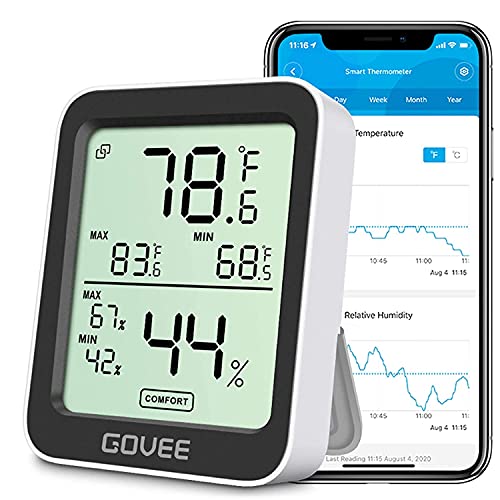
EPA's mold guidance says to keep indoor humidity below 60%, ideally 30-50%. We'd set a basement unit to 50% and drop it to 45% only if a musty smell hangs on. Read the result on a separate hygrometer, because the dehumidifier's sensor reads the air right at the machine. The Cube's can stick near 30% or read about 20 points low on a new unit while the room sits at 40-60%; nine owners have reported it, some on replacement units. Our basement humidity guide and crawl space humidity guide cover the targets in more depth.
How cold the space gets picks the machine
Every dehumidifier has a floor below which the coil frosts or the unit stops, and in a basement or crawl space that number matters more than the pints:
Lowest rated operating temperature | Units |
|---|---|
33.8°F | AlorAir Sentinel HD55S (auto defrost) |
38°F | LG DT501BKR0, Hisense ALDH50KP26 |
41°F | Midea Cube, Midea 22, Frigidaire FHDD5034Y1, Honeywell TPFIT, hOmeLabs |
49°F | Santa Fe Compact70 (works best from 56°F), Santa Fe Ultra70 |
50°F inlet air | AprilAire E070 and E100 |
Don't assume the pricier unit handles cold better. The Santa Fe and AprilAire units stop well above the portables' 41°F, and Santa Fe's manual says the Compact70 removes little to no water at 55°F or below. Put a hygrometer with a temperature log in the space through one winter if you don't know how cold it gets; it tells you which column you're in.
Drain, pump or bucket
The bucket is the weak point. The Frigidaire's 2.7-gallon bucket fills in about 10 hours at its rated 49.71 pints a day, the LG's holds only 14.3 pints, and a full bucket stops the machine. The LG also shuts itself down for an hour after 23 hours of nonstop running, which caps a full day at about 47.7 pints. Plan on a hose.
- Gravity first: if a floor drain, sump pit or laundry standpipe sits lower than the drain port, run a short hose downhill to it. If the drain is across the room, move the dehumidifier to the drain.
- A built-in pump: the Cube's pump version is rated to lift 14 feet, the Honeywell's plan on 15 (its manual says 16.4) and the hOmeLabs HME1004 16.4. The Hisense's manual documents a pump but no lift rating and no gravity drain. When an internal pump fails, the whole unit goes in for service.
- A separate condensate pump: the Little Giant VCMA-15ULS moves 50 gallons an hour at 5 feet of lift and 25 at 10 feet. It wants its own circuit, and its overflow switch usually can't shut off a plug-in dehumidifier, so add a water alarm. If it fails, you replace the pump and keep the dehumidifier.
We'd rather own a pumpless unit and a separate pump when there's a free circuit near the drain; our dehumidifier with a pump guide walks through both setups.
Crawl spaces and whole-house units
Crawl space units are built to sit in a sealed crawl space and run for years, and they cost several times what a portable does. For a crawl space that stays in the mid-50s or warmer, the Santa Fe Compact70 is our pick: 43.7 pints a day at 65°F, a MERV-13 filter and a written warranty of five years on defects and six on components, with Santa Fe choosing between a part and a new unit. For a crawl space that runs cold, the AlorAir HD55S keeps working to 33.8°F at a fraction of the price, drains by gravity only, and gives two years of full coverage, then refrigeration parts only through year six; the warranty holds only if you buy from AlorAir or an authorized dealer. The AprilAire E070W bundle adds Wi-Fi and an external condensate pump for a crawl space with no drain, but AprilAire publishes no current-test capacity.
A whole-house unit is a different project. The AprilAire E100 is certified at 85 pints a day at 73°F with an IEF of 2.35 and ENERGY STAR Most Efficient status, moves 280 CFM and ducts with 10-inch collars. Ducted into the house it dries the living space; set up as a standalone box in a corner of the basement, it dries the room it sits in and not much else. In humid Southern houses owners report it running around the clock short of its setpoint, so the 5,500 square feet on the box is a range, not a promise. The Santa Fe Ultra70 earns its place only when its 12-inch cabinet, outdoor-air port or MERV-13 filter is what you need; for about the same money, AprilAire's E080 is certified at 65 pints at 73°F to the Ultra70's 52.45.
Warranties and how long they last
Expect a portable to be a several-year purchase, not a decade. The portables here carry one year of coverage, and the details differ:
Unit | Warranty |
|---|---|
Midea Cube 50 | One-year limited |
Frigidaire FHDD5034Y1 | 1 year parts and labor; no sealed-system term stated |
LG DT501BKR0 | 1 year on internal and functional parts, in-home service where available |
Hisense ALDH50KP26 | Not stated in the manual or listing; confirm with Hisense |
Midea 22 Pint | 1 year; owner pays diagnostics, removal and transport |
Honeywell TPFIT50PWK | 1 year, 4 years on sealed-system parts, but the licensee is out of business and claims go through a Honeywell Store form |
AlorAir Sentinel HD55S | 2 years full, then refrigeration parts only through year 6; authorized sellers only |
Santa Fe Compact70 | 5 years on defects, 6 on components; Santa Fe picks part or unit; no labor |
AprilAire E070 and E100 | 5 years per the manuals, AprilAire picks part or unit, no labor; the W versions' shop pages advertise 5 years full plus 1 of parts |
Iced coils, refrigerant loss and units that stop collecting water show up across every brand, portables and crawl space units alike, including Santa Fe units with evaporator leaks handled under warranty. That's the case for a longer warranty on a unit you'll run for years, and for buying a portable where the return is easy.
Which one we would buy
- Damp basement above 41°F with a drain: the Midea Cube 50.
- Same basement, no drain, a free circuit: the Cube plus a Little Giant condensate pump.
- Cool basement, no drain: the Hisense 50 with its built-in pump, after confirming the warranty.
- One damp room: the Midea 22 Pint, or the 35 if the room is very damp.
- Sealed, warm crawl space: the Santa Fe Compact70.
- Cold crawl space or a near-freezing basement: the AlorAir Sentinel HD55S.
- Whole house with ductwork: the AprilAire E100, installed to its manual.
Whatever you buy, add a separate hygrometer and put it across the space from the unit.
The picks
Products we recommend for this guide.

Midea Cube 50 Pint Dehumidifier (MAD50S1QWT-A)
Our default for a damp basement above 41°F: 49.67 pints/day on the DOE 65°F test, IEF 2.01, a gravity hose in the box and usually less money than its equals. No pump in this listing. Check its humidity reading in week one.
Read our full review: we scored it 7.0/10

Midea 22 Pint Dehumidifier (MAD22C1AWS)
For one moderately damp room above 41°F: 22.31 pints/day at the 65°F test, a gravity-hose outlet and auto restart. Not a basement unit; a very damp room calls for Midea's 35-pint sibling. Sold by Amazon when we checked.
Read our full review: we scored it 6.2/10

Hisense 50-Pint Lift-Up Dehumidifier with Built-In Pump (ALDH50KP26)
For a cool basement with no drain below the unit: 49.89 pints/day at 65°F, rated down to 38°F, a built-in pump and an 18-pint top-lift bucket. The manual shows no pump lift or warranty, so confirm the coverage first.
Read our full review: we scored it 6.3/10

AlorAir Sentinel HD55S (ENERGY STAR, gravity drain)
For a crawl space or basement that nears freezing: rated to run from 33.8°F, 36.33 pints/day at 65°F per ENERGY STAR. Gravity drain only. The warranty holds only when bought from AlorAir or an authorized dealer.
Read our full review: we scored it 7.0/10

AprilAire E100 Whole-House Dehumidifier
For a whole humid house with ductwork: 85 pints/day at the 73°F ENERGY STAR test, Most Efficient, 280 CFM and 10 in duct collars. Rated to 50°F inlet air. Budget a drain or pump and plan the ducts before you order.
Read our full review: we scored it 7.2/10
What owners say
Real owner reports from the threads and editorial sources we drew on for this guide.
“We ran a small one for a couple of years and had constant issues with wet flooring. We upgraded to a 50 pint smart dehumidifier with a floor drain. Instead of the 50-60% humidity, we have it down to 40%.”
“Probably Not meant for 4500sqft as it advertises even if running 24/7.”
“We use a separate condensate pump instead of the built in one. Would be loud for a living space”
“I run mine 24/7/365. I have a utility sink in the basement, so I just ran a drain line to the sink. It really helped. I’m on my 3rd unit in 15 years.”
“I typical get 2-3 years out of a dehumidifier such as Dansby, GE & Frigidaire.”
“My crawlspace dehumidifier- a Santa Fe Advance90, fails every 4 years. The refrigerant leaks out every time. It's out of warranty, but I call Santa Fe and they give me a big discount on a new one.”
“I actually bought my Aprilaire unit from Lowe’s during a seasonal sale. It was the exact same model that local crawl space companies were quoting, but hundreds cheaper.”
“I had one put in a couple years ago because my basement was always damp and the upstairs felt sticky in summer. Mine wasn’t the Aprilaire E100 but a similar capacity unit, and it did make the whole house feel more comfortable.”
“We have encapsulated the crawlspace in plastic sheeting – floor and cinder block walls – and have a SantaFe Compact 70 dehumidifier running full time. The humidity is around 40% all year in the basement.”

